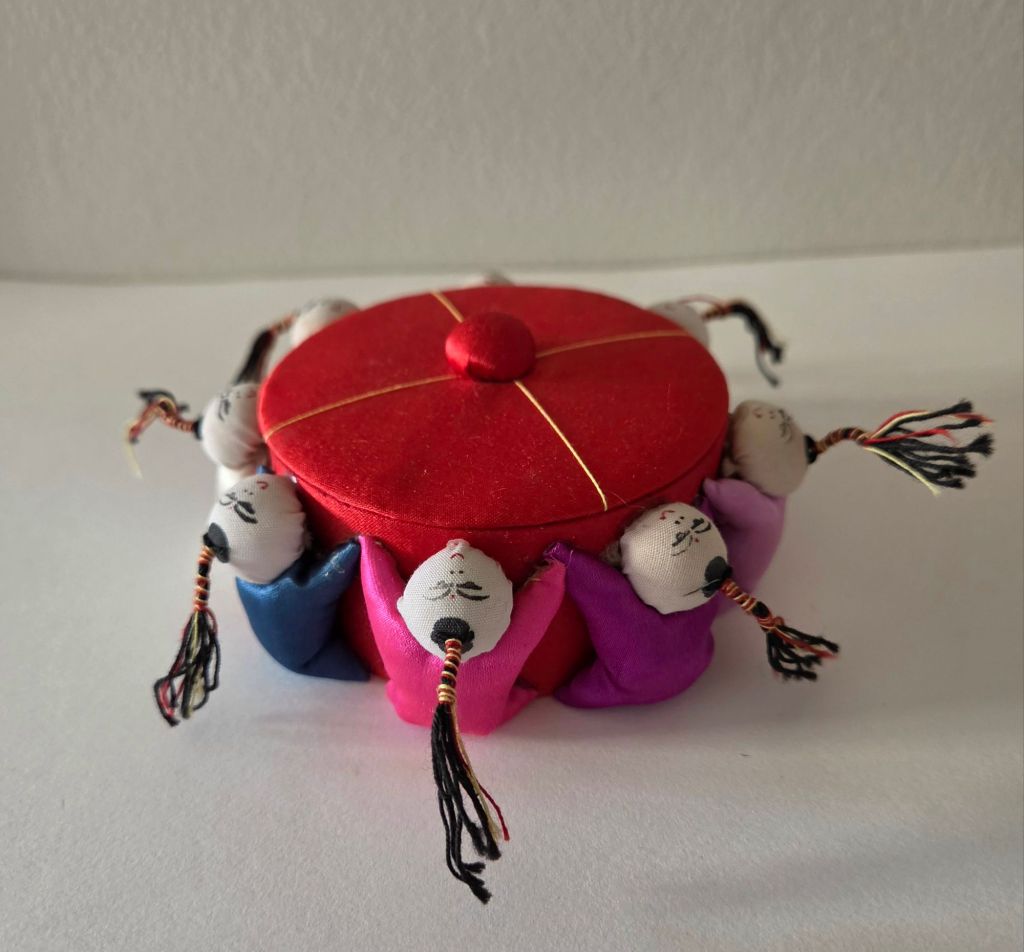
A book I have suggests that an affordable way to decorate with folk art is to collect items crafted to be sold as souvenirs. Lately, I’ve definitely found that to be the case. I’ve always loved the Chinese silk “lucky baby” or Baizi pincushions, so I snapped up this little box for $3.00 when I found it at a secondhand store in Columbia. Symbolizing good fortune, harmony, abundance, and prosperity it’s a perfect box to store my needles.
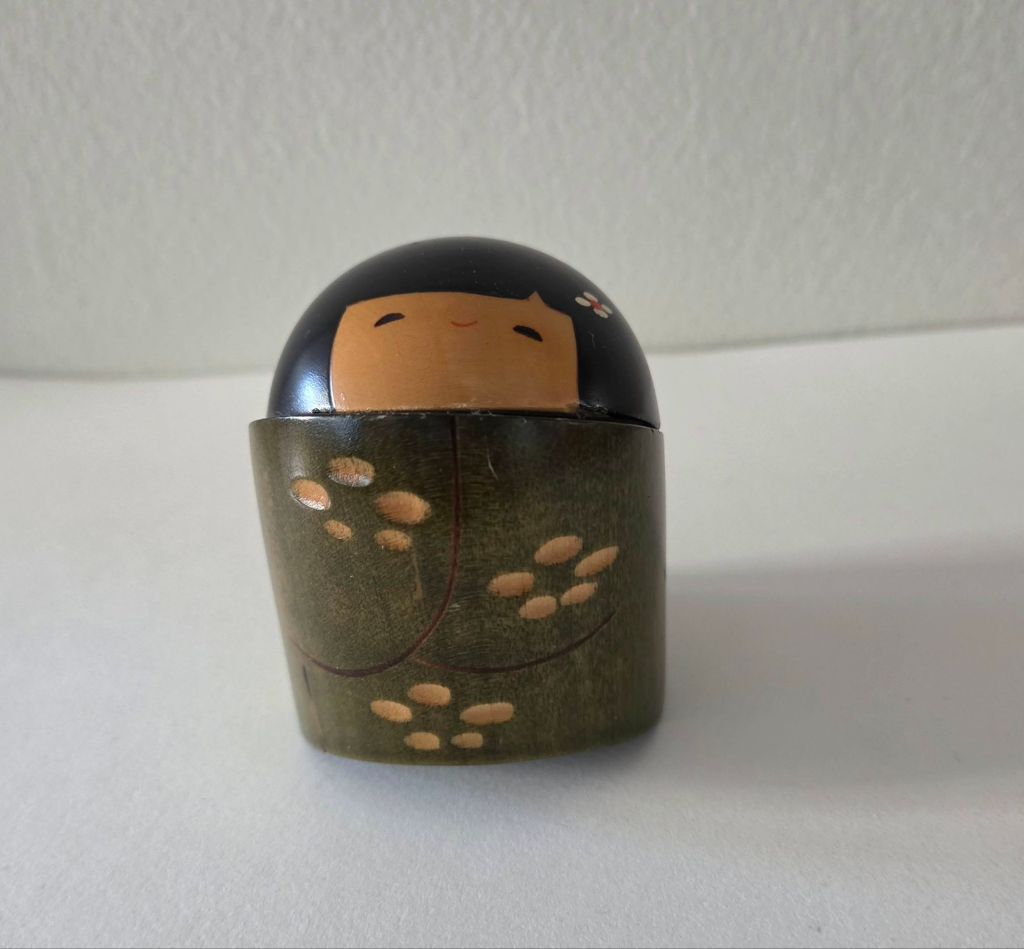
I found this vintage Japanese Kokeshi (doll) at the Mount Sinai Resale Shop marked “as is” for $1.00. There didn’t seem to be anything wrong with it except for a little glue residue on the little ledge. I thought that maybe something used to be there and had come off but, after I reverse googled it, that doesn’t seem to be the case. It does turn out to be one of a four part series called Shiki (four seasons) designed by Okamota Usaburo, so perhaps the “as is” refers to the fact that there is only one of them.
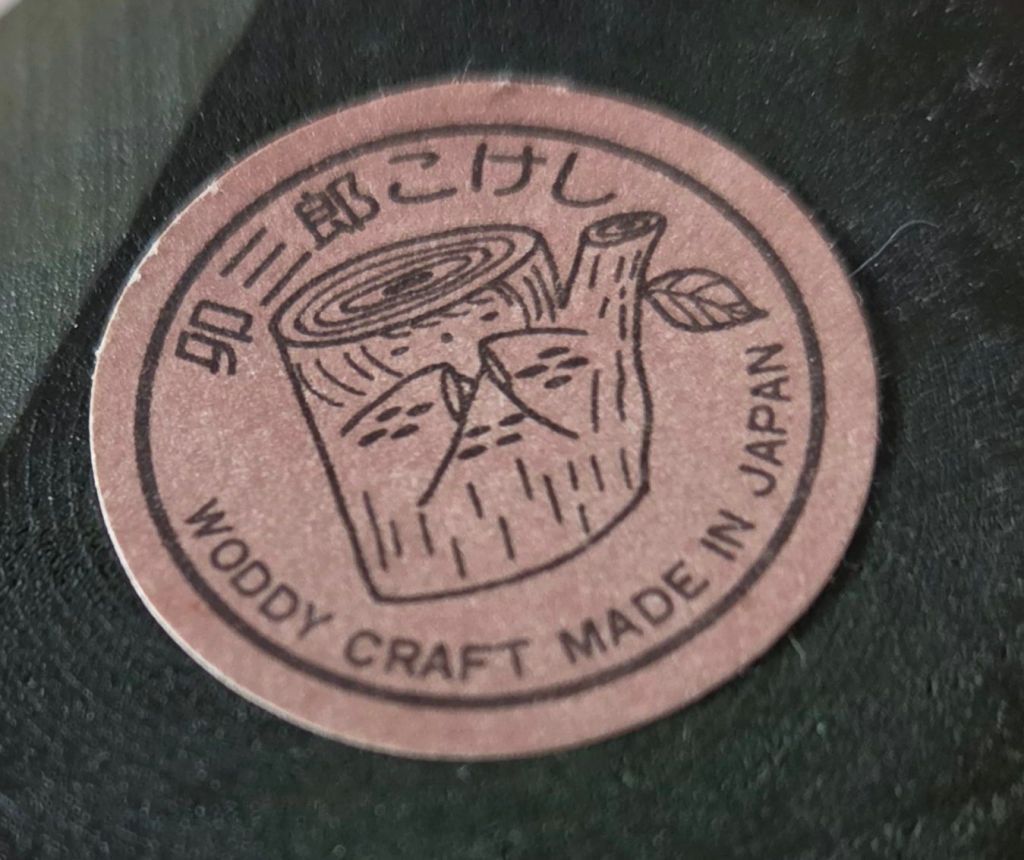
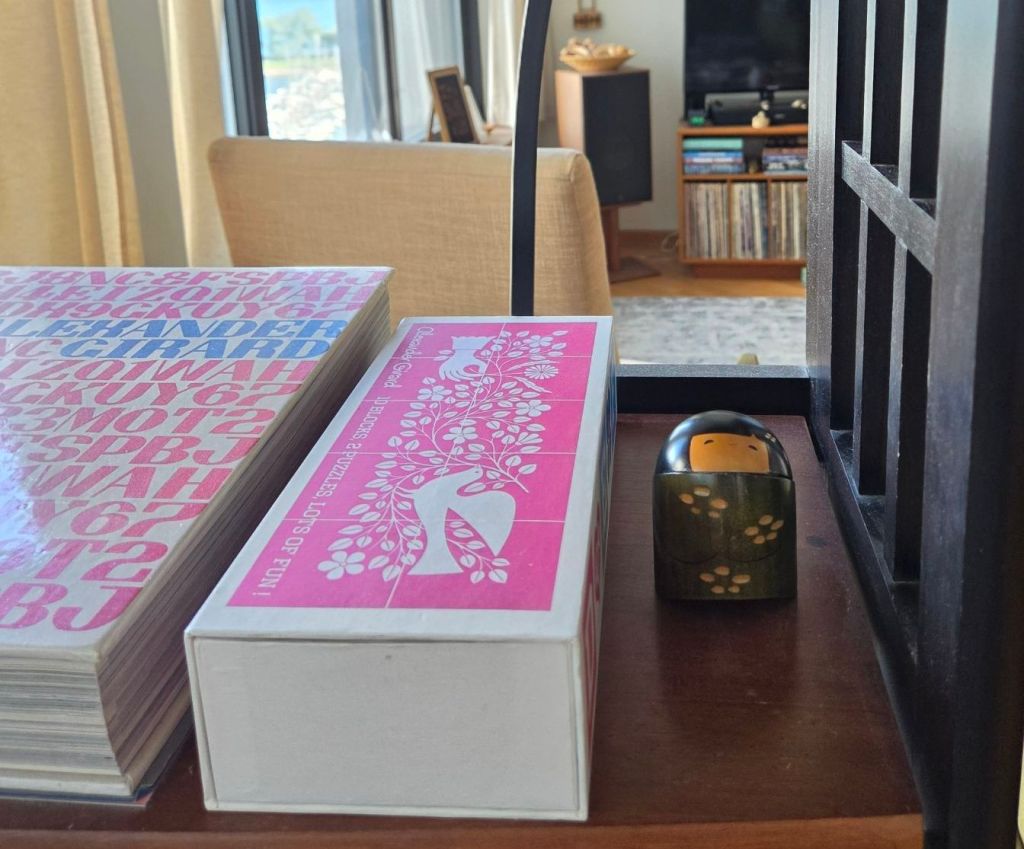
It is the Fuyu or Winter doll and after removing the glue residue with Goo Gone, I found the perfect place for it on the Alexander Girard shelf.
My latest find from Brown Elephant was this U.S.S.R. souvenier wooden figurine for $2.50.
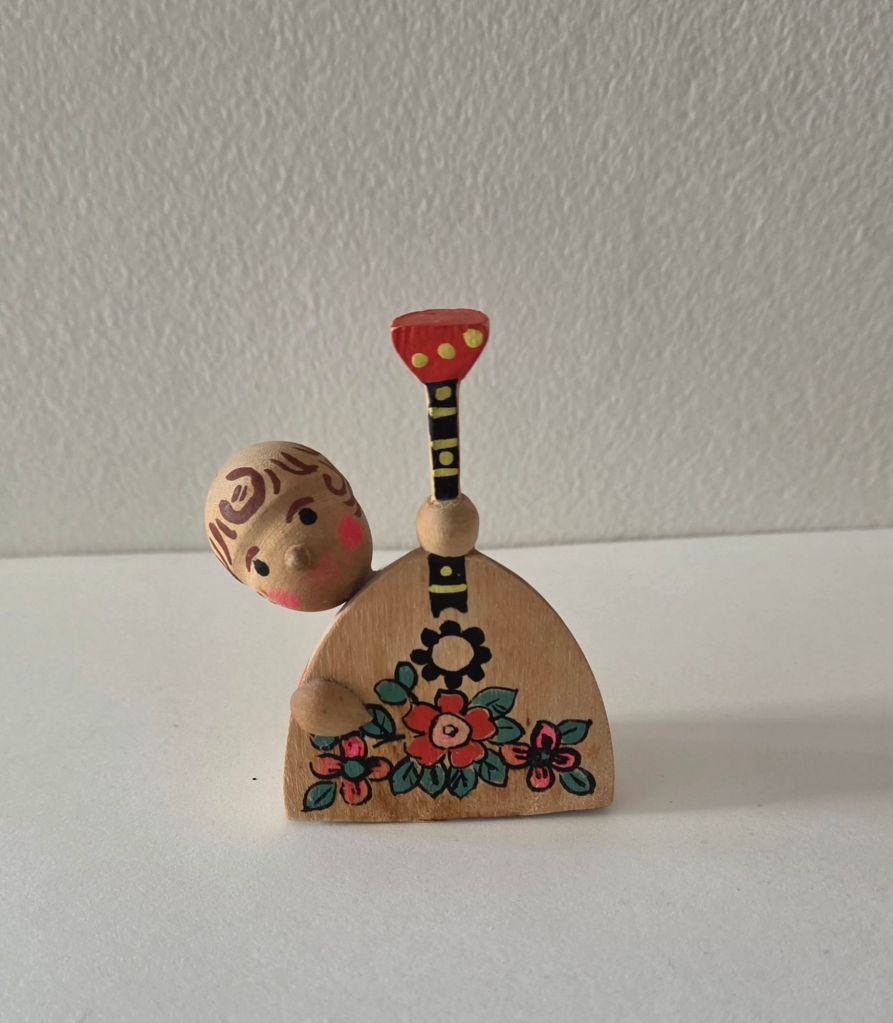
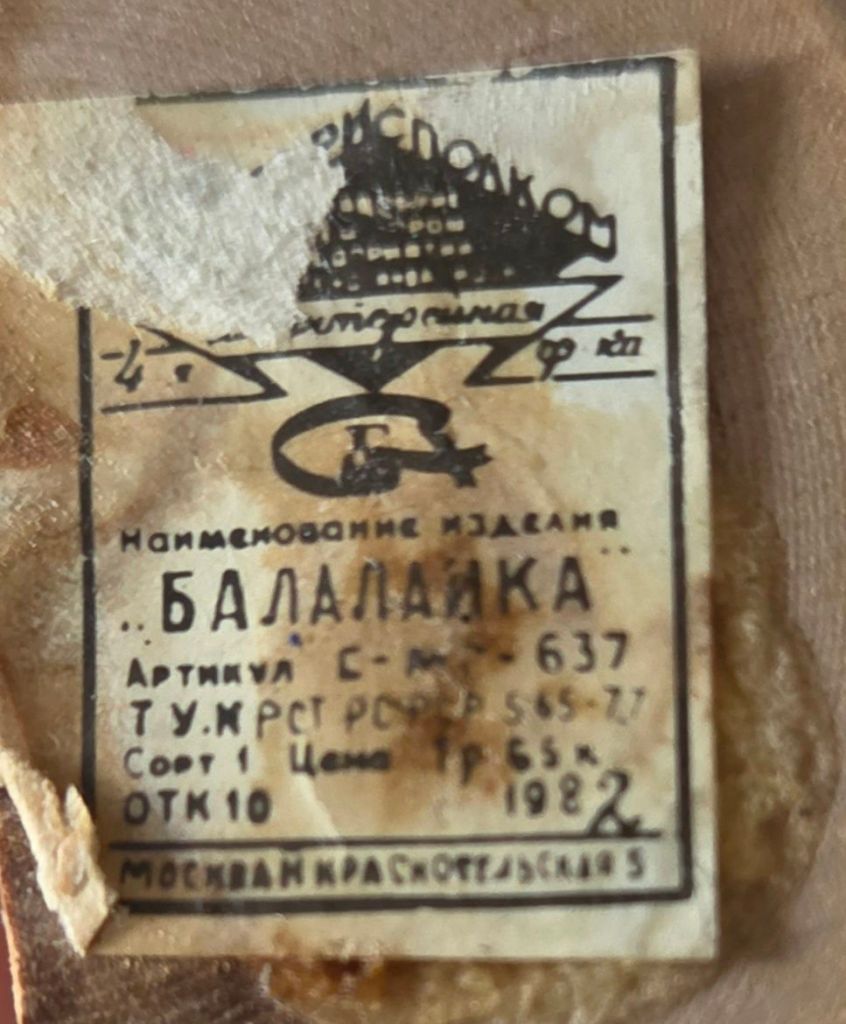
The hand carved and hand painted boy is holding a balalaika – a traditional Russian stringed instrument. The label dates it to 1982.
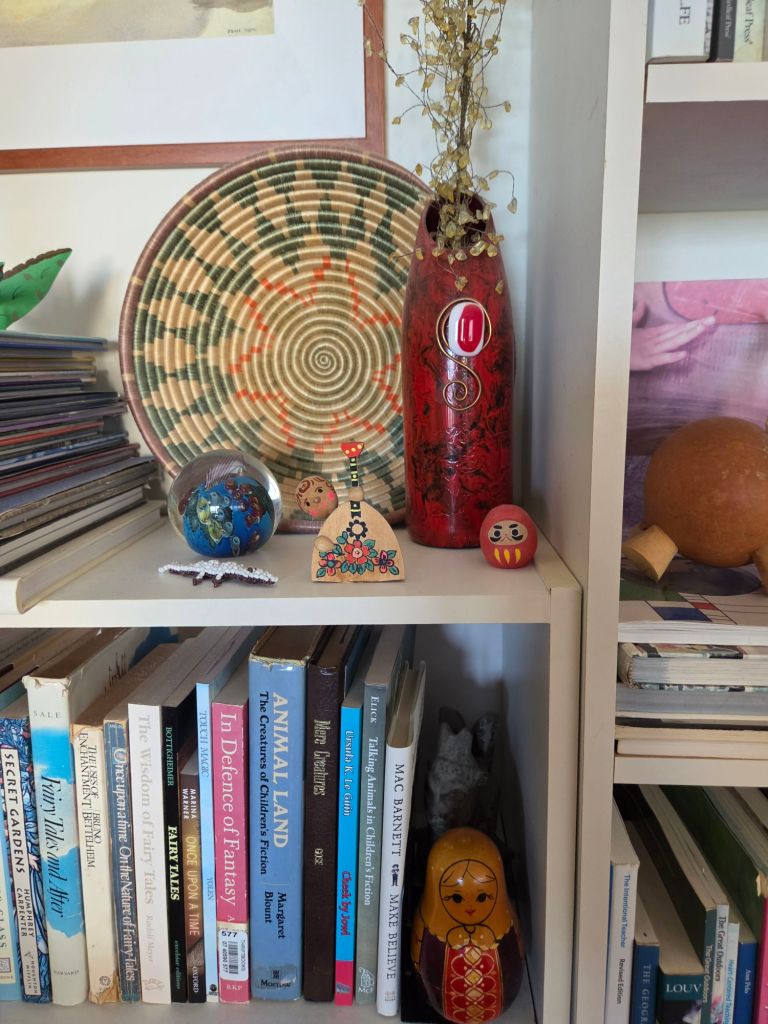
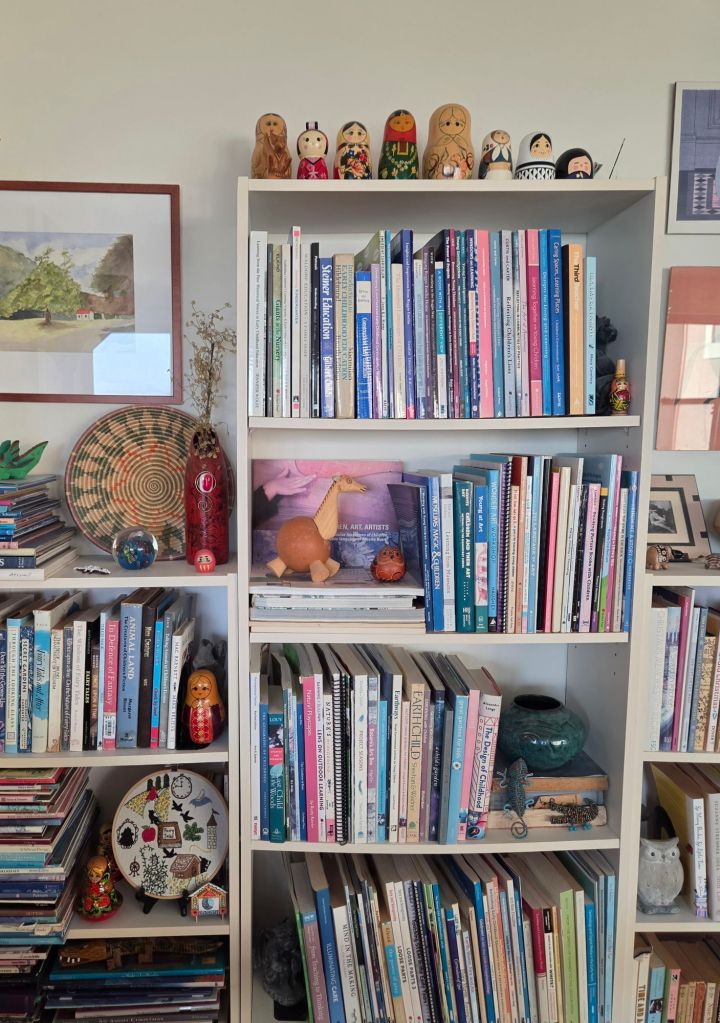
He found a home on the white shelves near the other Russian dolls.
I’m looking forward to my next finds!

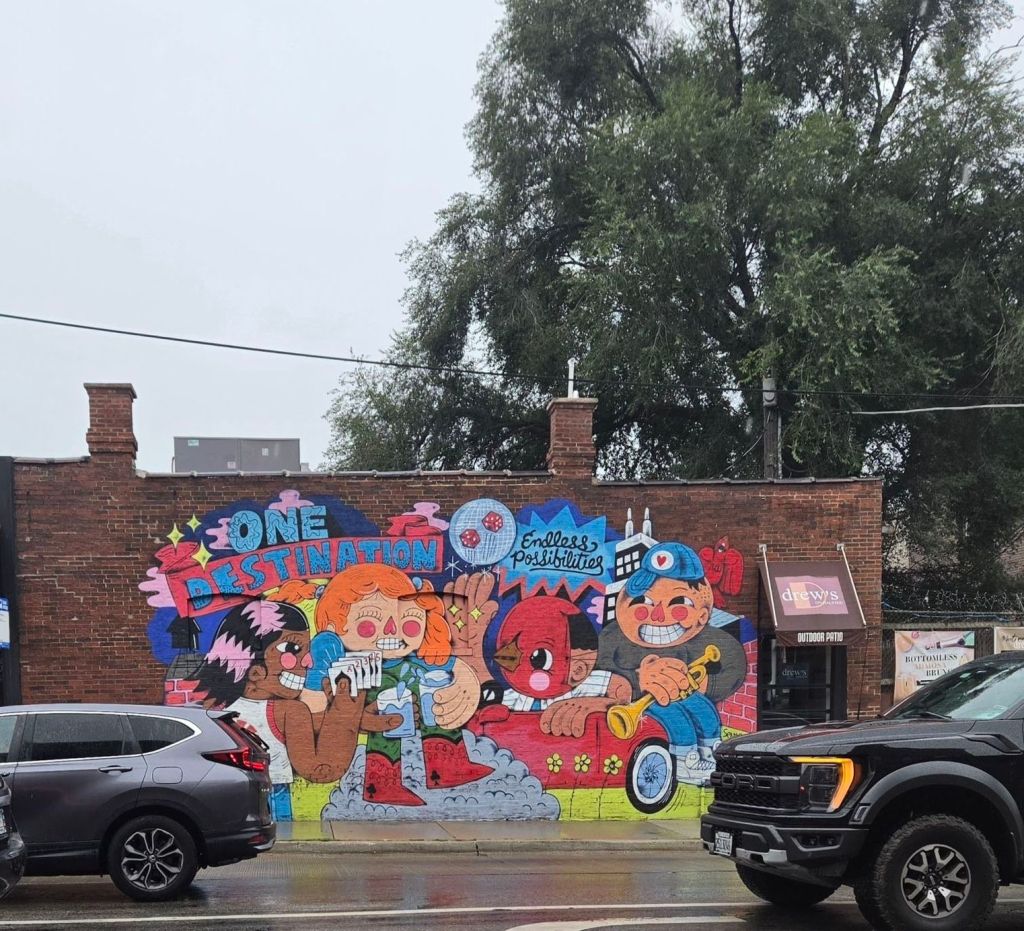
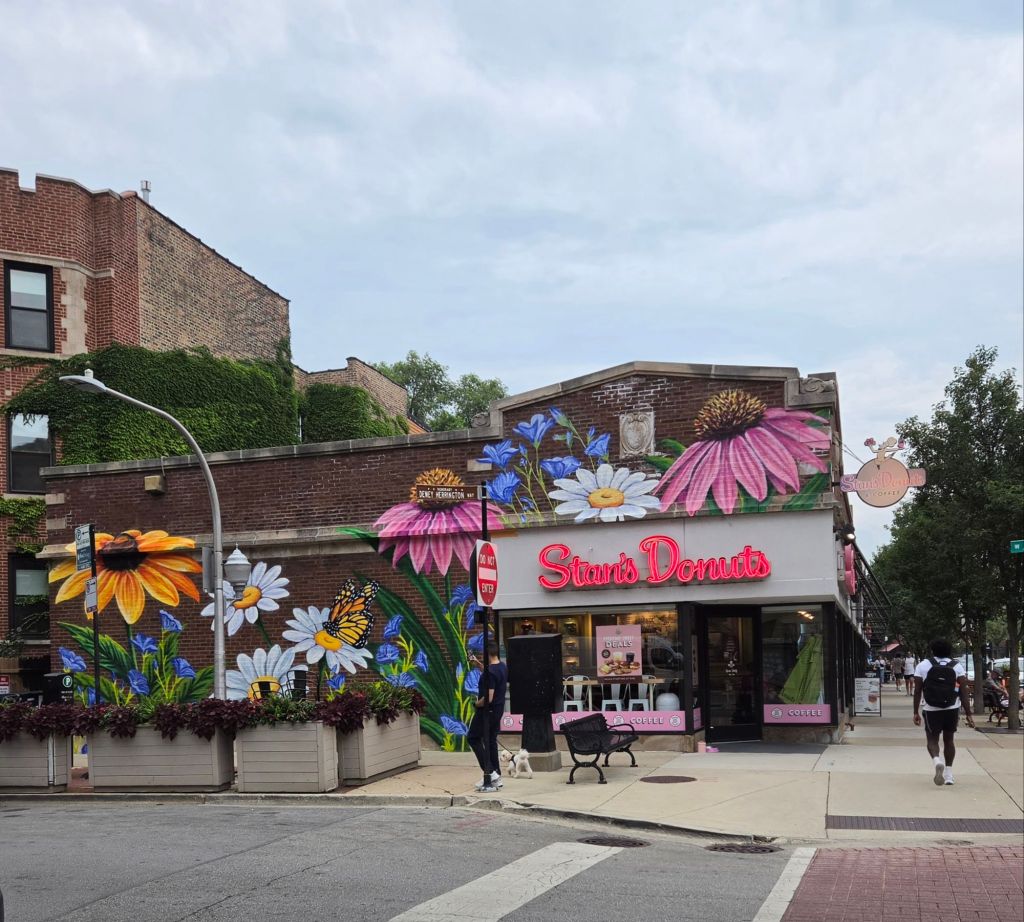
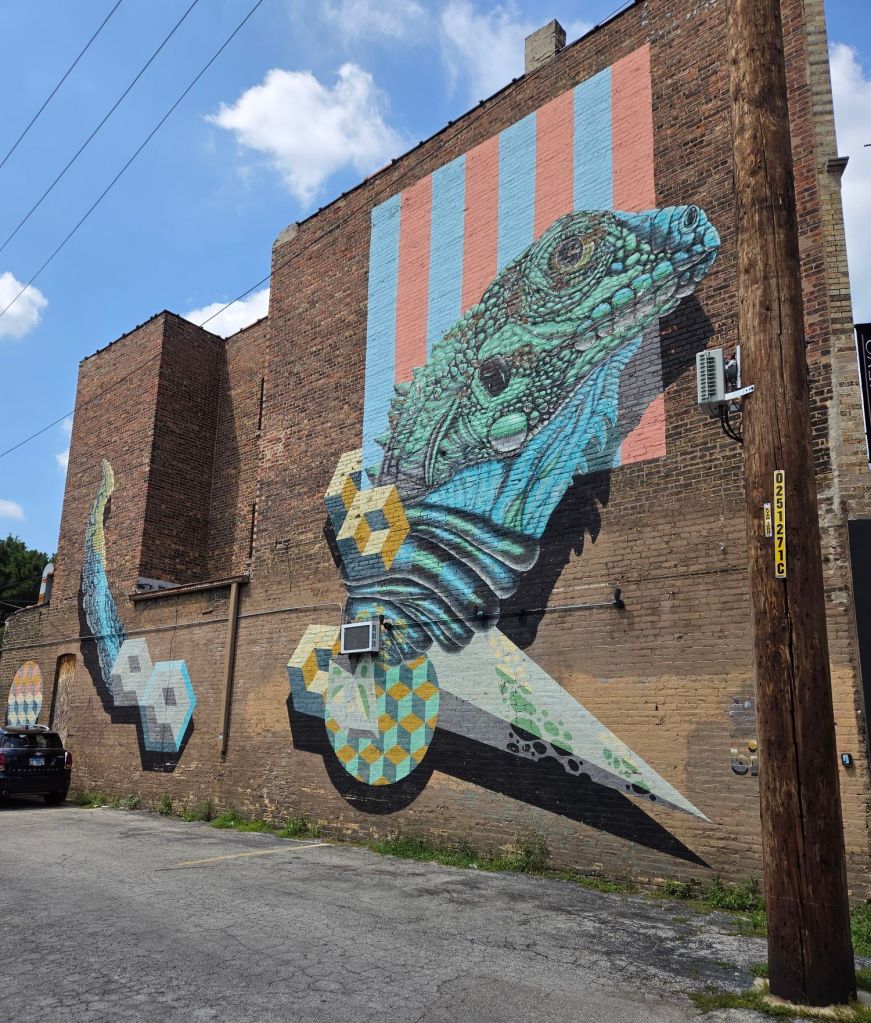
In my last post about Lakeview murals I totally missed this one right across the street from the Ryan Tova Katz ones on Belmont. It’s not my favorite style but it reminds me of another one I’ve never featured so I snapped a shot of that one too.
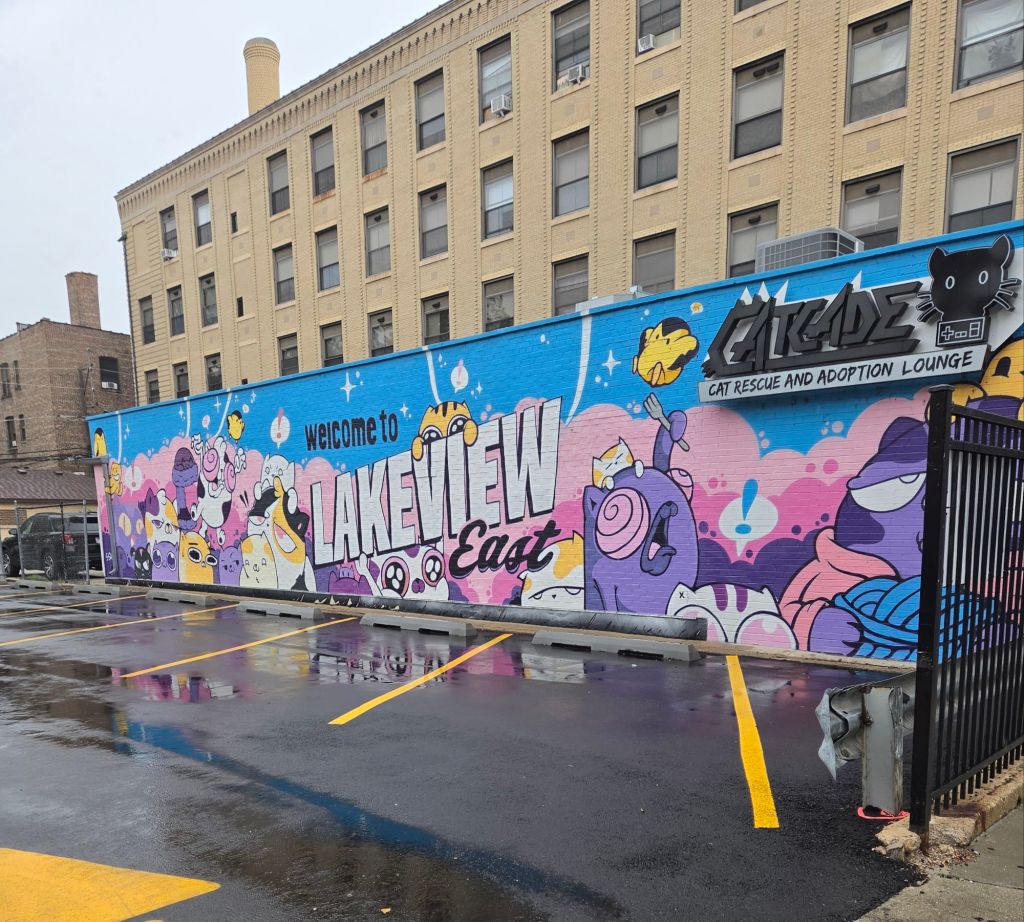
Even though they’re not my favorites I thought I should document them here.

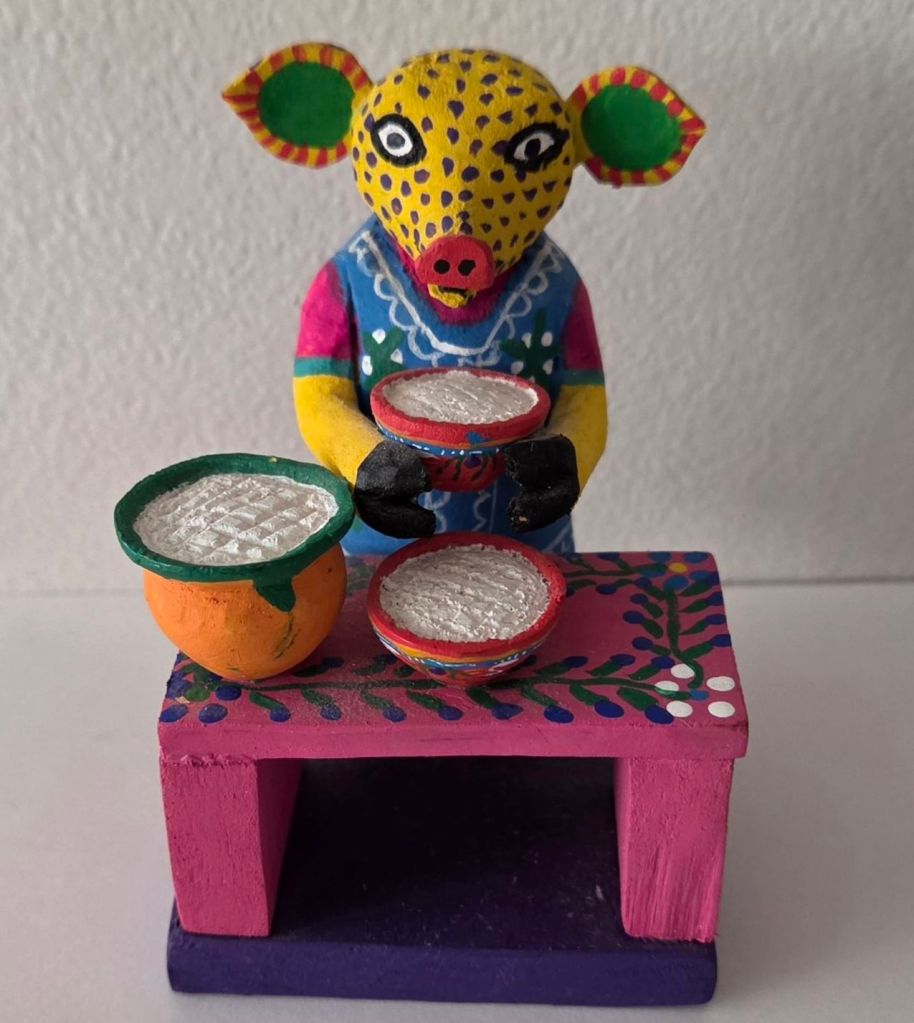
Oscar who works at the children’s museum is from Oaxaco and when I showed him a picture of my pig/cow thrift find, he exclaimed “She’s making tejate!” Oscar explained it was an Oaxacan drink made with corn flour. It is, I found out, also called the Drink of the Gods and has been served in Oaxaco as a cold morning beverage since preColumbian times.
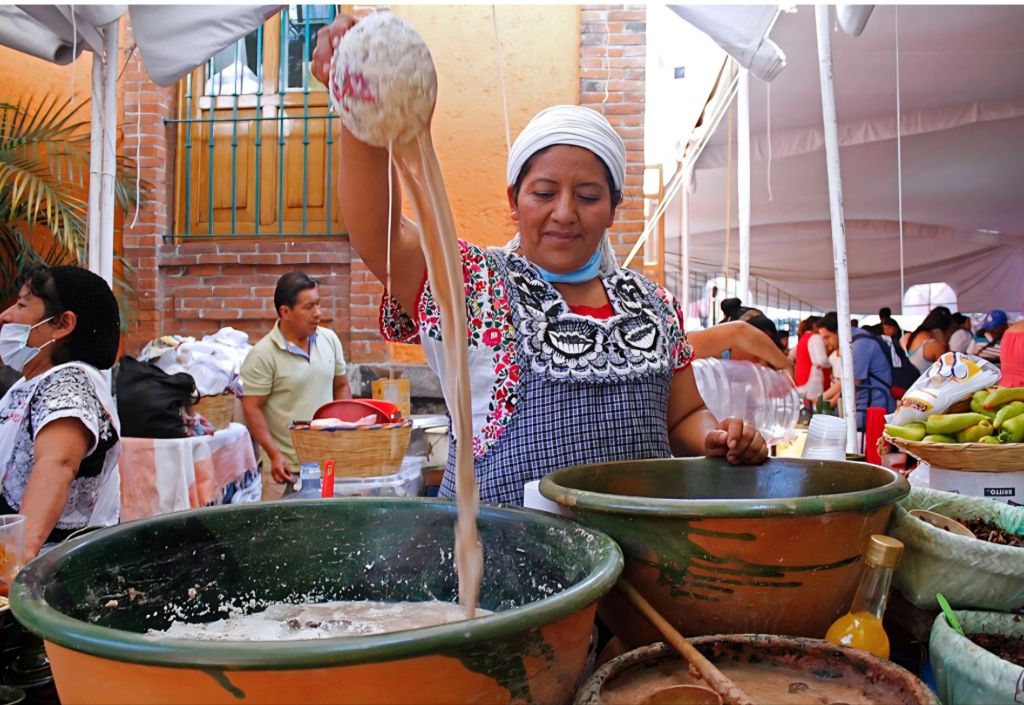
Oaxacan women start by making a paste of toasted corn flour, pixtle which is ground seeds or pits of the mamey fruit, a white flower called rosita or flor de cacao, and often fermented cocao beans in giant clay bowls. They add water and knead it which causes a white foam to rise to the surface.
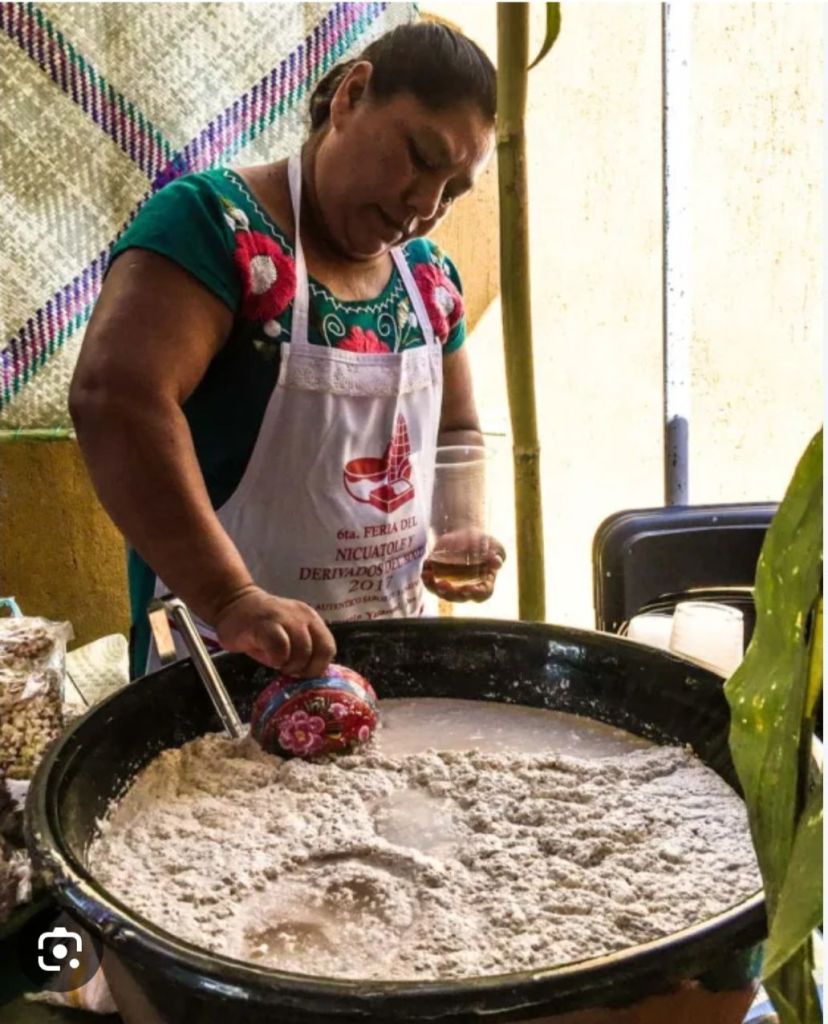
Then they scoop it up with jicaras or calabash gourds and serve it.
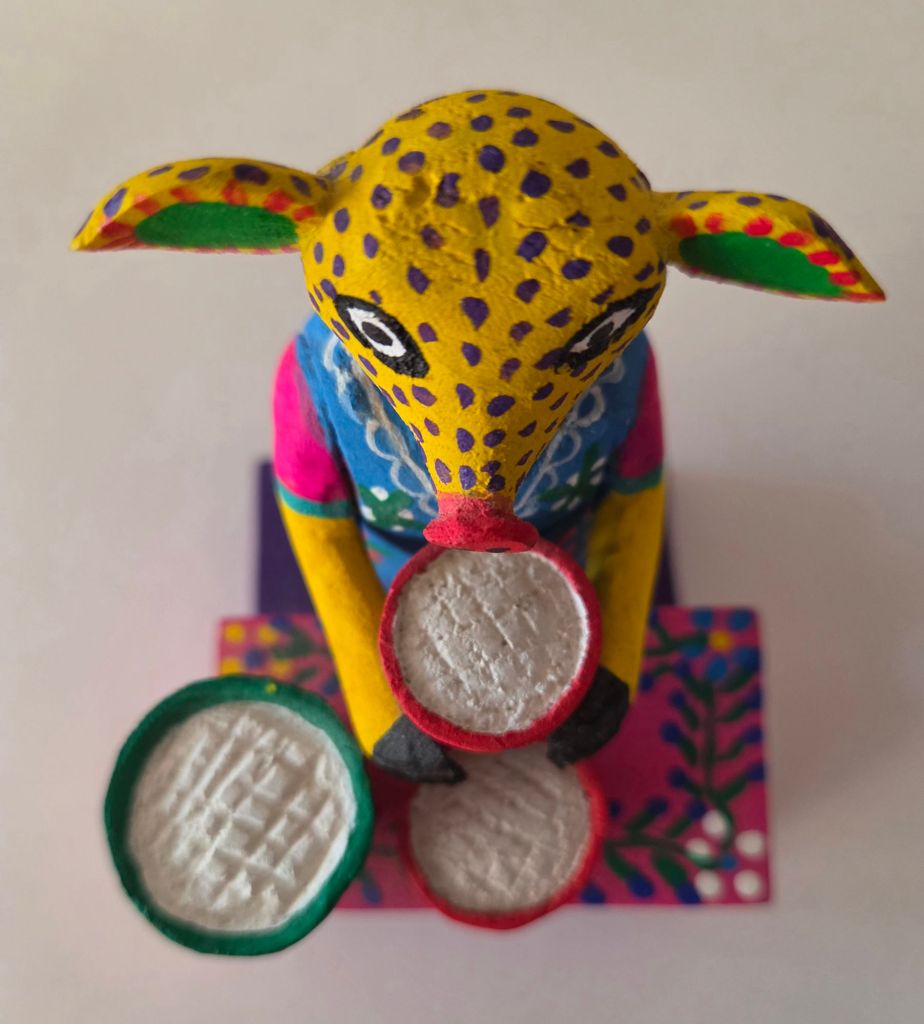
“And here you go” the pig/cow seems to be saying.

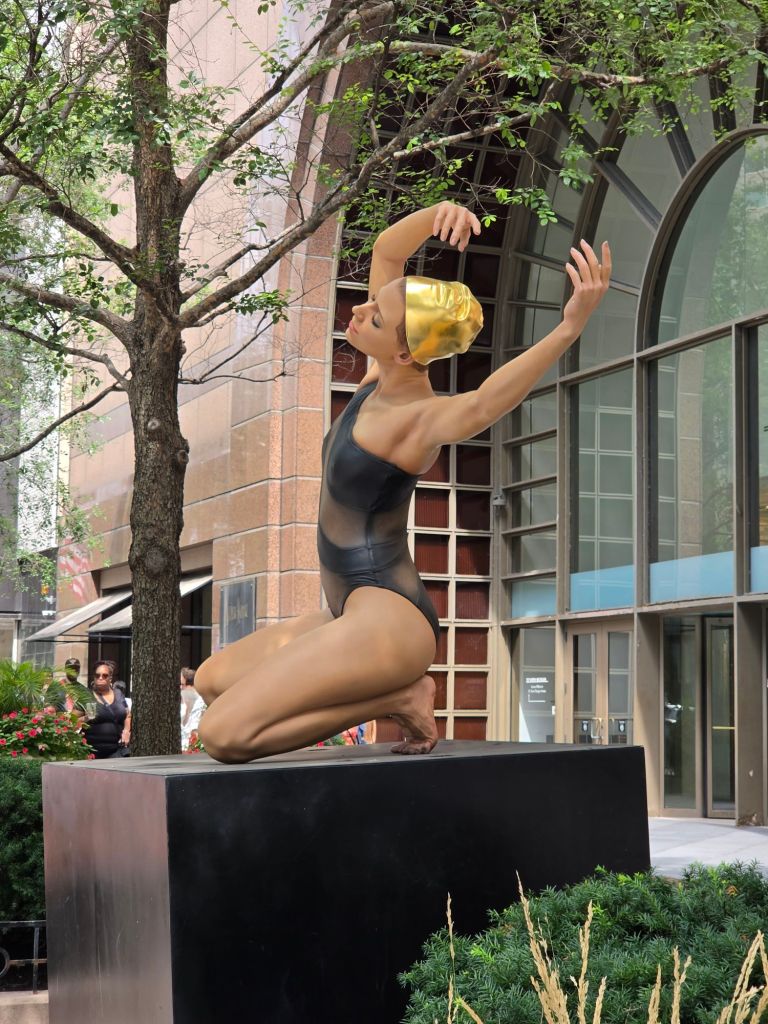
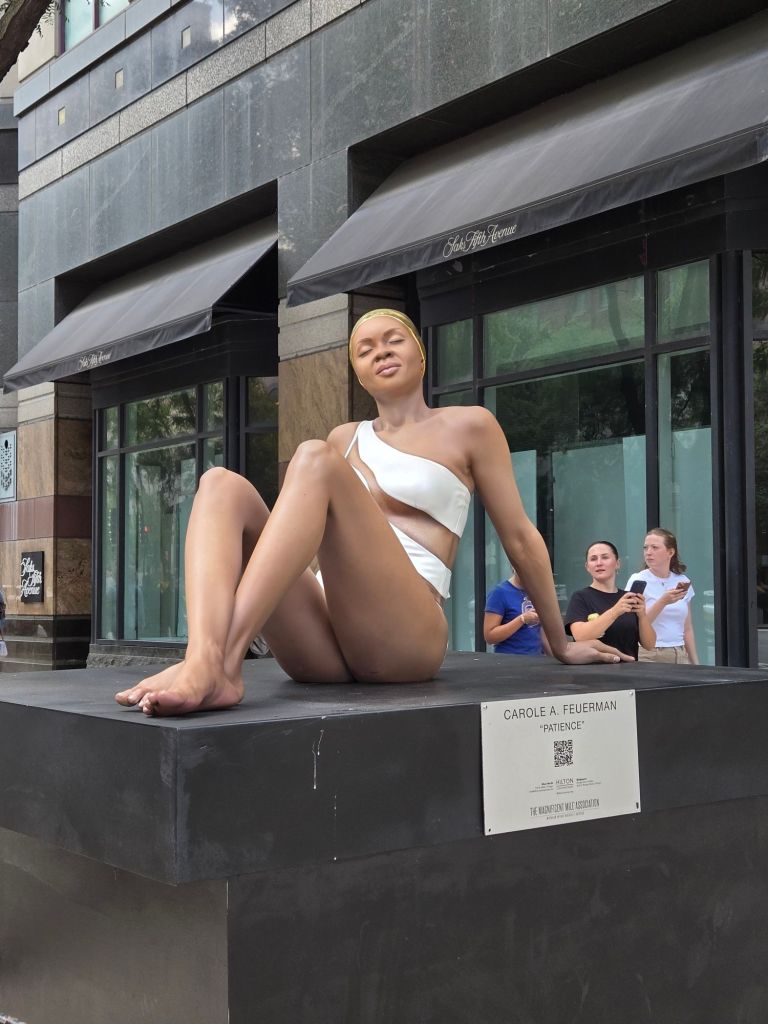
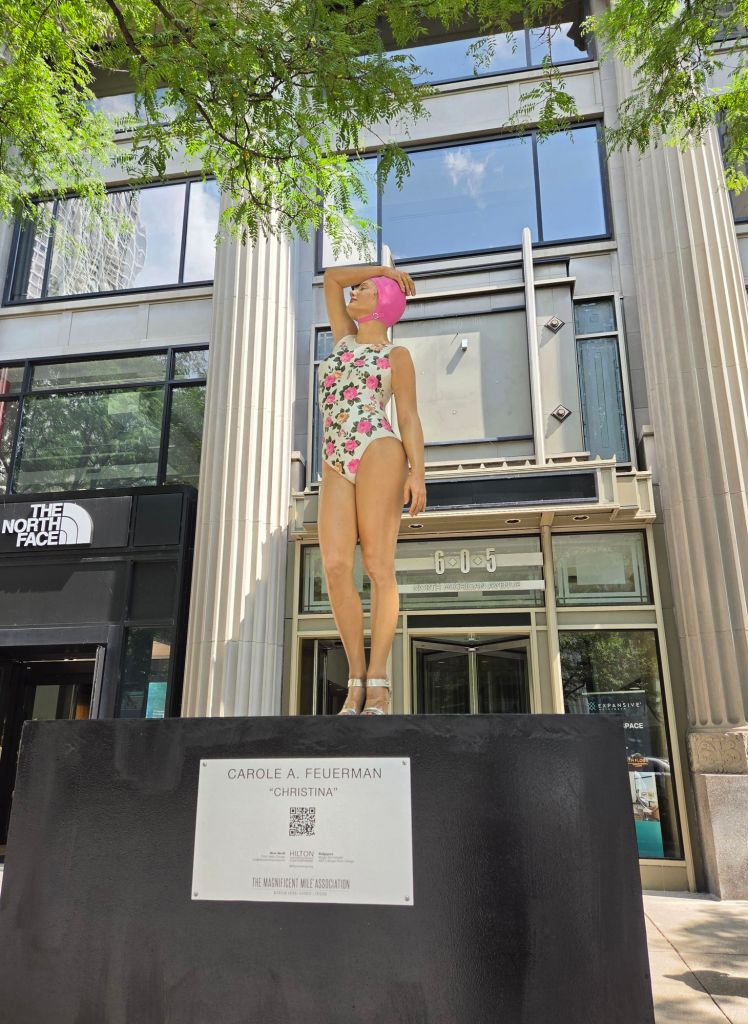
It seems like everytime I go downtown I see a new one of the Carole Feuernam swimmers I wrote about in “Well This Is New” so I thought it should probably document them too.

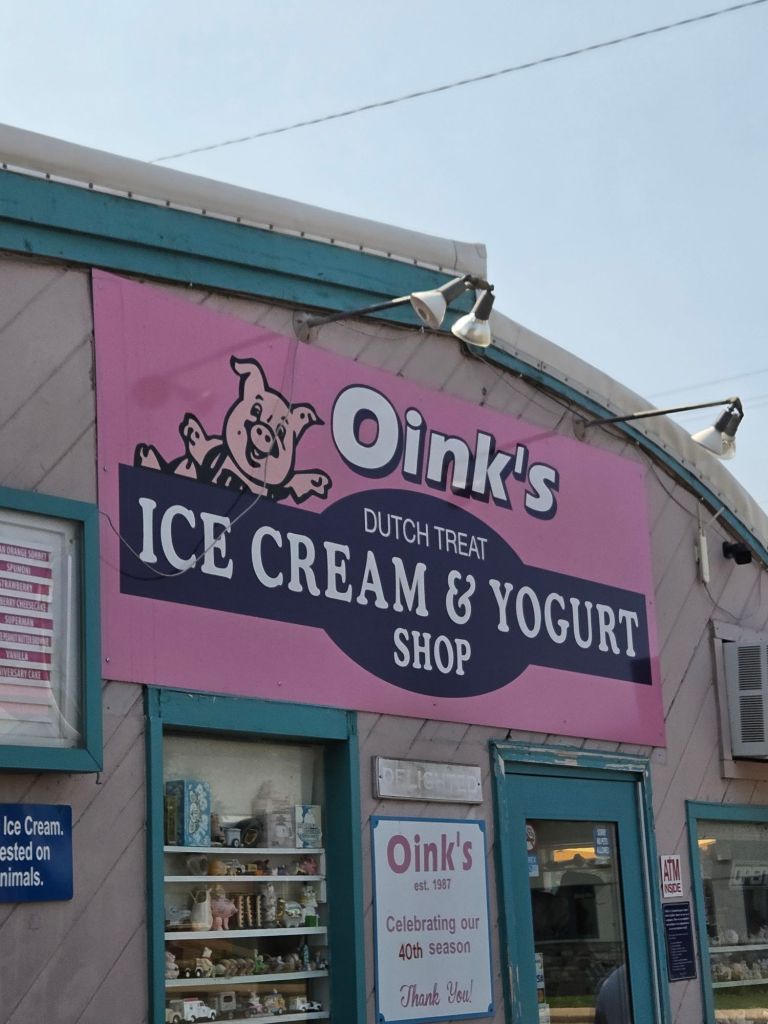
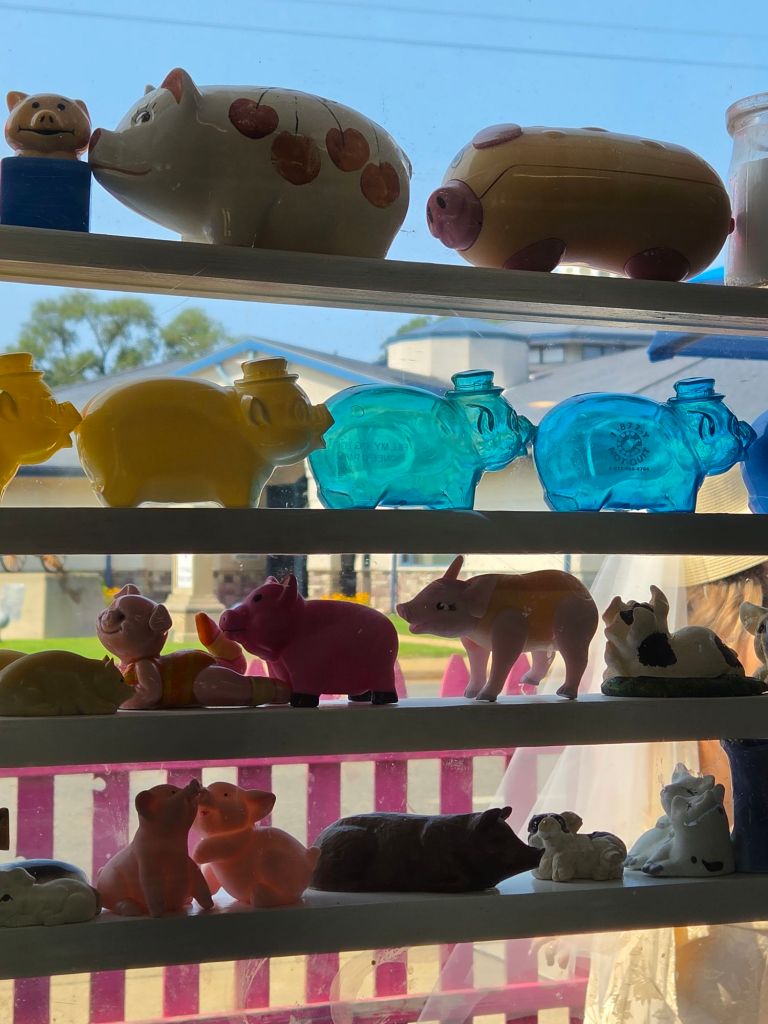
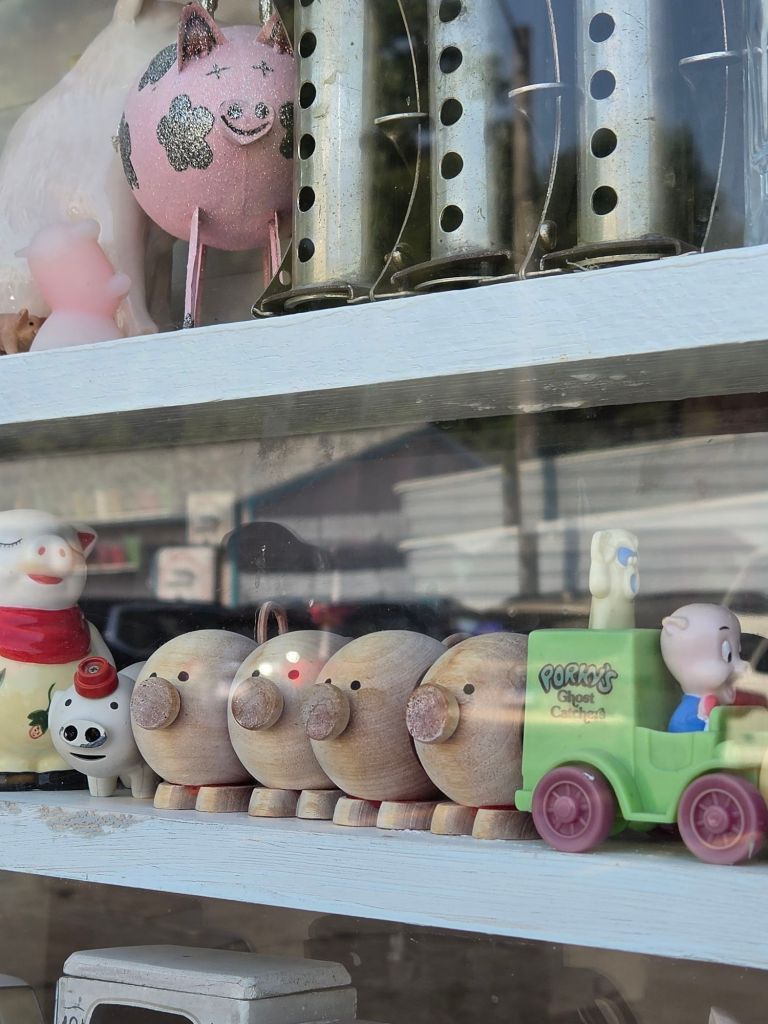
It was not surprising that an ice cream shop named Oinks had a pig collection but the sheer amount of pigs was a surprise. Here are just a few of the thousands of pigs at Oinks in New Buffalo, Michigan:
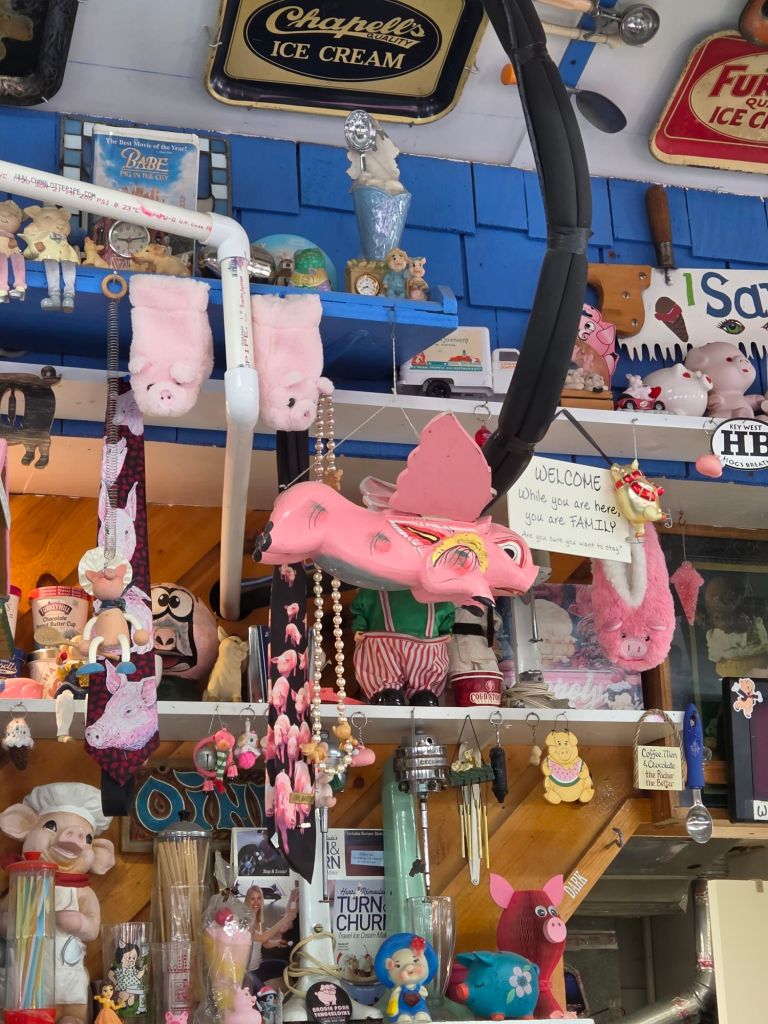
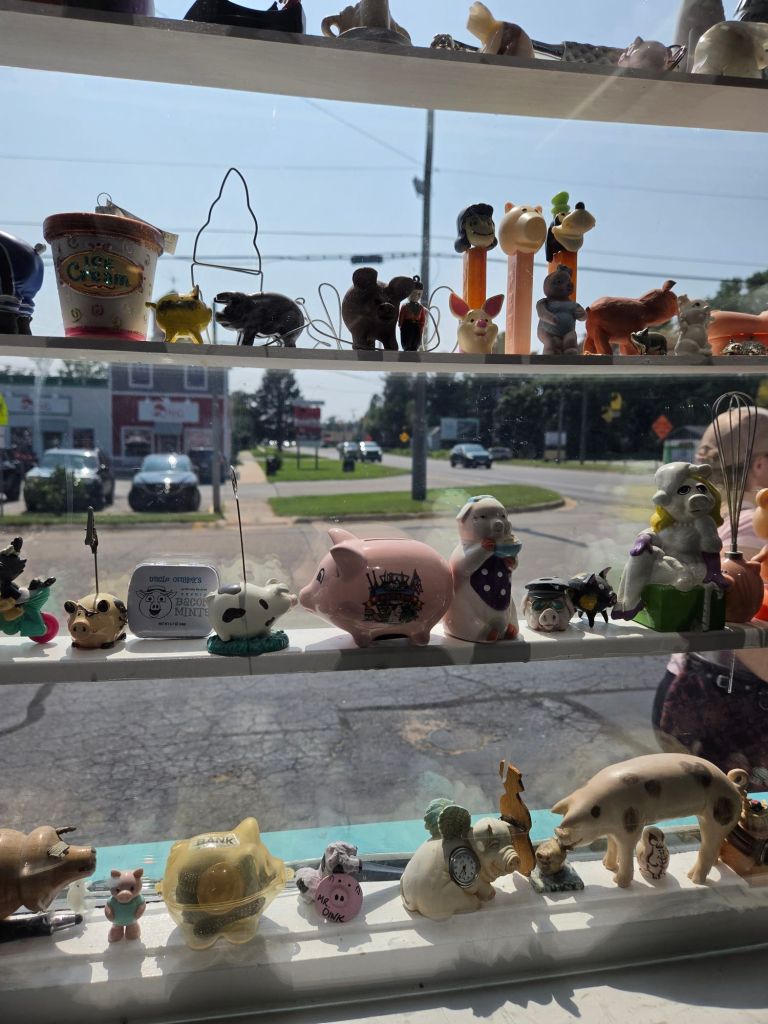
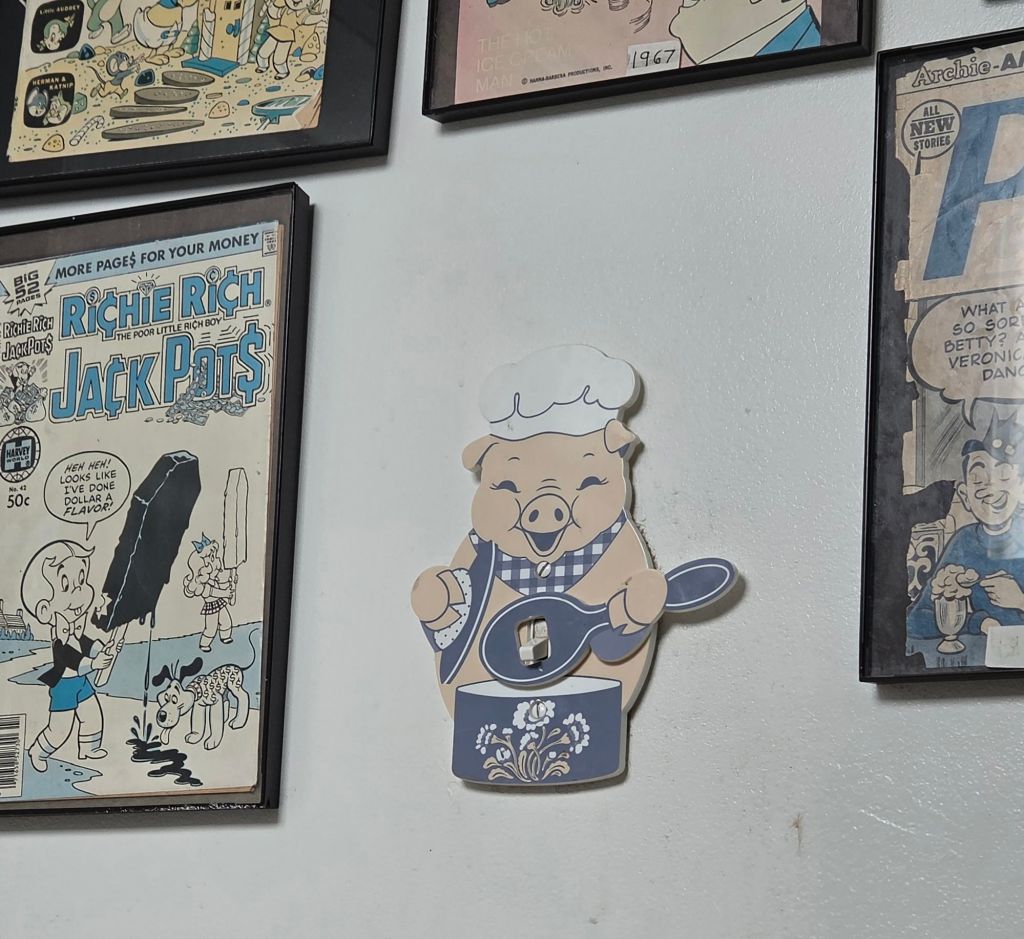
There was also this framed comic book collection around the pig light swtch in the bathroom. And the ceiling of the restaurant was home to an ice cream scoop collection, a few of which are visible in the first picture. Obviously a return trip will be necessary!

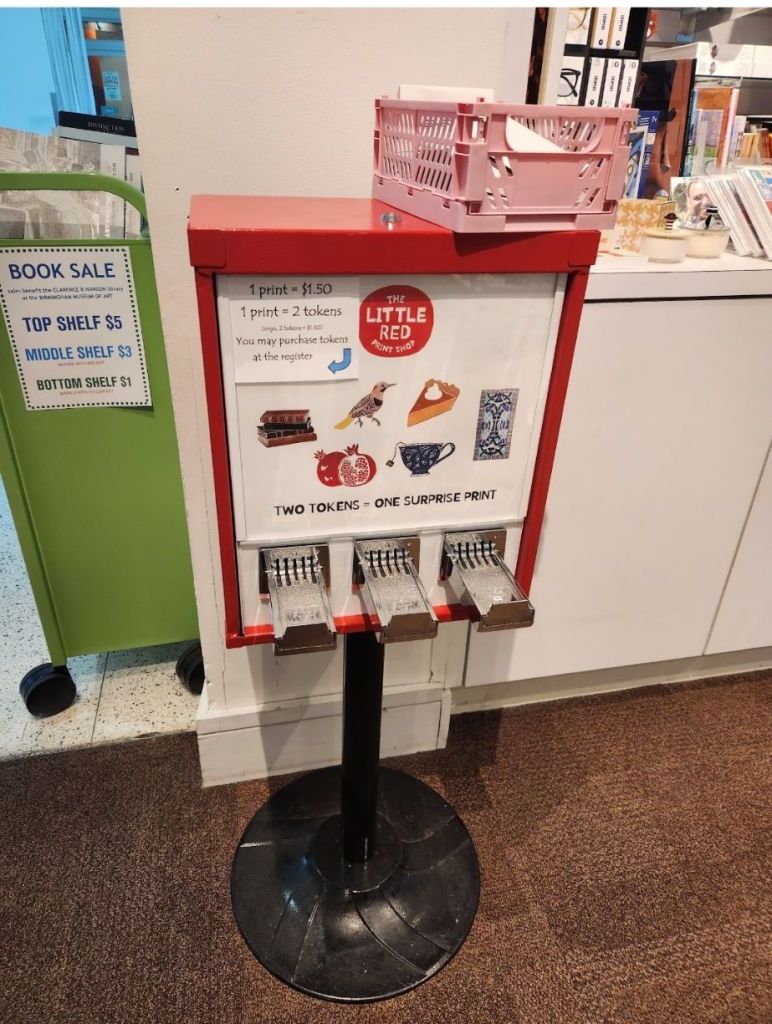
A few months ago I mentioned the first art print vending machine I found at the Birmingham Art Museum. The “Little Red Print Shop” included a variety of prints by Jessica Leitch and I was pleased when I got the bird one. After I mounted it on a map of Alabama along with the watercolor birds my Alabama grandniece painted for our Rushmer Christmas place cards, I put it in the living room bathroom because that’s where the birds are and I thought that was that.
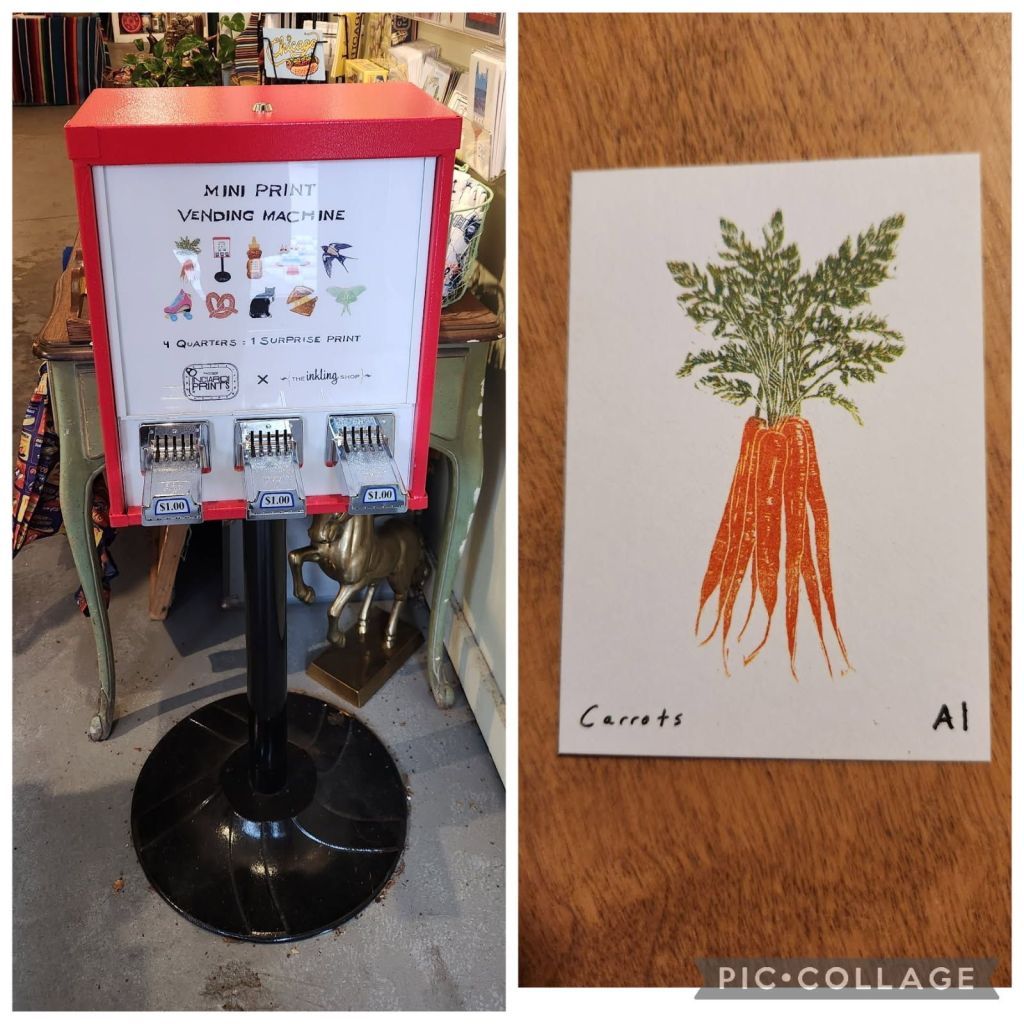
But then I came across a “Mini Print Vending Machine” at Inkling, a store in our neighborhood. I put in my four quarters and got this beautiful carrot print. The Inkling saleswoman mentioned that these mini print machines were all over the United States and had their own Instagram account. I checked it out and learned all about printmaker Ana Inciardi who grew up in Brooklyn and is now based in Portland, Maine. She came up with the idea for the vending machines as a way to get quarters for the laundromat. She knew about the Art O Mat refurbished cigarette machines and remembered the sticker and temporary tattoo machines she had patronized as a child in Brooklyn and wondered if there was some way she could design a machine that could dispense her prints for quarters. She launched her first machine in 2022 and now has over 200 across the United States. Her prints start with a linocut and are printed using the risograph method. Most are food focused and it is important to her that they remain accessible and affordable.
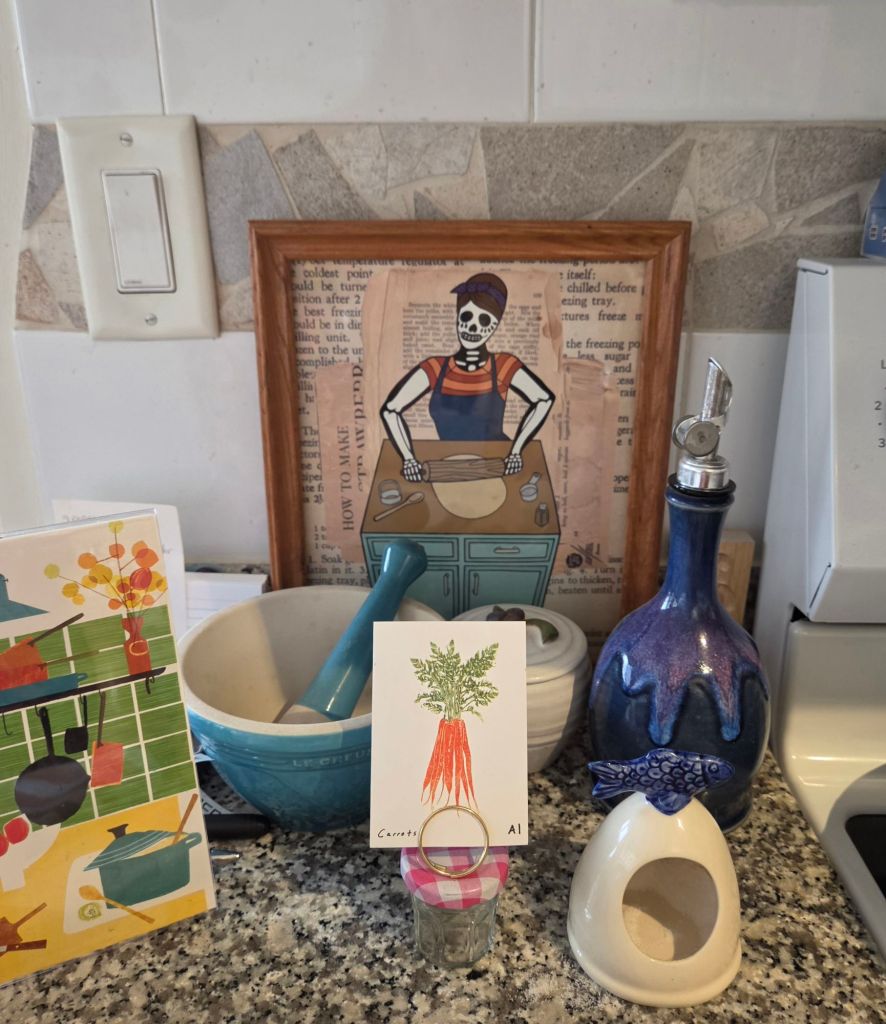
I knew I wanted to display our print in the kitchen but I wasn’t quite sure how since our kitchen essentially has no walls. But since I’d taken the little bird place cards out of their tiny jam jar holders I stuck the carrot print in one of them. It eventually migrated to the kitchen counter next to the kitchen scene birthday card from my sister that I’d stuck in a plexiglass frame and in front of the baking skeleton my older daughter gave us. I think they all go together quite well (as my mother would say).
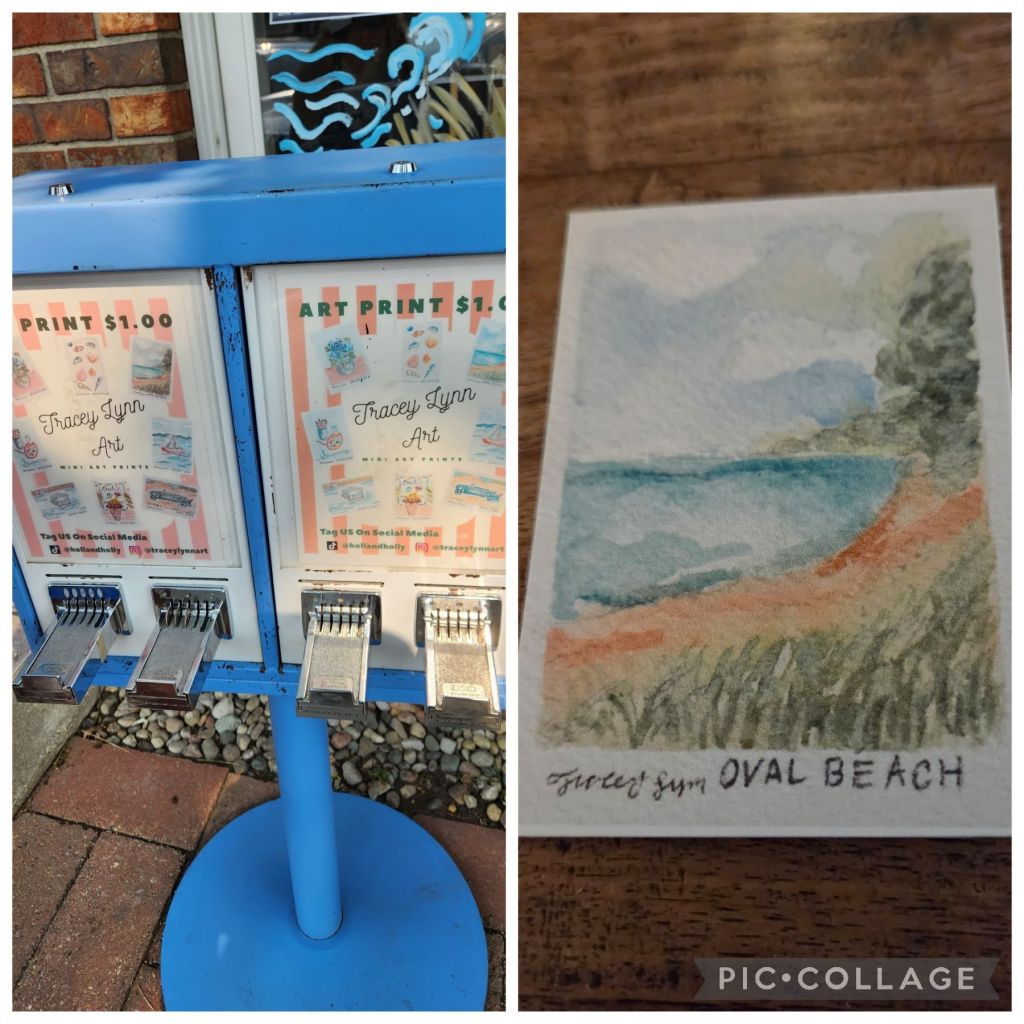
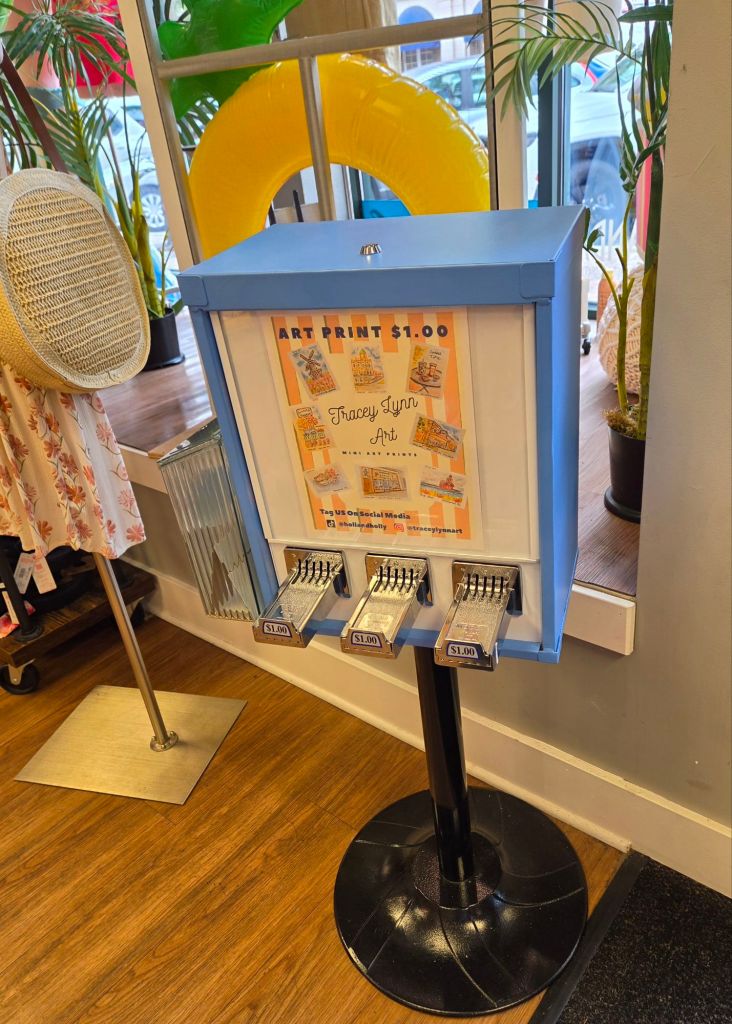
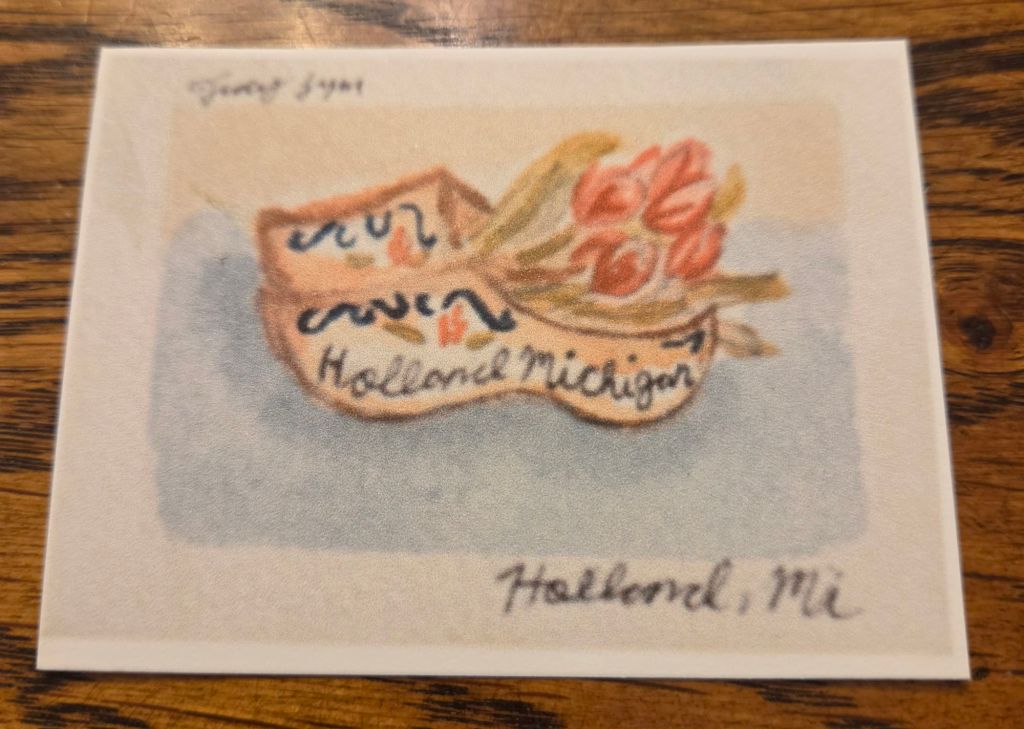
Then we found these Tracey Lynn Art print vending machines in Saugatuck and Holland that included reproductions of Tracey Venama’s watercolor paintings. According to an article in the Holland Sentinel, Tracey got the idea for her vending machines after seeing a NYC machine on TikTok. I imagine it was probably one of the Inciardi mini print machines. I was so pleased to get an Oval Beach print in Saugatuck and one of the prints she created for Tulip Time in Holland because we attended it a few years ago.
I knew I needed to make another souvenir map and when my daughter sent me a link to a new art print vending machine at Midwest Nice in Chicago, I knew there would be a series!
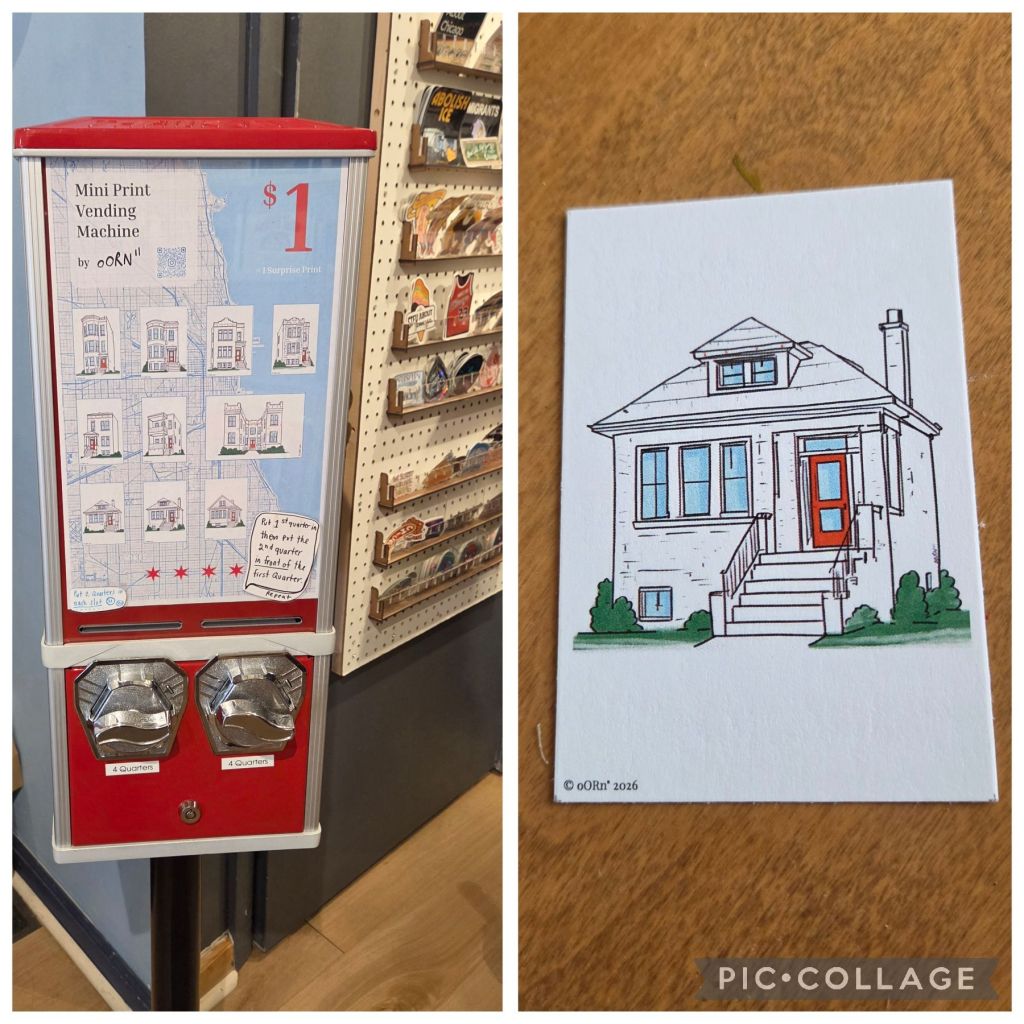
The “Mini Print Vending Machine by Ooorn” (artist Ornuma Panmunee) currently includes architecture art. Our quarters yielded a bungalow, a two flat, and a three flat.
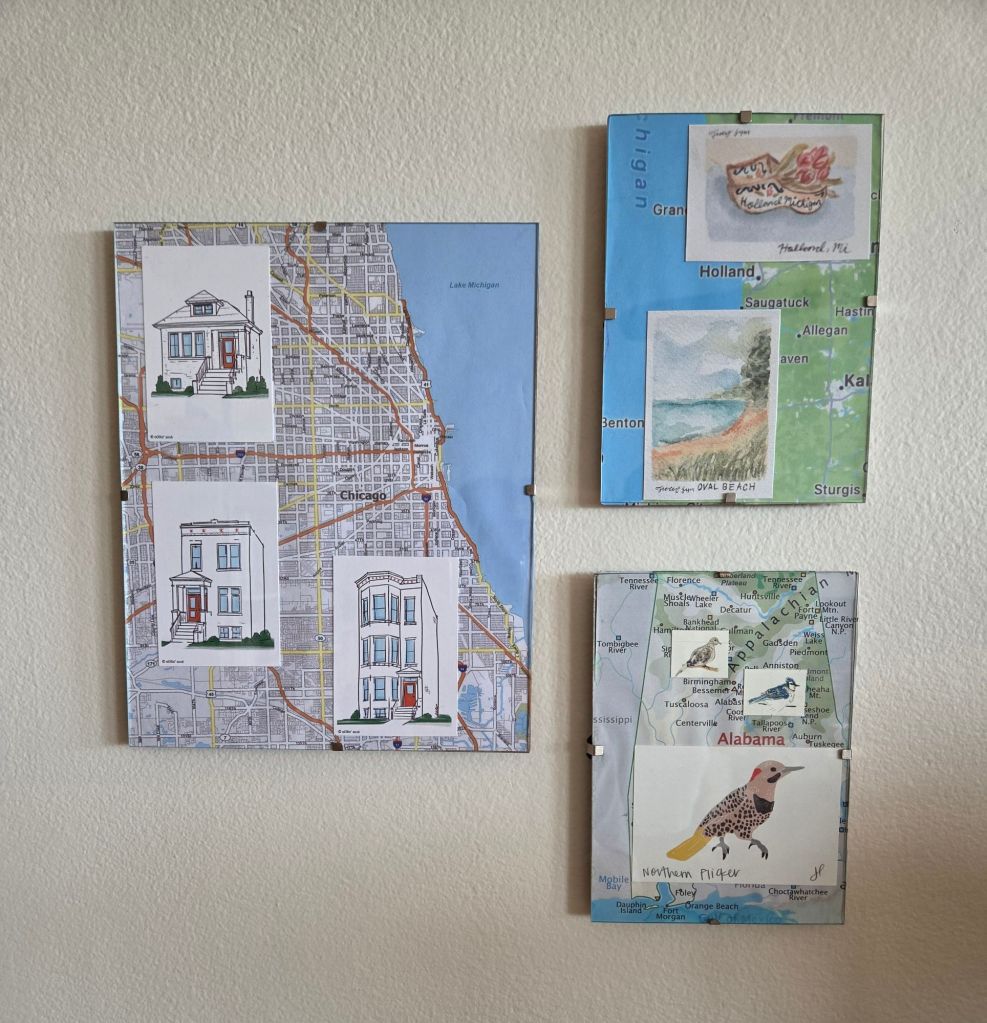
I loved the way all three look together but there isn’t much wall space left in our apartment so at first I thought they were going to have to stay in the bathroom but then I realized we had the perfect space.
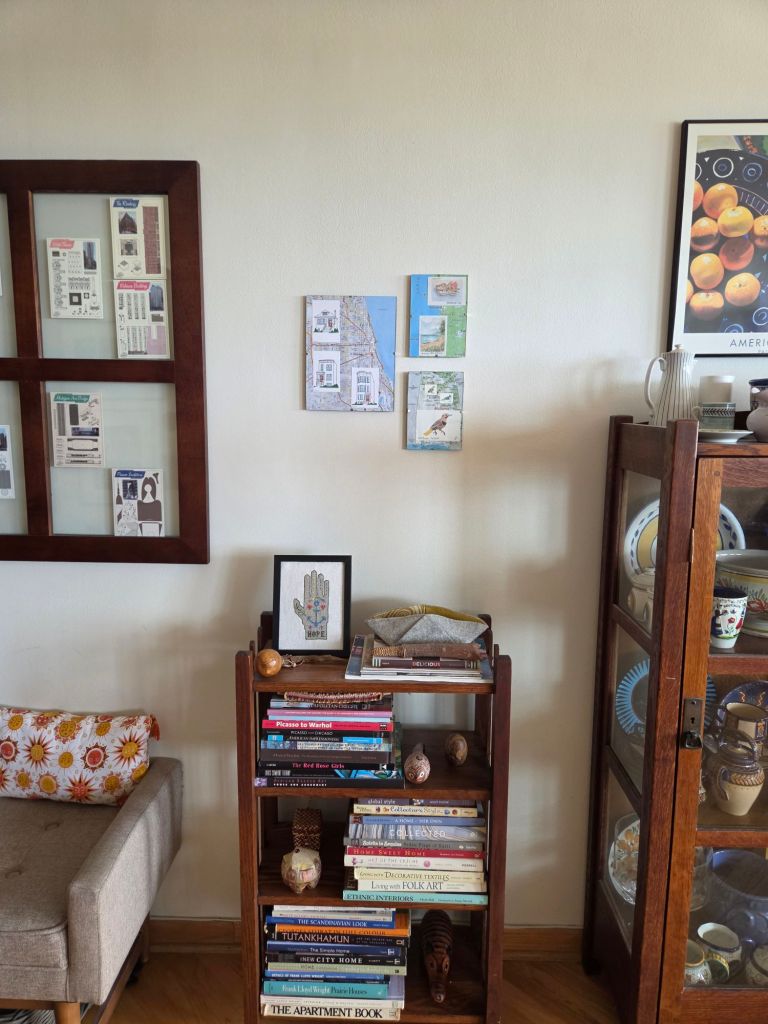
Now if we come across any other art print vending machines on our travels, we’ll have plenty of room for another map or two or …

In my last post I mentioned that I had stopped by the Mount Sinai Resale Shop the other day but I didn’t mention that I found two great pieces. The first one to catch my eye was an Oaxacan carved and painted piece. My first thought was that it was a cow but a staff person at the store called it a pig and now I’m not sure which it is.
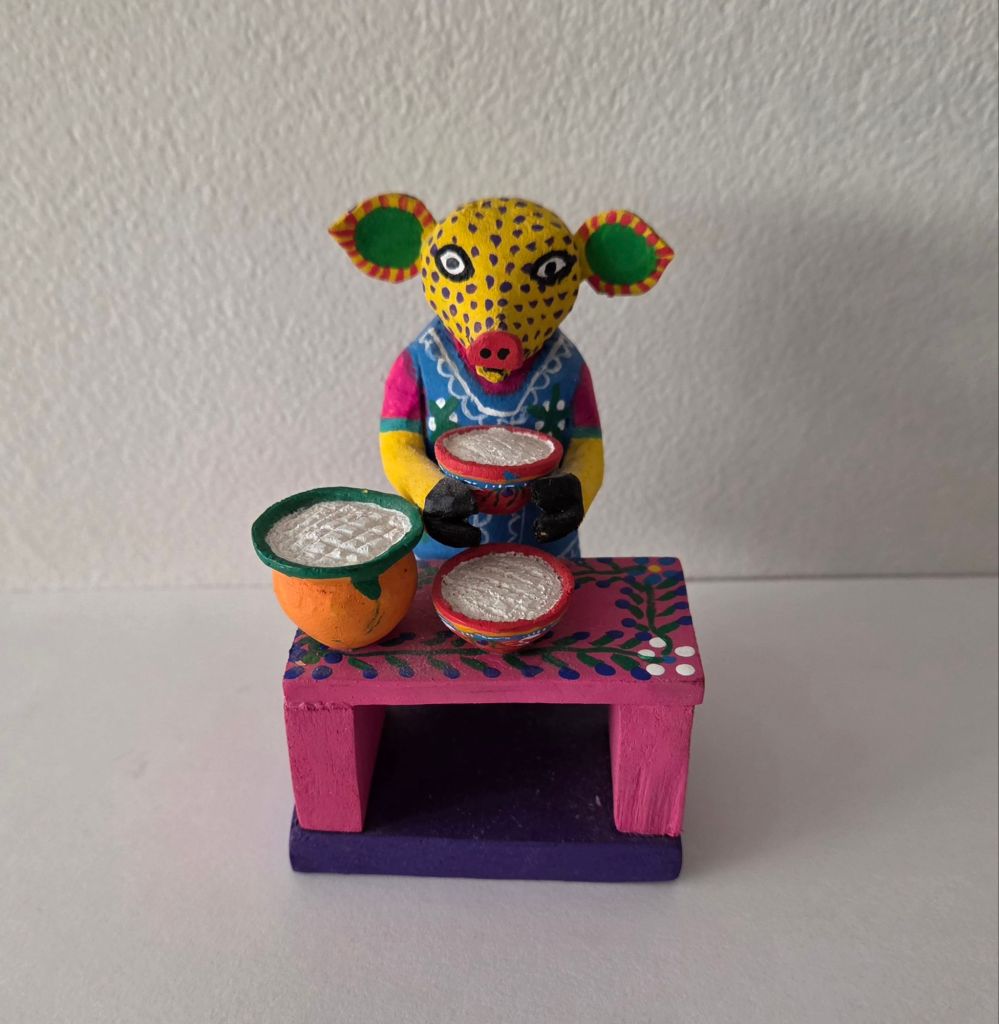
It is signed on the bottom in pencil rather than white ink as most of our Oaxacan pieces are.
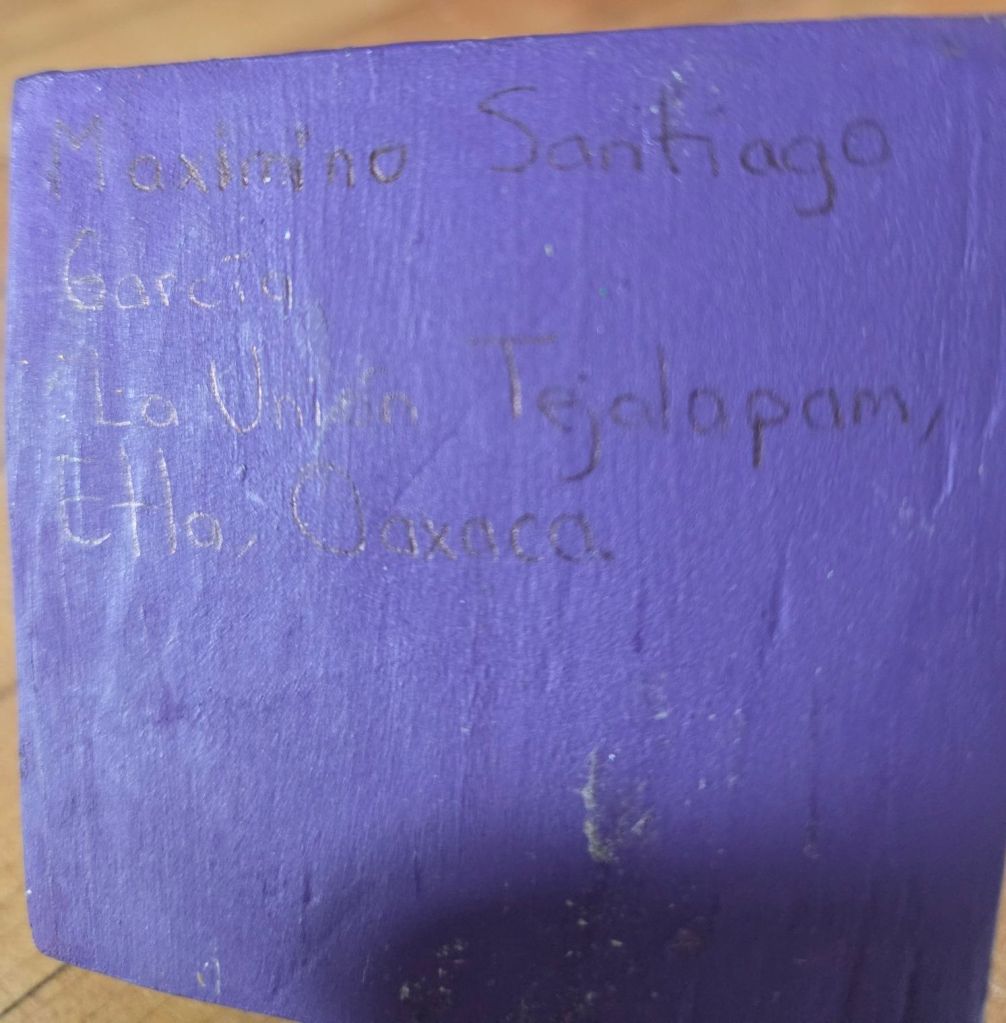
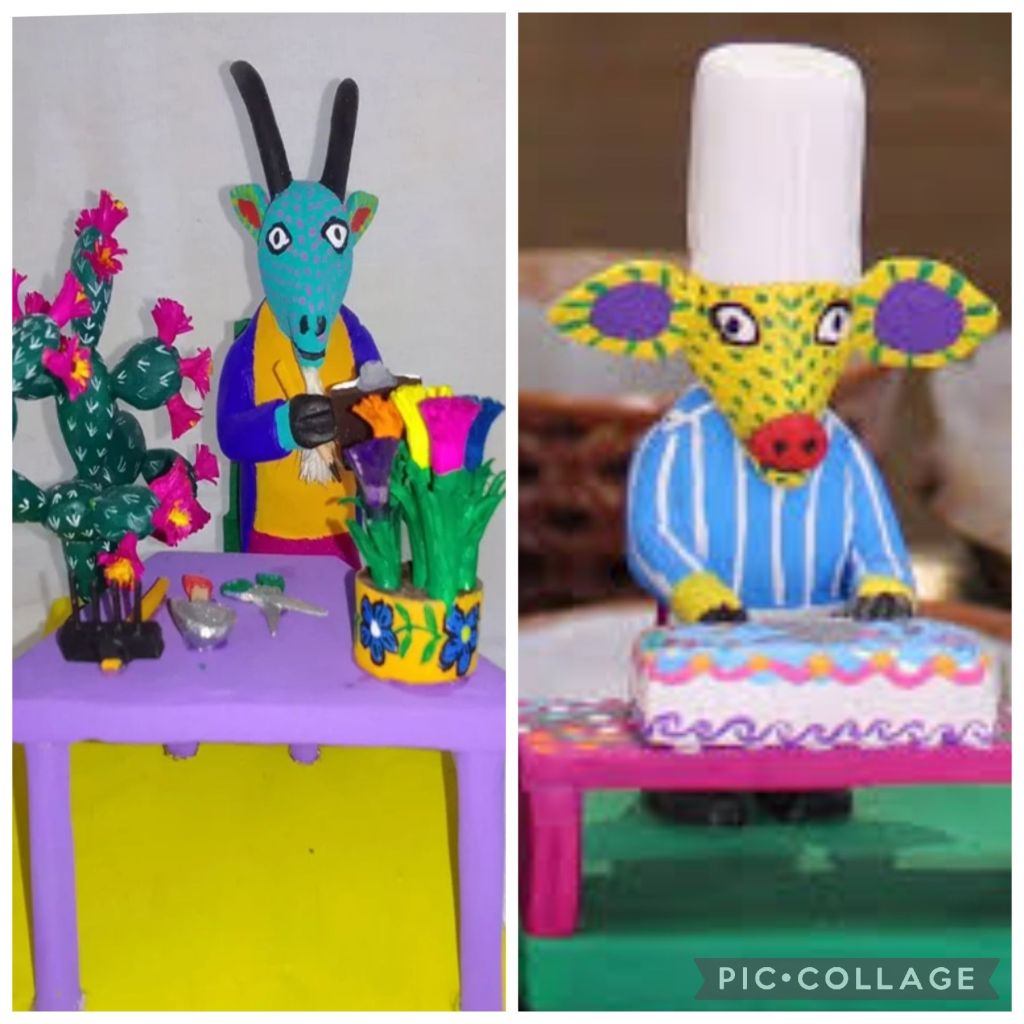
It is a bit hard to decipher but says Maximino Santiago Garcia, La Union Tejalapan, Etla, Oaxaco. I found a similar piece online by Maximino Bartola Santiago Garcia. His bio on the site Feria Maestros del Arte mentions that he works alongside six of his family members. I also found an almost identical piece credited to Maximino Santiago on an Oaxaco La Galeria le Mano Magica gallery’s Instagram post.
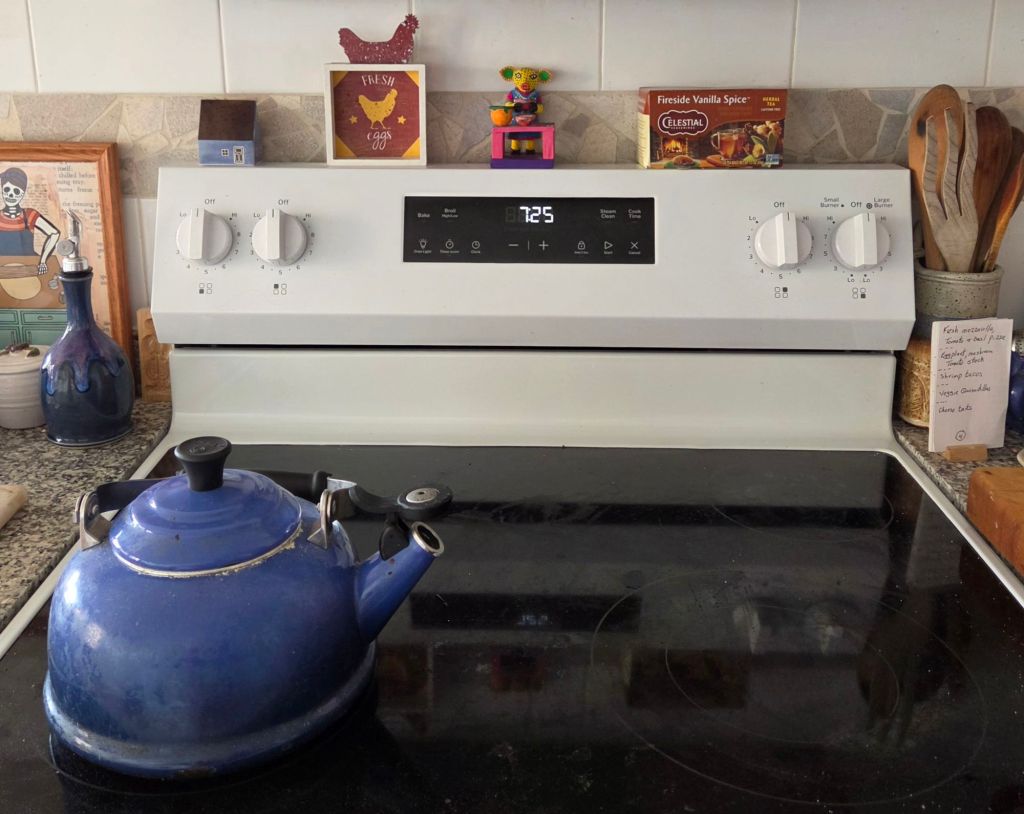
When we thought about where to display it we both thought it belonged in the kitchen and since we no longer have the small tin collection on the back of our stove we thought that would be the perfect place for it.
The second piece that caught my eye was a Matryoshka doll – except it wasn’t. While it had a seam, I didn’t think it could be opened and it seemed way too heavy. I could also hear a faint bell.
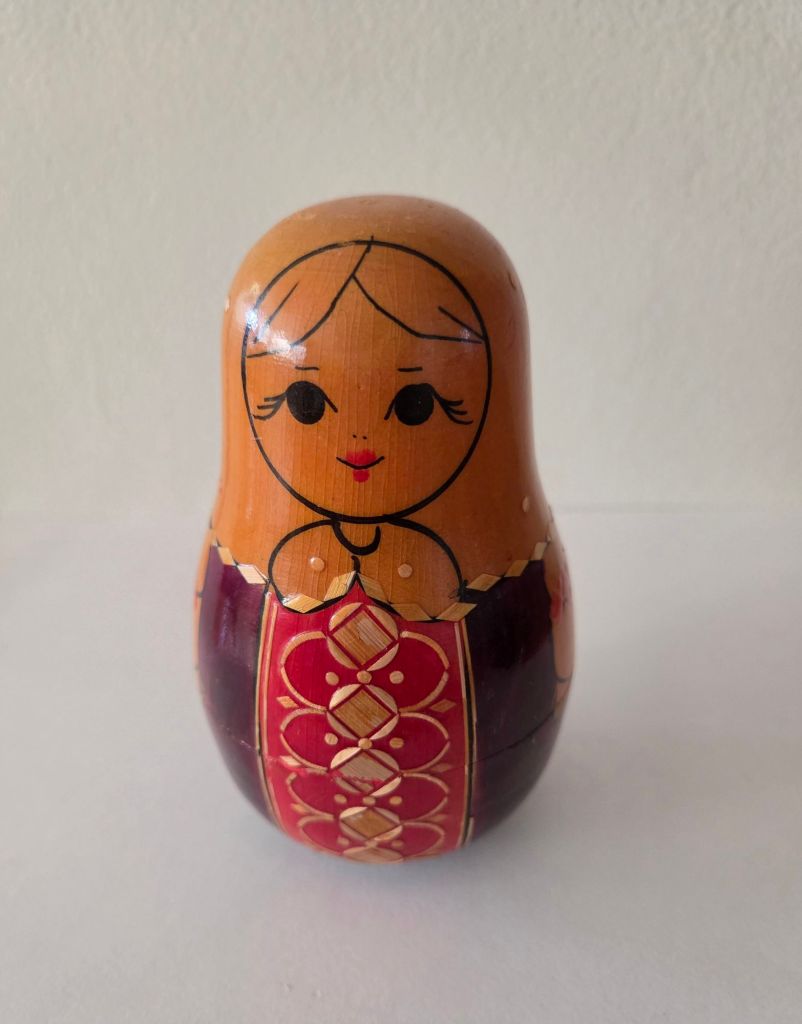
So I thought it must be the same thing as another piece with a much clearer bell that I had found at the table at the dump in Northampton.
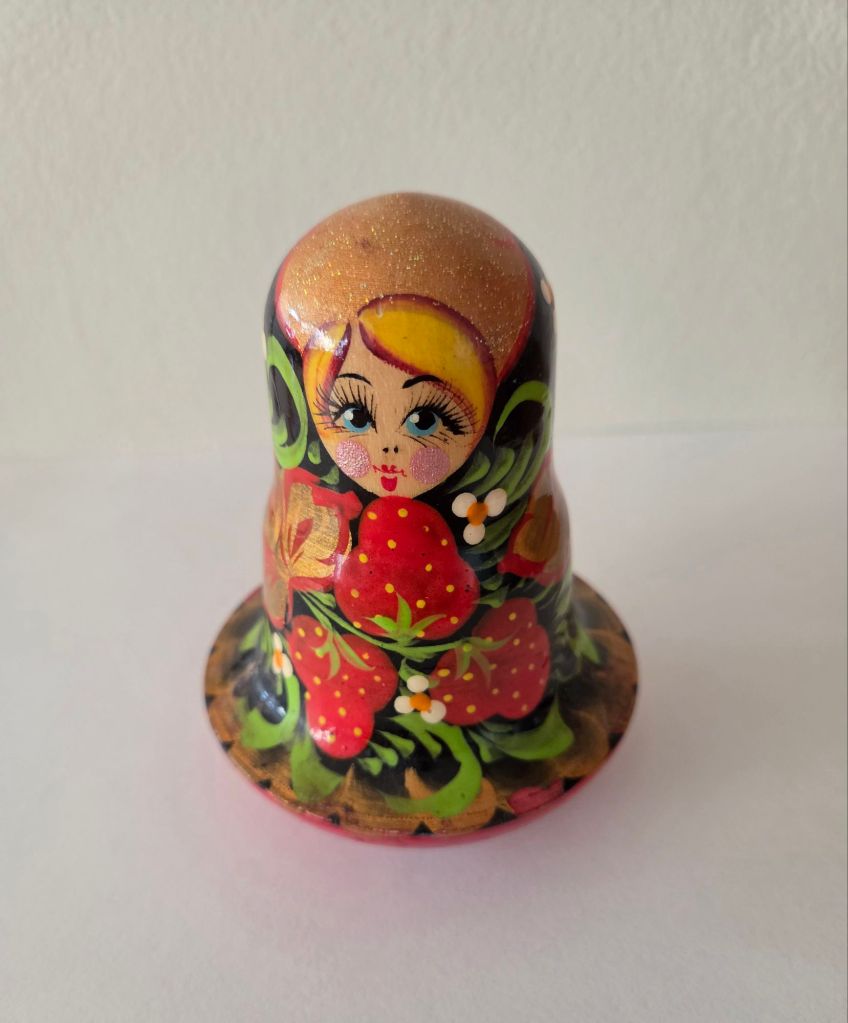
Googling their qualities led me to the Alkota Russian Treasures website and this description.
“Russian Rolly-Polly, called in Russia Nevalyazhka, or Vanka-Vstanka is a popular Russian doll. Instead of different people, or nests inside which can be opened in Matryoshka doll, Nevalyazhka has a bell inside and makes sound if you touch it or play with it. Russian nevalyashkas appeared in some parts of the European Russia in the beginning of the 20th century and quickly grew in popularity along with the rise of Matryoshka nesting dolls.”
It was also interesting to find out why it looks like you can open it. “The process of making a Russian Rolly-Polly involves making a blank out of wood, taking off the wood from the inside of the blank, putting a bell inside, glueing both parts (upper and lower) together and finally painting it.”
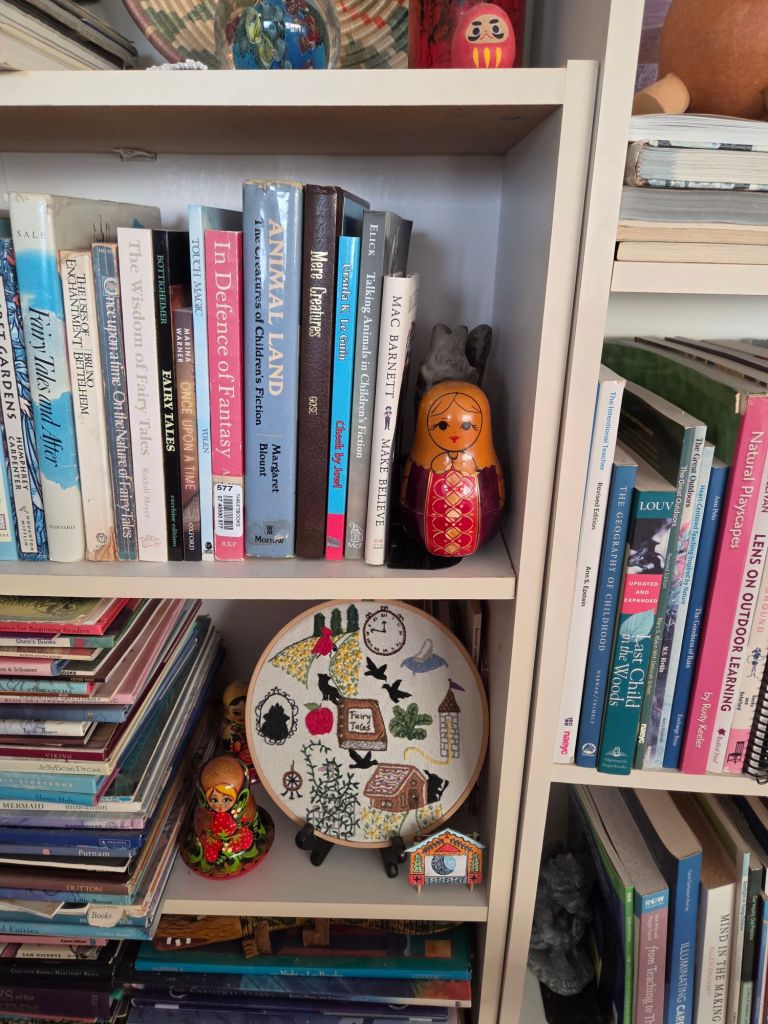
Another interesting thing about the new one is that it is embellished with straw marquetry. I might be running out of places for display so I tucked her in a space (in front of a gargoyle) above the other one and to the left of the matroyskas.

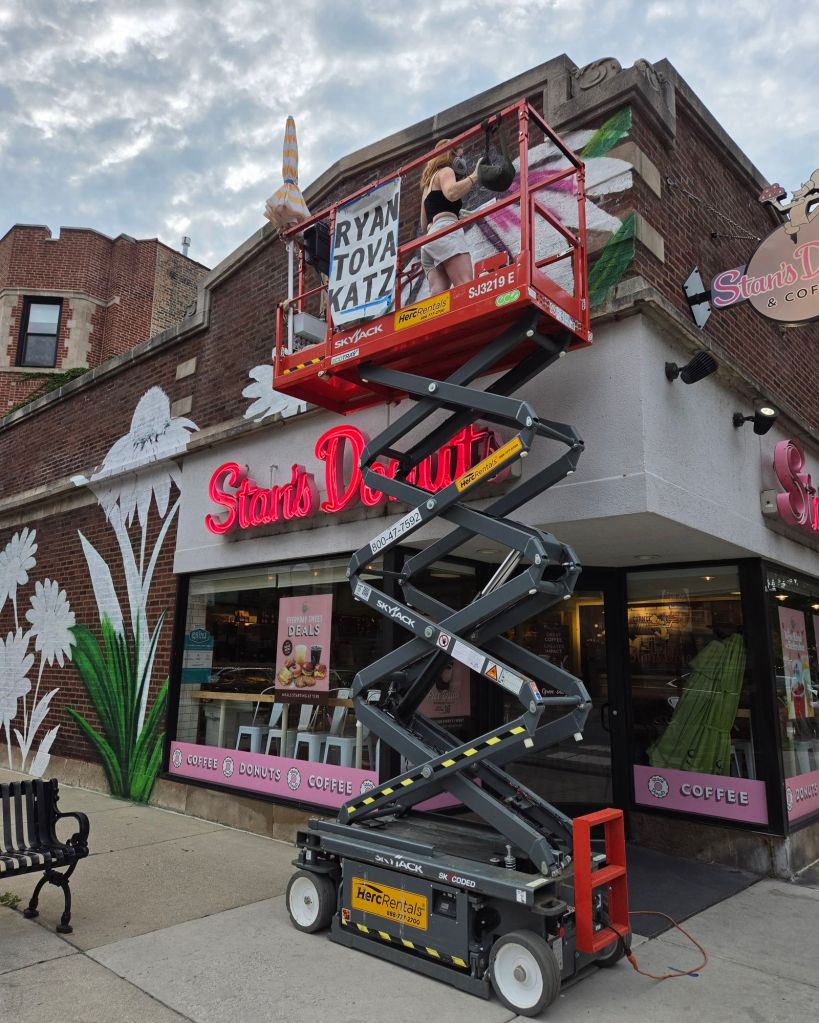
I was walking home from the gym one day when I was surprised to see a new mural in process. I was pleased to see that it was by Ryan Tova Katz whose murals I have admired before. It was finished a few days later.
Today I was walking to the hospital to get a routine follow up vascular scan of my arm and thinking about writing this blog post in the waiting room when I was surprised by two more Ryan Tova Katz murals on the new building on the corner of Belmont and Halstead.
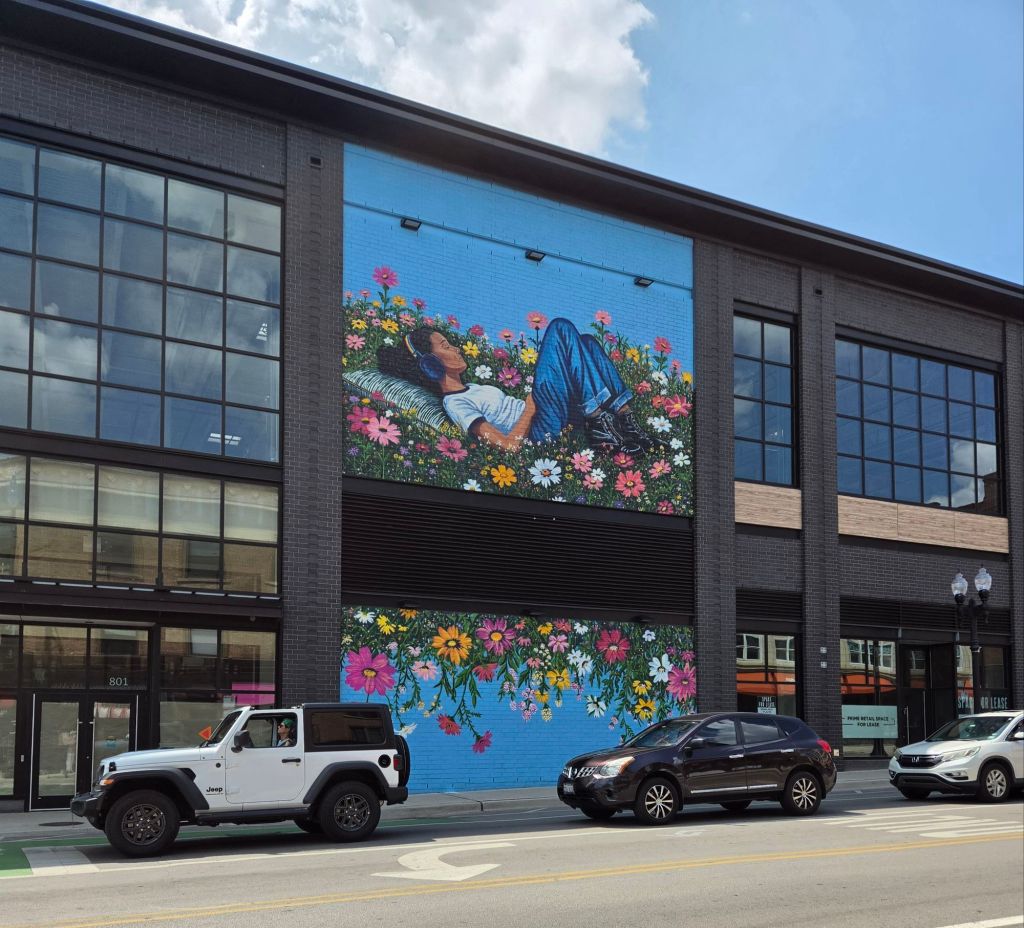
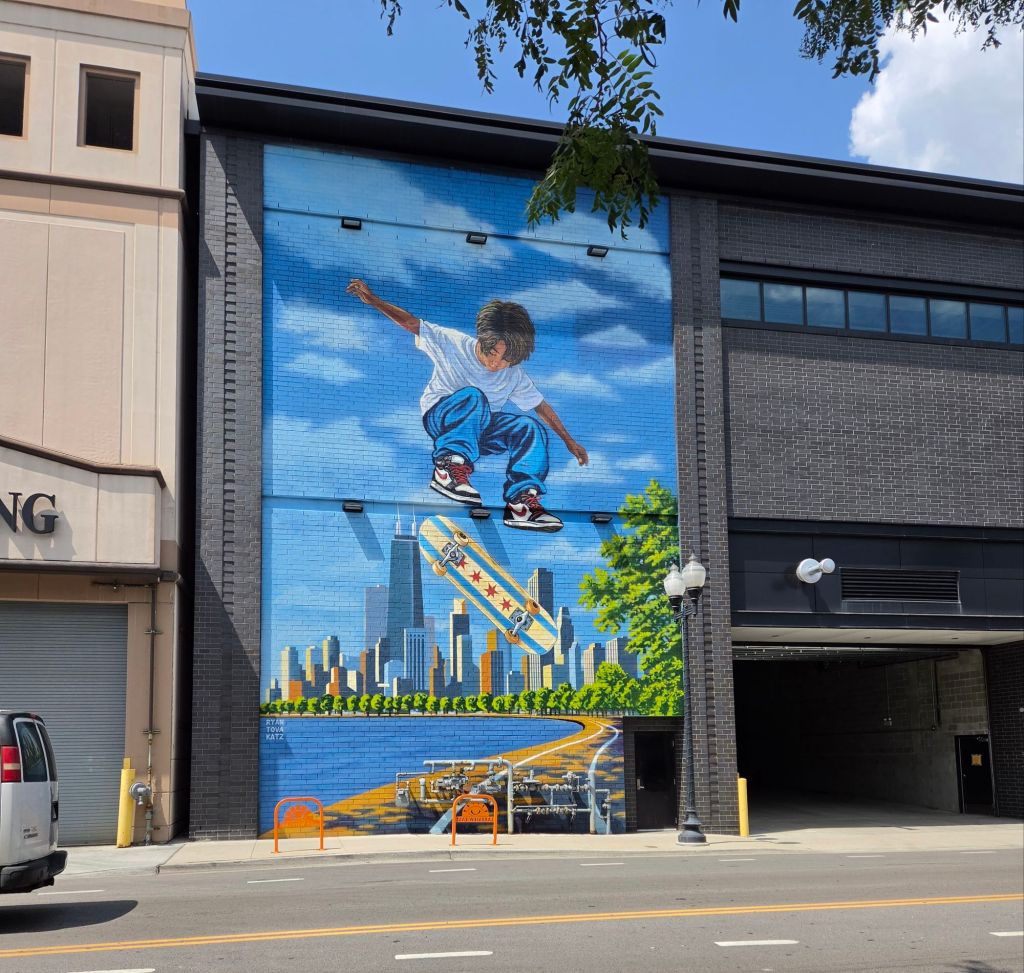
Ryan Tova Katz is a “professional artist and interior designer in Chicago specializing in murals, signs, interior and exterior painting” so I guess it’s no surprise that I’ve seen so many of her murals in Chicago. I’m so glad they’re appearing in my neighborhood.
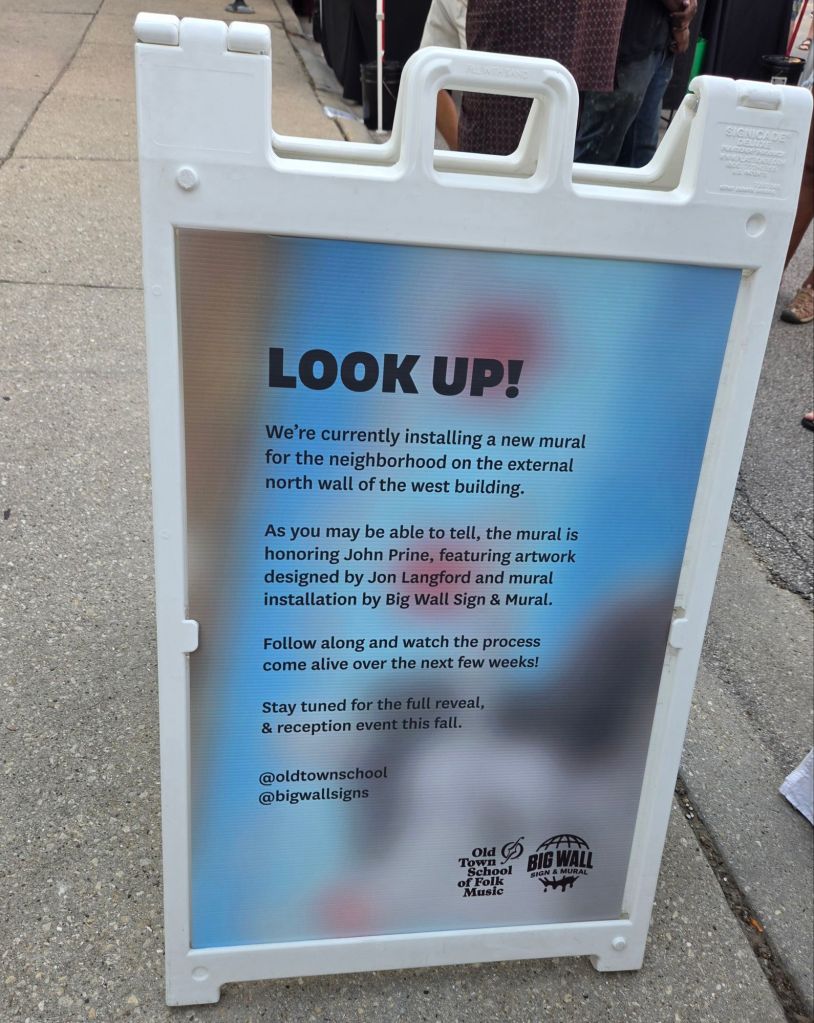
Our neighborhood isn’t the only one getting a new mural. At Square Roots we were directed to look up to see a new mural honoring John Prine on the Old Town School of Folk Music building. The mural was designed by Jon Langford.
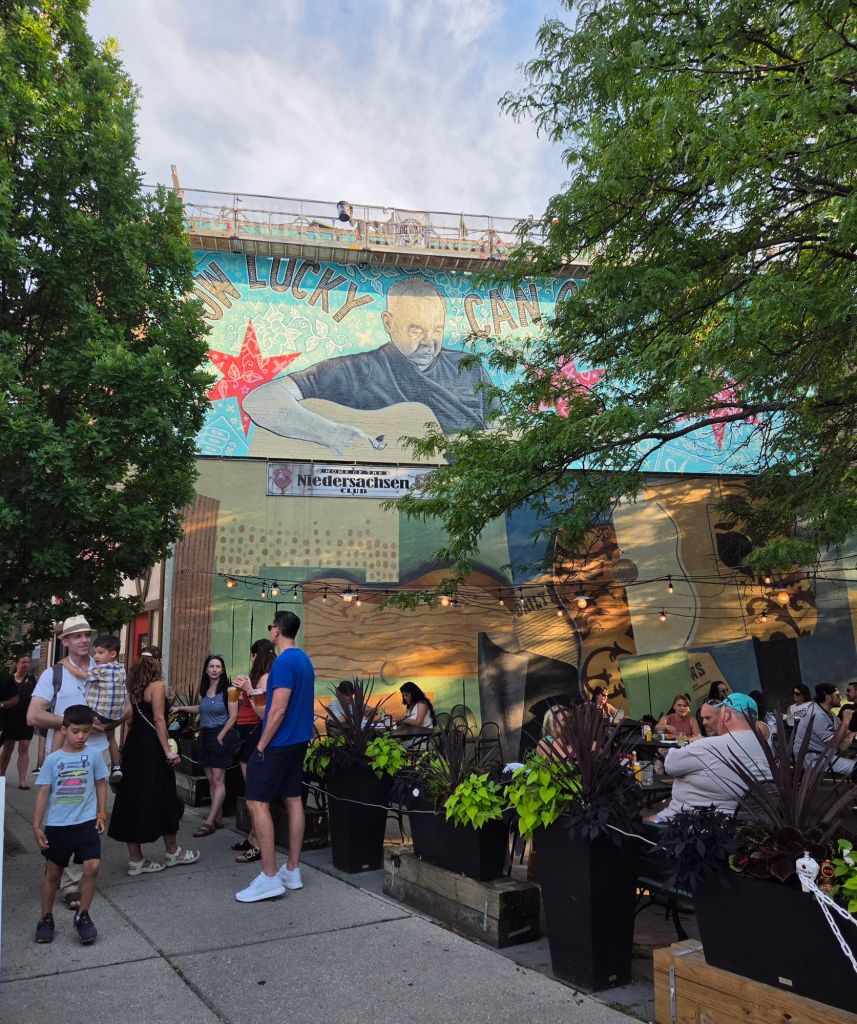
I became aware of Jon Langford at the gallery Yarddog in Austin, Texas. I loved his portraits of musicians but had to be content with postcards because the originals were way out of my price range. I was surprised when we moved to Chicago to find out that he is also a musician. If I had wondered at the connection between a Chicago artist and a gallery in Austin my confusion would have been cleared up as I read the book my husband gave me for my birthday about the founding of Bloodshot records – “The Hours are Long but the Pay is Low”. Rob Miller attributes a lot of Bloodshot’s success to the shows they played at Yarddog during South by Southwest which included Jon Langford and his band The Waco Brothers (a band I’d actually seen in Massachusetts but did not connect with the artist whose work I had admired at Yarddog and at an exhibit called Nashville Cats at the Country Music Hall of Fame and Museum). Since I still can’t afford an original Jon Langford I am happy that I could buy a “Give a Shi*t” t-shirt that featured one of his designs at a Square Roots Festival a few years ago and that everyone will get to appreciate the new mural.
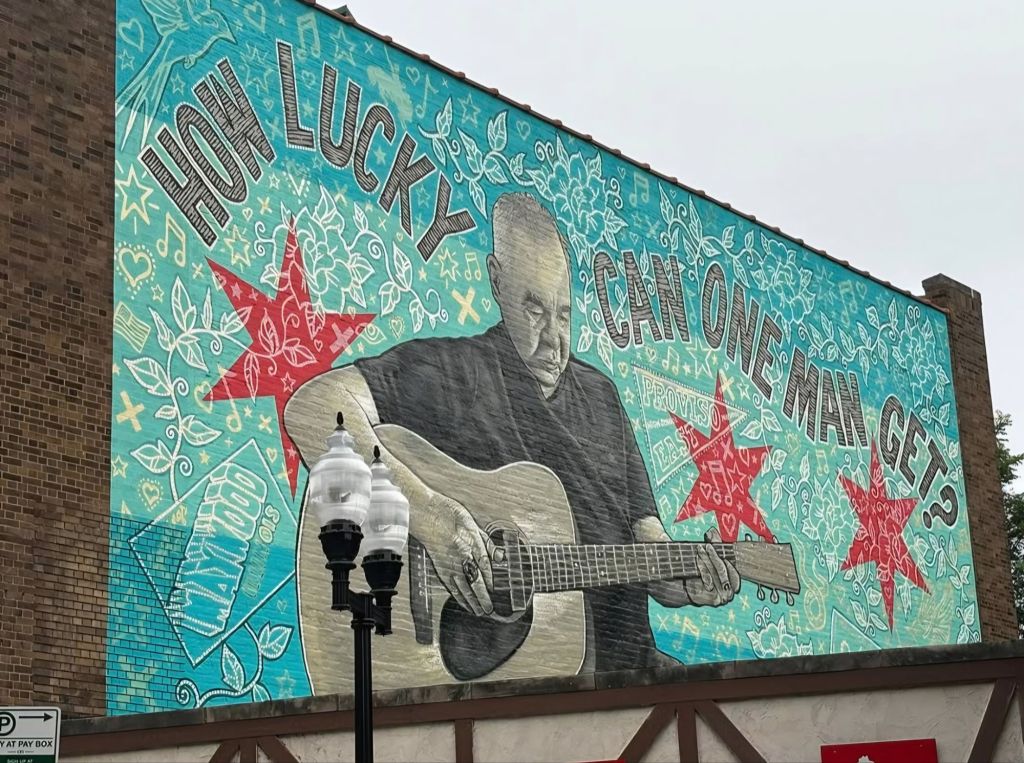
After I left the hospital today I walked over to the Mount Sinai Hospital Resale Shop in Clark where I saw this mural, I couldn’t resist taking a picture of it and including it in this post even though it’s clearly not a new one.

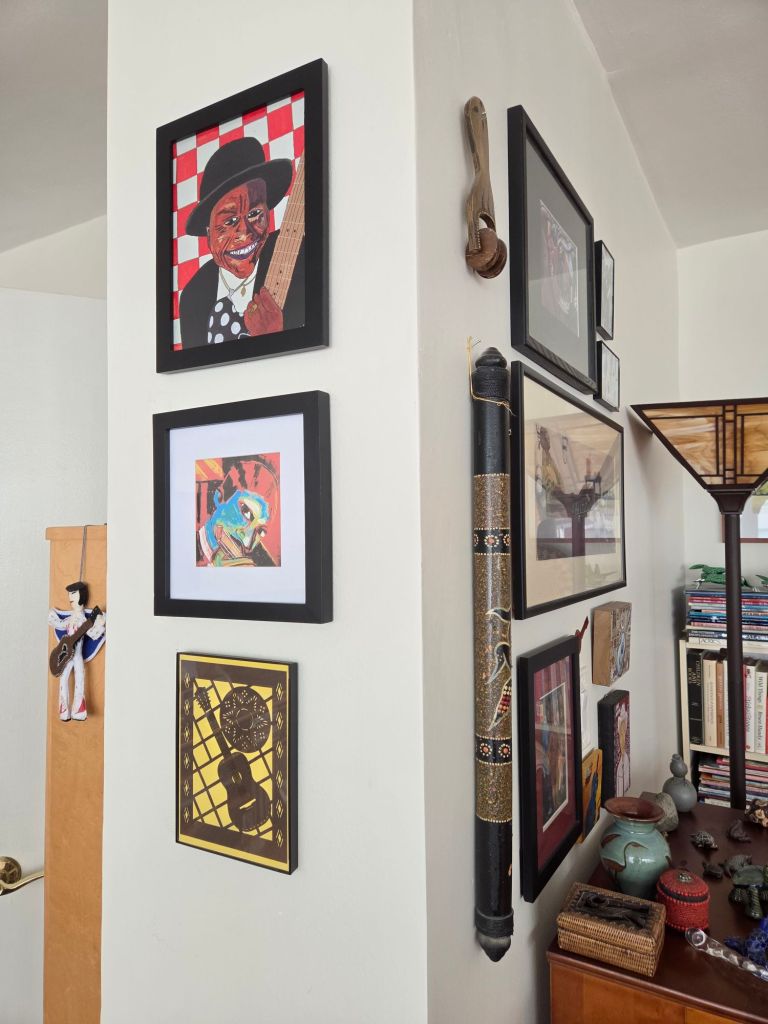
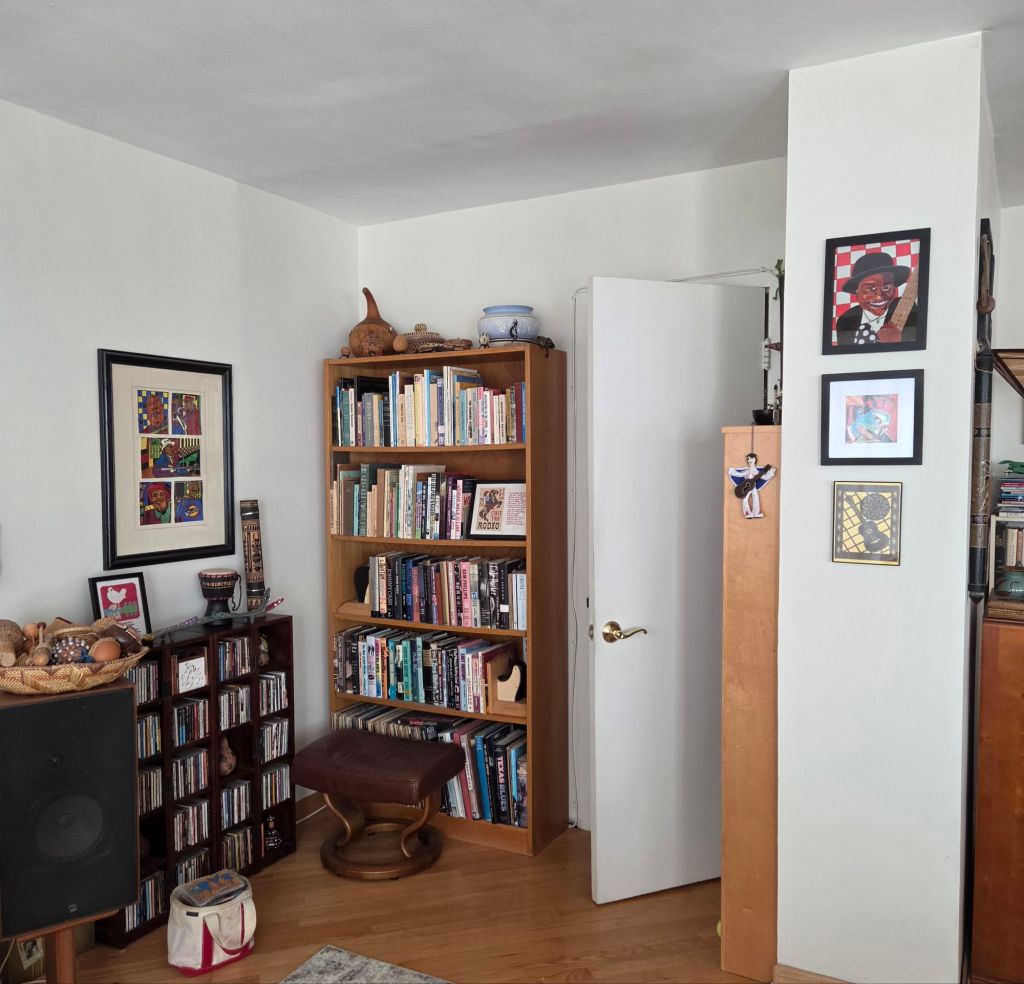
My birthday comes first and my daughter’s family gave me this Papel Picado guitar and sun by Chicago based artist Jason Guzman of Guzman Studio. My daughter bought it at her favorite new neighborhood store “Hey I Thought of You” and it’s as if that space in our living room was waiting for it. I backed it with yellow cardstock to coordinate with the background of the guitar painting we got in Texas around the corner and to accentuate the yellow in some of the other prints.
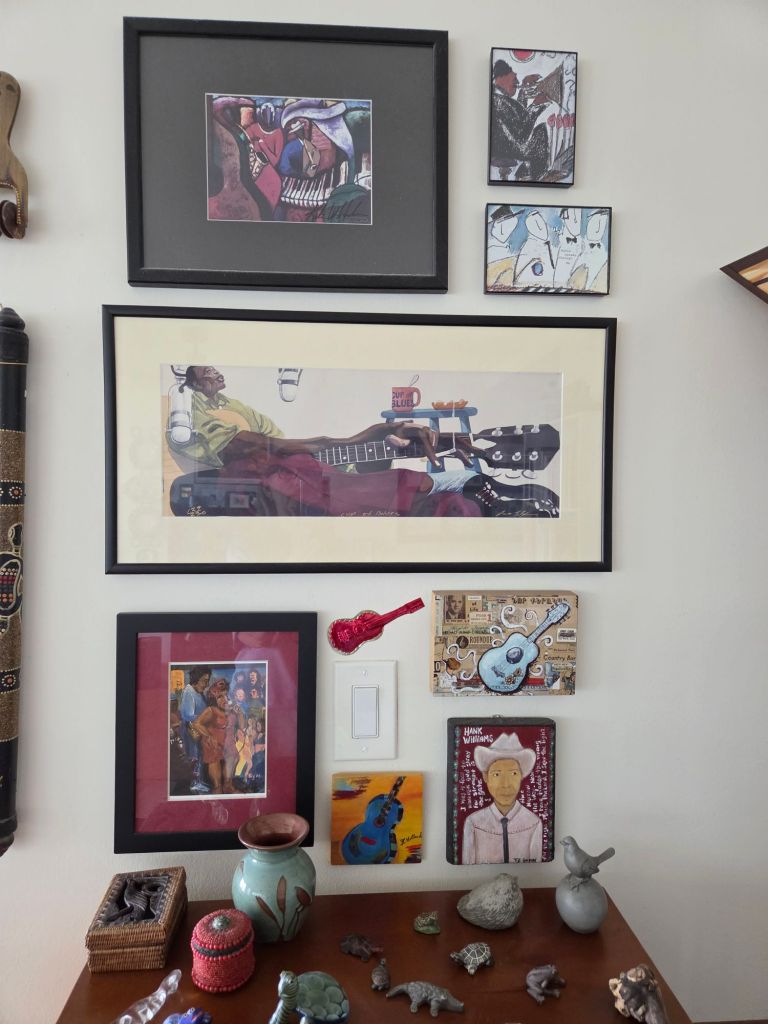
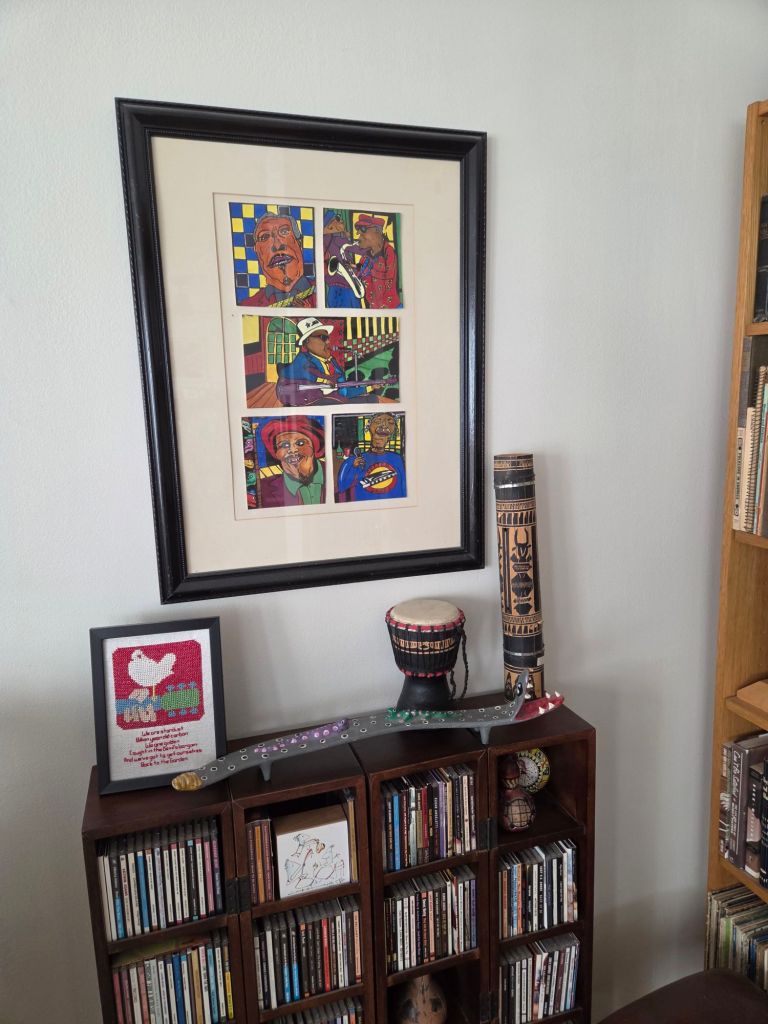
I also like the way the yellow highlights the squares in the background and relates to the checkerboards and other yellow areas in the blues portraits by Denise Beaudet across the way.
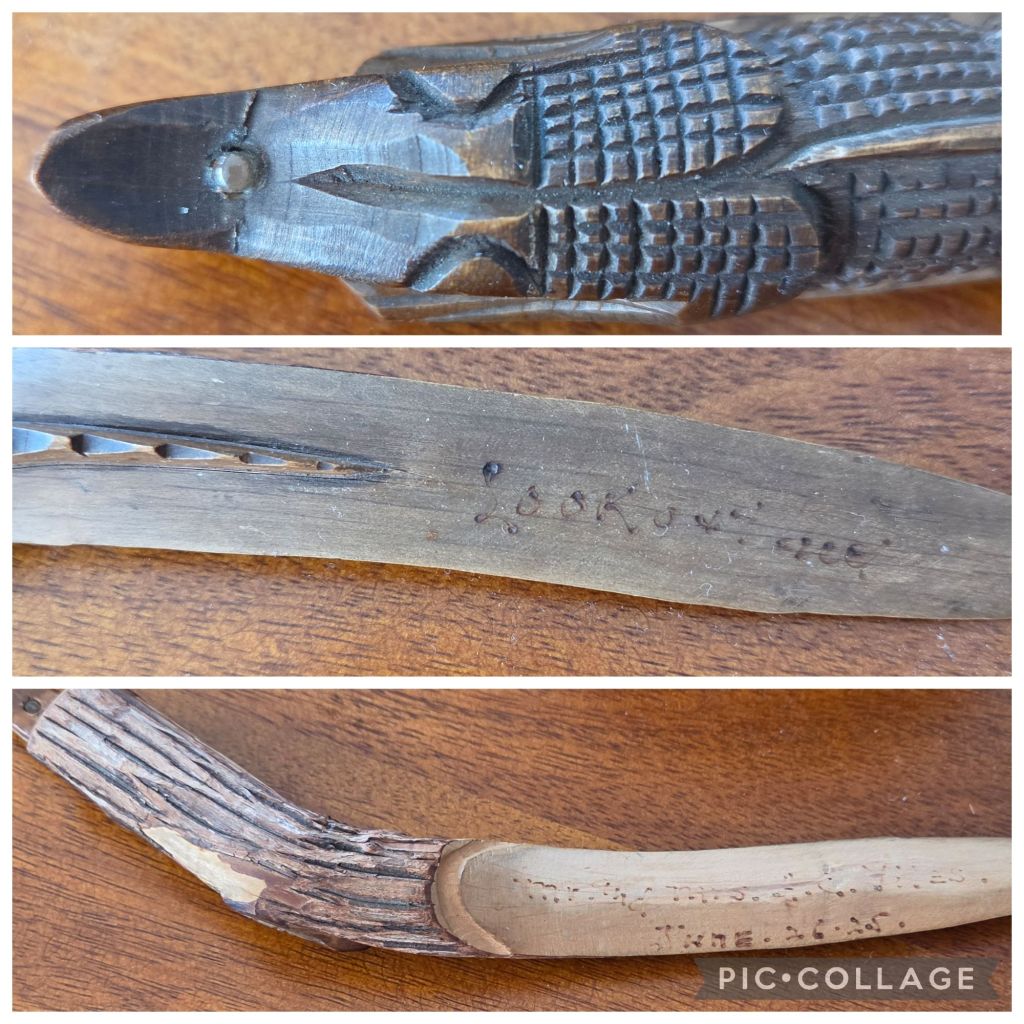
My husband’s birthday was next and I couldn’t resist getting him the alligator letter opener I’d seen a couple of times at the Intuit Art Museum gift shop.
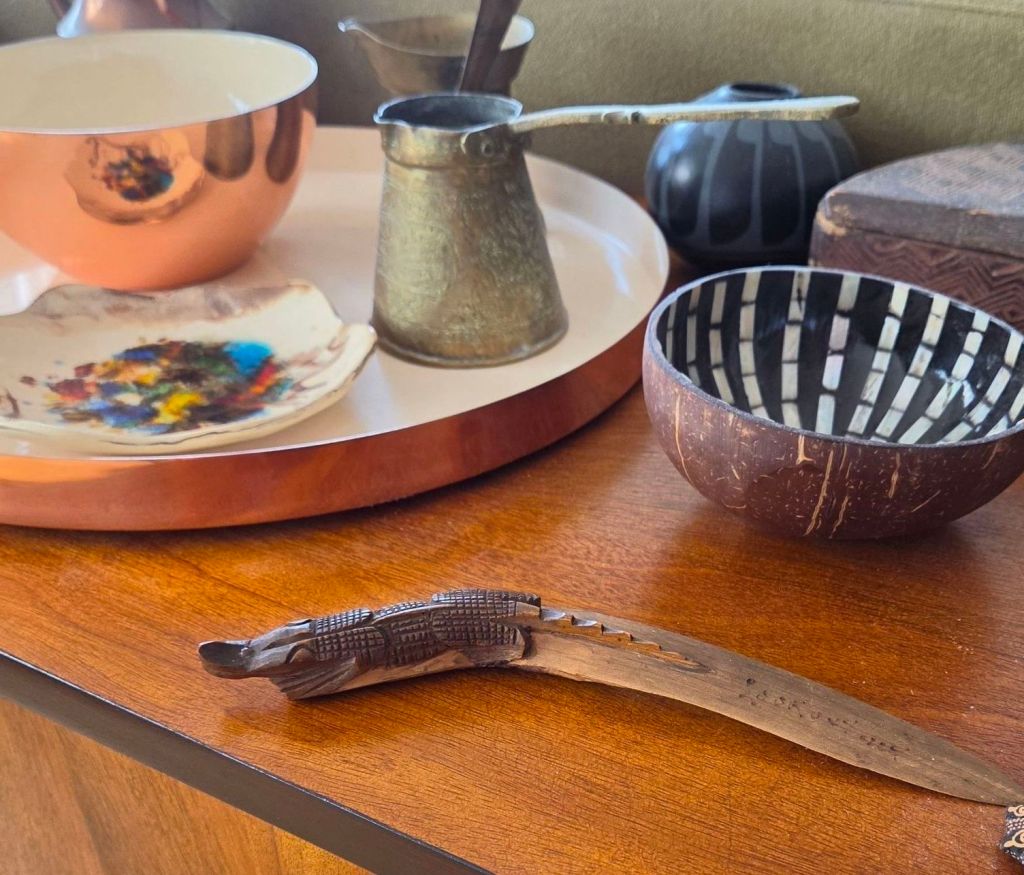
I loved the way he emerged from the wood and the way the scales were carved and burned or stained. I noticed the glittery eye or something on the top of his head and I could see carved writing on the front and the back of the letter opener but hadn’t been able to decipher it.
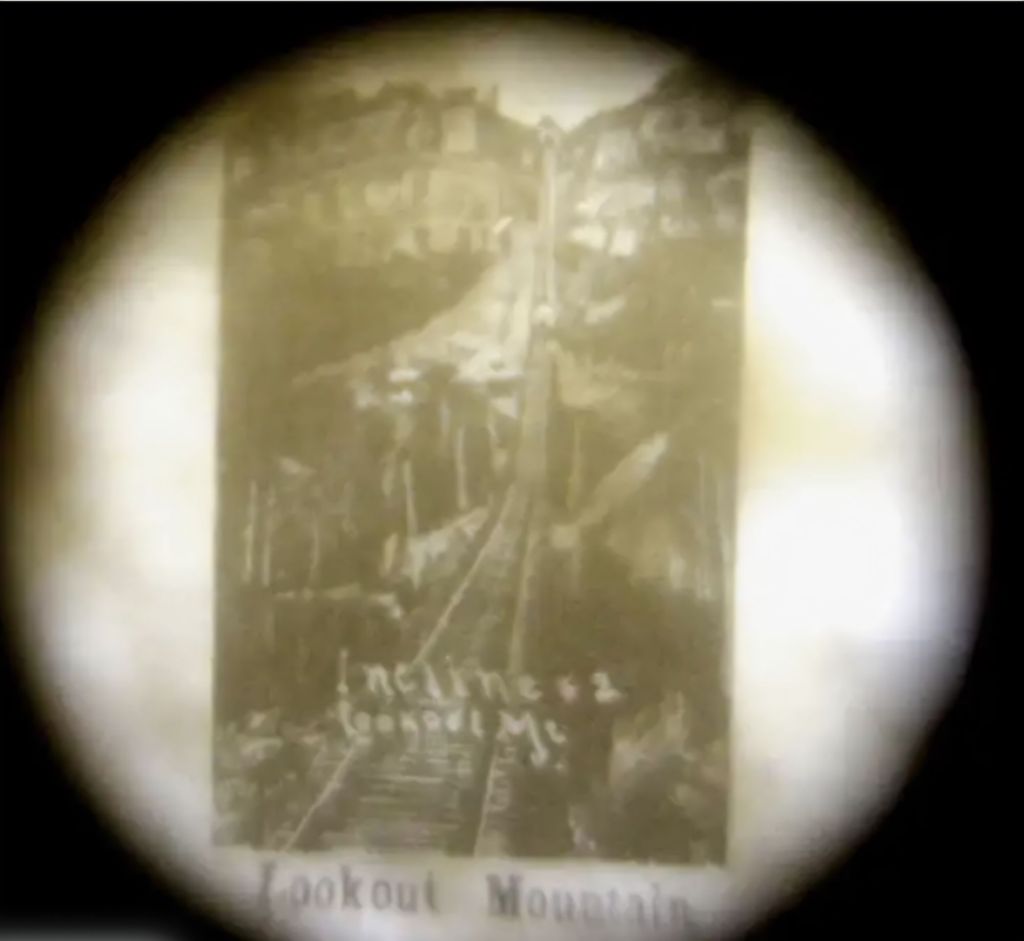
It turns out it comes from Lookout Mountain, Tennessee and the little “eye” is a Stanhope Micro Lens, a tiny optical viewer, that depicts a feature of Lookout Mountain. Ours isn’t that easy to see but you can see there is a picture in there. I did find a close up of the Lookout Mountain incline railway that is in another one that was for sale on the Ruby Lane website.
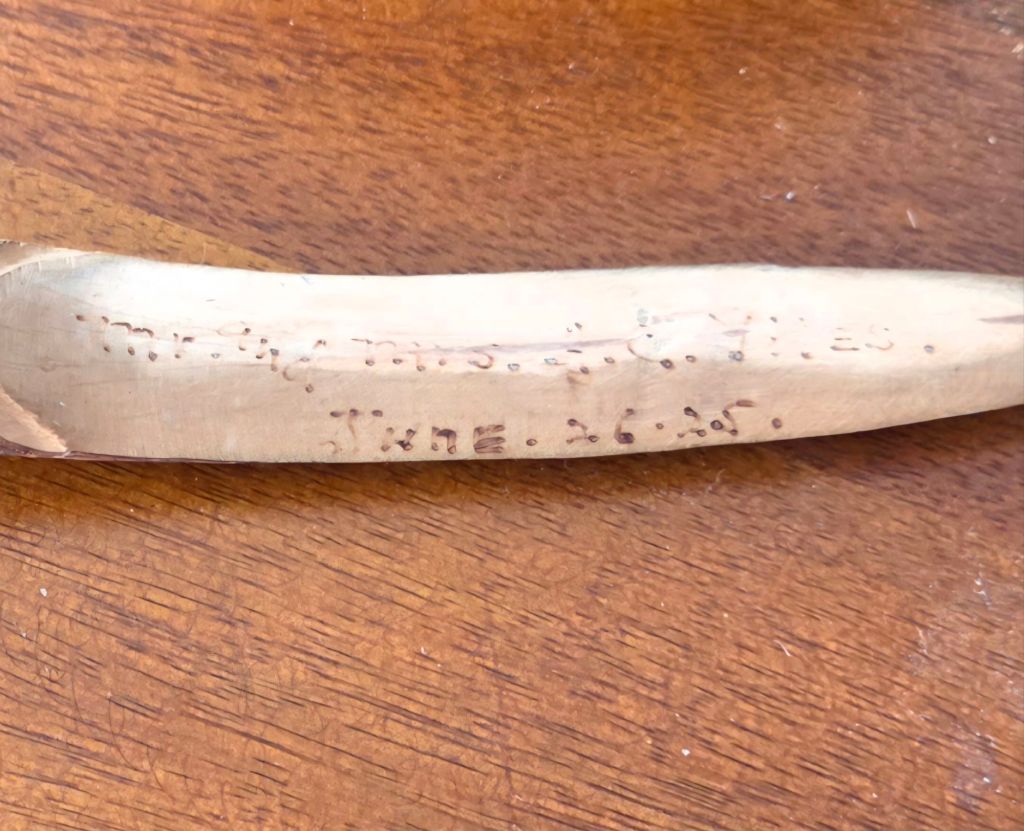
The souvenir letter openers were carved out of hickory or a similar wood by local craftspeople starting after the Civil War and into the 1920’s. Most aren’t signed but ours is signed and dated (June 26 – 25).
I think this alligator turned out to be even cooler than I originally thought he was!

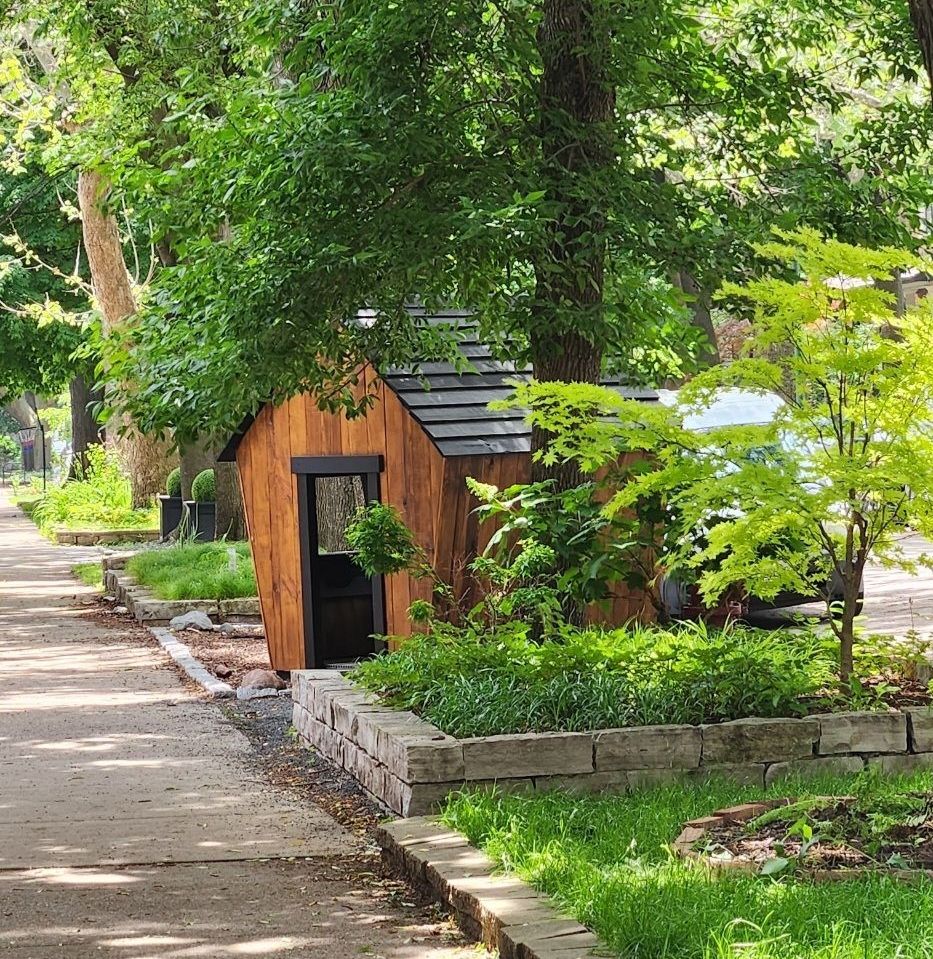
I’ve written before about the incredible things people add to that strip between the road and the sidewalk (I always have to look up what it’s called and this time Google’s AI informed me that in Chicago it’s called the parkway) but still I was shocked when I was on my way to the dentist and saw that someone had built a house on the strip!


