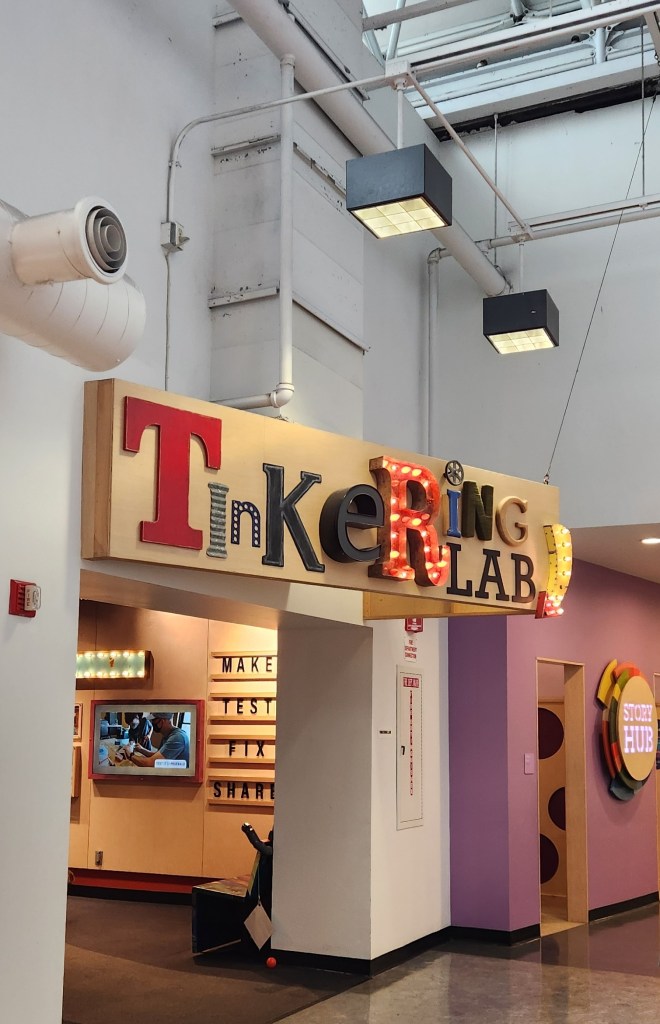
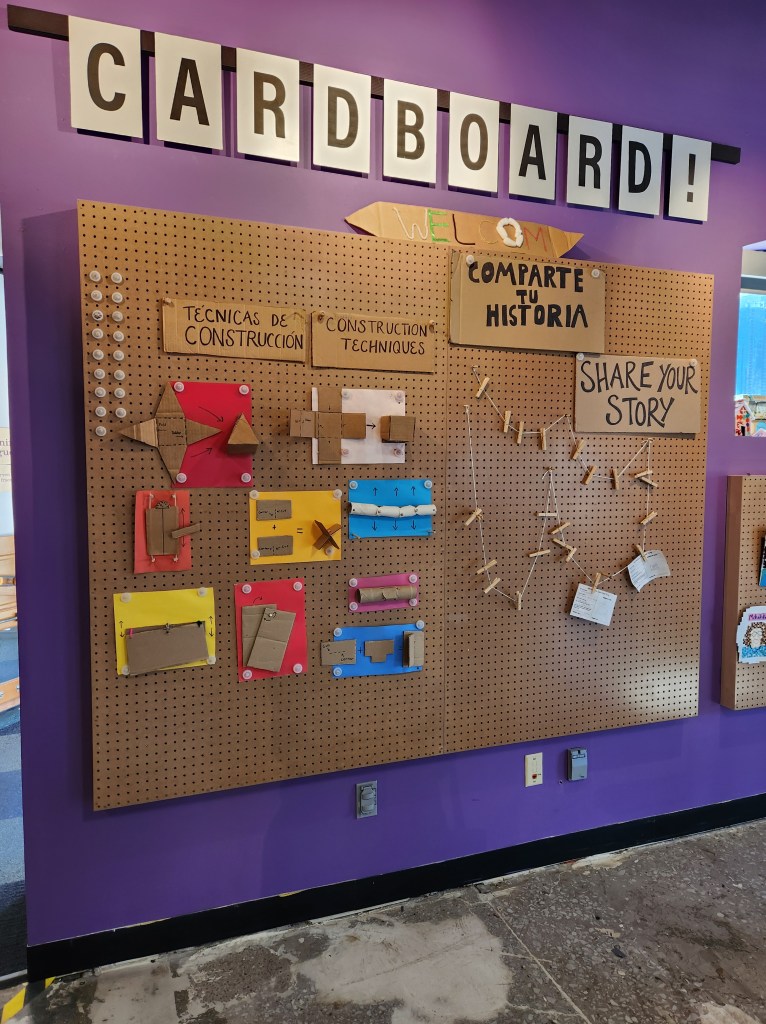

I’ve written about the Chicago Children’s Museum Art Studio often, but I don’t think I’ve written about my other favorite space – The Tinkering Lab.
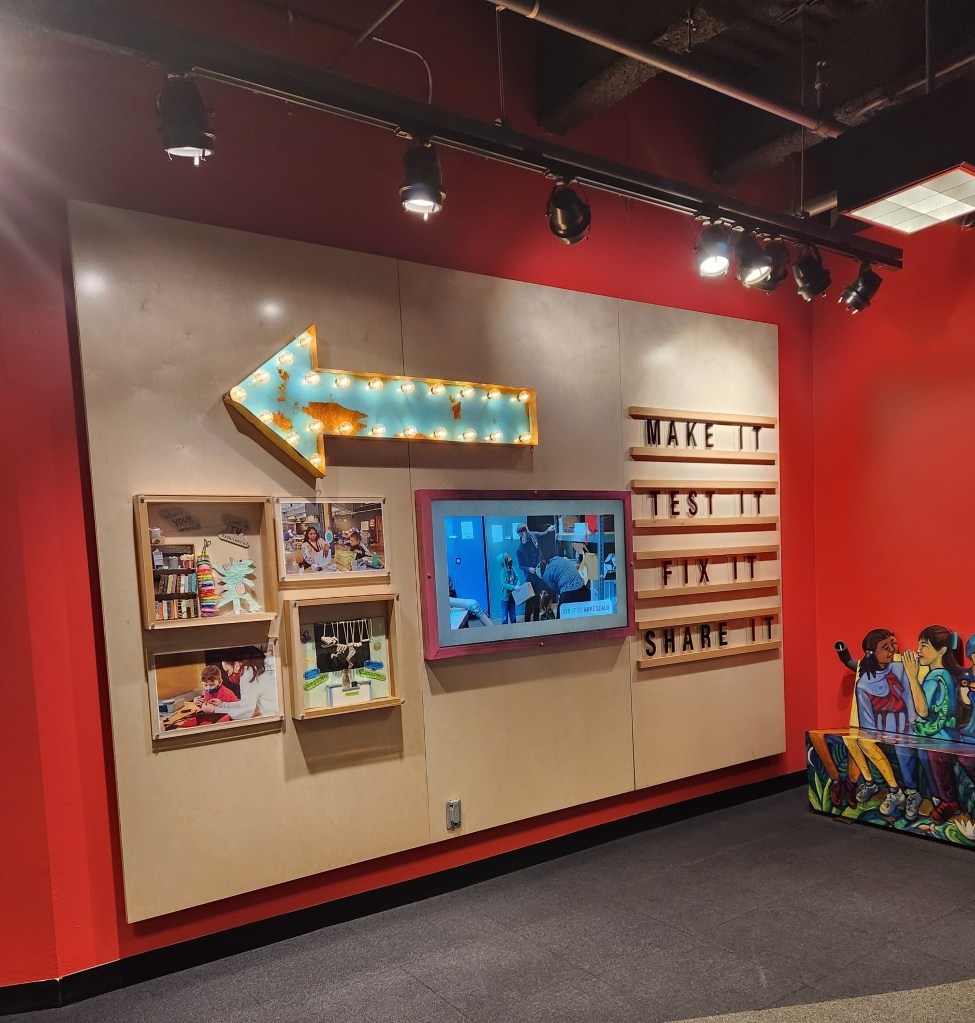


The entrance highlights the guiding principle of tinkering – Make it, Test it, Fix it, Share it which is really evident in the recent program – mini museums.
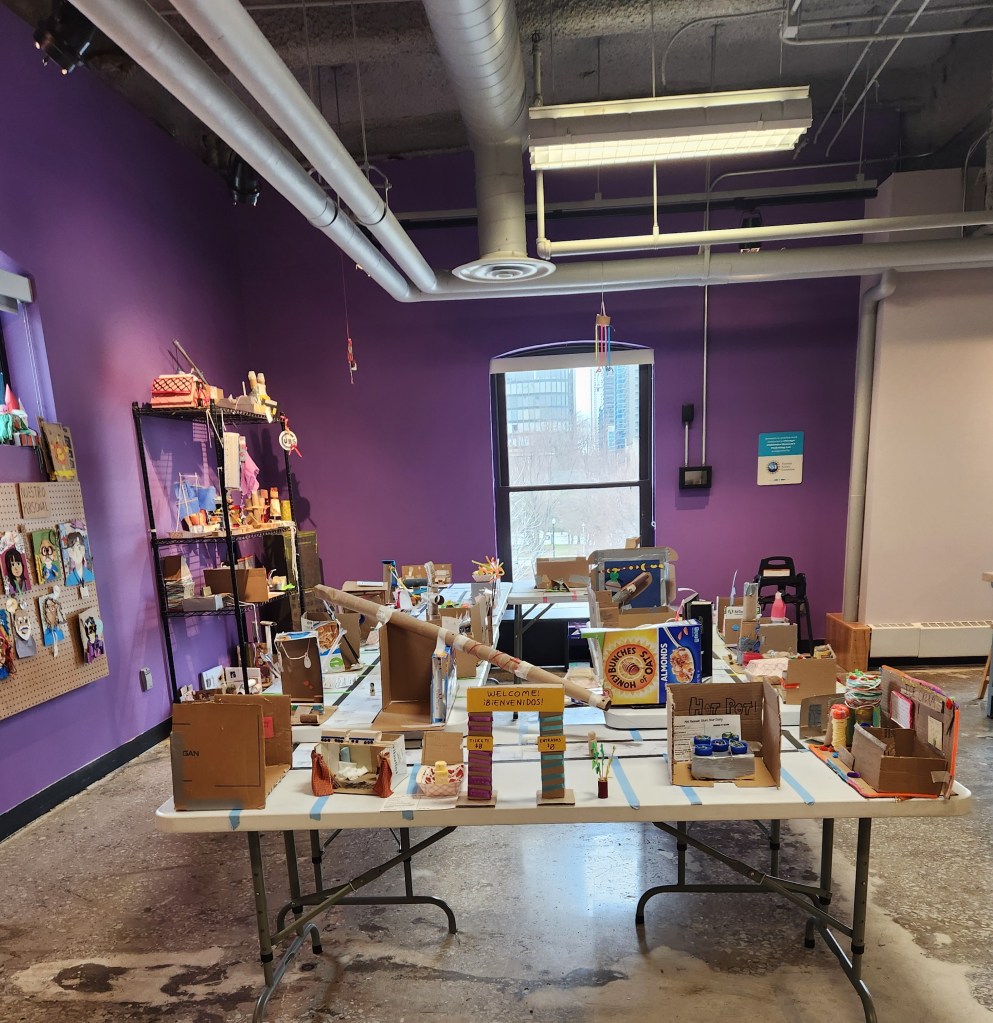
I got to experience the program as a guest with my youngest granddaughter and checked out the exhibits a couple of other times as well. Here are some of my favorites:

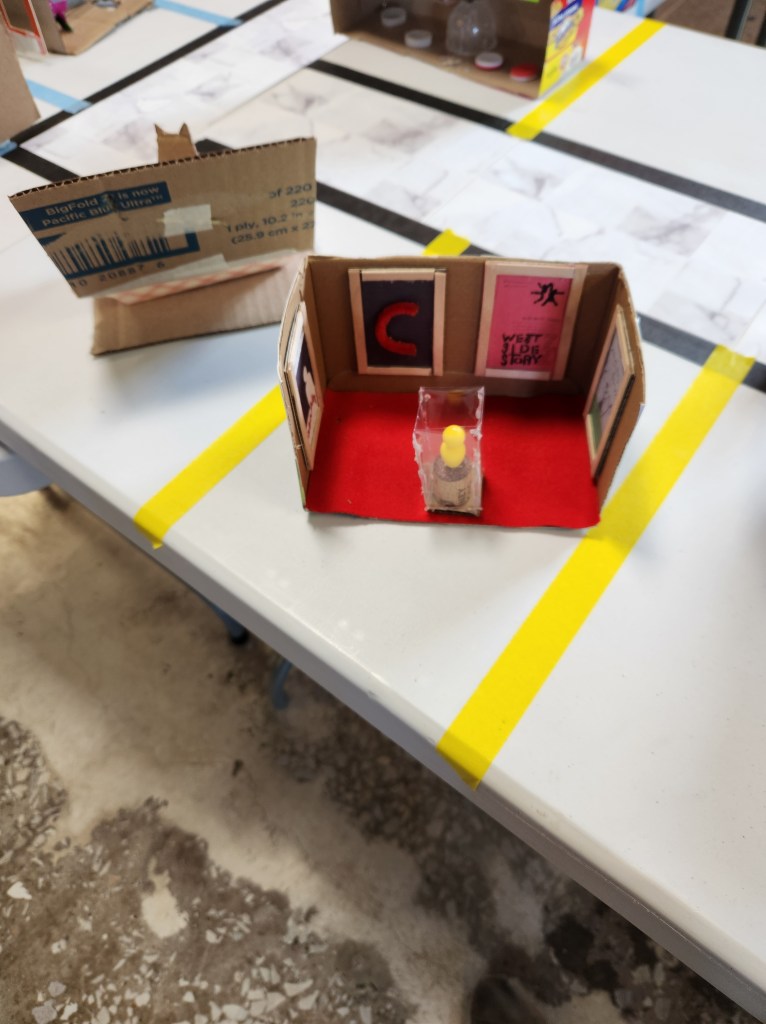
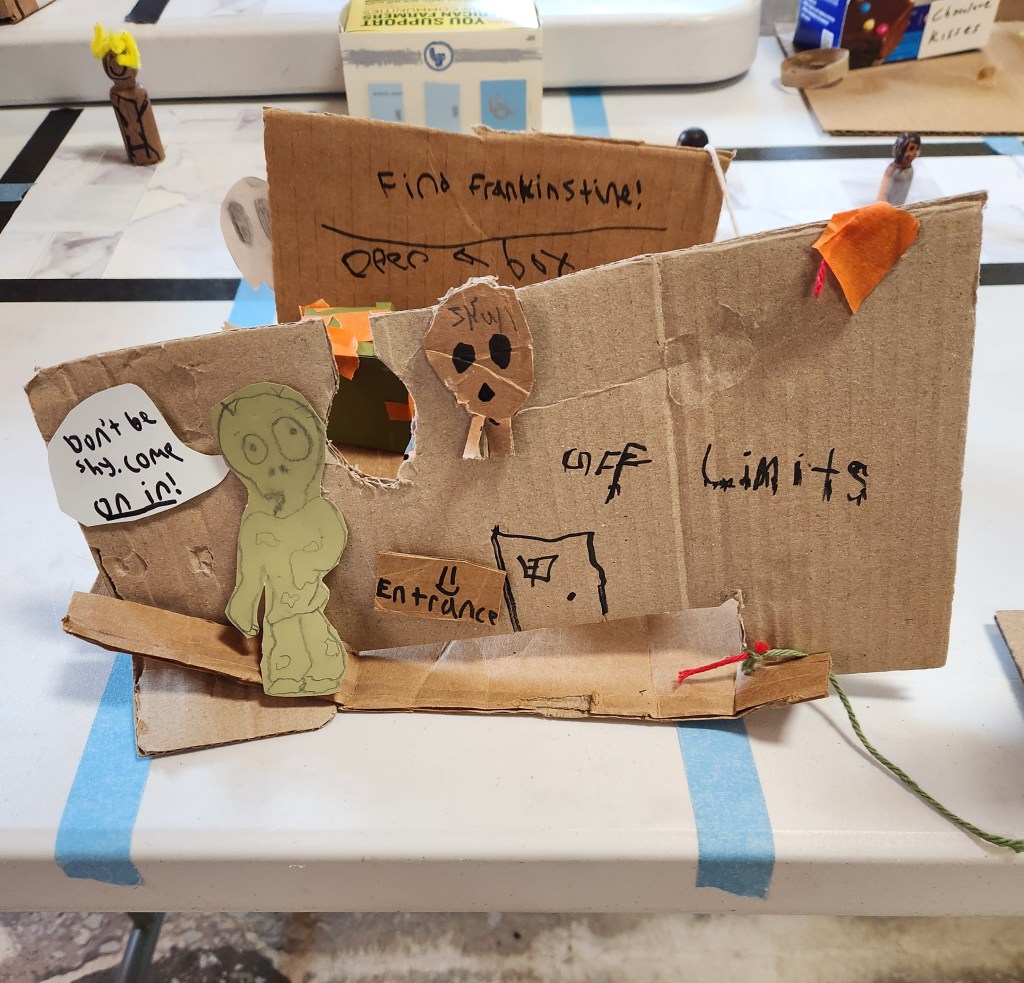


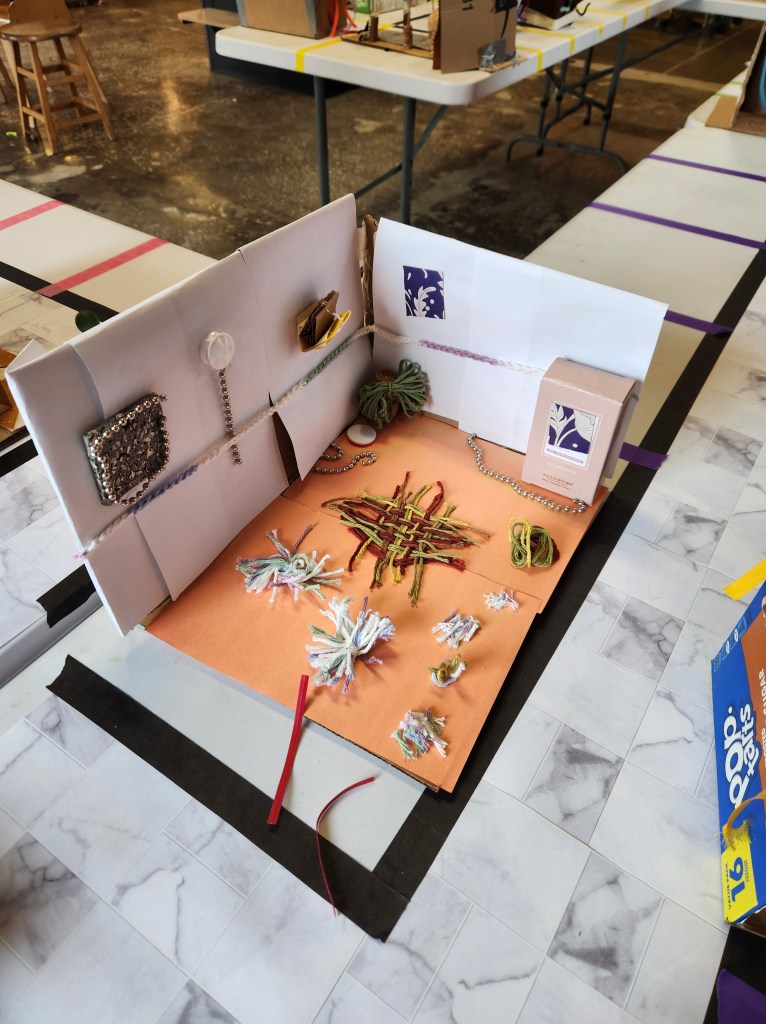


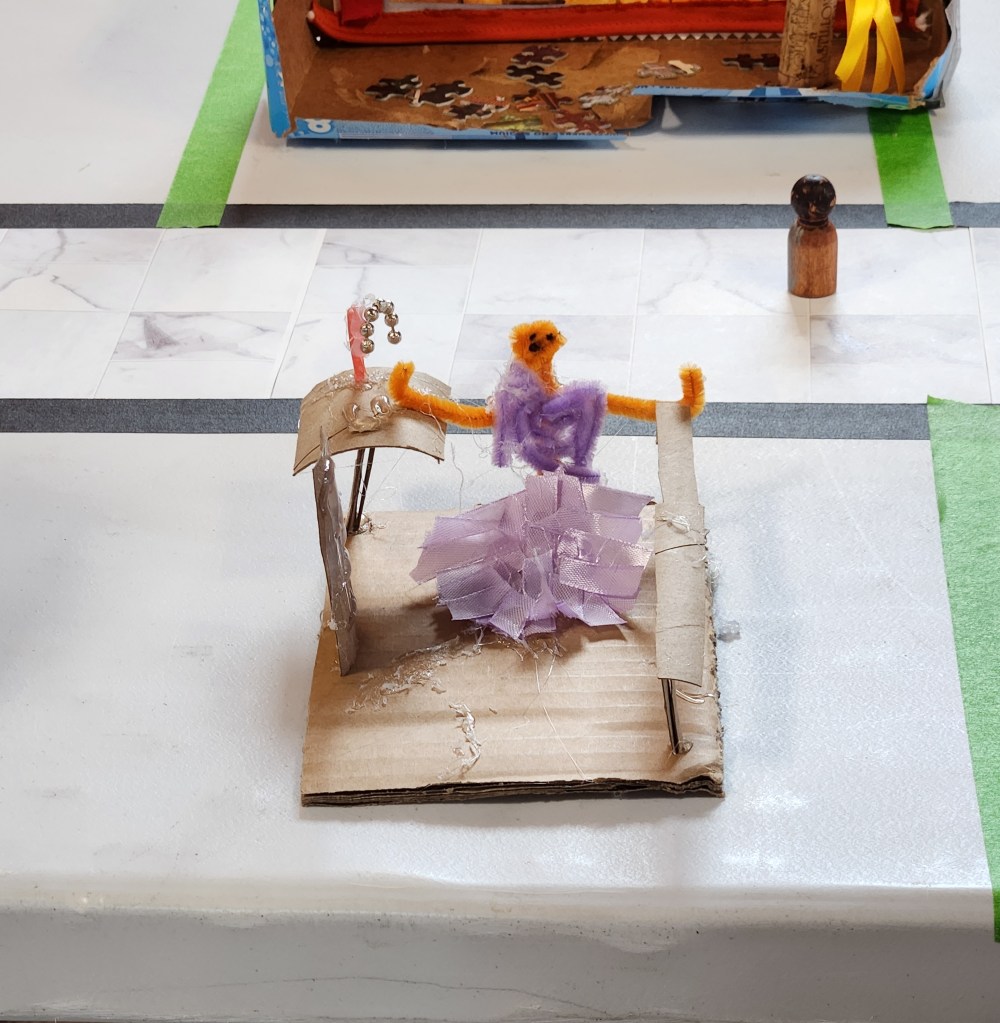
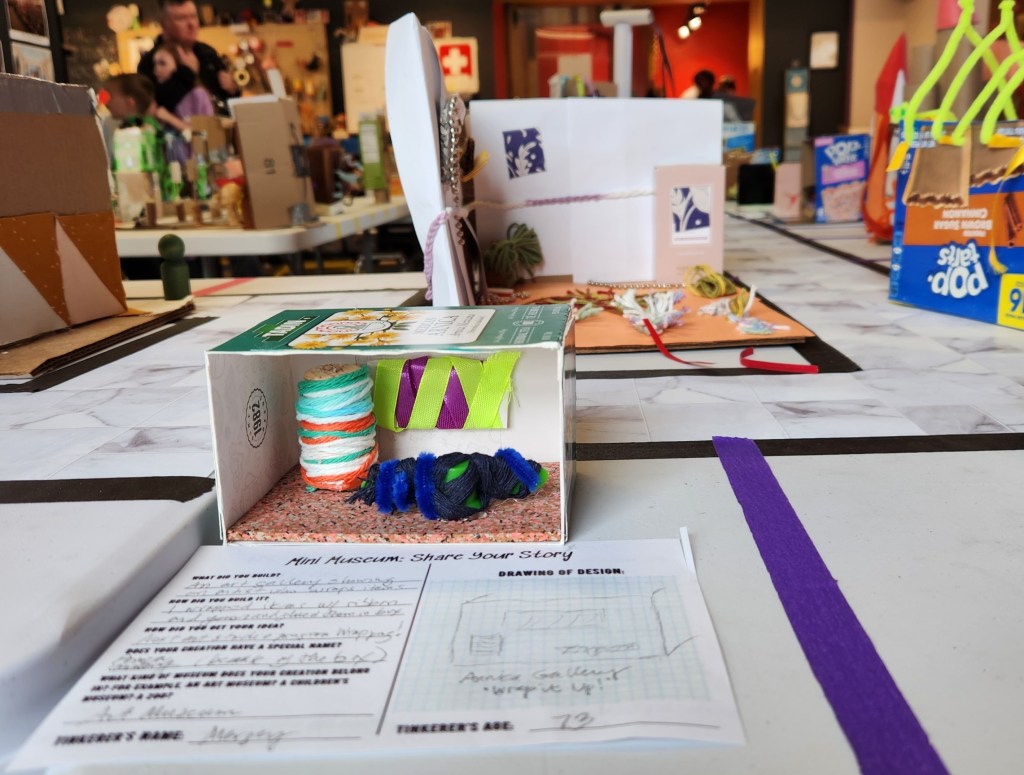
I even filled out the paperwork.

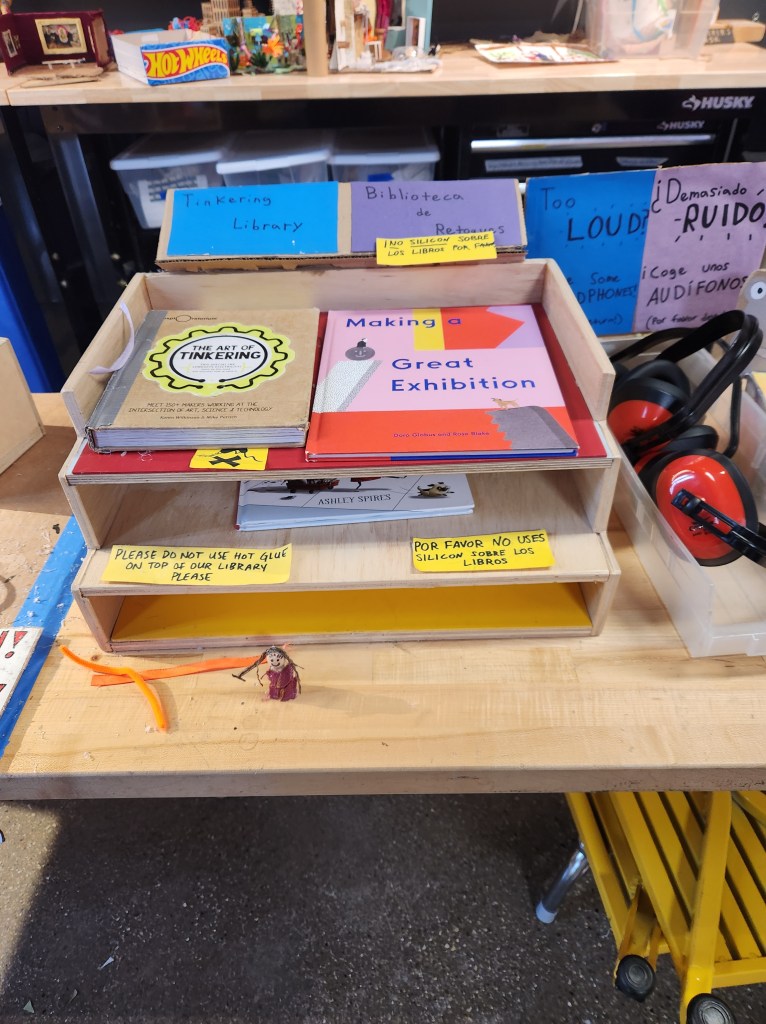
And I loaned one of my books “Making a Great Exhibition” to the program.


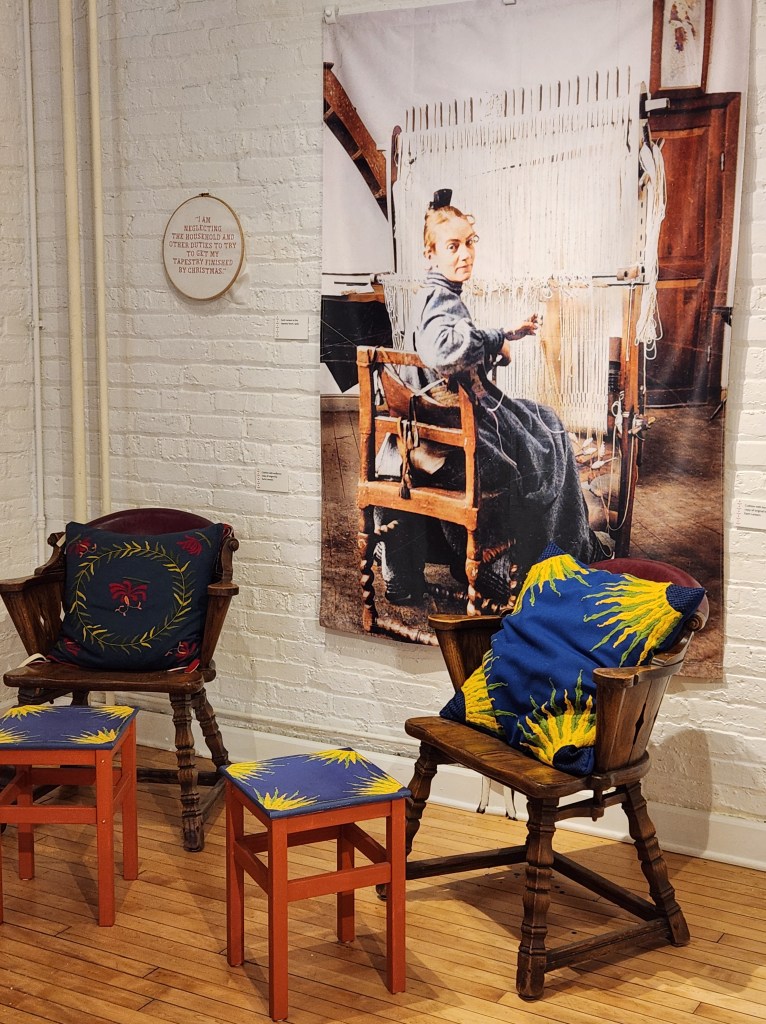
My latest piece was inspired by the exhibit “Karin Larsson: Let The Hand Be Seen” at the Swedish American Museum. Karin Larsson was the wife of the Swedish artist Carl Larsson, and it’s as much her textile work as his paintings that “came to shape the country’s national identity” as a recent article in the New York Times Style Magazine* put it.
The exhibit included recreations of Karin’s textiles, which were impressive, and I snapped pictures of some of them.

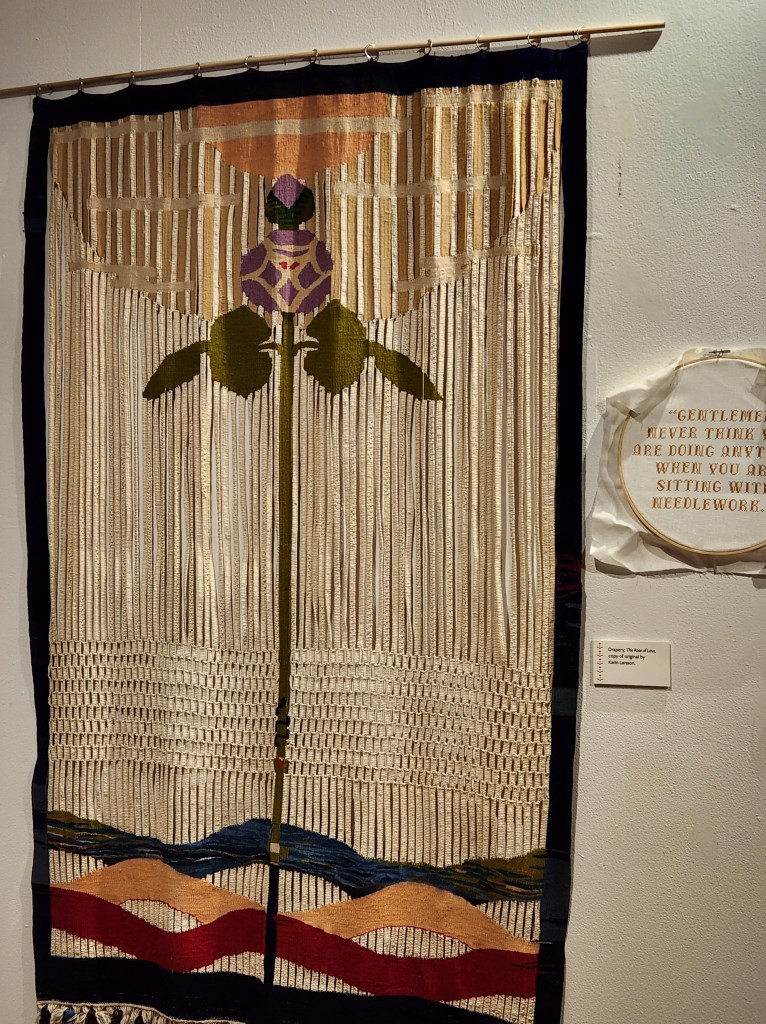
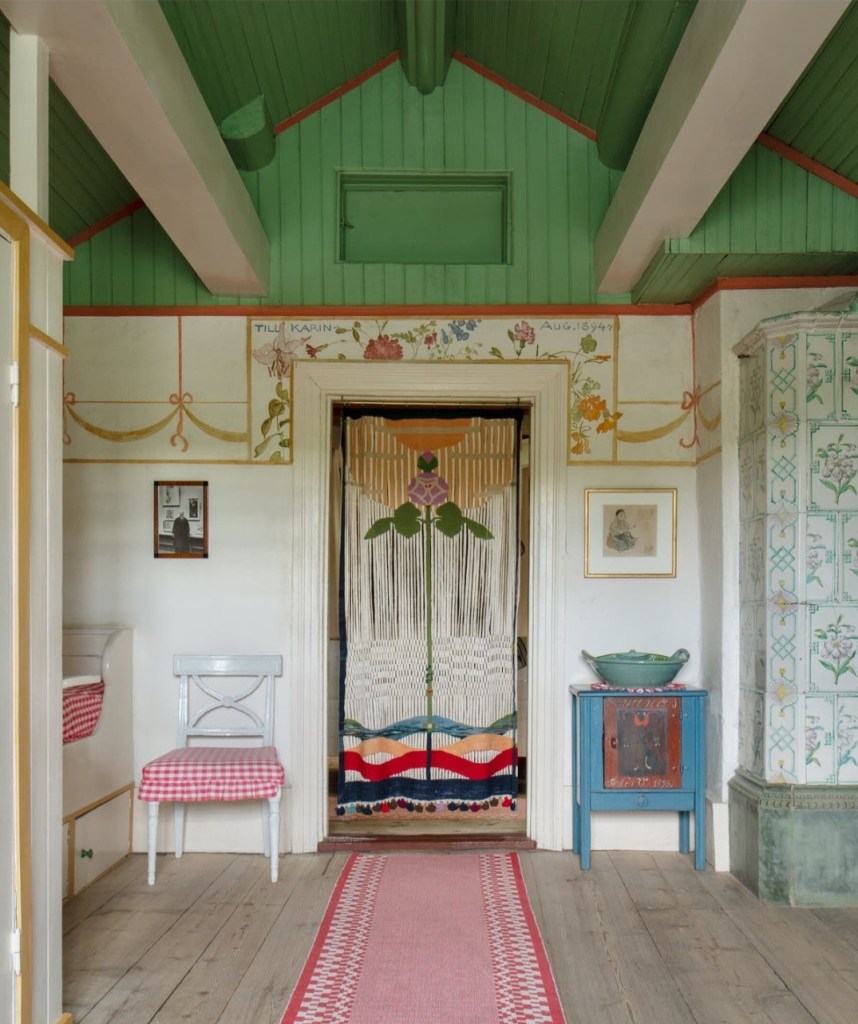
This picture is from the New York Times article* and shows the original weaving in situ.
At the exhibit, I was also taken with the cross-stitch lettering that appeared on the signs and on embroidery hoops throughout the exhibit.

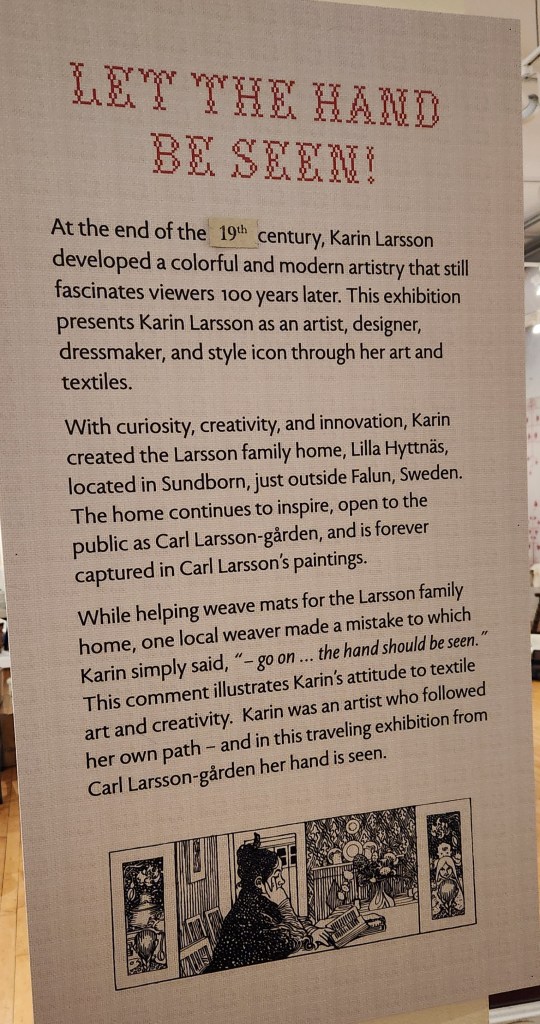
This sign explains the origin of the title of the exhibit, “While helping weave mats for the Larsson family home, one local weaver made a mistake to which Karin simply said, go on…the hand should be seen.” It almost begged me to embroider it! When I transferred the letters from the sign to graph paper, I realized they were too big to embroider on 20 count linen, so I adapted them, and I added a border on top so it would work in the frame I found for it. I thought it was ironic that as I was stitching, I was fixing any mistakes I made, so when I realized I had miscounted both when graphing and stitching the border, I decided not to take it out and redo it.
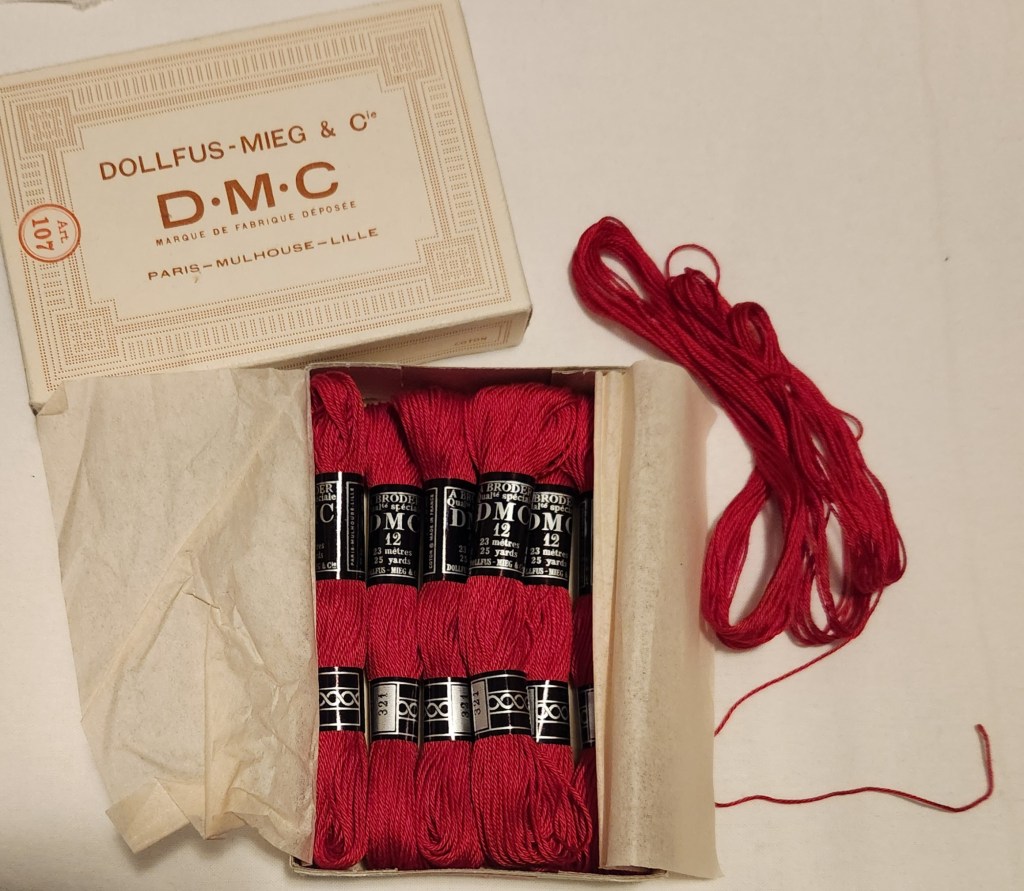
I mentioned a putchase from the Ukranian National Museum in a previous post, but I don’t think I mentioned that while I was there I also bought two boxes of vintage DMC embroidery thread from a “make us an offer” basket. I was surprised when I took out the black thread to use on the “Alternative to Appropriation” piece to find that it had four rather than six strands. I also found while stitching this piece that it left a bit of red on the linen when I removed stitches – another reason for leaving the border as it was.

This piece also seems like it belongs on the workroom shelves.
*The Hand-Embellished Countryside HomesThat Helped Define Scandinavian Style” Nancy Hass, New York Times Style Magazine 3/20/25

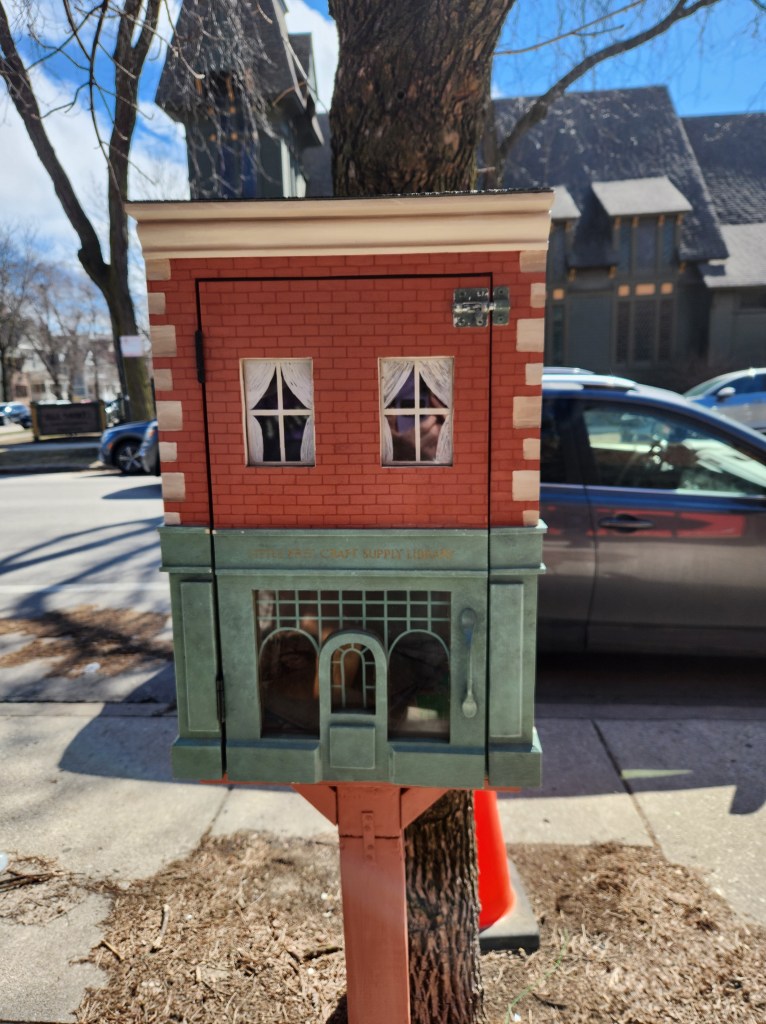
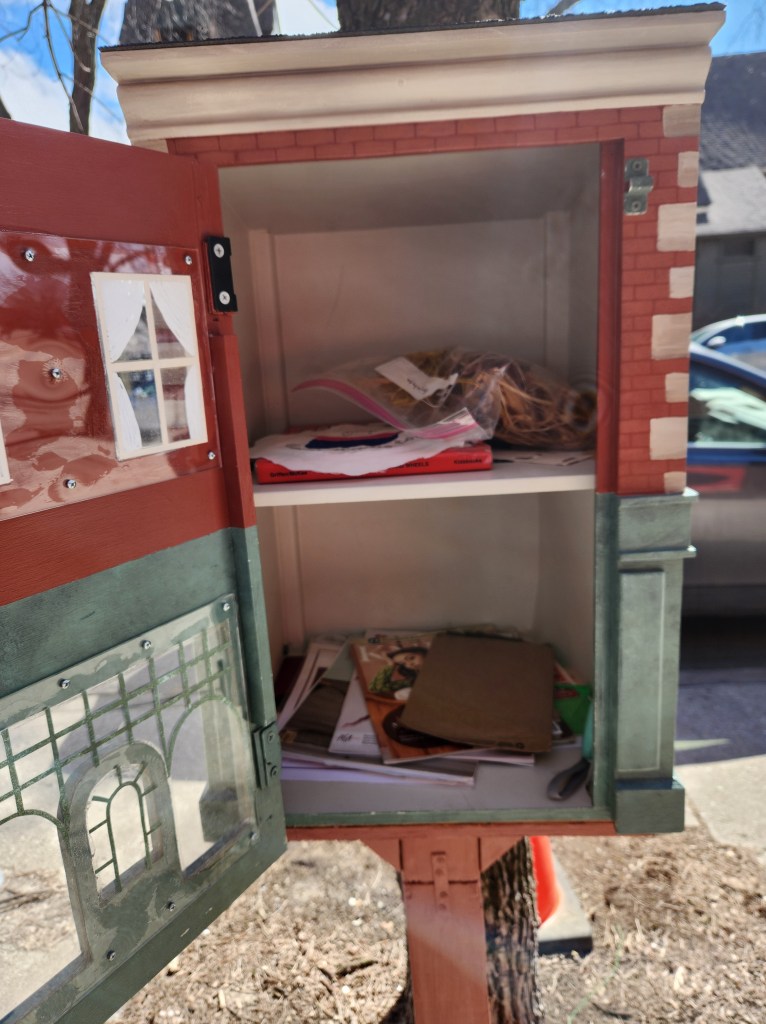
While visiting Maydel, a new needlework shop, last weekend, I also visited their really beautiful little free craft supply library compkete with “Guidelines for Use.”

I was glad to see that people were following the last two guidelines – no graffiti or trash. Unfortunately, there weren’t many craft supplies either.

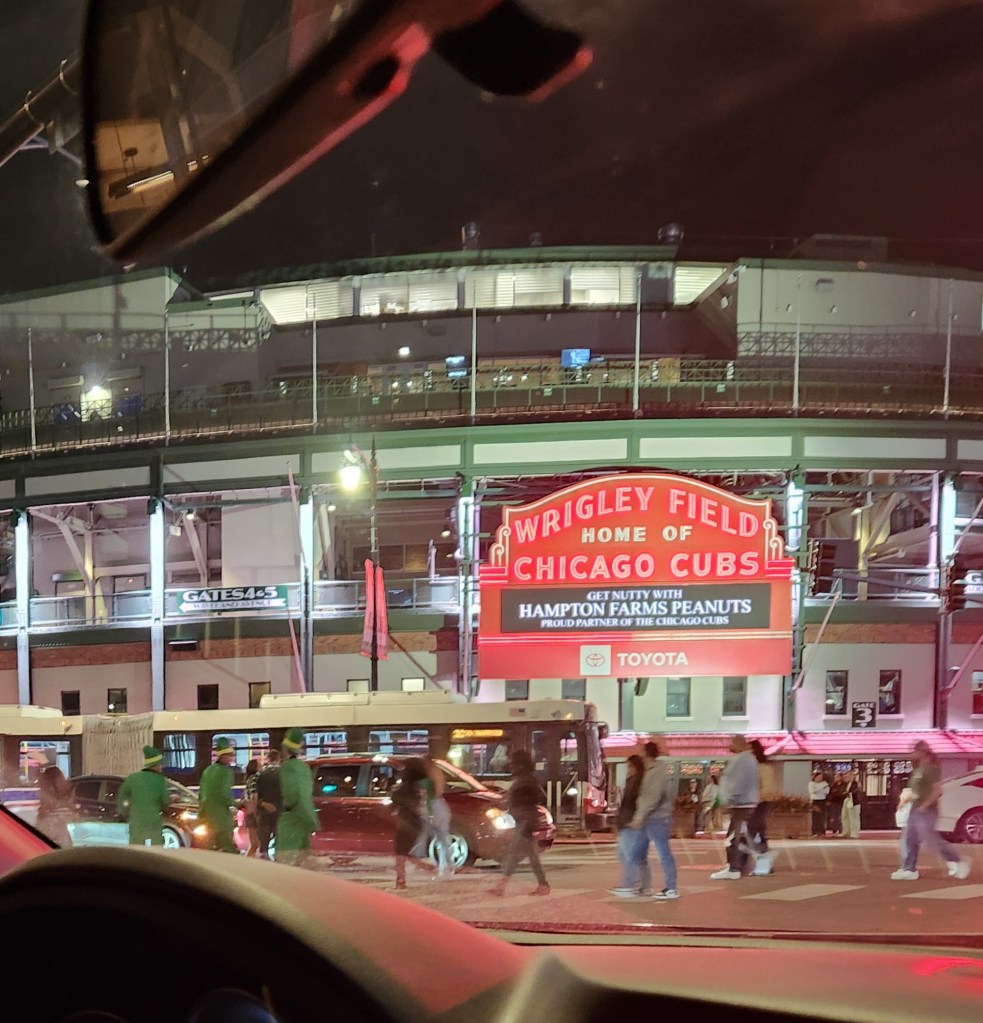
Speaking of little free libraries when we got stuck in Wrigleyville traffic on the way home the weekend before, I noticed the little free Snoopy library was decorated for St. Patrick’s Day. I snapped a picture through the car window, but I really wish I had gotten out to take it, which certainly would have been possible since there were a lot of shenanigans going on. We even saw some leprechauns!


I have always admired and been inspired by other cultures and appreciated artists who were as well (Alexander Girard, for example), so I was disturbed a few years ago when it suddenly seemed that almost everyone was being accused of appropriation.
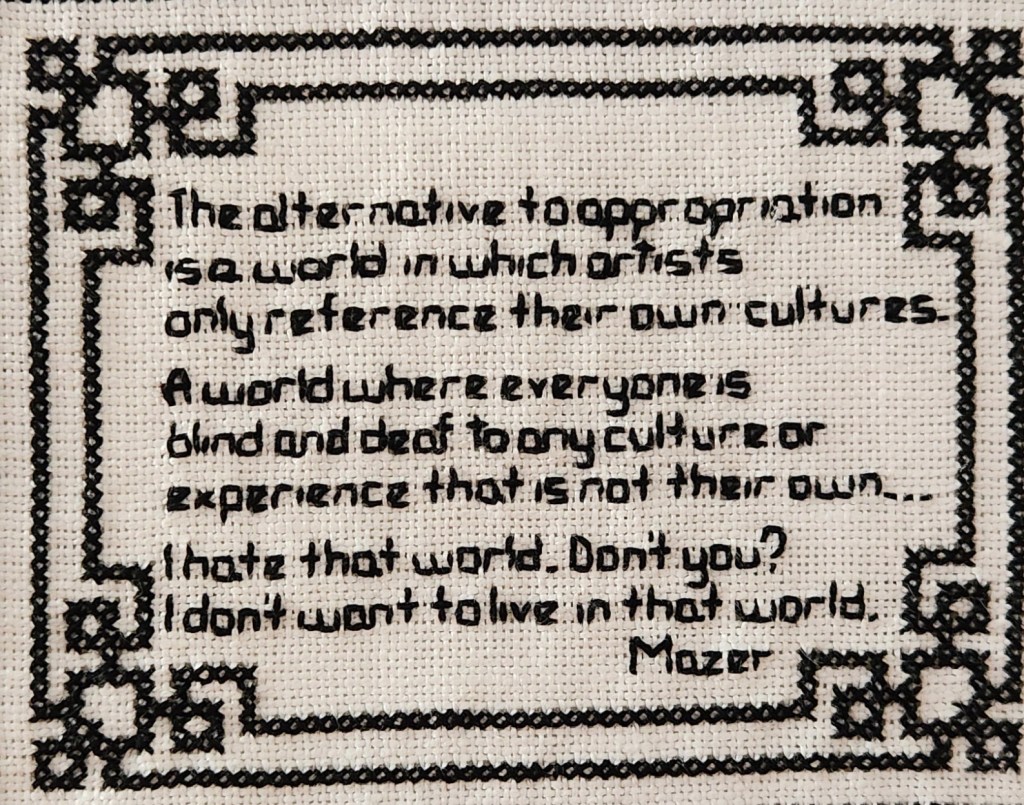
Recently when I read “Tomorrow and Tomorrow and Tomorrow” by Gabrielle Zevin, I was struck by the character Sam Masur’s response during an interview to accusations of appropriation in the video game he created with his friend Sadie Green. Sam, who at this point in the story is going by the name Mazer responds: “The alternative to appropriation is a world in which artists only reference their own cultures.” The interviewer responds, “That’s an oversimplification of the issue.” Mazer continues: “The alternative to appropriation is a world where white European people make art about white European people, with only white European references in it. Swap African or Asian or Latin or whatever culture you want for European. A world where everyone is blind and deaf to any culture or experience that is not their own. I hate that world, don’t you? I’m terrified of that world, and I don’t want to live in that world, and as a mixed-race person, I literally don’t exist in it.”
Yes, I thought that’s it and wrote the quote down. After picking up the piece of paper and reading it again many times, I realized I wanted to embroider an abridged version of it.
I thought I’d use the same small alphabet I had used for the “Angel from Montgomery” piece, and I thought it would be perfect to surround it with folk art borders from many countries. I knew I wanted to use the Scandinavian selburose (eight pointed star) I had used before on Christmas cross stitch pieces and the Greek key pattern I had used in my Greek myths piece and that I first saw on to- go coffee cups and have always loved.

Those two choices led to the decision to use four closed borders and four border elements. I searched through the resources I had and did some Internet searching to find the rest of the elements. An internet search for “Chinese cross stitch border” yielded a pattern that I didn’t think would work with my initial concept, but would be perfect to frame the quote.
I found another border in an old DMC Library Morocco Embroideries book that used to belong to the Heath Library. My sister had rescued it for me when the library discarded it many years ago.

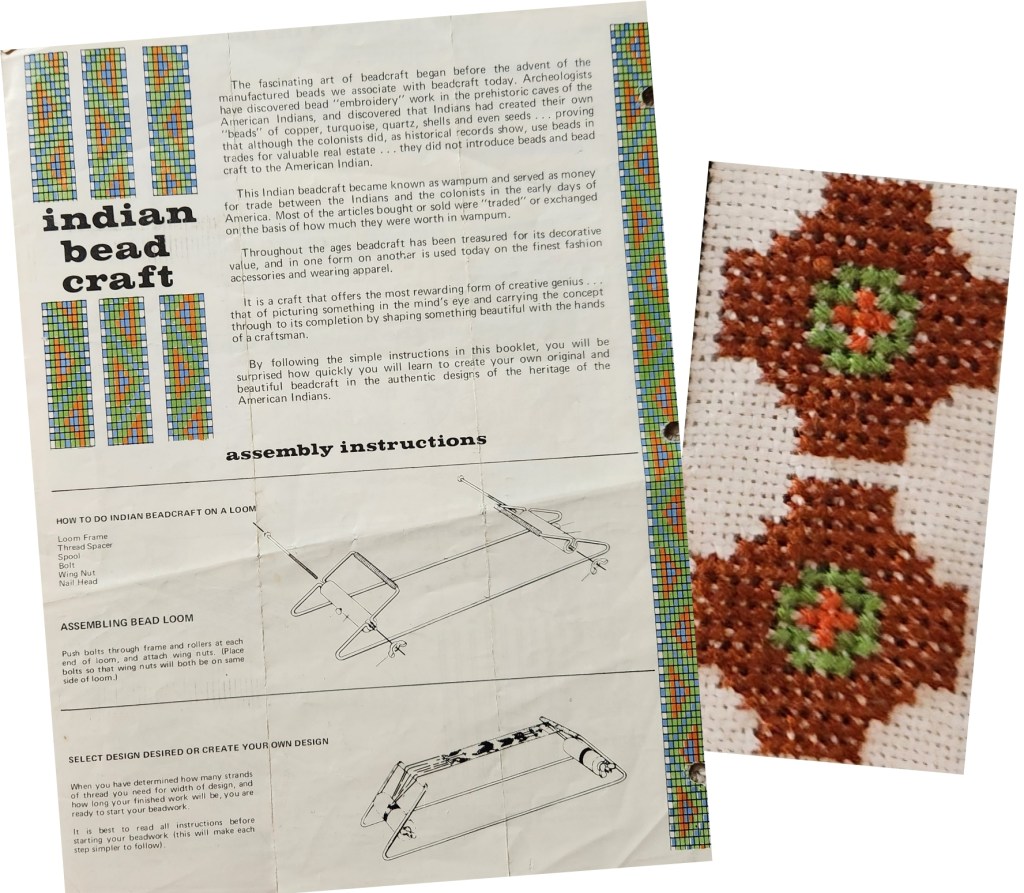
I adapted the Native American pattern from the directions that came with a beading kit. I don’t think I ever successfully made anything with the beading kit, but I saved the directions and have used them when designing cross-stitch patterns before.
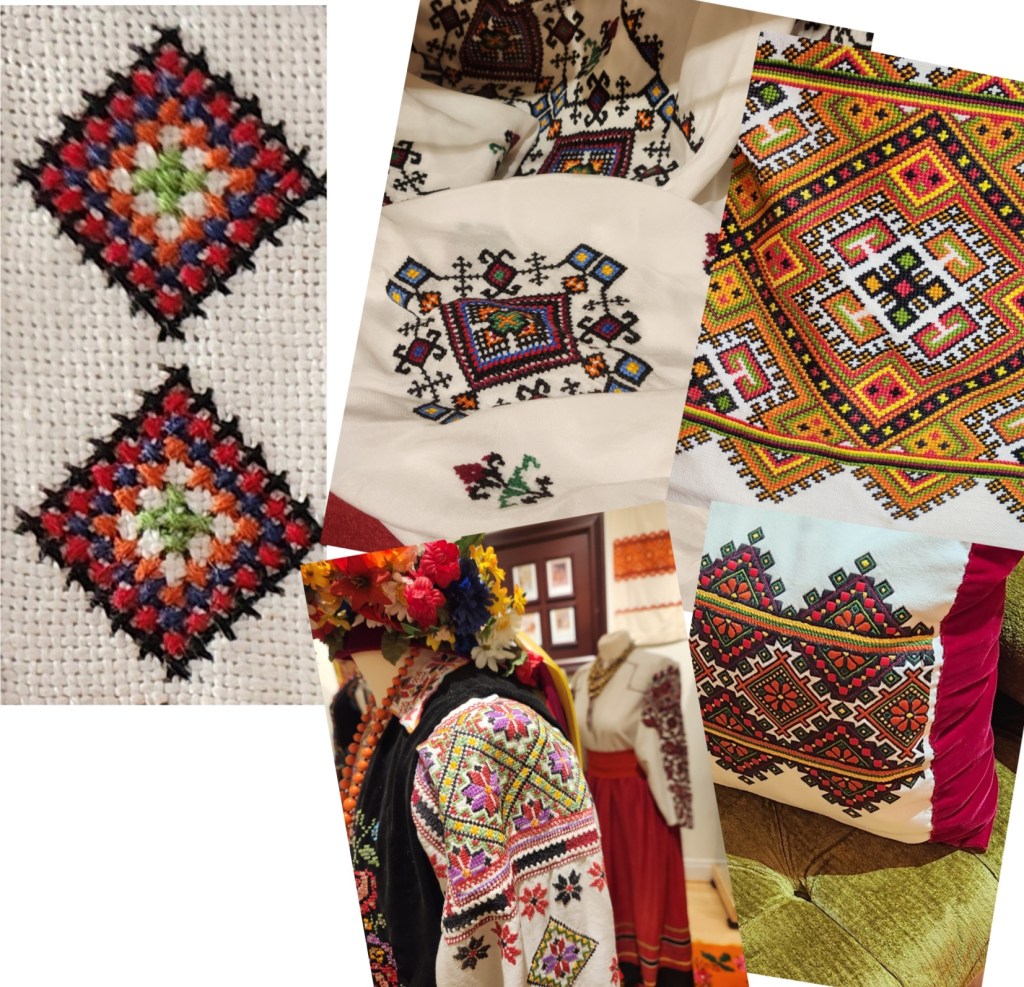
While I was still thinking about the piece, I went to the Ukranian National Museum and snapped some photos of embroidered pieces, which inspired the color choices for the Ukranian pattern I found by doing an Internet search.
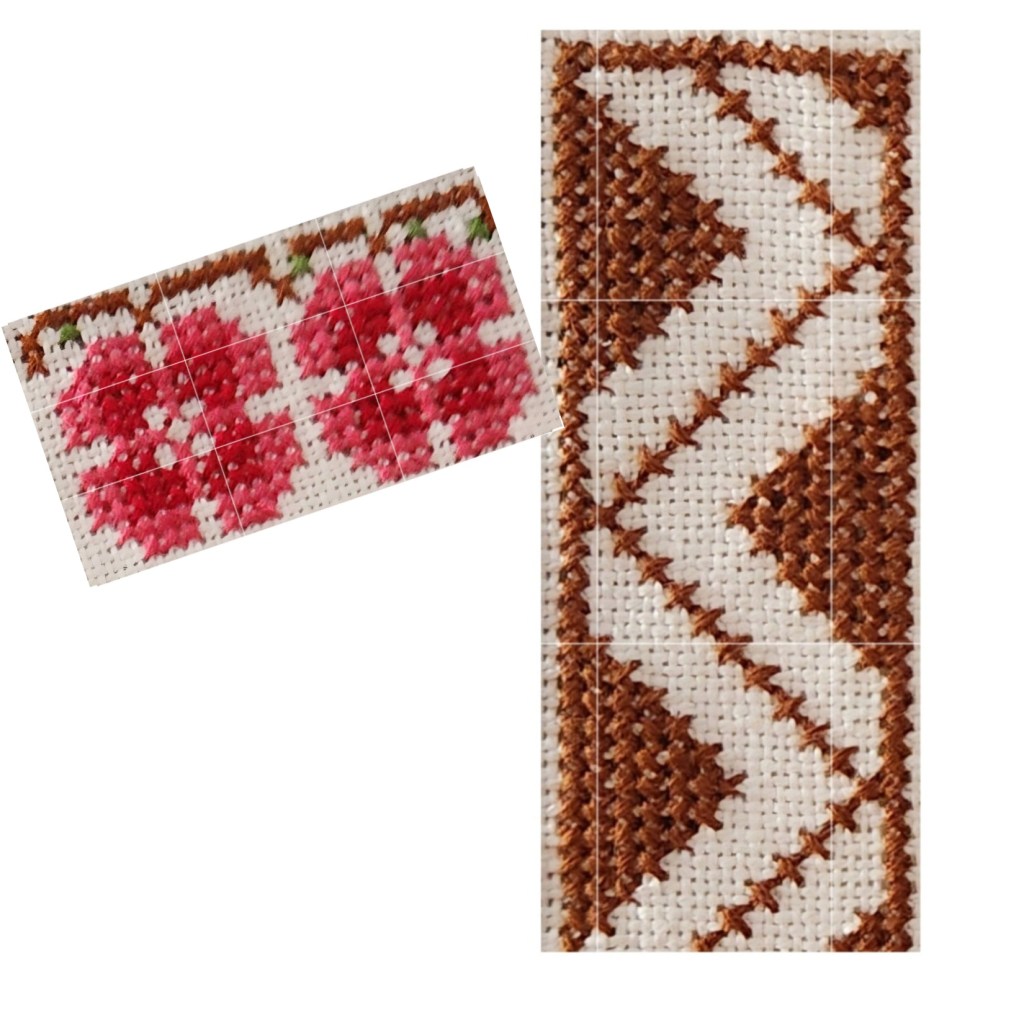
An internet search also led to the Celtic border, which is probably the hardest thing I have ever stitched. It was made even harder by the fact that I ran out of the thread, which I think would have been hard to match, while I was stitching it.

My internet search didn’t lead to any Japanese borders, so I adapted the cherry blossoms from another pattern I found. Finally, I designed a border meant to evoke Kente cloth.
When it came time to frame it I thought it didn’t make sense to frame what was essentially already a frame so I decided to use a stretched canvas like I had with the “Never Let The Old Woman In” piece. But this time, I had to make my own canvas, which worked well, although I’m not entirely satisfied with the mounting.
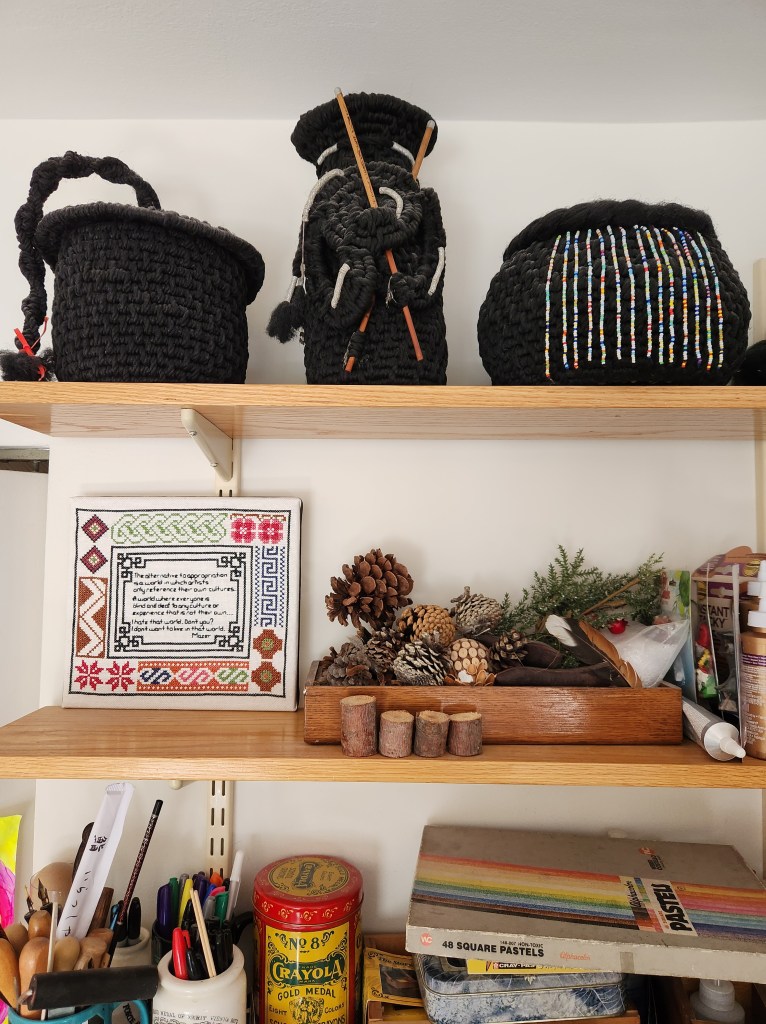
I think I found the perfect place to display it, though. Right under the hair baskets I made many years ago which some might accuse of being good examples of appropriation.

When we were driving home at night recently, I noticed a little library festooned with Christmas tree lights. While I wasn’t able to snap a picture of it, I was reminded that I had a couple of pictures of little libraries in winter that I hadn’t posted yet.

I hadn’t seen this one before, even though it is in my neighborhood.

And I saw this one on Instagram. We haven’t gotten this much snow in our neighborhood this year.
I also found a new Little Art Library in Andersonville.

It says, “Make art, take art, love art” on the side, but unfortunately, it didn’t have any art in it!

When Brittany of the House That Lars Built sponsored a heirloom ornament craft along two years ago, I purchased the ebook so I could learn how to transfer photos to fabric and participate. And then, I purchased the supplies – Bubble Jet Set 2000 and freezer paper (for crafts, I found out any old freezer paper won’t work when I thought I was out of it and ordered the wrong kind).
I started by making ornaments of my cheerleading granddaughters for one of their advent calendar presents.

And then I made some of my Missouri grandniblings to bring when we went to their house for Thanksgiving.

For Christmas that year, my Birmingham sister in law gave us a flash drive with old, mostly unlabeled photos from their mother’s side of the family. I knew they’d be perfect for this project, and since we hosted the family Christmas get-together this year, I decided to make them as favors.

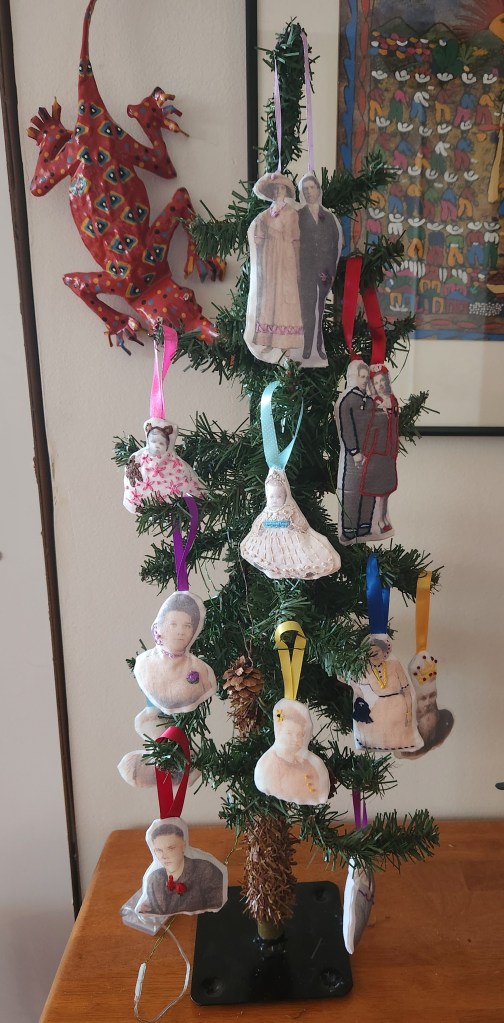
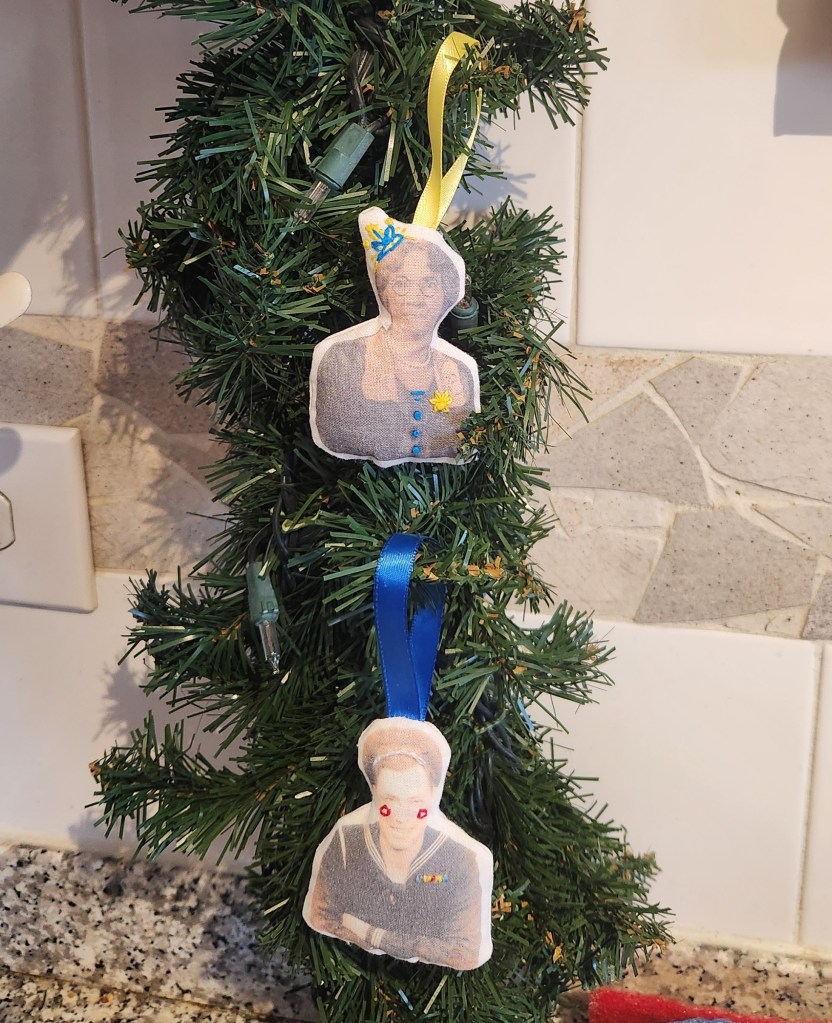
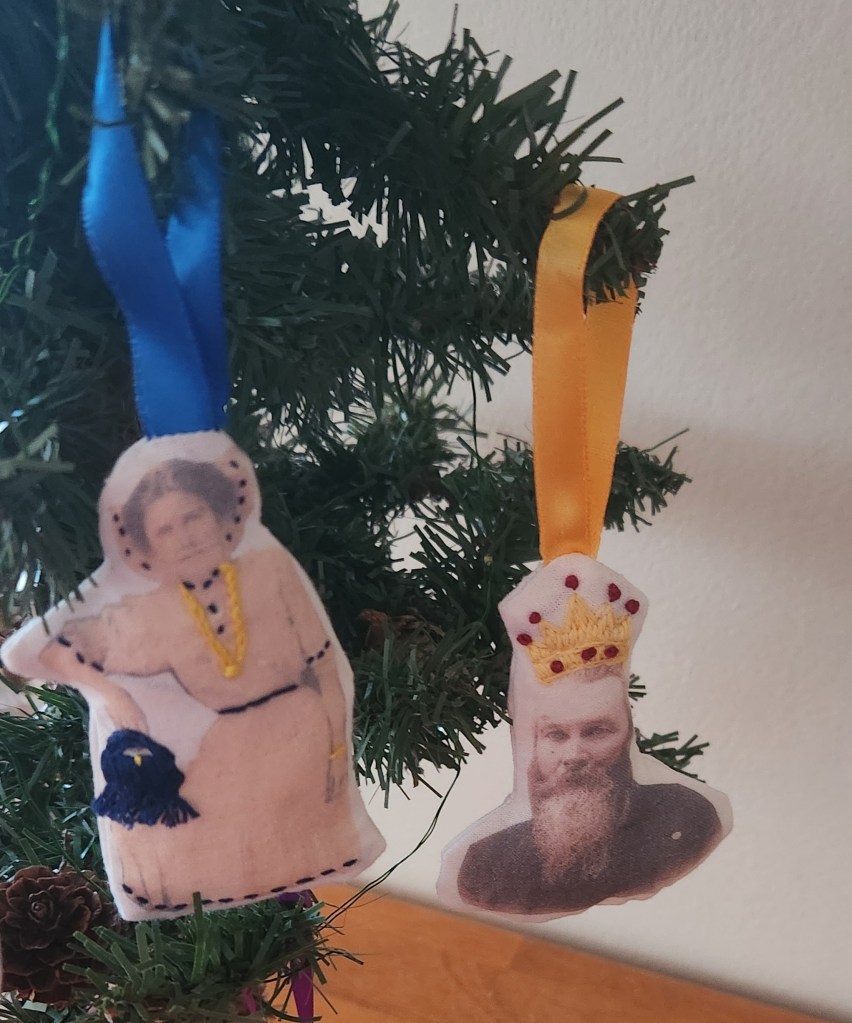

Their embellishments varied from embroidering what was already there, like ties or adding something simple like a flower to some fanciful additions like hats and crowns. If the pictures were labeled, I printed the names on the back. Guests had fun picking the ones they wanted to take. My grandniece took the relative she was named after. My nephew took the one with a crown because my daughter thought it looked like him. I worked on them for months, so it was great to see everyone enjoying them.
When I finished them, I had one more ornament to make since I have a new Missouri grandnephew, and we were headed there for Thanksgiving again this year.


We added the rest of the Scandinavian heart baskets we got at the Swedish American Museum sidewalk sales to the garland, so it was even more crowded than last year! Since the stars are still hanging in the windows, last year’s solution of what to do with all the paper hearts wouldn’t work. I waited for inspiration for a while and finally it came one morning when I noticed how bare the pinecone branches that were still on the yellow chest were looking.

We had some Kit Kat candy bars left over from making tomte gingerbread houses, so I decided to give those as my treats, although there weren’t enough so I had to buy another bag whih turned out to hold smaller bars. I found a vintage cat card to go with them, and I used glue dots to assemble everything (one or two bars depending on the size)

If the recipients actually hang up all the ornaments I’ve given them, this year, they’re going to have to add their own thread or ribbon hangers!

Now that we’ve packed Christmas all up and taken it back to the storage unit, I’m ready to write about some of the presents we got for Christmas and some other recent finds.
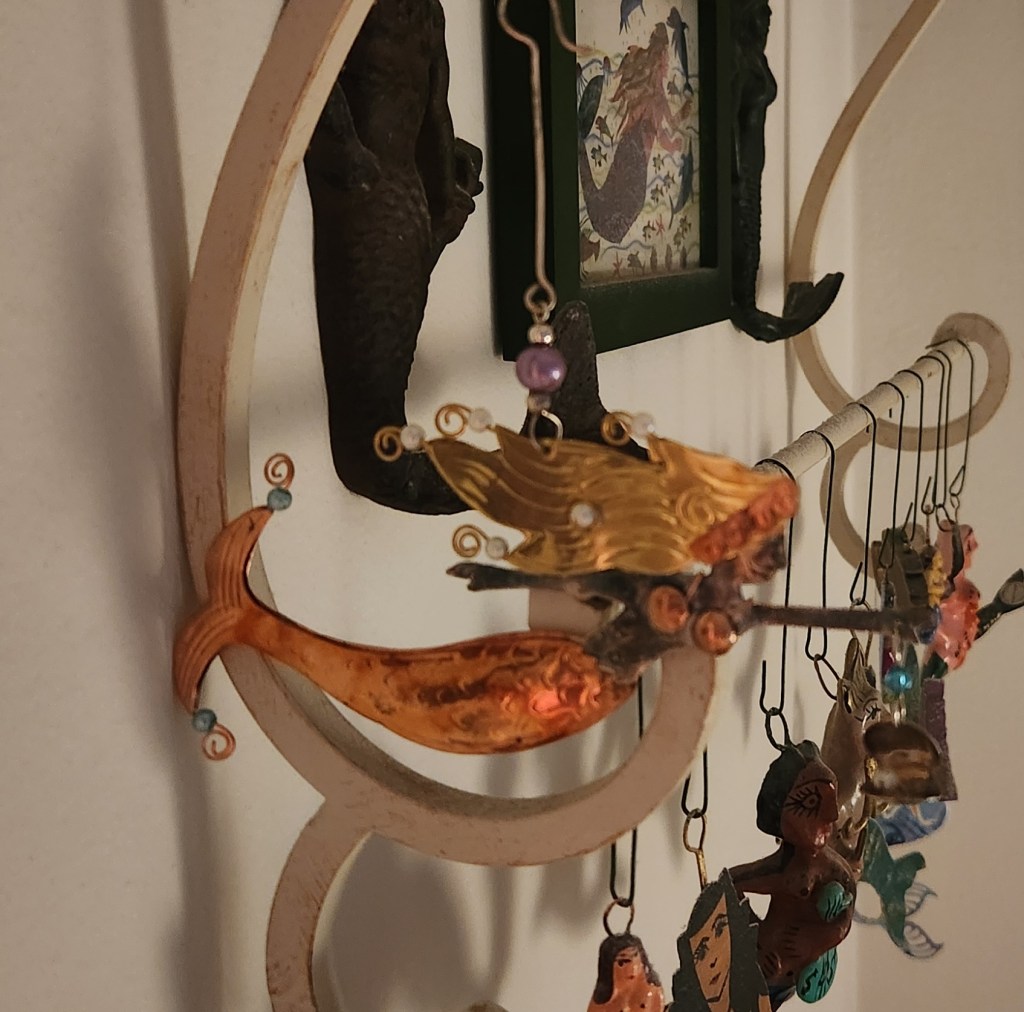
The first present to arrive this year was this mermaid from a Northampton friend. She wrote that she hoped I had room for one more mermaid because she couldn’t resist buying her for me. The best thing about having collections is getting unexpected presents just because someone saw something you collect. Of course, I had room for her!

Another Northampton friend knows about my latest collection, and she sent a wooden mushroom – a fly agaric one like the little mushroom gnome I had sent her.

I gave my husband a red painted lizard from Zimbabwe, another find from Amazwi this summer. I knew there was a space just waiting for him below the gourd mask I bought at Brown Elephant recently.
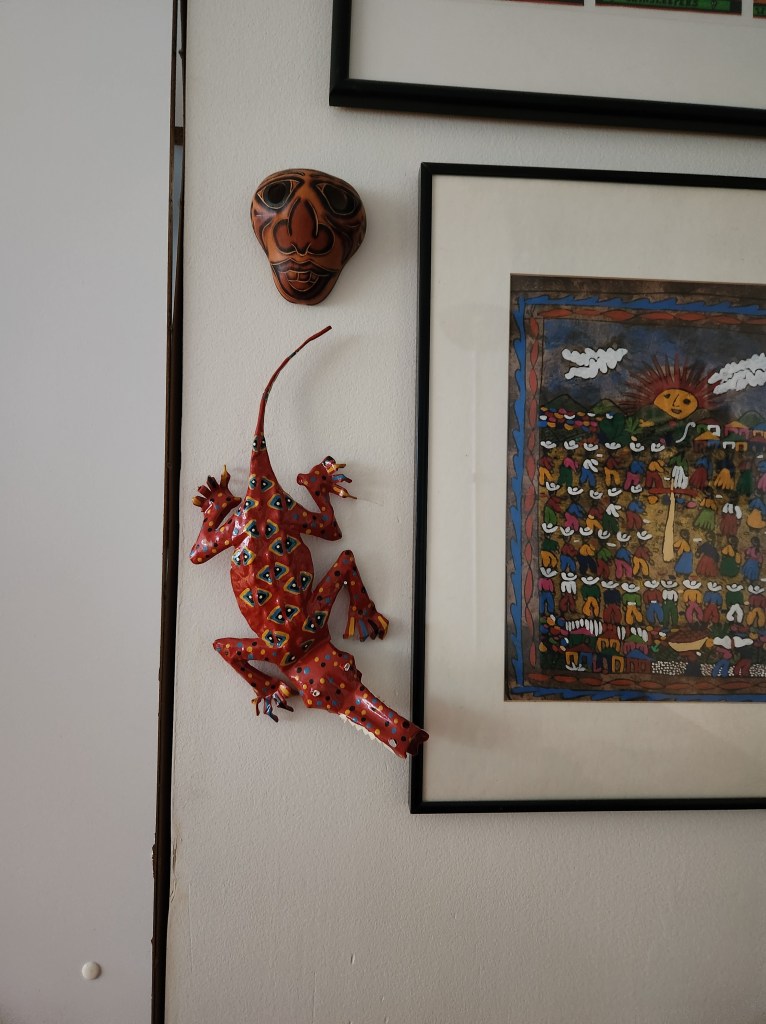

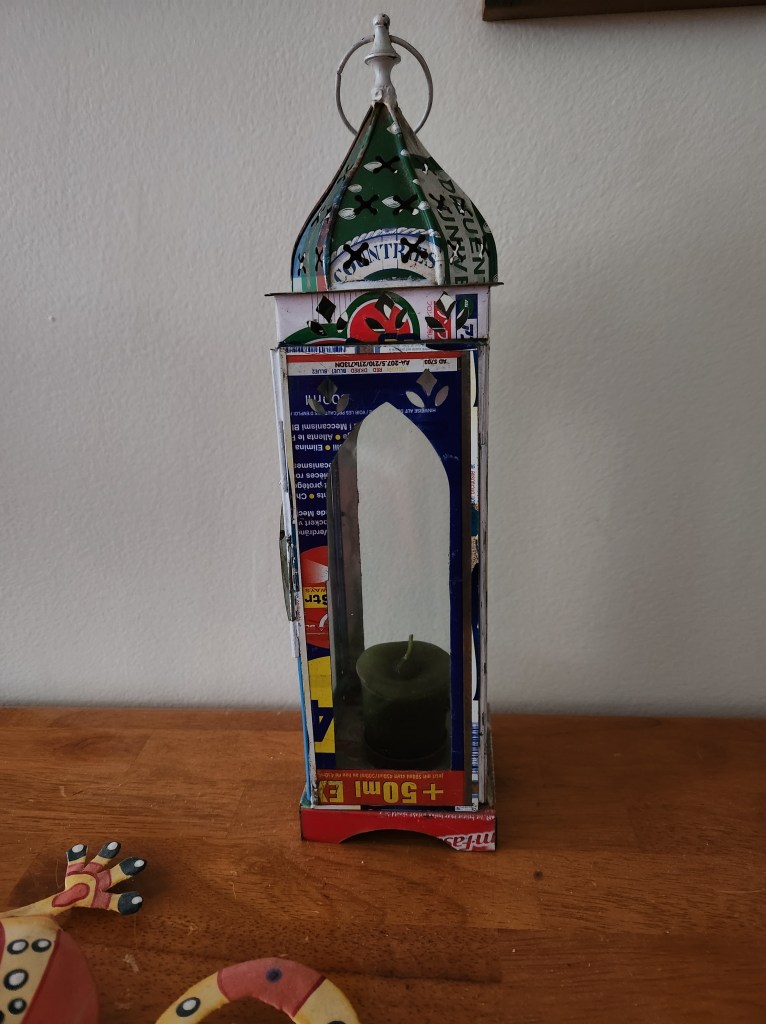
On the shelf below is another Brown Elephant find – a lantern made from cans. Each side is different, so it might get turned often.
My husband gave me a sun plate and mug from Anthropologie that I love! I’m using the mug for my morning tea, but I knew that, especially with its orange and blue rim, that the plate belonged in the china cabinet. I found the perfect place on the middle shelf – I just had to push the three plates that were already there over a bit.


Then, when I went to the Ukranian National Museum with my Birmingham niece, I found two little pots that I thought might also belong in the china cabinet. I hesitated for a moment since they were green, not blue, but I thought they’d still fit in, and they obviously do!

I found a place for them on the side on the middle shelf, next to the little pot from Israel I bought when our next-door neighbors in Northampton had a tag sale many years ago.
One of my favorite Christmas gifts is a wonderful quilt wall hanging that my Brooklyn niece made to go with my Day of the Dead offrendas, so in a way, this post will remain unfinished until the fall!

In her role as a caretaker, my Birmingham niece identifies herself as Logistics and her sister as Acquisitions. But in her role as my niece, she is definitely Acquisitions, and I happily get to be Logistics as I integrate her gifts into my collections. This year, when she came for our January Christmas celebration, she brought me a wooden mushroom with a “live edge,” and of course, I knew right where it belonged.

She also brought me a ceramic piece with a sun image that she bought at the Day of the Dead celebration in Birmingham from an artist named Lee Ann (@laclayworks on Instagram) that my niece originally met because she works at her optometrist’s office. It immediately reminded me of another piece that was still packed away from our move (with its lack of walls, this apartment doesn’t have as much space for hanging things). And I found the perfect place for both pieces.


She also gave me two mermaid prints, and I knew they belonged in our bathroom even though it is so small. I thought I had the perfect frame in the box of pictures that hung in our bathroom in Northampton for the larger print of a mermaid approaching a ship “Mermaid Moon” signed A. Marie (Googling tells me A. Marie is a Michigan artist named Amy Ferguson who signs her pieces A. Marie in tribute to her grandmother). The frame was one of a set, and while one held an original piece, the other just held a copy, so I evicted that one and hung the original, a drawing signed Linsey Kelch, with the new one. The small print of two mermaids in a fan from Vintage’s Salvaged Art Series made with a “very old printing block” fit perfectly as well.

It’s hard to see the pictures in the photograph, but I love them, and I’m so happy to have mermaid pictures hanging in our bathroom again.


I mentioned in the last post that I feel like I missed a lot at the Rabbit hOle. Part of that was because my focus was on looking at and photographing the amazing book re-creations. I did see that there were books at each exhibit, but I missed that you could listen to some of the books being read aloud.

I also missed some things because they weren’t open on the day I was there, which was pretty disappointing. I was looking forward to having a Choco bar at Max’s Kansas City, the on-site restaurant. I was also disappointed that what is referred to as the either the Maker Space or the party and craft room on the website and the Tons of Fun Room on Instagram (I think these are all the same thing) was not open. It looks like maybe it is only open for specific activities on weekends, but I hadn’t realized that before we went. I did get to peek through the windows, though, and I was impressed with how many well organized materials there appeared to be.

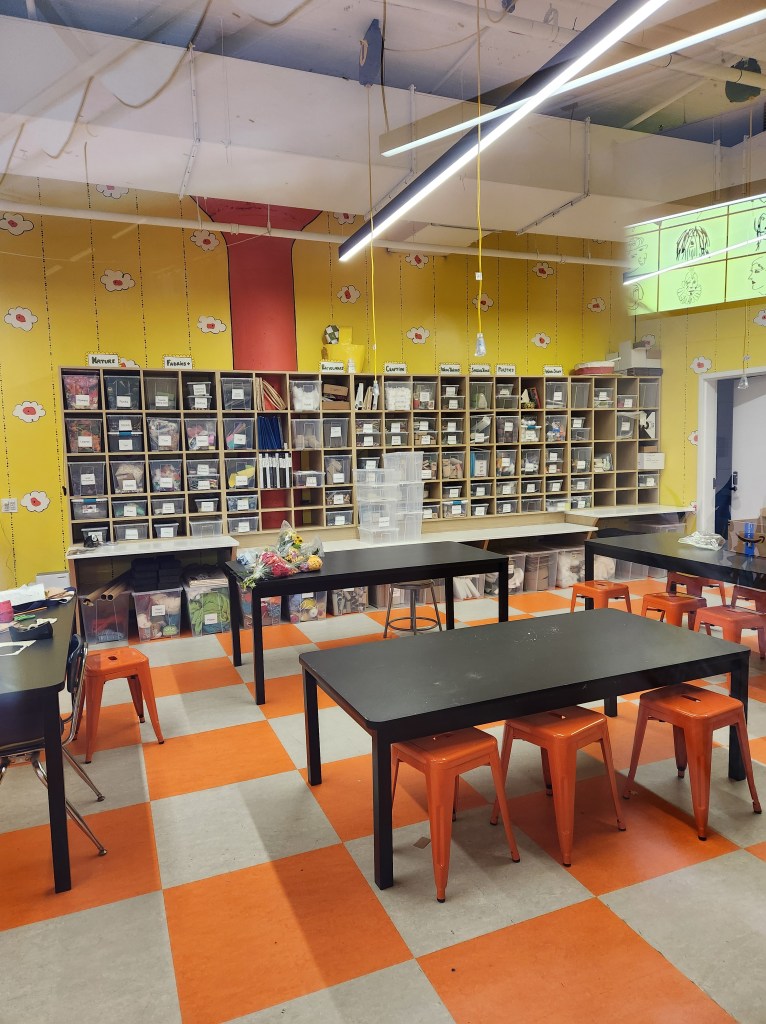

I also hadn’t realized until I was looking at the website recently that this room is George and Martha themed.
There is apparently also a print shop and story lab, but I have to admit I’m not even sure where that is. I think it is on the second floor but must not have been opened either when we were there.
There is an onsite bookstore which makes sense since the whole concept of the Rabbit hOle grew out of a bookstore. The Reading Reptile, which often featured literary installations, was owned by the actual founders of the Rabbit hOle Pete Cowdin and Deb Pettid. The bookstore at the Rabbit hOle is named Lucky Rabbit Books and features weekly story hours, which I imagine take place in this space.

While the bookstore has an extensive collection of children’s books, I was surprised that there weren’t books about children’s books and children’s book authors and illustrators in the small adult book section. Since I wanted to purchase a birthday card, I was also disappointed that there weren’t cards with children’s book illustrations. It looked like maybe they will be selling their own line of cards produced in the print shop. I also kind of expected that there might be ornaments for my children’s book and movie characters Christmas tree, but there weren’t. Maybe they’ll have added those next time!

 Collections and Other Stuff I Like