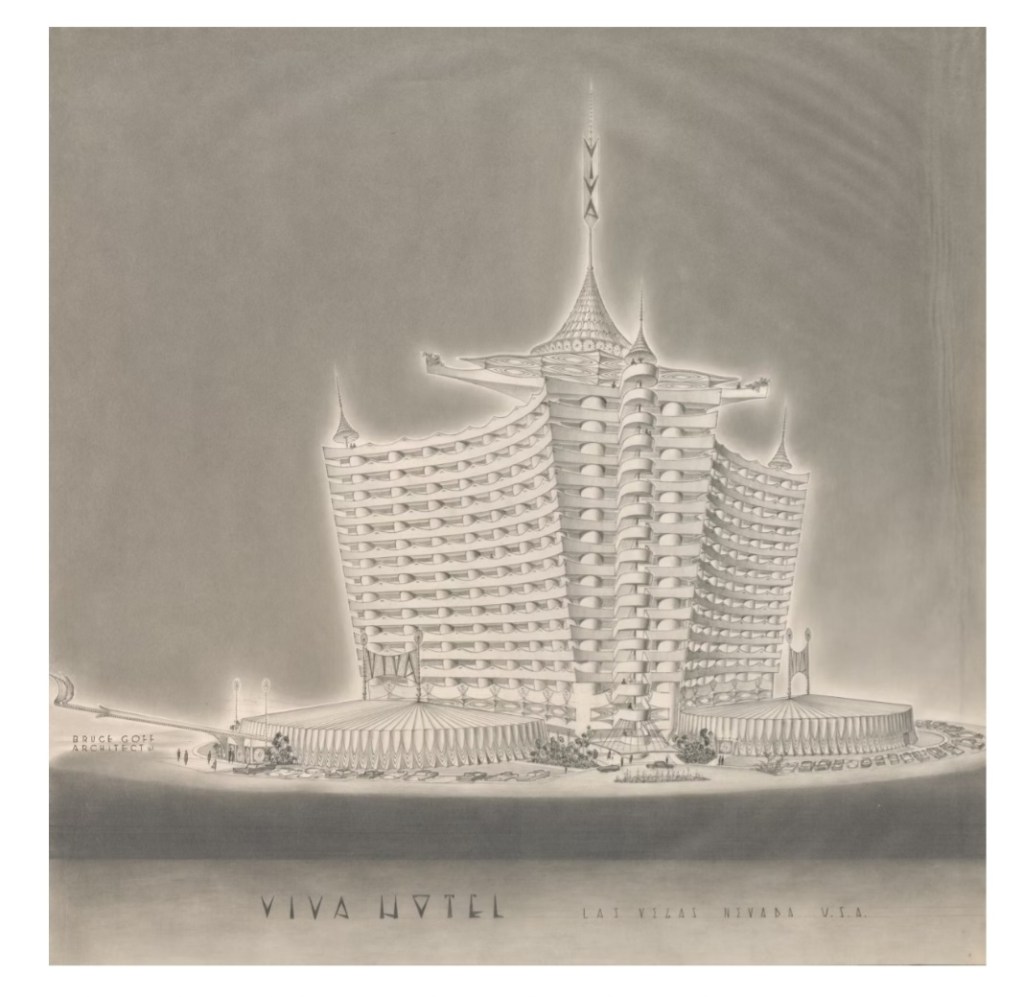
I had read enough about Bruce Goff before we went to the recent exhibit Bruce Goff: Material Worlds at the Art Institute to expect drawings and photographs of fantastical buildings but was surprised to find what the exhibit labels referred to as Realia. The Art Institute is home to a vast Bruce Goff collection and archive which includes his collection of a “mix of everyday and extraordinary objects that reflect his diverse interests and enthusiasms.” A museum label explained that it is unusual to find such personal belongings in an archive “which typically preserve written and printed materials” but that the “included selection of items provides a window into the passions and ideas that shaped Goff’s material worlds.”
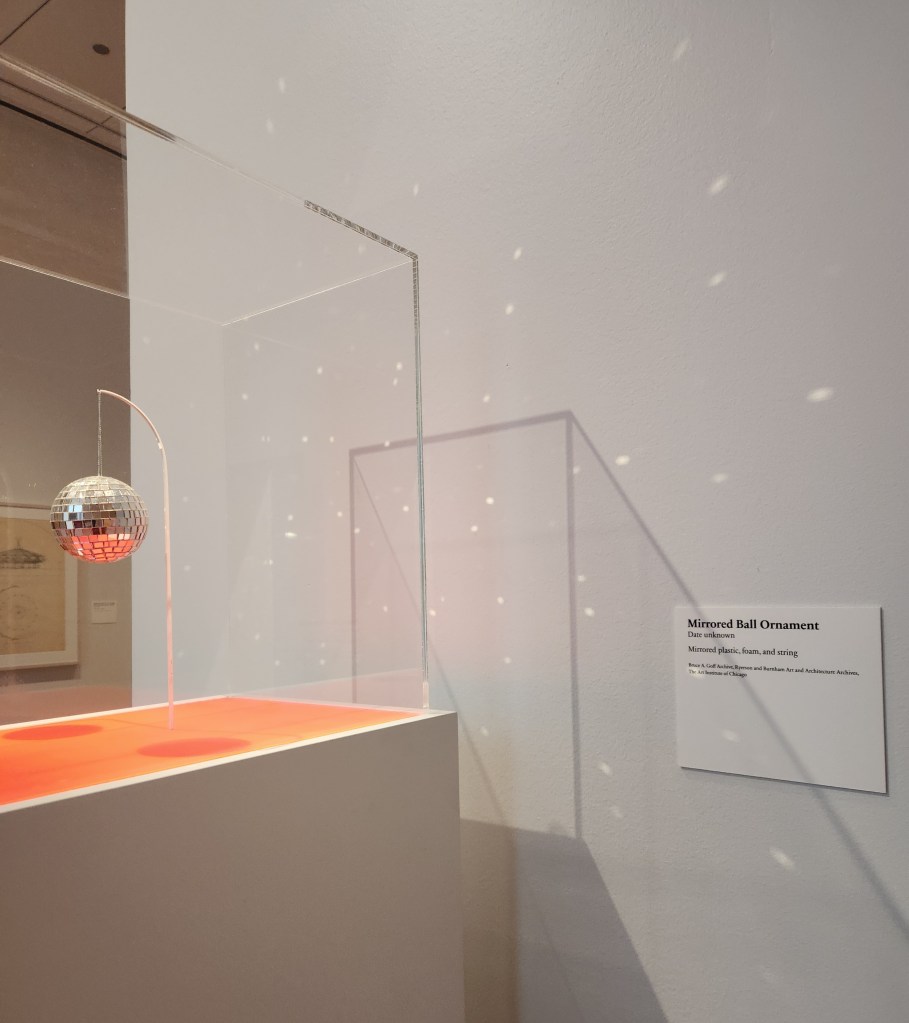
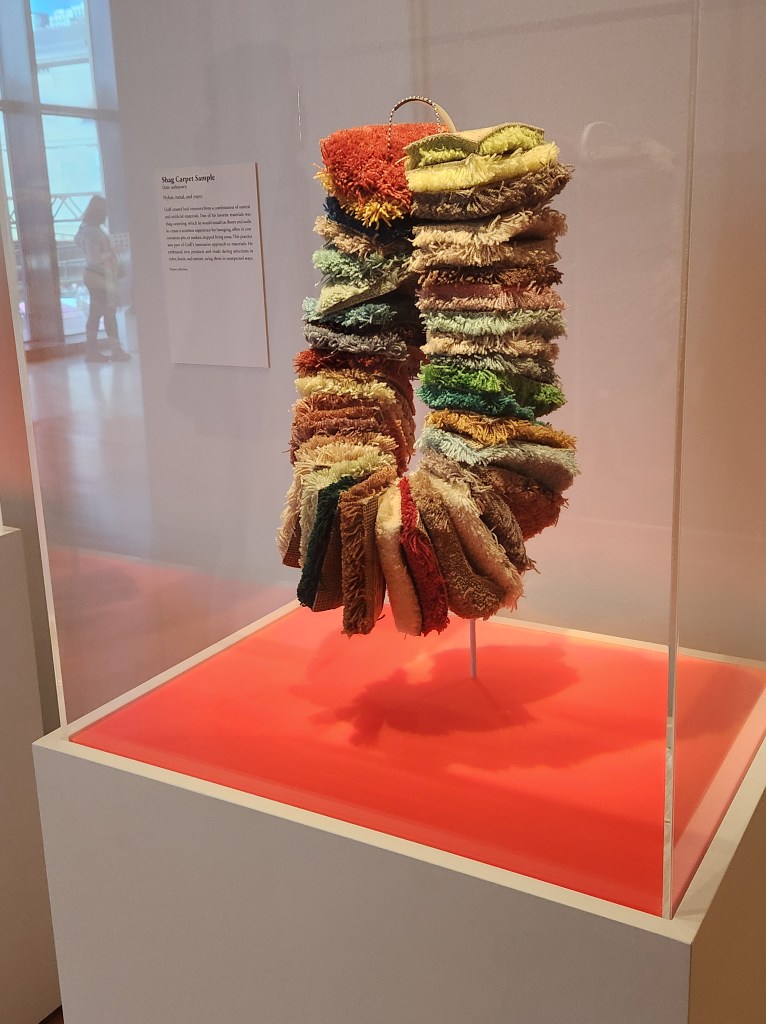
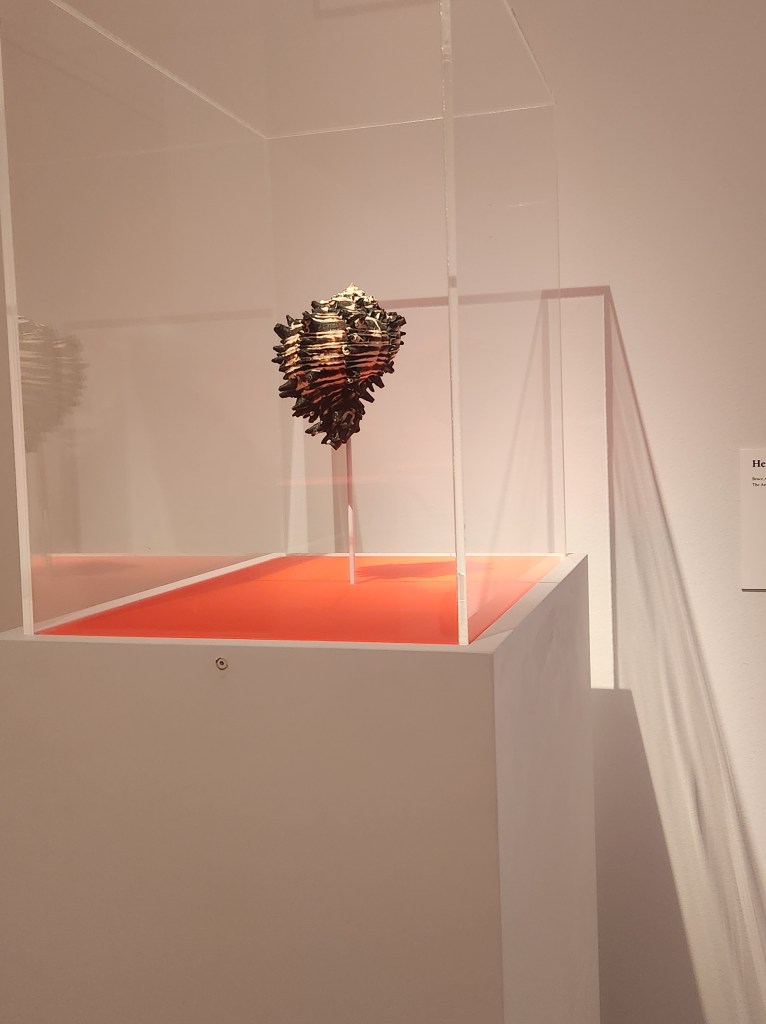
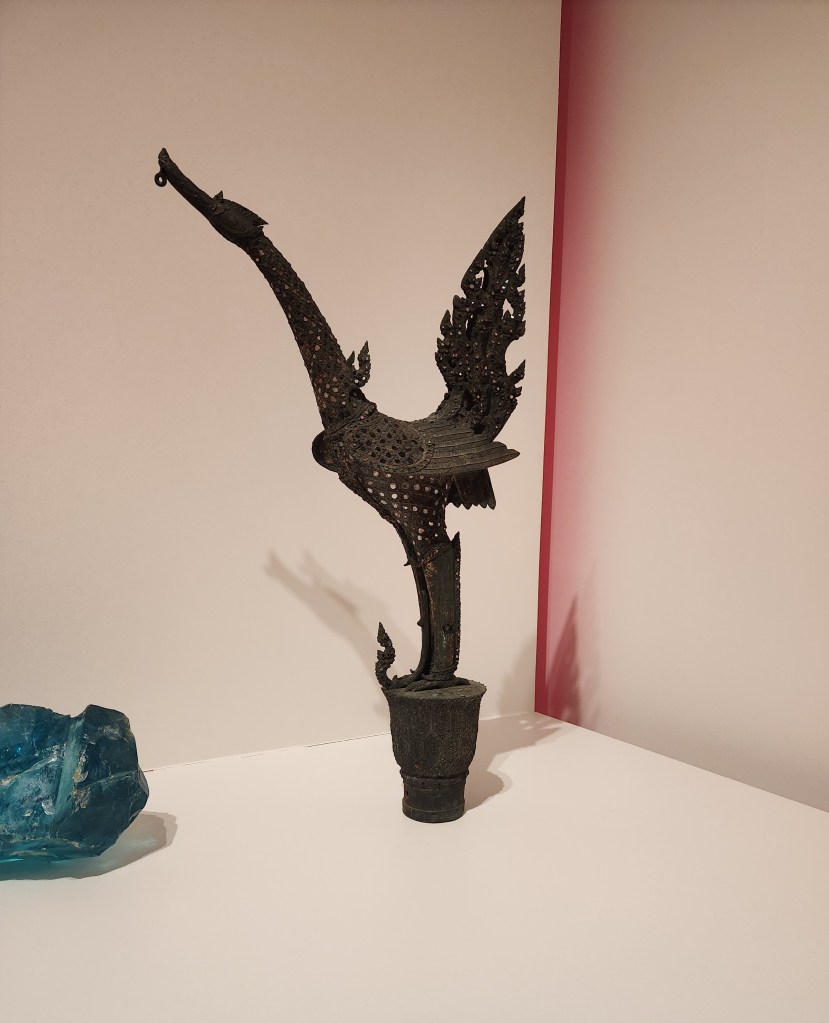
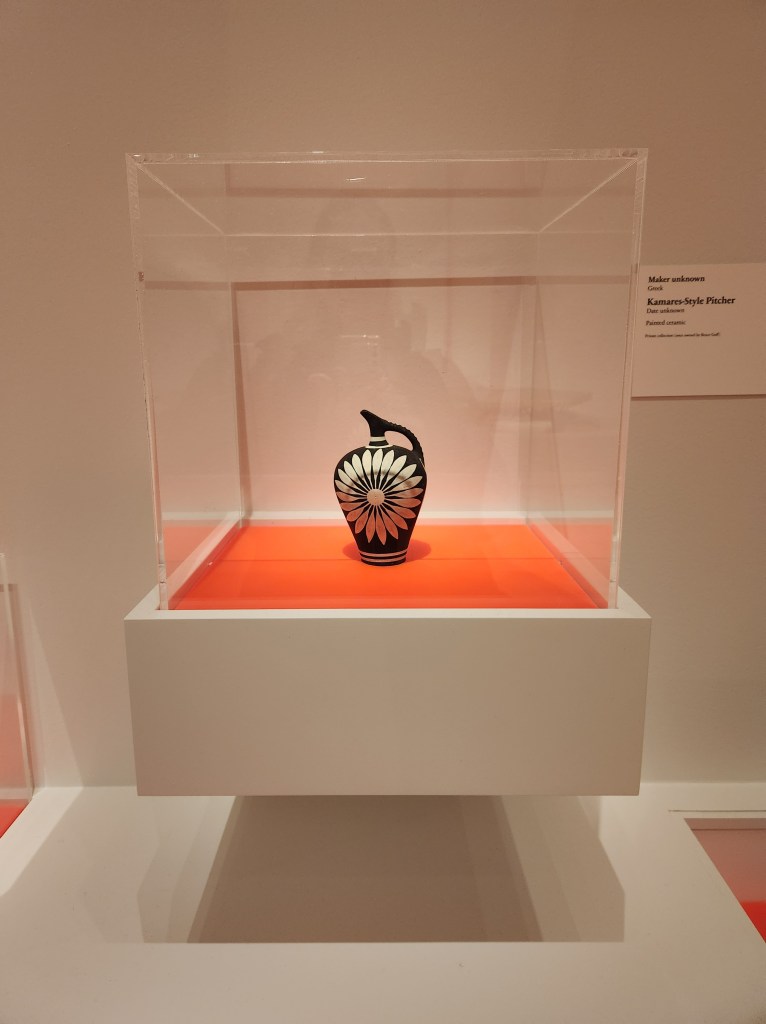
Goff had a large collection of Asian objects and a life long interest in East and Southeast Asian art and culture.
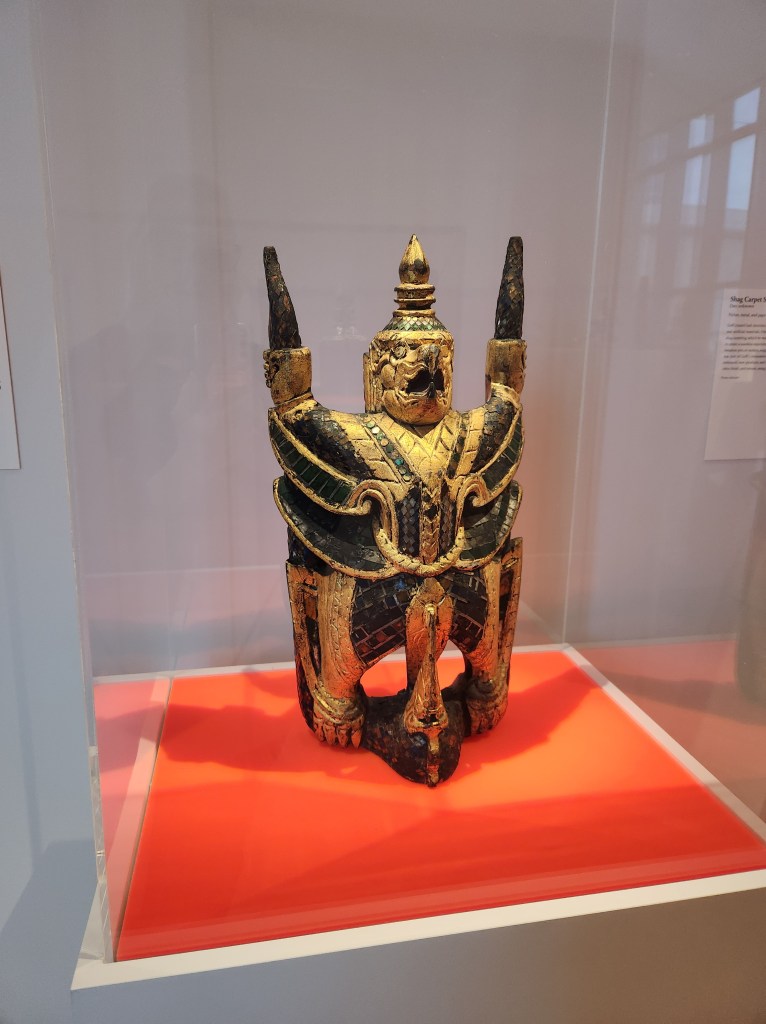
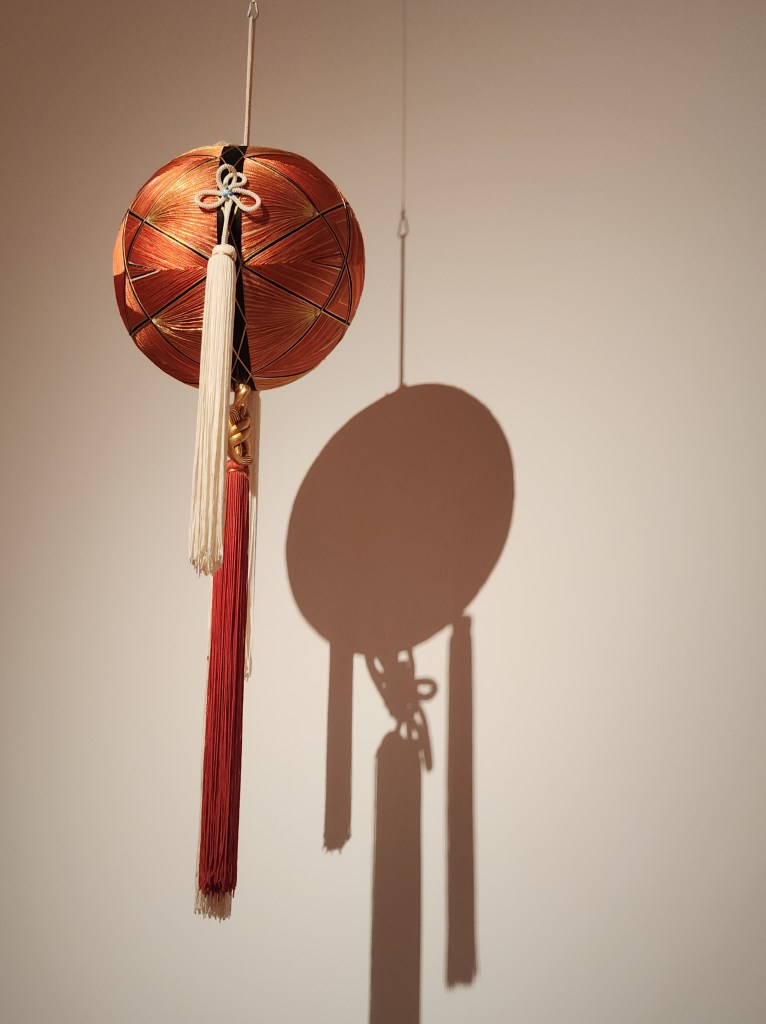
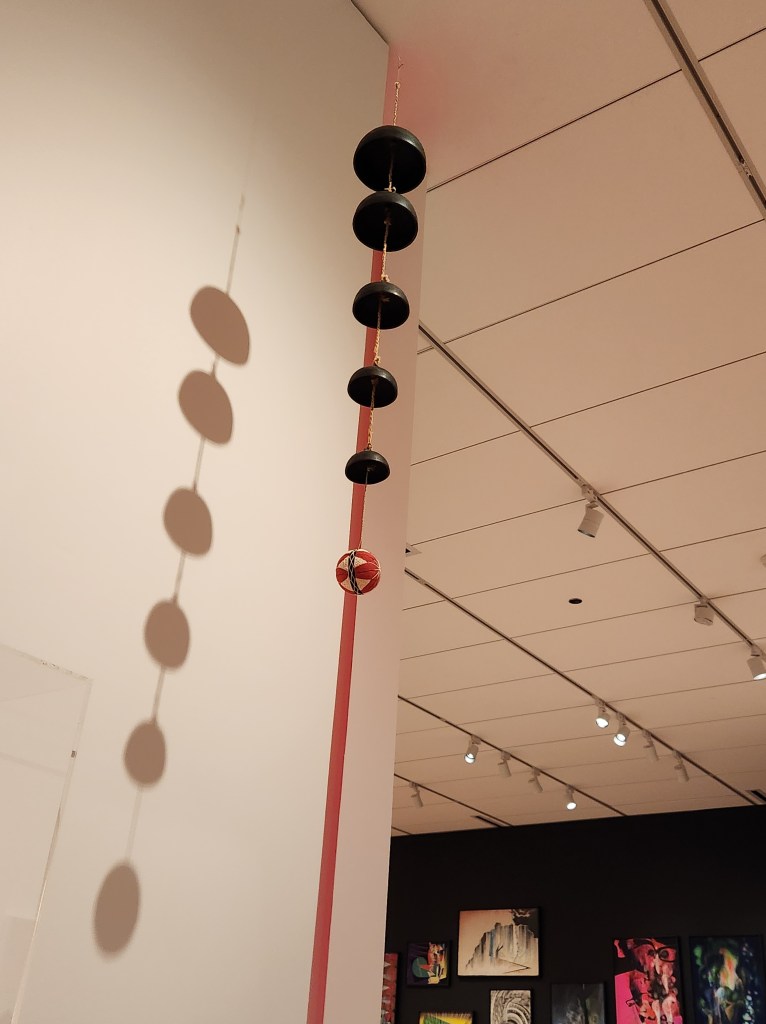
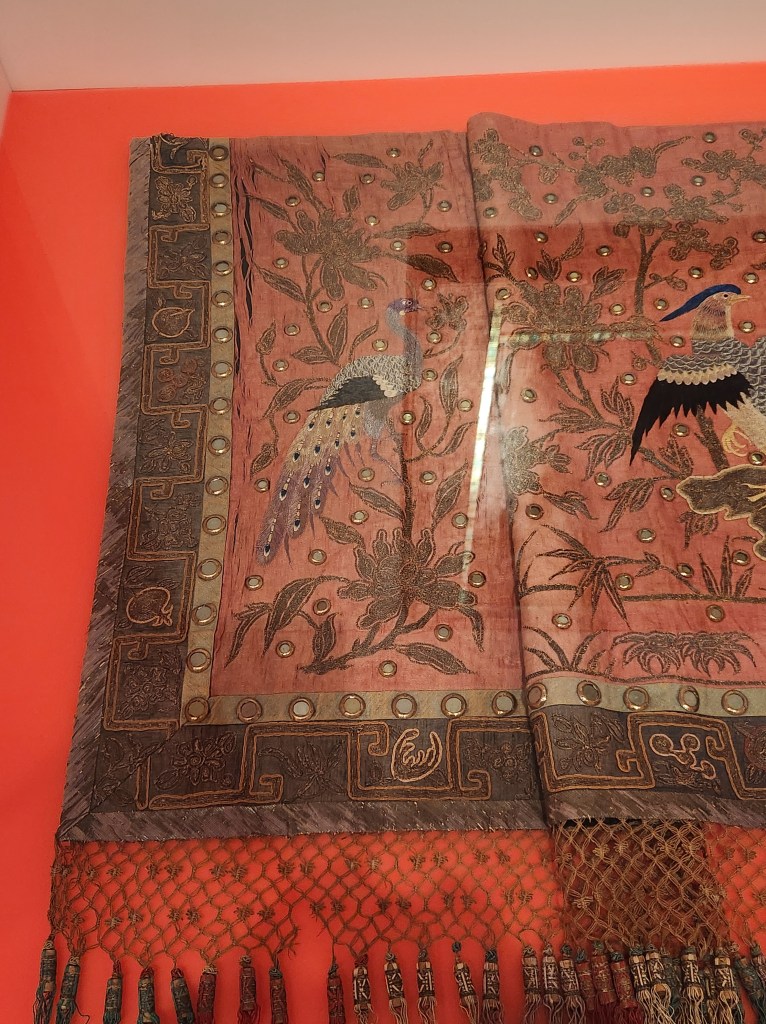
I took note of the label that mentioned he only visited Asia in 1969 after decades of collecting because it reminded me of the time that a visitor to our apartment assumed that we were world travelers due to our collections. I was especially tickled to find a label towards the end of the exhibition that mentioned Goff’s “preference for experiencing the world at a remove, at home with his tuxedo cat and record player.”

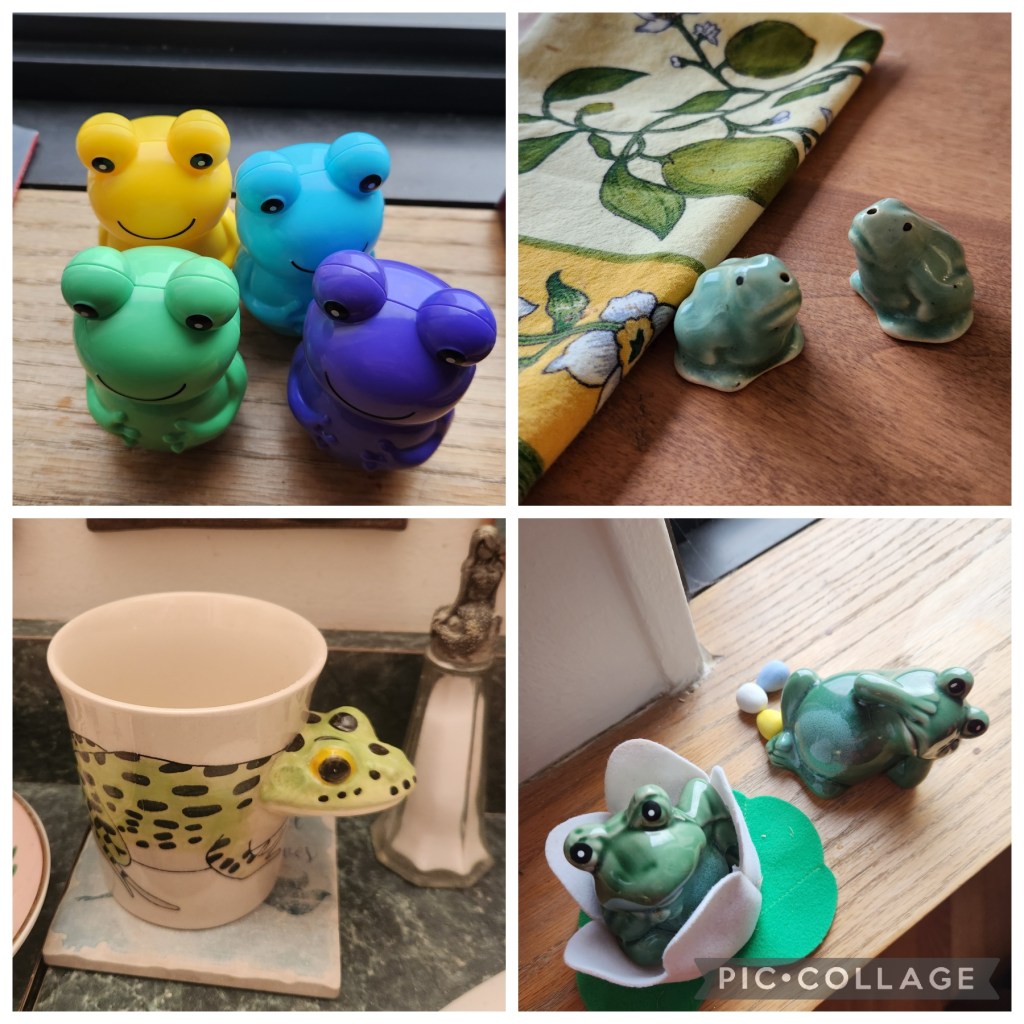
Spring started with the traditional frog appearances. Those colorful frogs full of Cadbury mini eggs started things off. They were followed by the two vintage salt and pepper shakers from Inkling and the incredible frog cup I bought in Saugatuck last summer. On the first day of Spring all the frogs around the house gave birth to Cadbury mini eggs – a few are visible in the fourth picture.
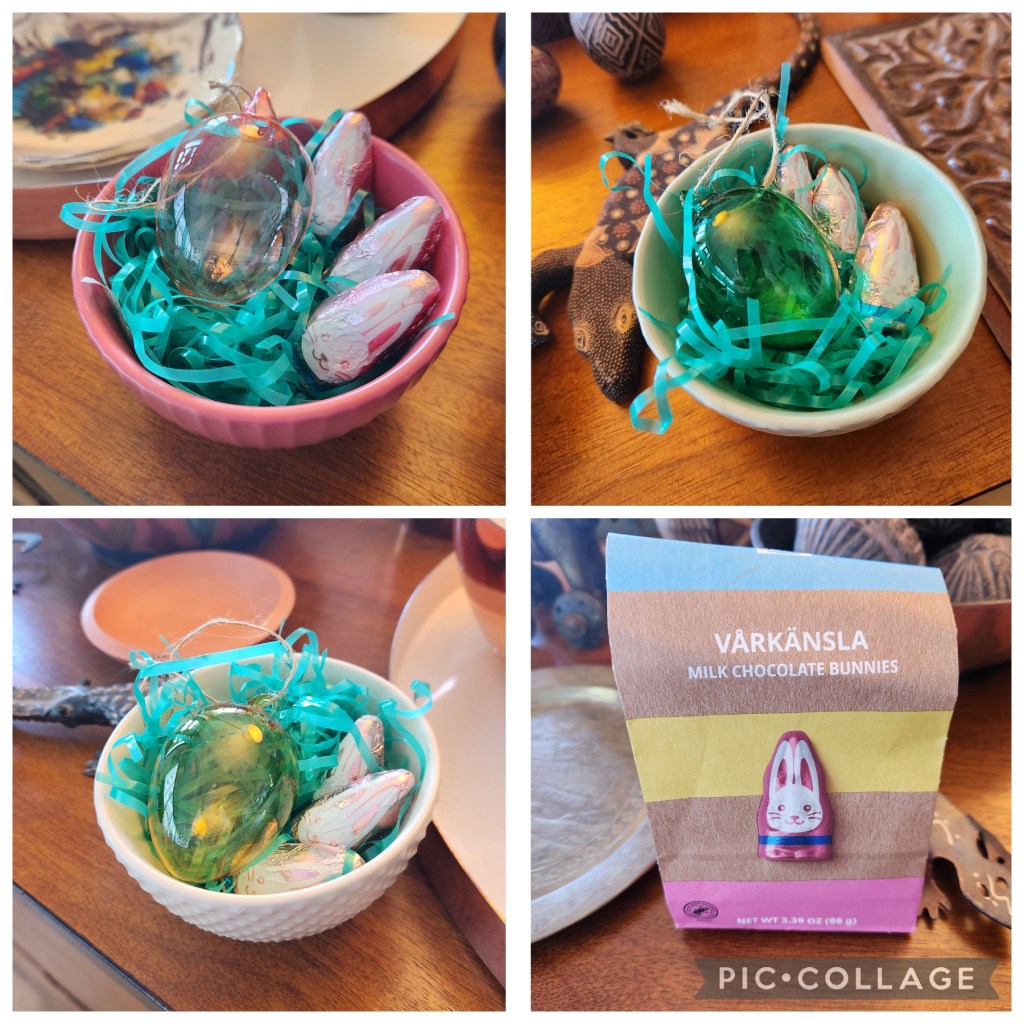
We went to Ikea recently to buy a new bedside table light. It was only my second visit to an IKEA and it was so much nicer than I remember the first one being. I loved a set of three little bowls and another set of three glass eggs and thought they’d be perfect for my daughter’s and granddaughter’s Spring gifts.
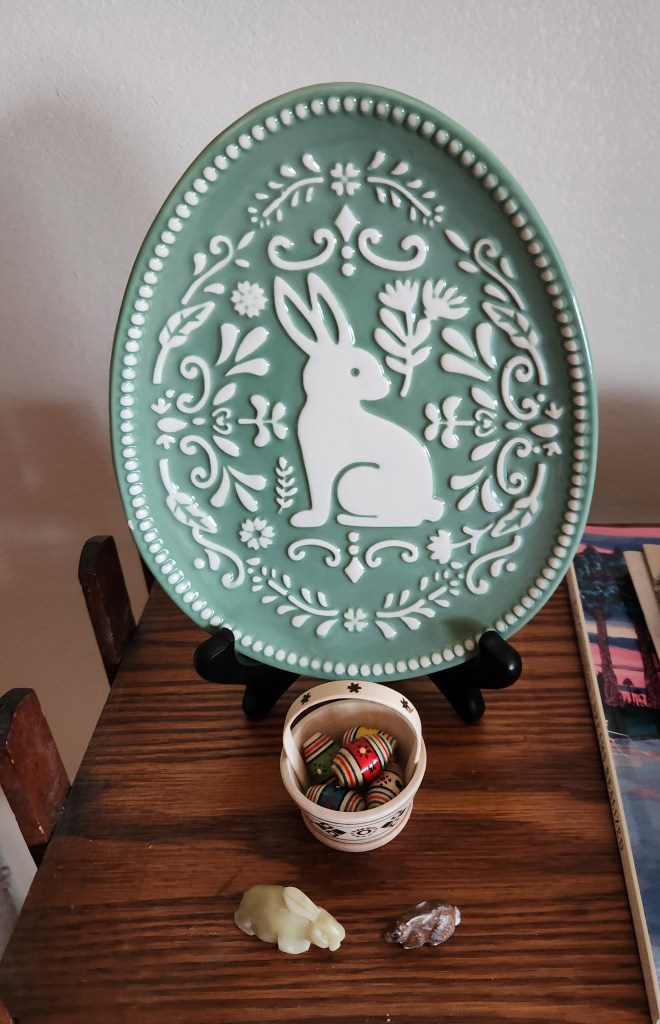
All the decorations ended up in the same places again this year except these two little bunnies who are perched in front of the little basket of eggs we got at the Ukranian National Museum. We stopped there when we went to see the Ukranian churches during Open House Chicago this year. I bought the bunny plate at the Walmart in Columbia – speaking of places that are much better than the last time I went to one!
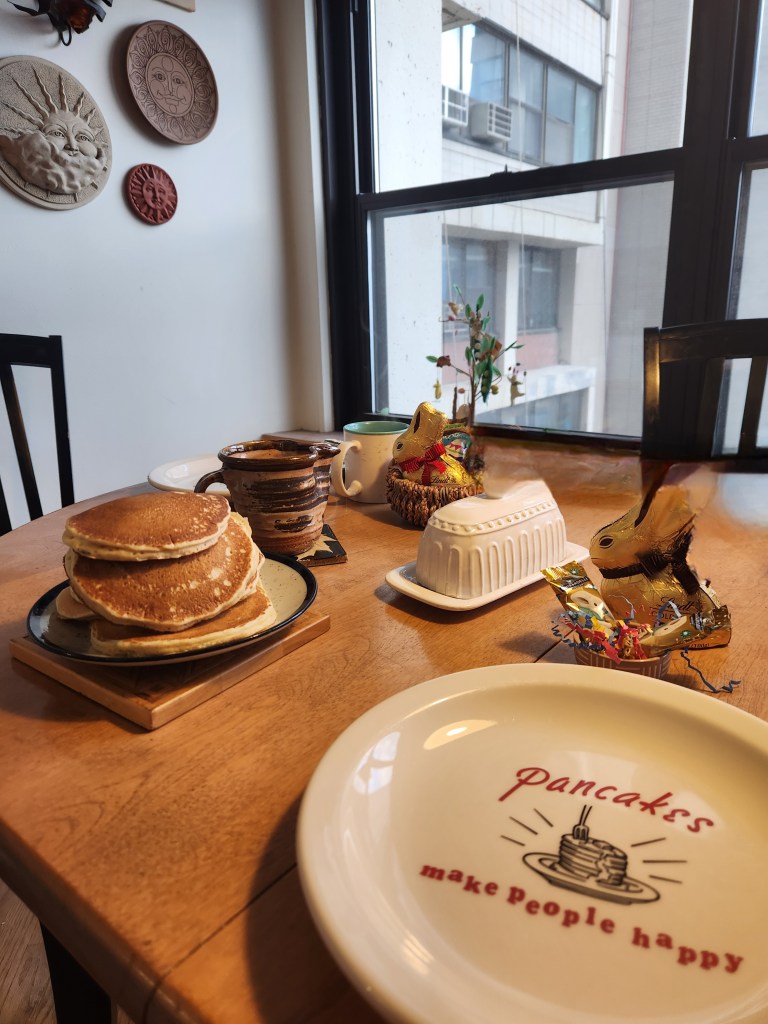
We had pancakes with our Easter baskets since Easter was on a Sunday and we weren’t having a brunch this year. My tiny Easter “basket” isn’t really visible in that picture but here’s where I put it on the sideboard after I ate the delicious Ghirardelli chocolate caramel bunnies out of it.
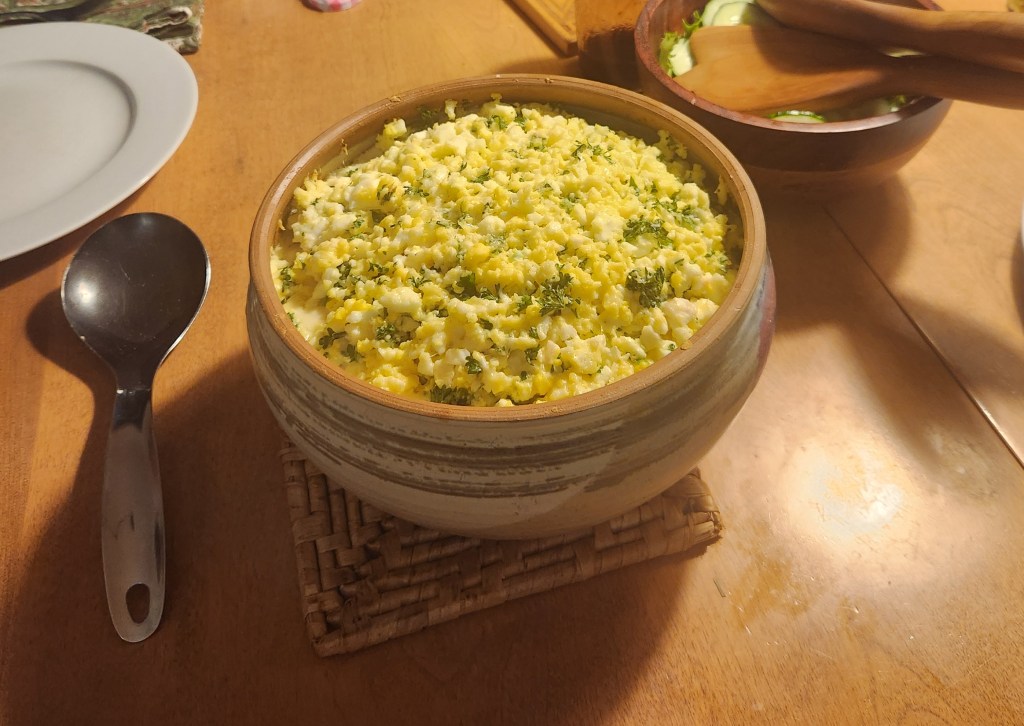
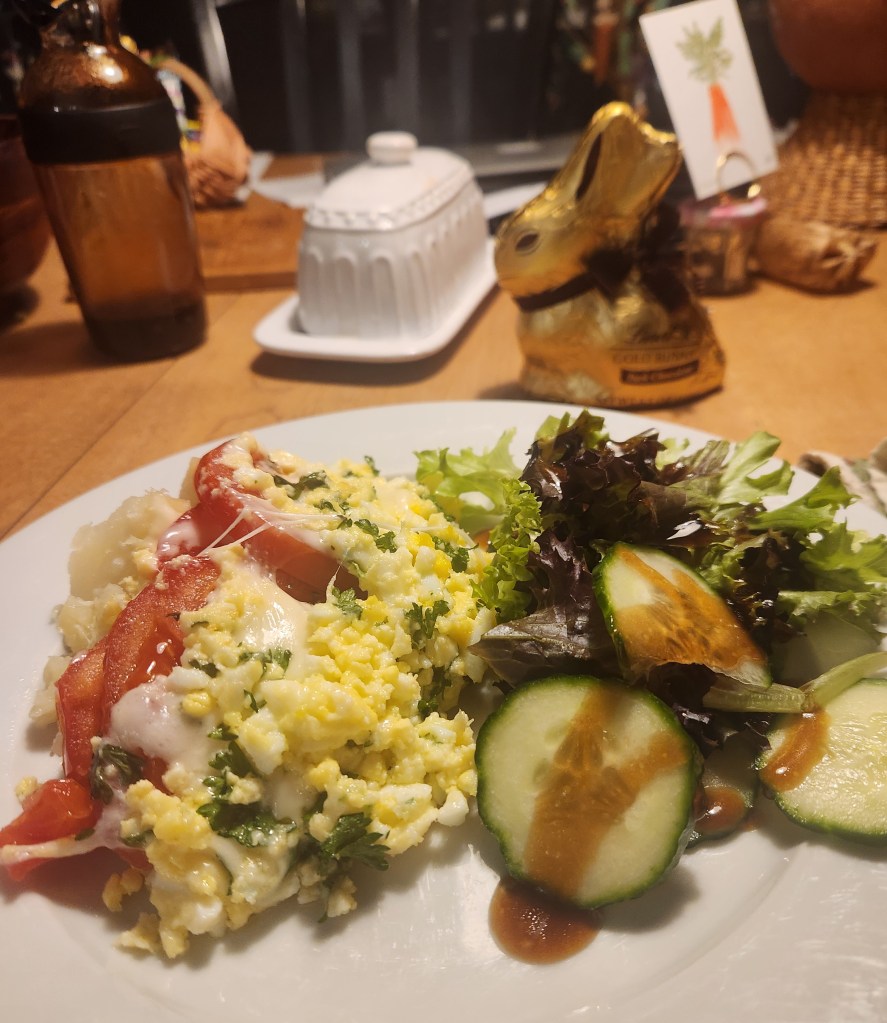
Since we weren’t having a brunch we had our traditional Easter casserole for dinner. I made it with fresh tomatoes for the first time and it was delicious!

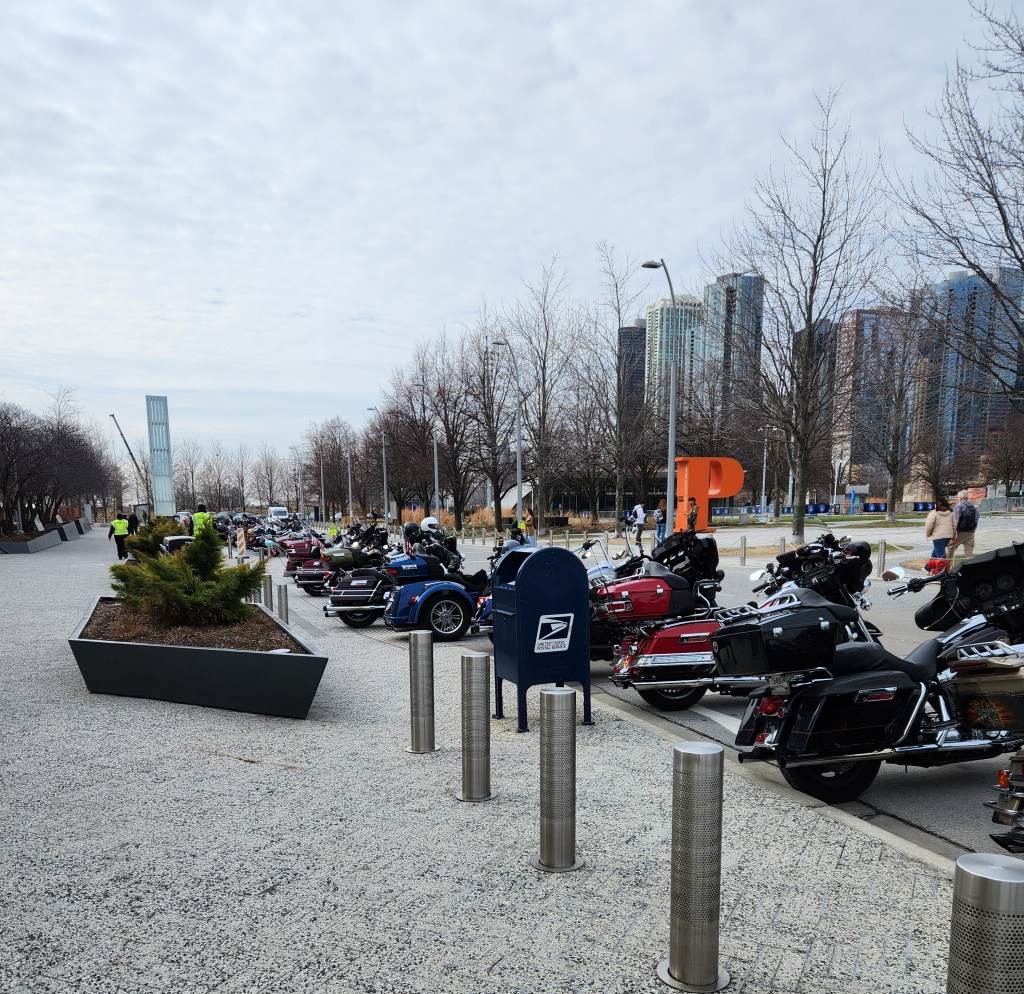
When I arrived at Navy Pier last week the entrance was lined with motorcycles. There was nothing to indicate why they were there but there are often different things going on at the Pier so I snapped a photo and I thought I’d ask the person at the information desk why they were there. But there was no one at the desk and there were no signs or flyers or any other way of knowing what was happening that day – a pet peeve of mine that could be the subject of a whole other post.
After awhile I asked my coworker in the art studio if she knew what the story with the motorcycles was. They must be part of the Route 66 sign unveiling she said. The what? While I was only vaguely aware of Route 66 when I moved to Chicago, I was excited but a bit confused when I saw my first Route 66 sign.
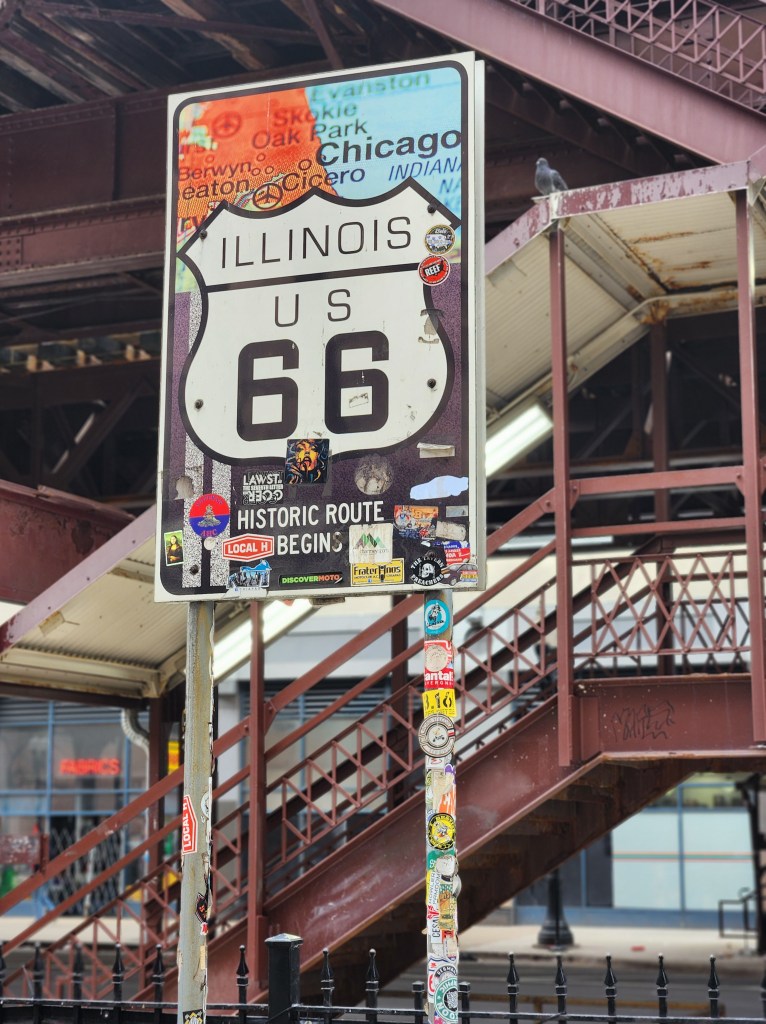
This sign is in a small fenced park on Adams and Wabash one block west of Michigan and Adams and it seemed like an odd place for a road to begin.
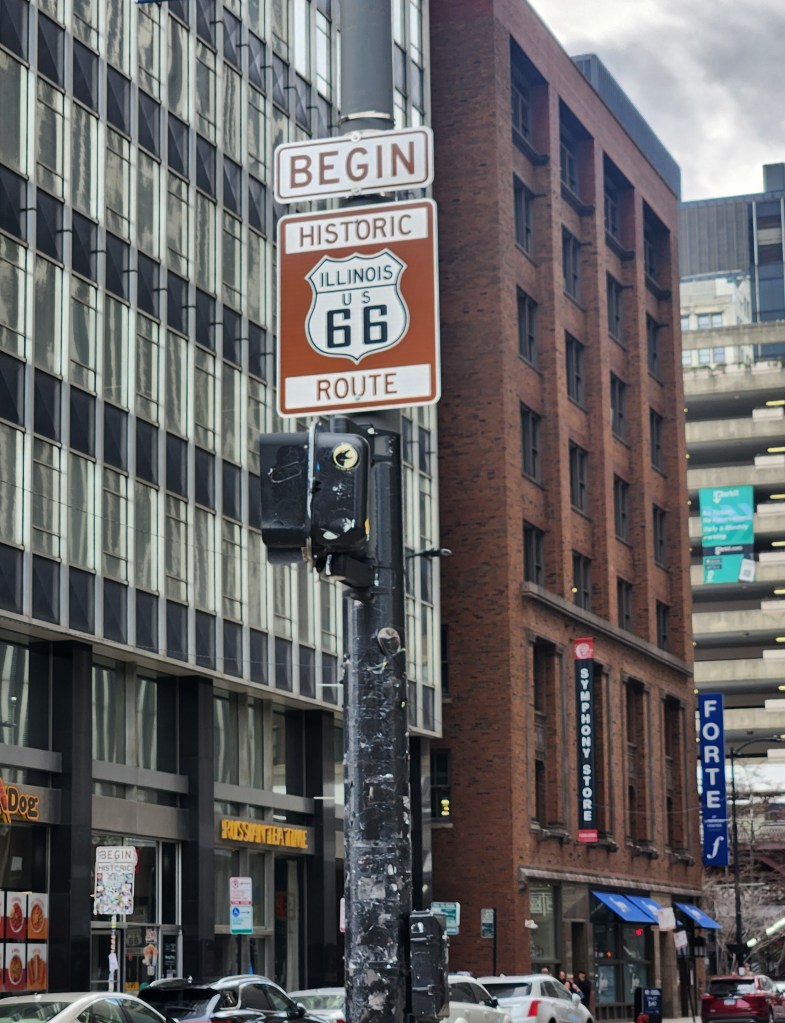
Later I saw this sign which actually looks like an official highway sign on the corner of Michigan and Adams which made more sense since Adams actually begins there. It doesn’t exactly look that important though so I guess that’s why a new sign appeared two years ago right on Michigan Avenue at street level where way more people would notice it.
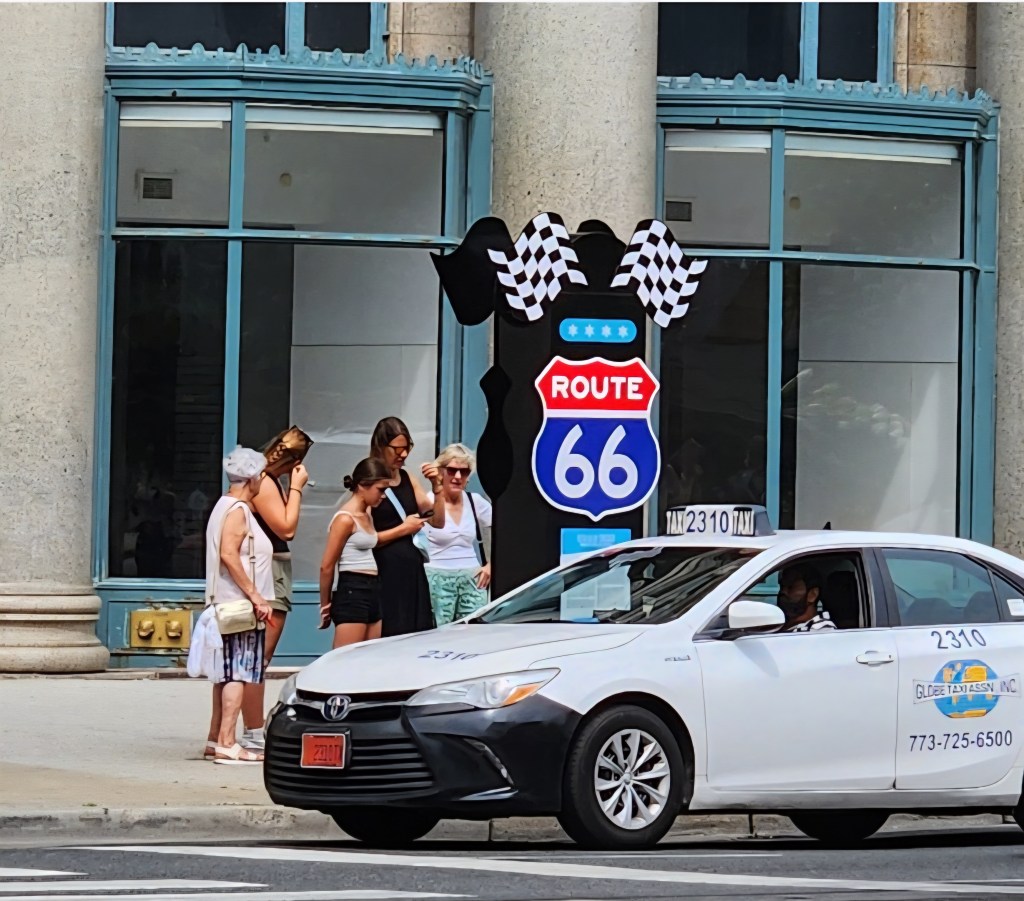
While there is some dispute about whether Route 66 begins or ends in Chicago and all the original official signs were removed when the route was decommissioned as the new interstates were built, I think it is pretty clear that Route 66 does not begin at Navy Pier.
I said as much to my coworker and she said that since there was a decision to have the road end at the Santa Monica Pier a few years ago they had now decided to have it start at Navy Pier. But that makes no sense I indignantly insisted. She didn’t seem to see the problem, it’s a Pier to Pier thing she explained and then she told me what she found far more interesting – there were going to be alpacas at the unveiling.
I left the museum without going to look at the sign or the alpacas and did some googling to find out what on earth was going on and found this on the Route 66 news website:
In celebration of Route 66’s centennial, the City of Chicago will formally recognize Navy Pier as the symbolic starting point of the highway.
The designation was approved through a resolution introduced by Alderman Brendan Reilly and adopted by the Chicago City Council in recognition of Route 66’s centennial and Chicago’s historic role as the route’s eastern anchor.
“Route 66 has always been about dreams and possibility,” said 42nd Ward Alderman Brendan Reilly. “Designating Navy Pier as the eastern terminus honors Chicago’s historic role while creating a powerful Pier-to-Pier connection that captures the true spirit of the American journey.”
Navy Pier is about one mile northeast from Route 66’s actual eastern terminus of East Adams Street and South Michigan Avenue.
In 2009, the symbolic endpoint of Route 66 (in California) was moved one mile west from the actual western terminus at Olympic and Lincoln boulevards — a once-nondescript intersection — to the gaudier Santa Monica Pier.
The symbolic move culminated with the erection of the “Route 66: End of the Trail” sign, though multitudes of Route 66 travelers already had ended their journeys at the pier for many years.
A new Route 66 sign will be installed at Navy Pier, marking it as the “Beginning of the Trail.”
The Pier-to-Pier connection creates a symbolic bookend to one of America’s most storied highways, linking Lake Michigan to the Pacific Ocean and reinforcing Chicago’s role as a historic origin point and a modern gateway for exploration.
“Route 66 has long represented connection and possibility, and we’re proud that its journey now begins at Navy Pier,” said Marilynn Gardner, CEO of Navy Pier. “As Chicago’s front porch and a gateway to the city, Navy Pier is a fitting starting point to honor 100 years of the American journey.”
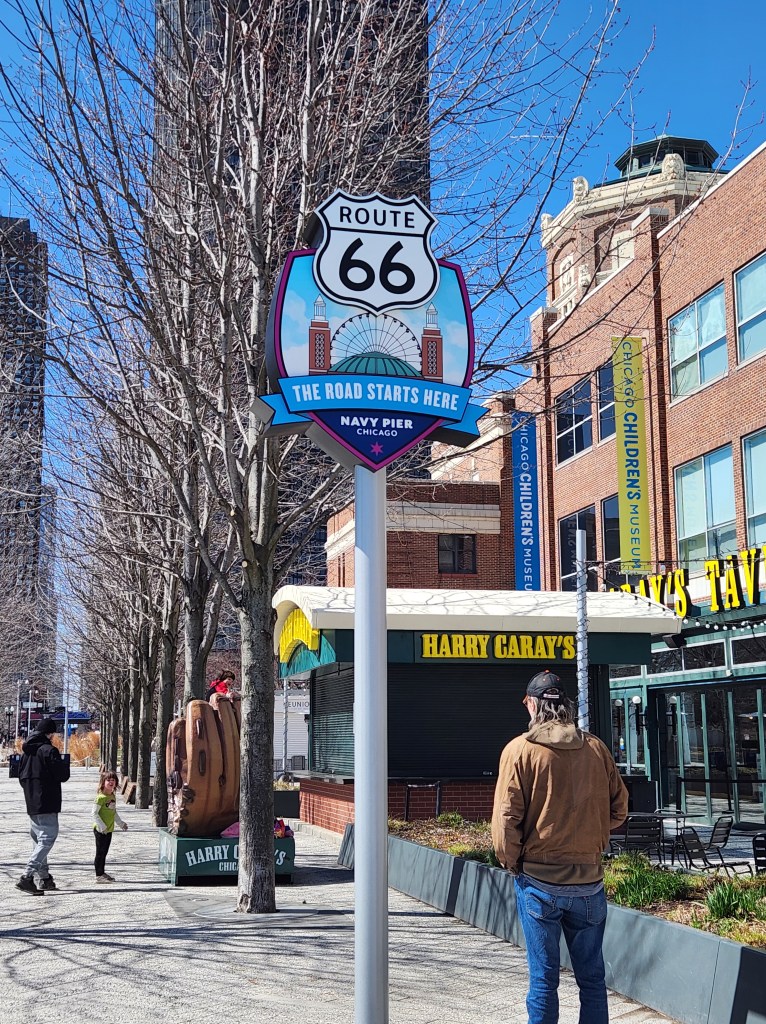
Still in disbelief I went to check out the sign the next time I was at the Pier and as you can see the sign is in front of Harry Caray’s restaurant. More research reveals that the CEO of Harry Caray’s was instrumental in the city’s decision to make Navy Pier the starting point. “Harry Caray’s life perfectly embodied the spirit of Route 66…” Sure, I think the Tribune got it right this morning in their editorial “Get your kicks… on Navy Pier?”
“As far as we can tell, the reason for the cheeky change to the terminus/beginning of the Mother Road was that Navy Pier and its benefactors at the city of Chicago just decided it would be thus, so as to snag more business during this 100th anniversary year for Route 66.”
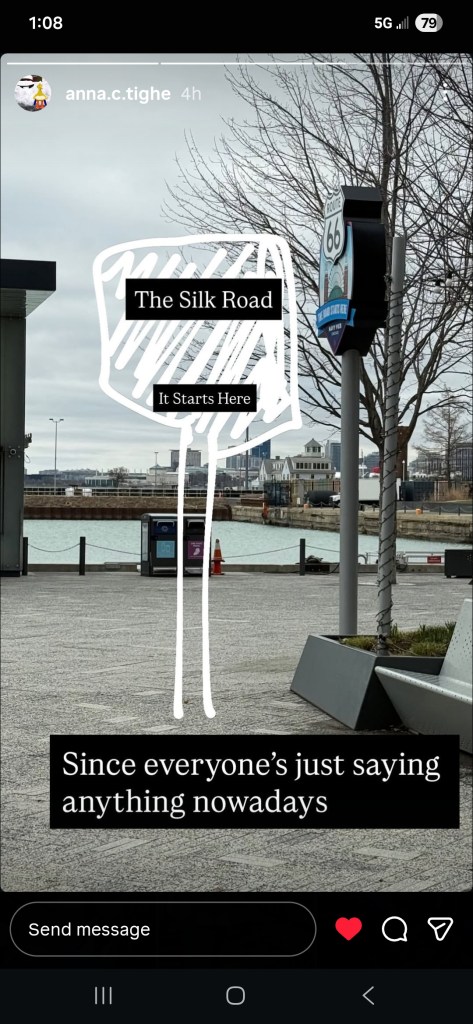
I was glad to see that at least one of my museum co-workers was not blasé about the change. Think of the commercial possibilities if all roads began or ended at Navy Pier!

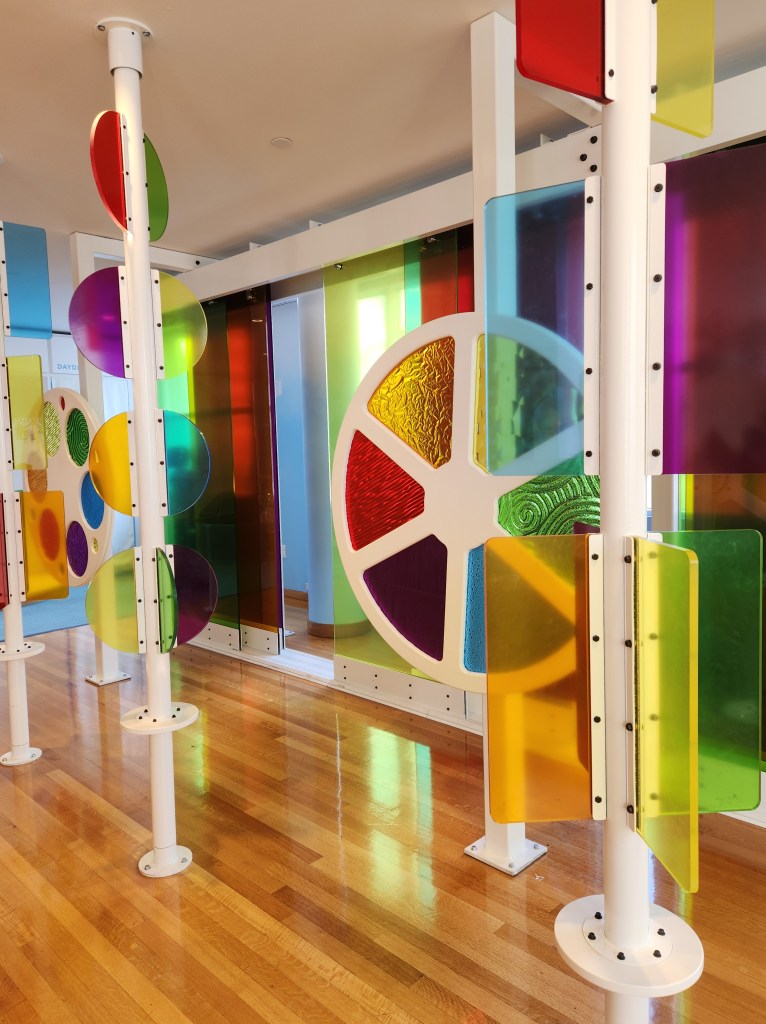
Last week when Anna was showing me photos from her recent visit to the Baltimore children’s museum, I realized I’d never posted the photos I took of the children’s spaces at the museums I went to during our January Rushmer Christmas trip.
Rushmer Christmas was in Birmingham this year so we added a trip to the High Museum of Art in Atlanta to see their outsider art collection. Of course I had to check out the children’s spaces too. The Greene Family Learning Gallery for infants to eight year olds has “two distinct spaces for creative play that combine cutting edge technology with hands on activities”
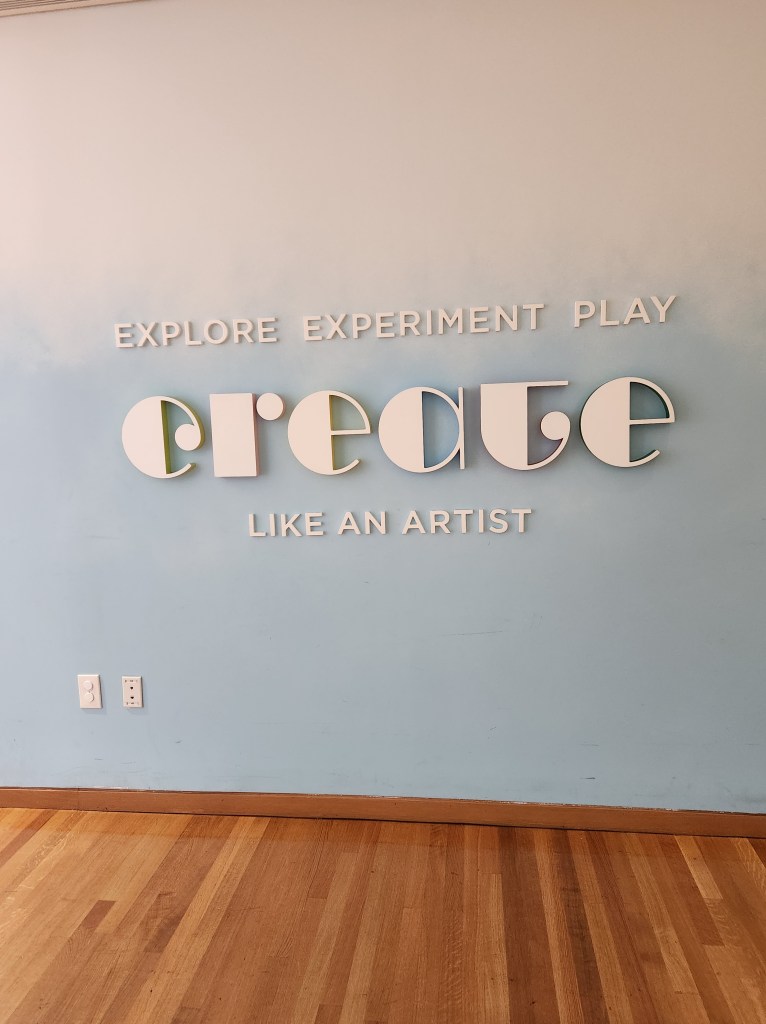
According to their web site Create is “an open studio centered on creative process and devoted to developing young visitors art-making abilities.”
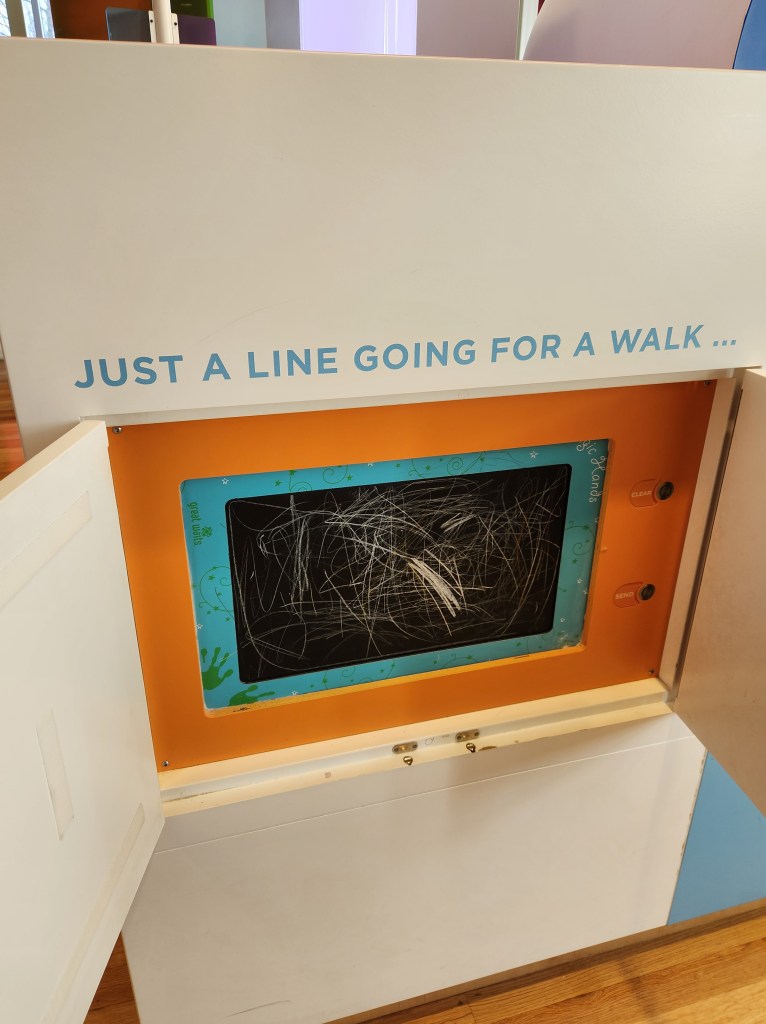
The Paul Klee quote leads to one of the technological experiences.
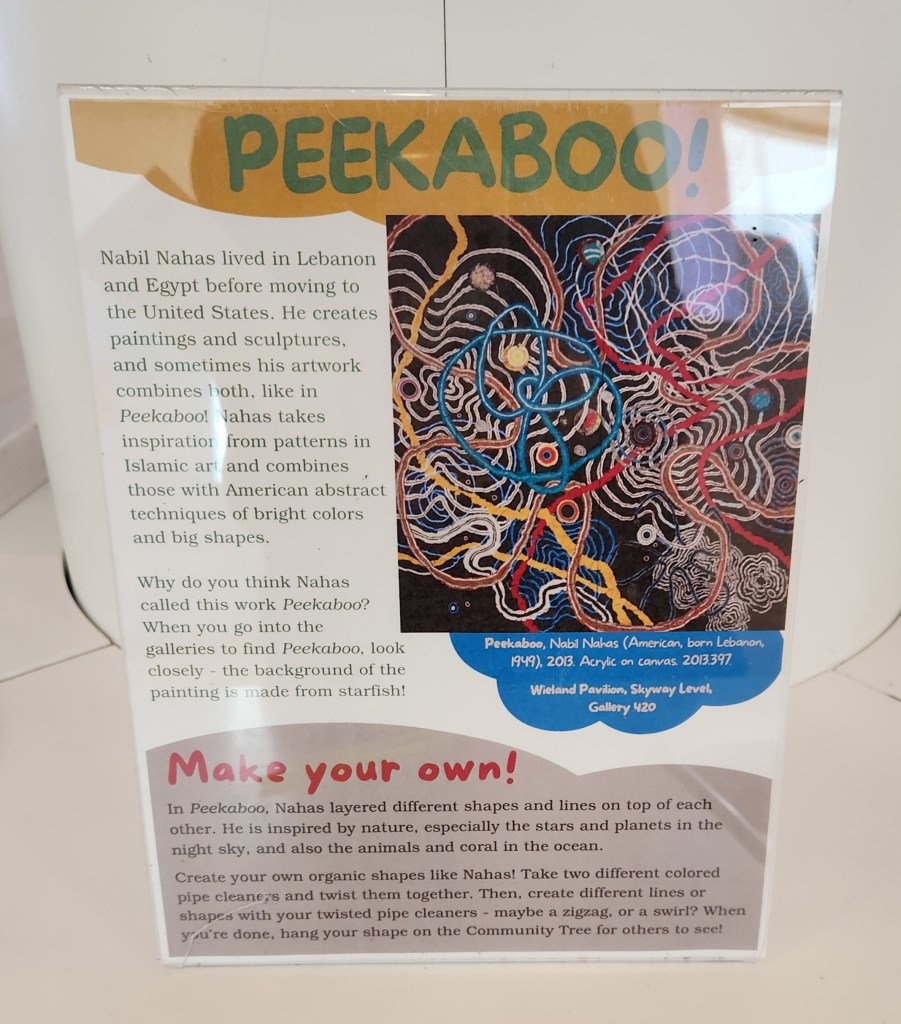
And one of the pieces from their collection “Peekaboo” by Nabil Nahas inspired one of the hands on activities.
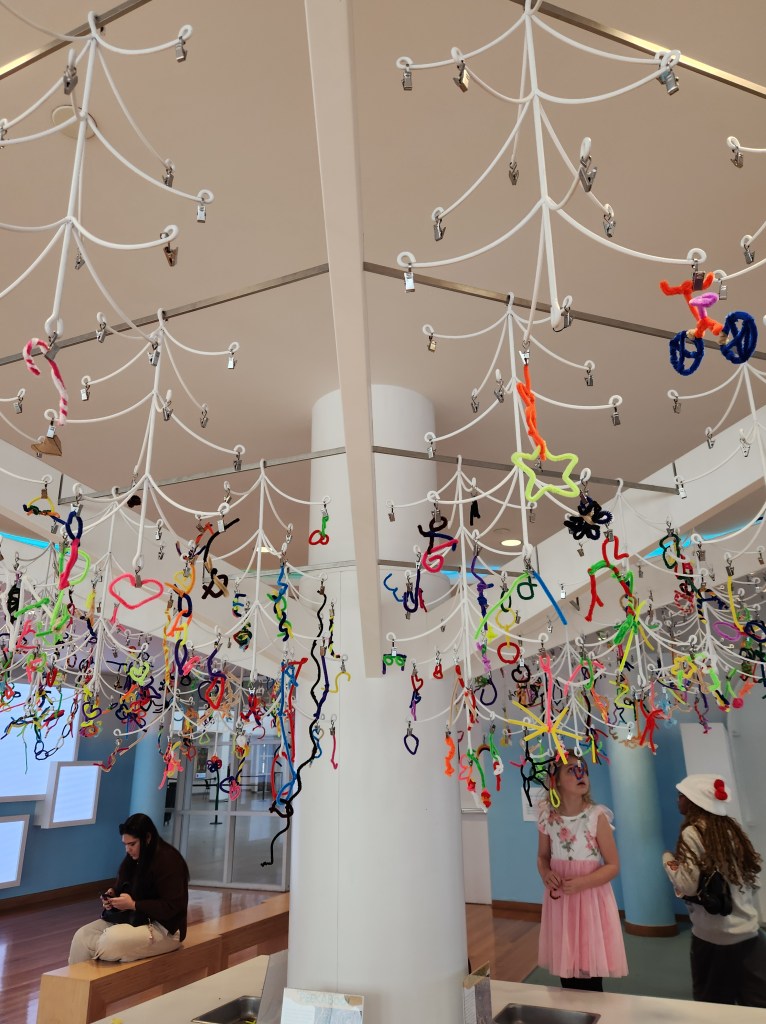
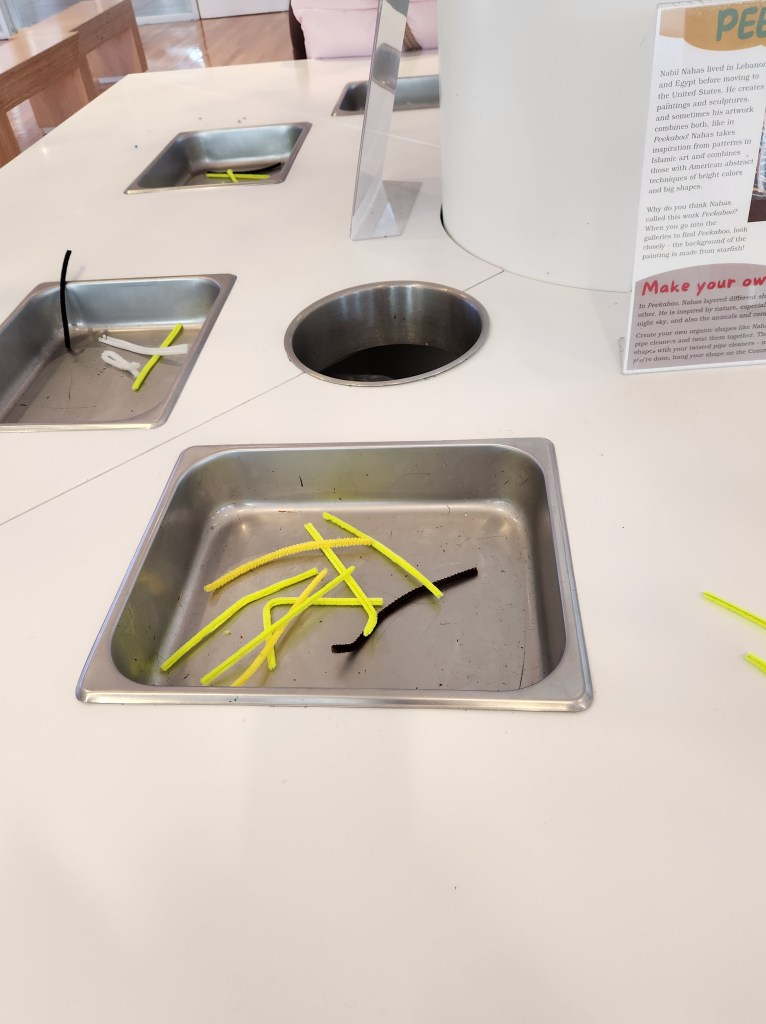
It reminded me of the CCM Young Artist Program chandelier project. I’ve never seen the handy built in trays before though.
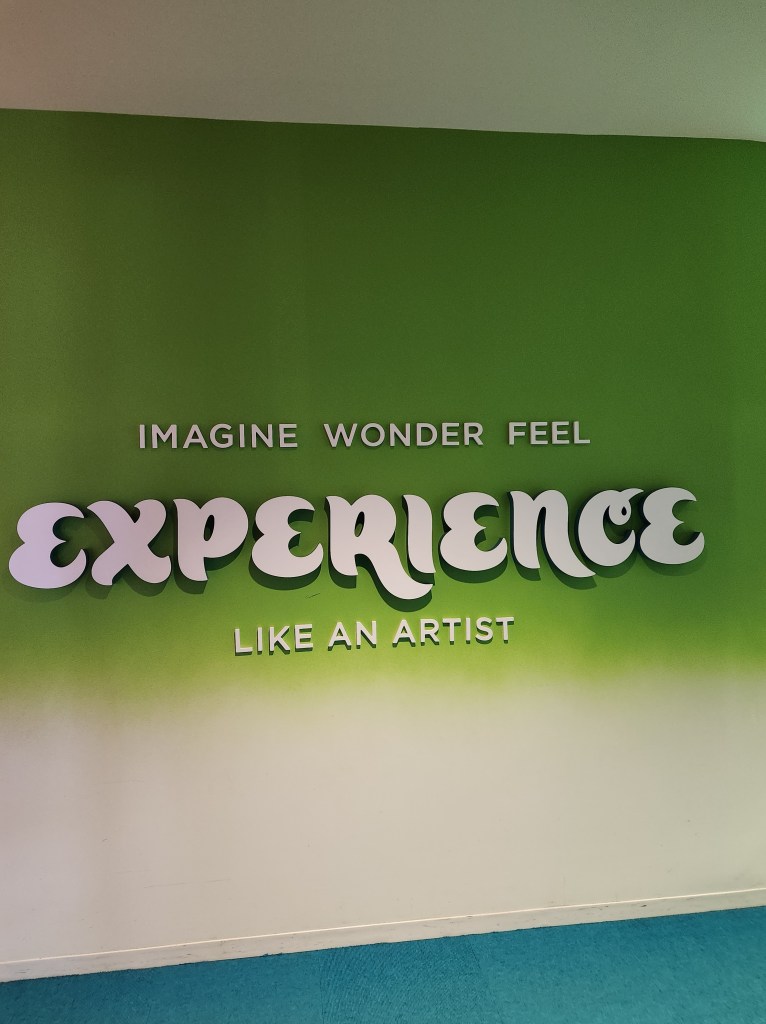
Across the hall was Experience: “a deeply immersive gallery that enables visitors to explore what art means, how it feels, and where it can take us”
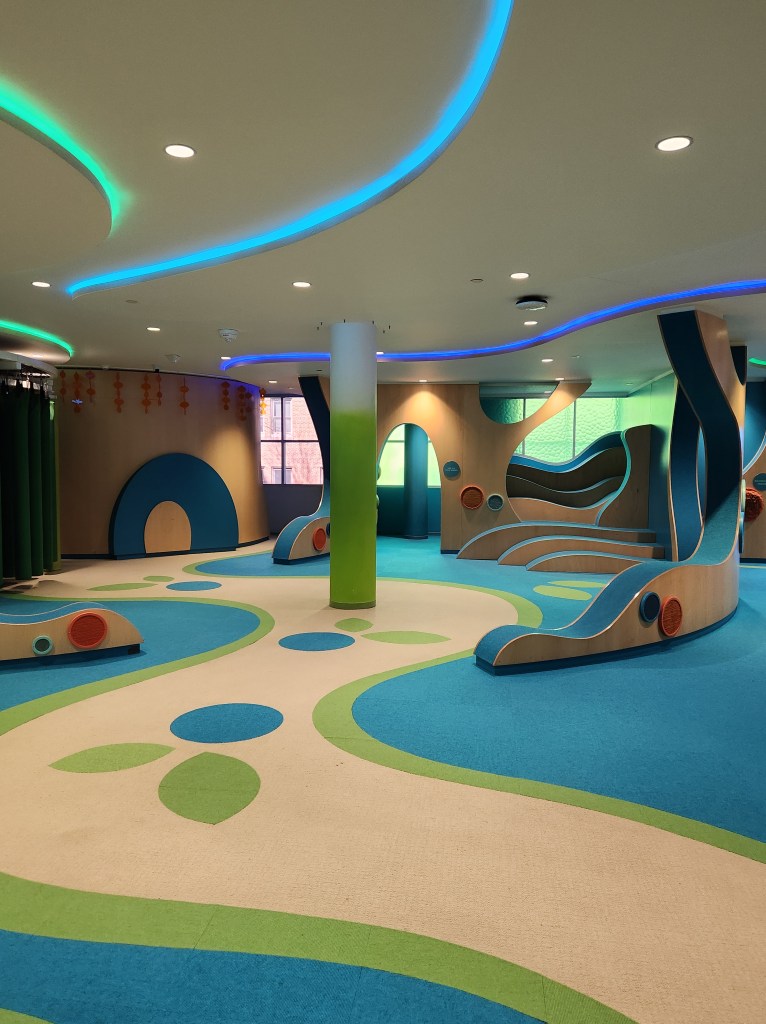
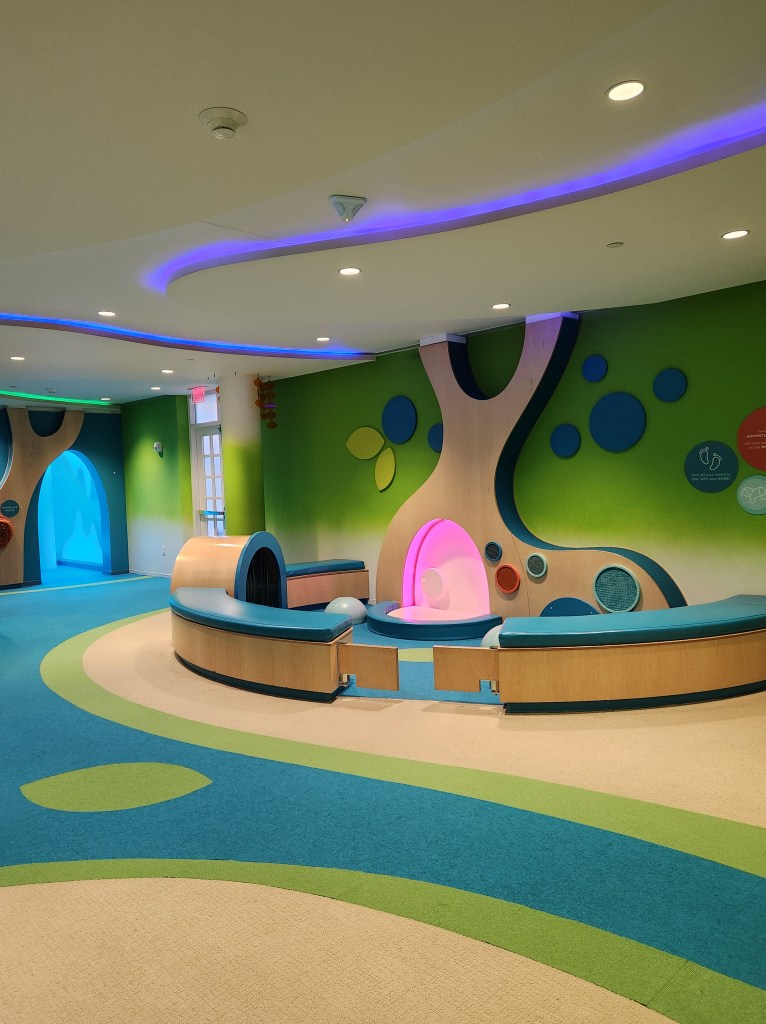
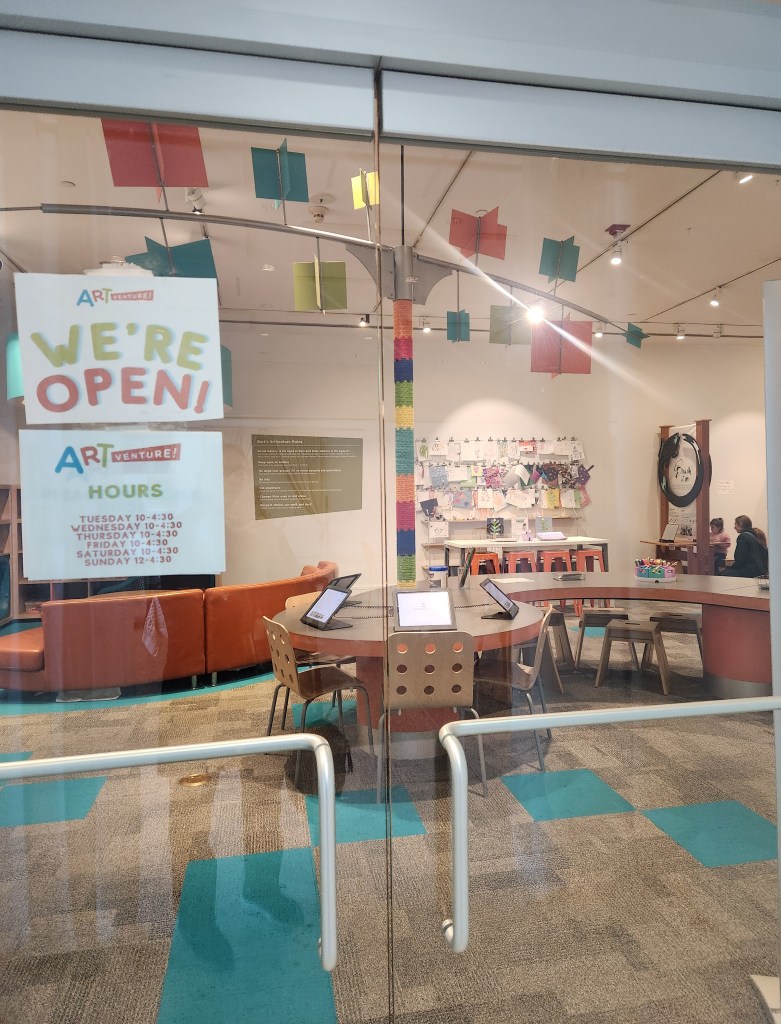
The next day we went to the Birmingham Museum of Art and to Art Venture and its “15 hands-on learning stations for toddlers to tweens”.
The Sonat Gallery offers opportunities for crawlers and toddlers to explore light, color and texture.
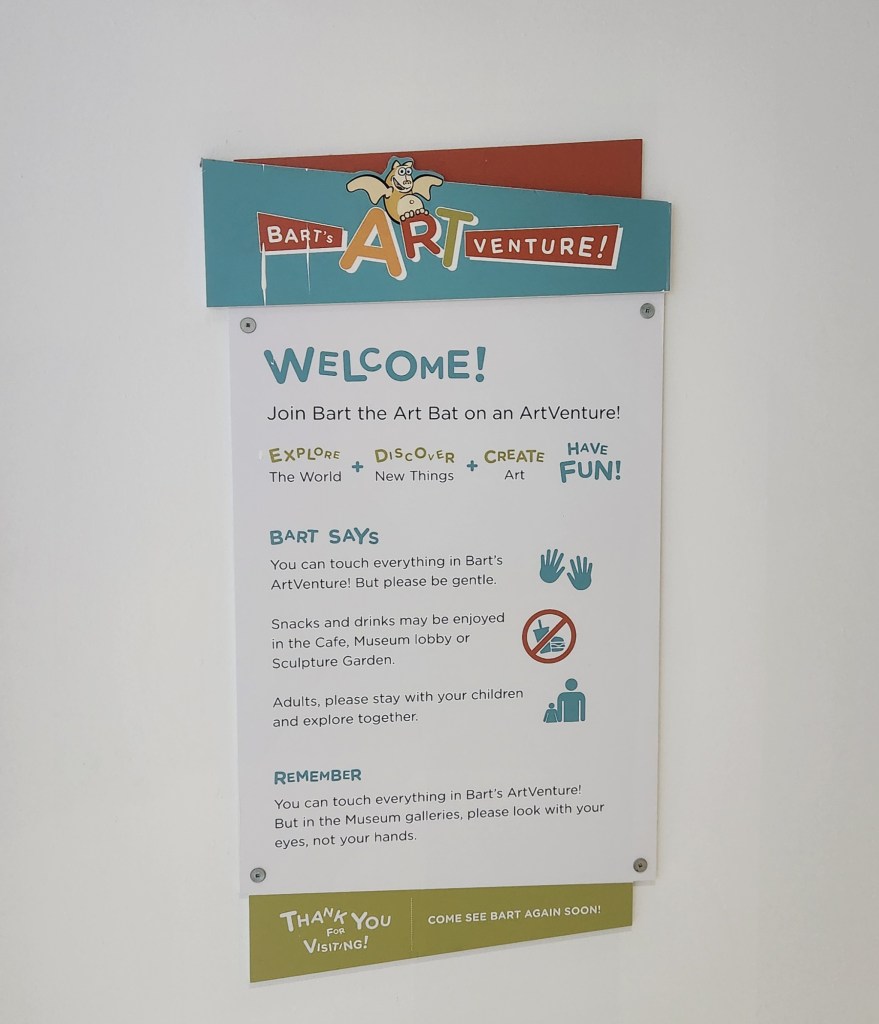
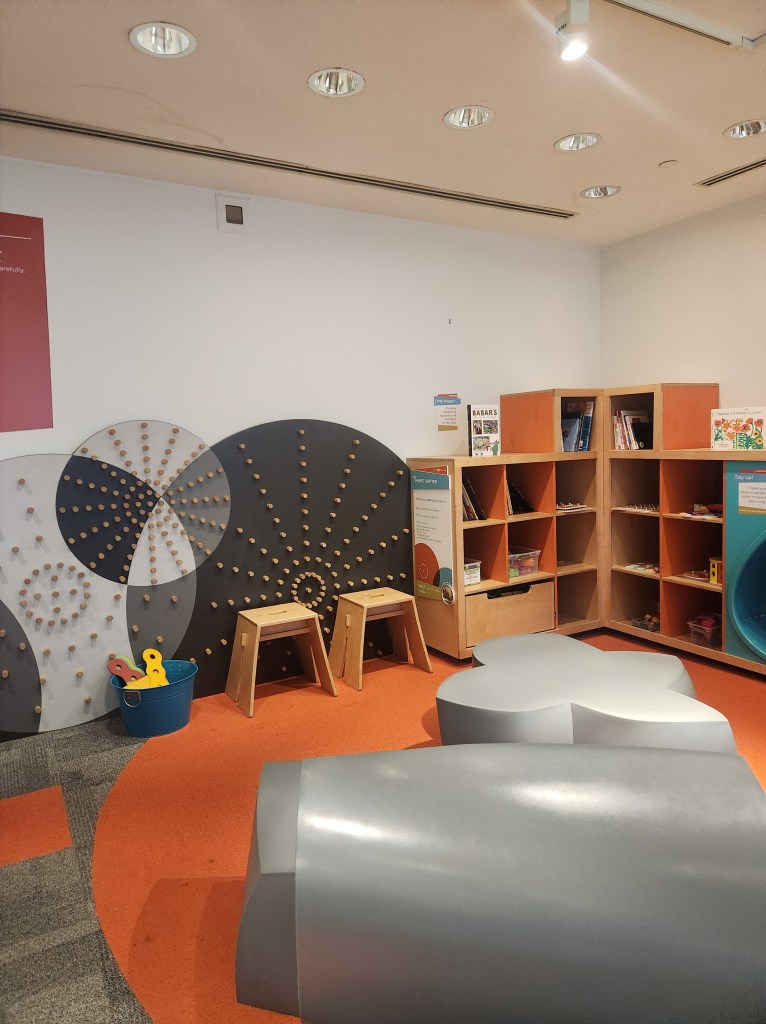
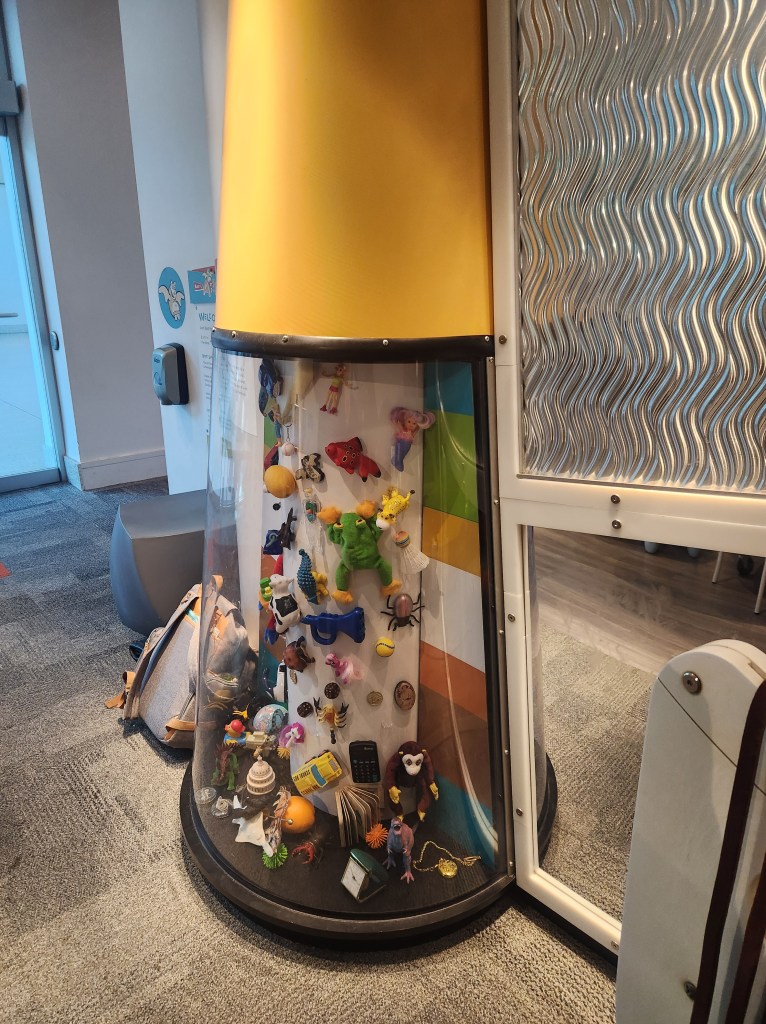
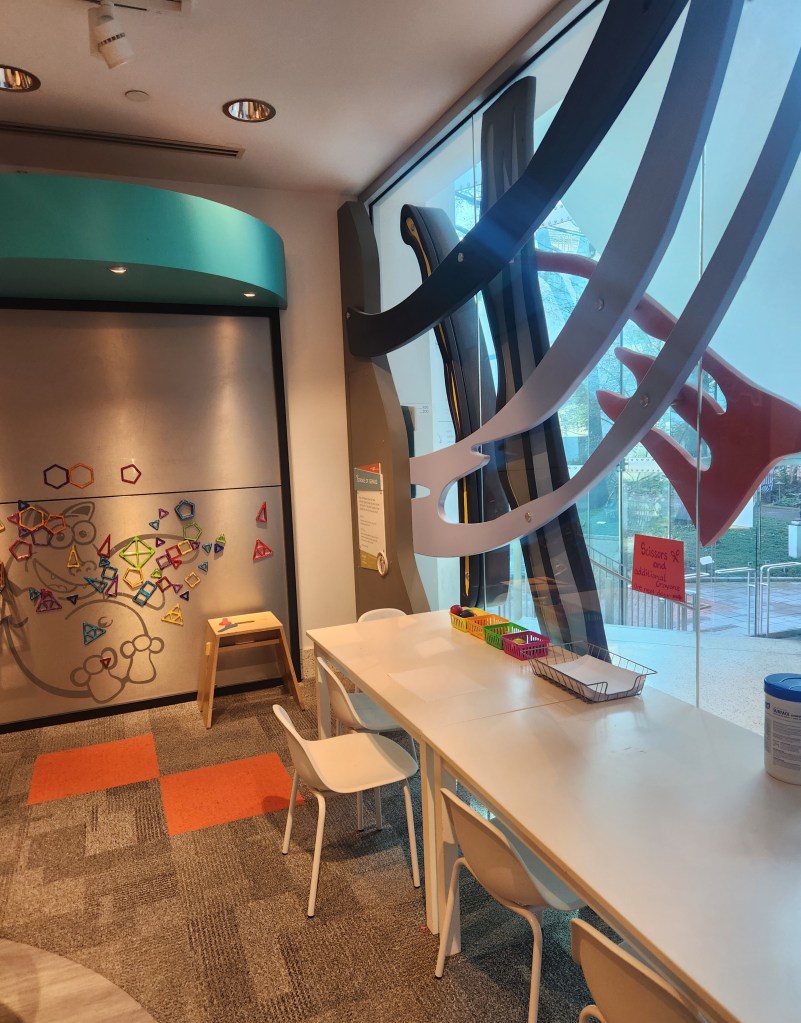
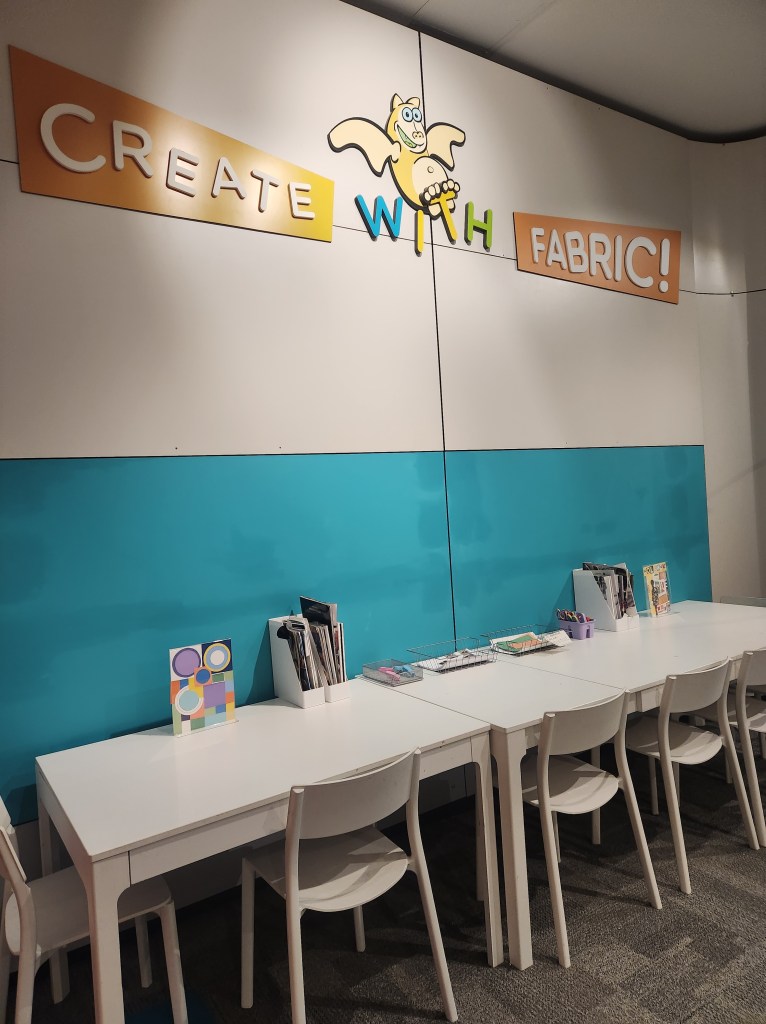
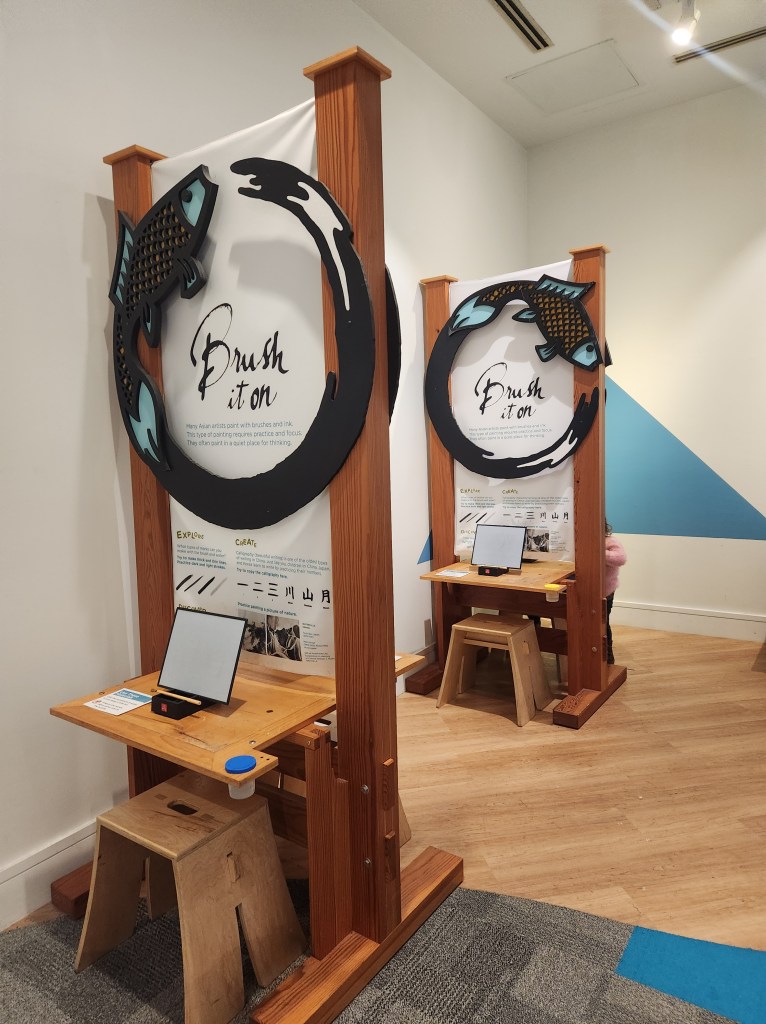
The Hess Gallery aims to “inspire a love of making” for 5 – 12 year olds and has activities including a maker space and a stop motion tech station.
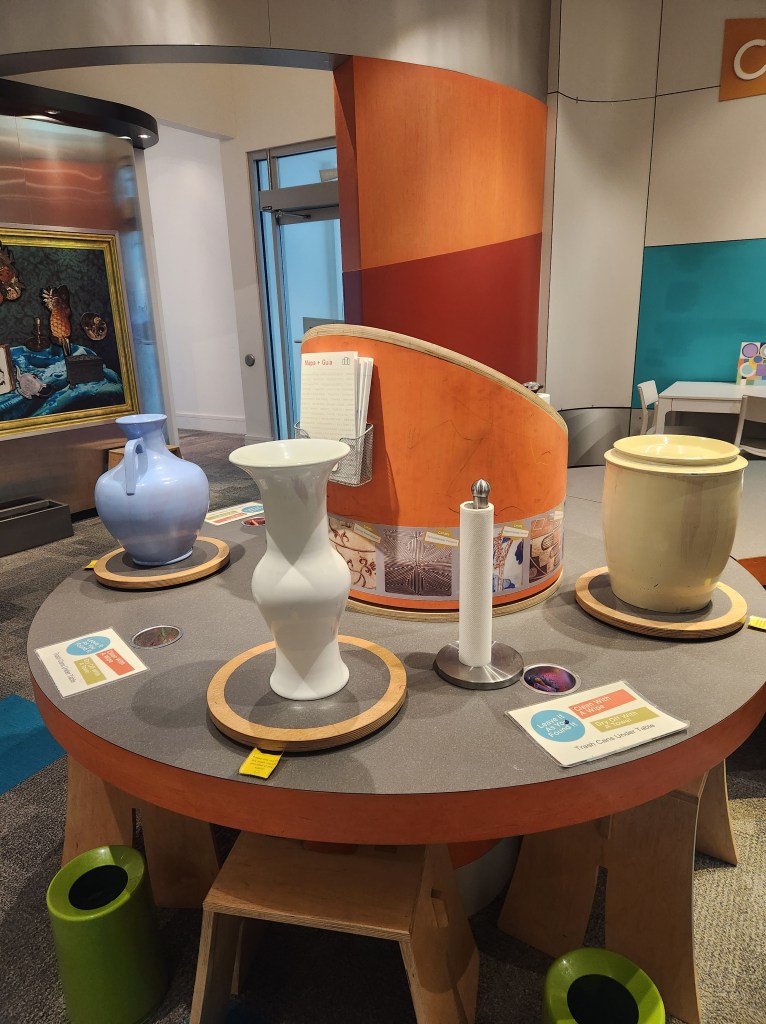
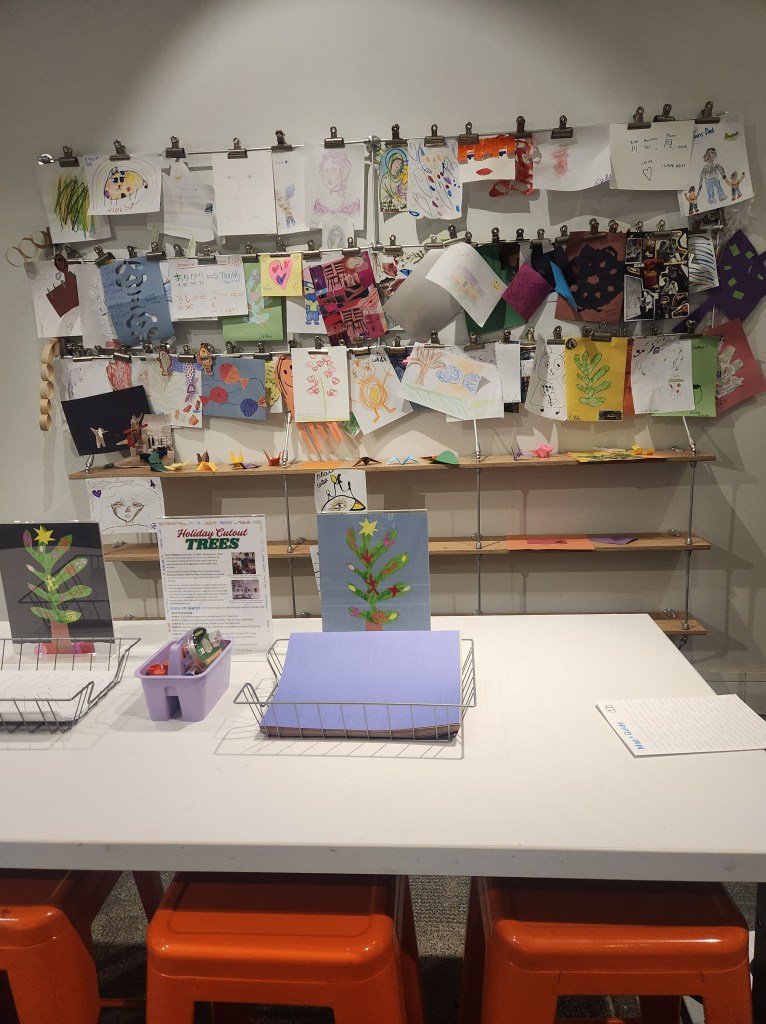
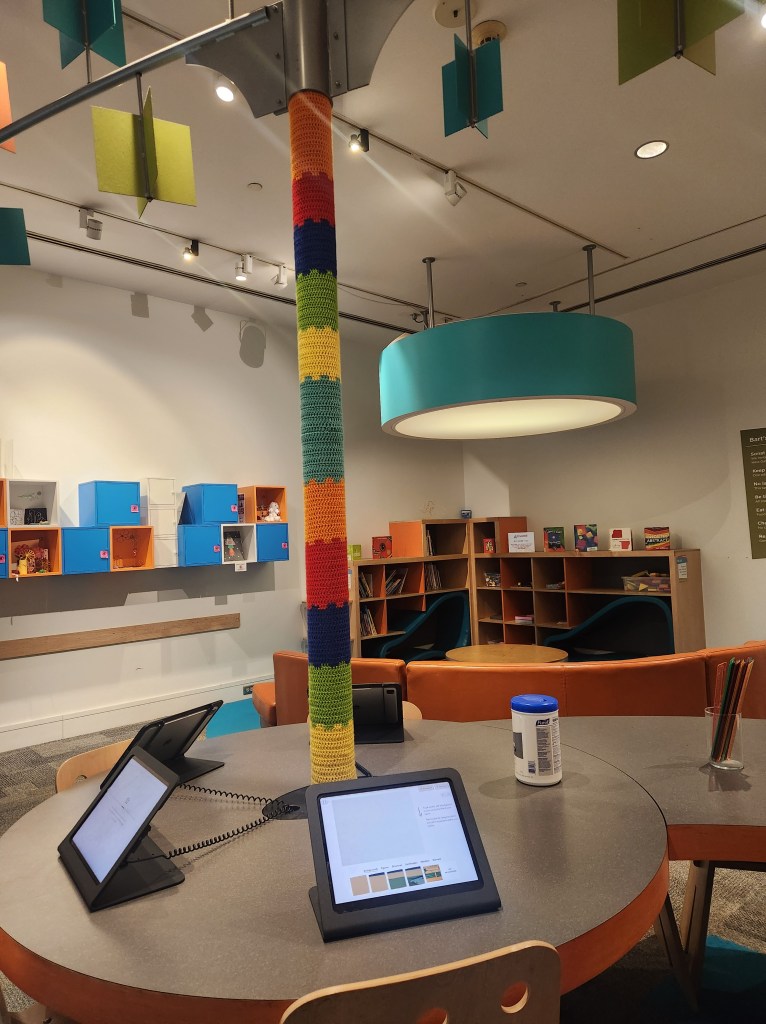
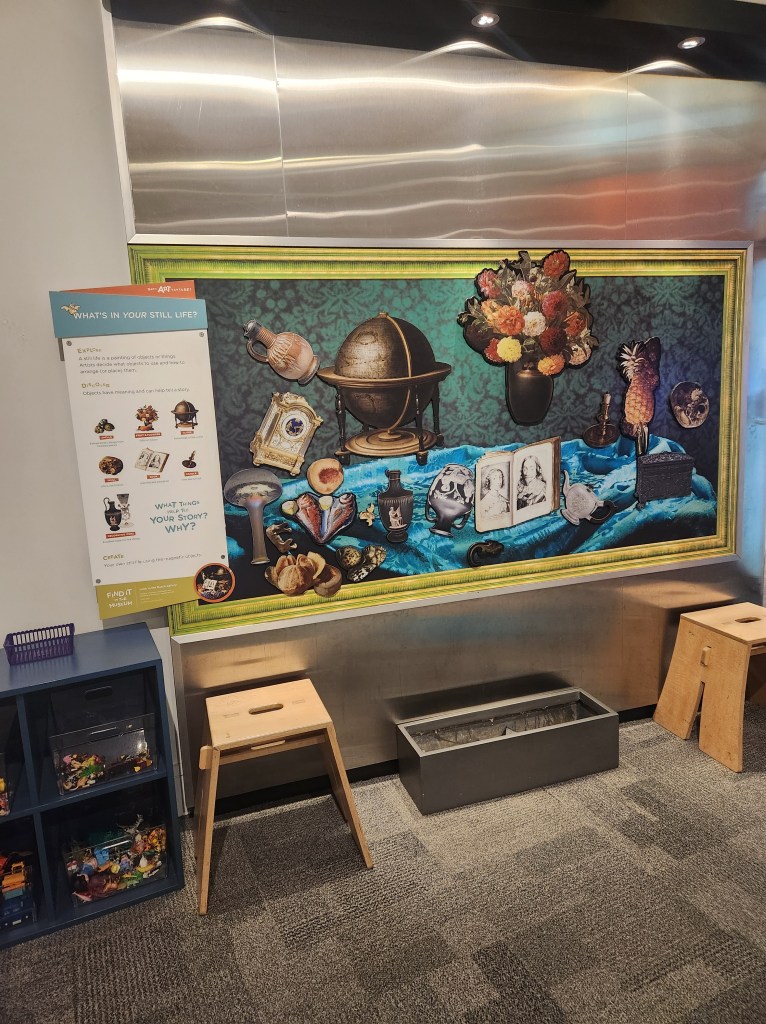
Quite the spaces!

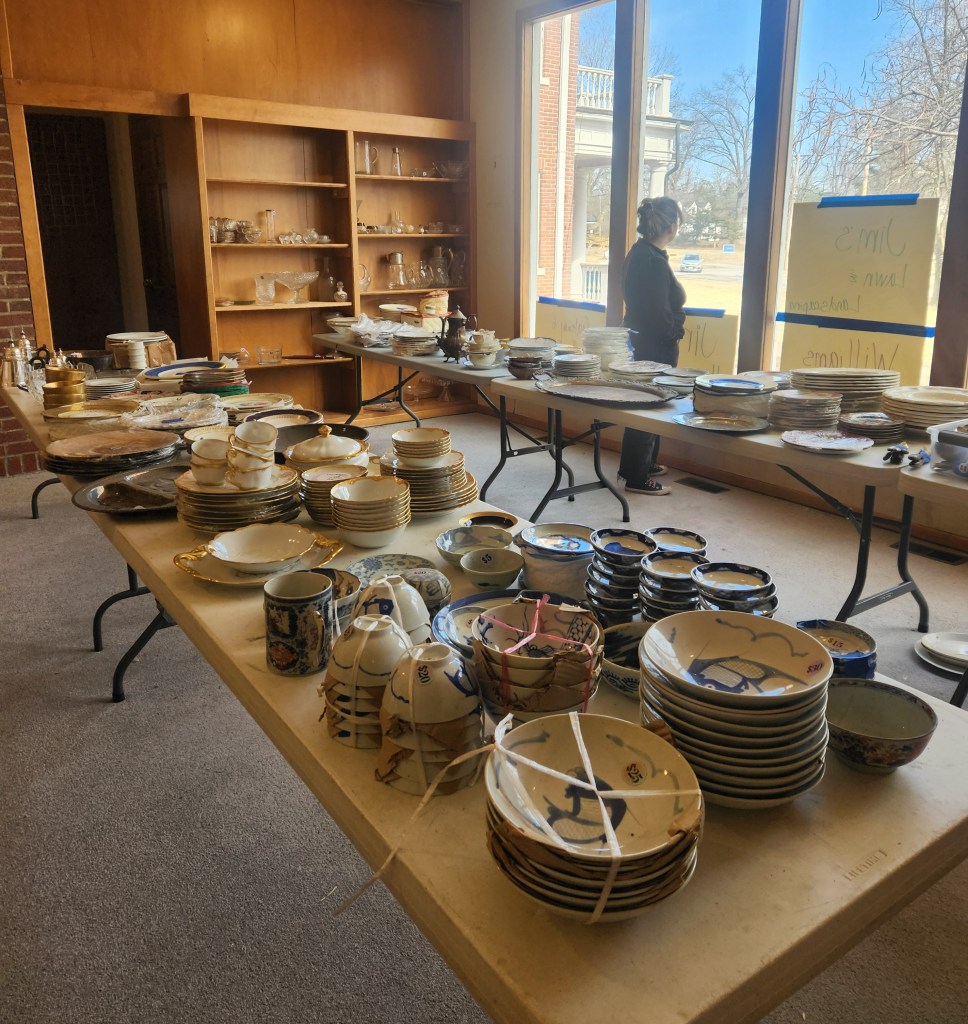
I took this photo when I went back to the estate sale in the afternoon. In the morning the tables were filled with larger platters and those blue and white fish bowls were on the floor. I picked out a stack of the small ones for my daughter.
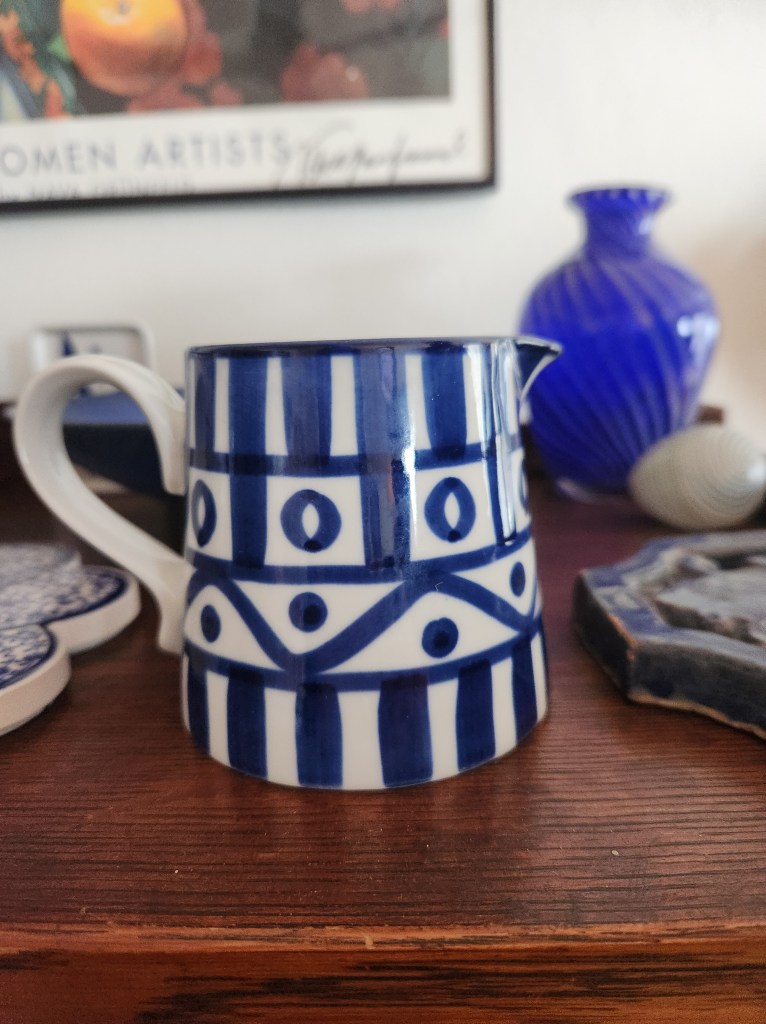
I also found a small blue and white Dansk pitcher. It reminded me of my “fish bowl” that I fill with grapes every afternoon.
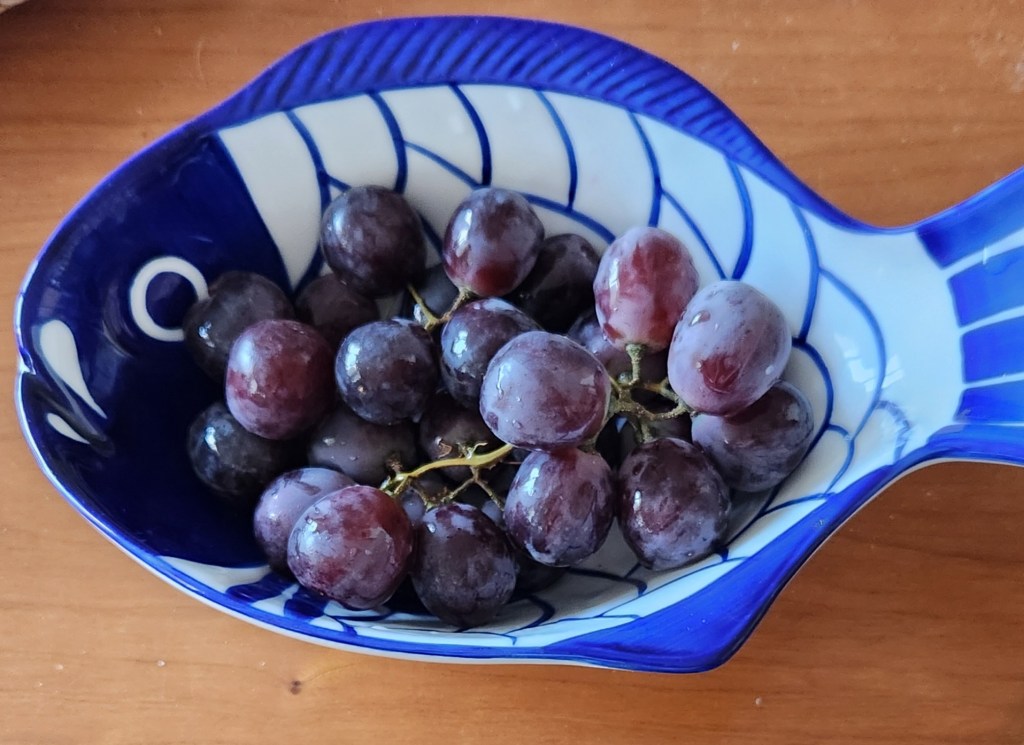
It turns out that they are both from the Dansk Arabesque line that was designed by Niels Refsgaard.
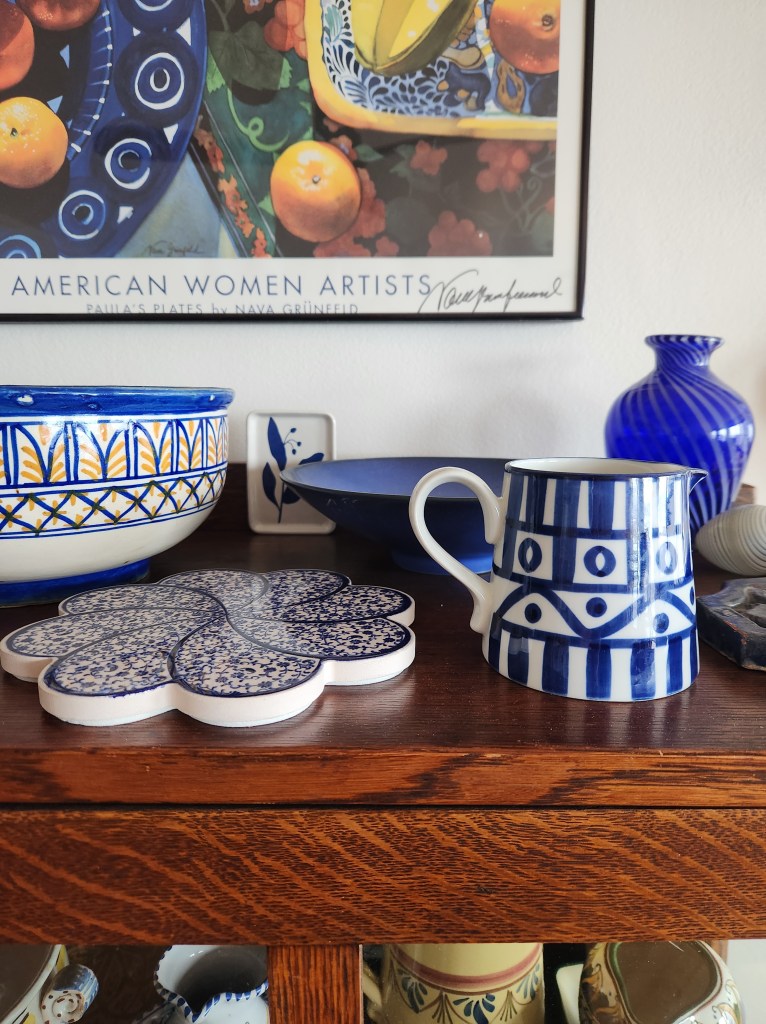
I thought the pitcher went well with the small tray in the back that was in my Christmas stocking this year. I understood why when my research into Niels Refsgaard revealed that he had also designed this pitcher.
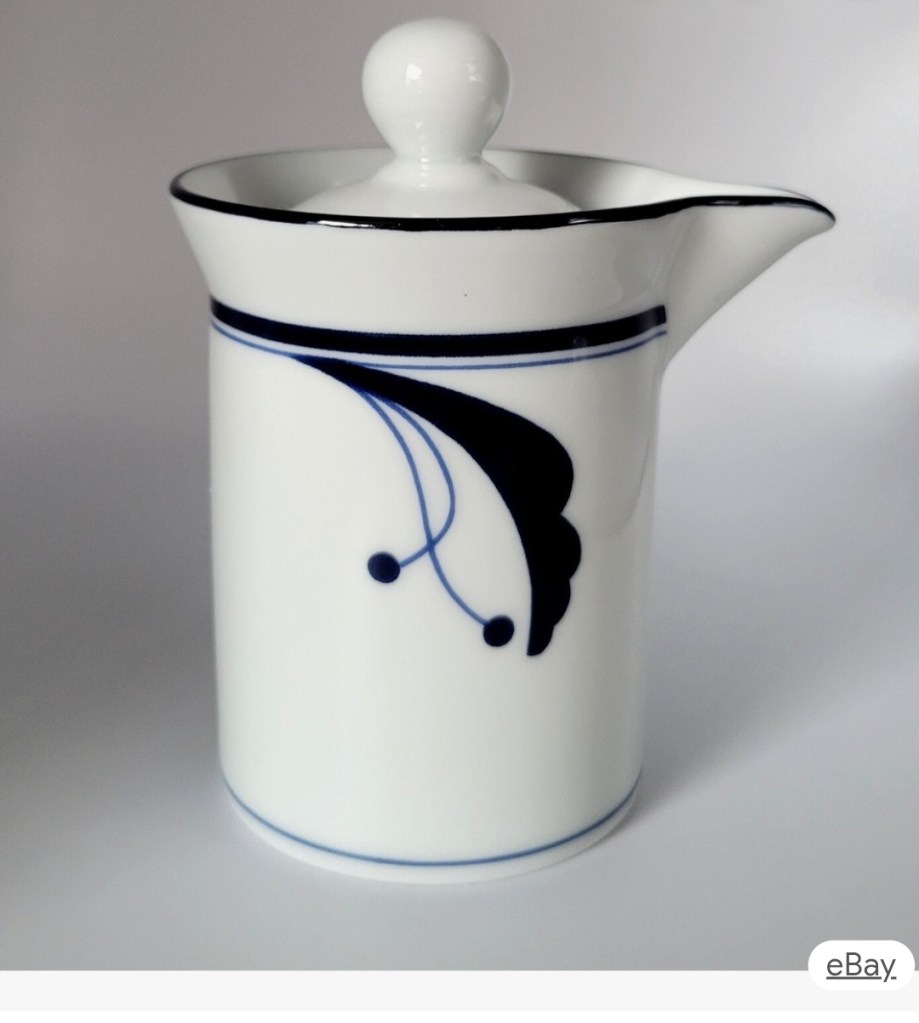
Although now I’m wondering if I’m displaying the little tray upside down!
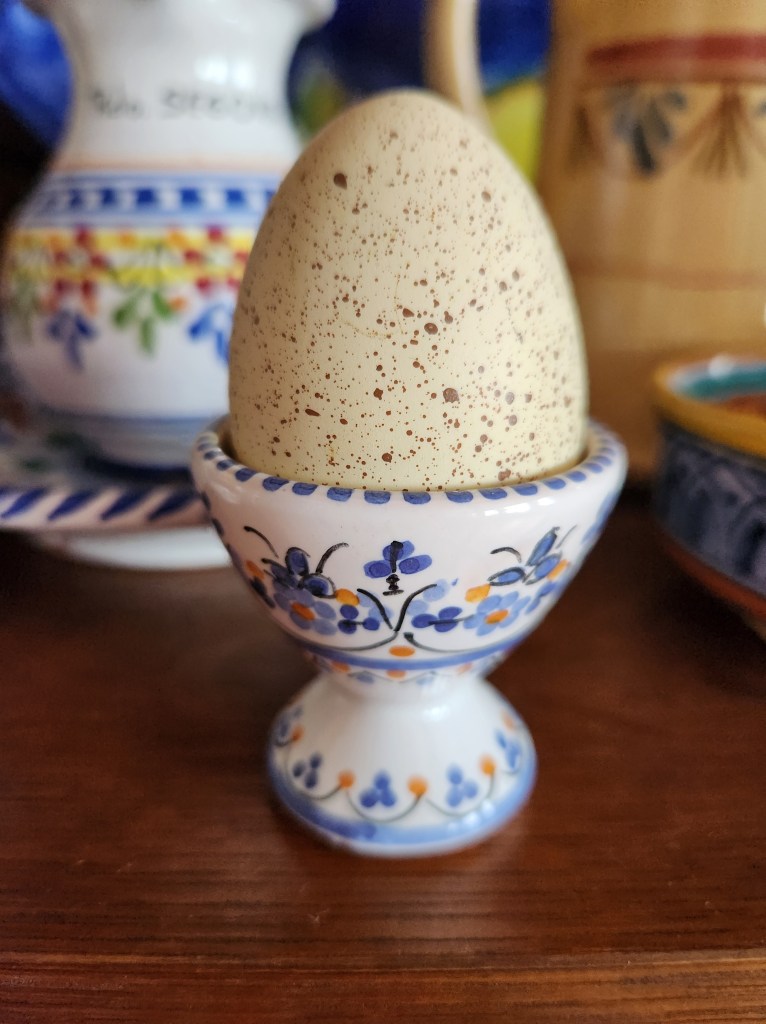
My sister bought three little egg cups like the ones our parents used for eating soft boiled eggs. All three of them were different and as I said to my sister channeling Harry Smith, “One of them clearly belongs in my collection”. So she gave it to me.
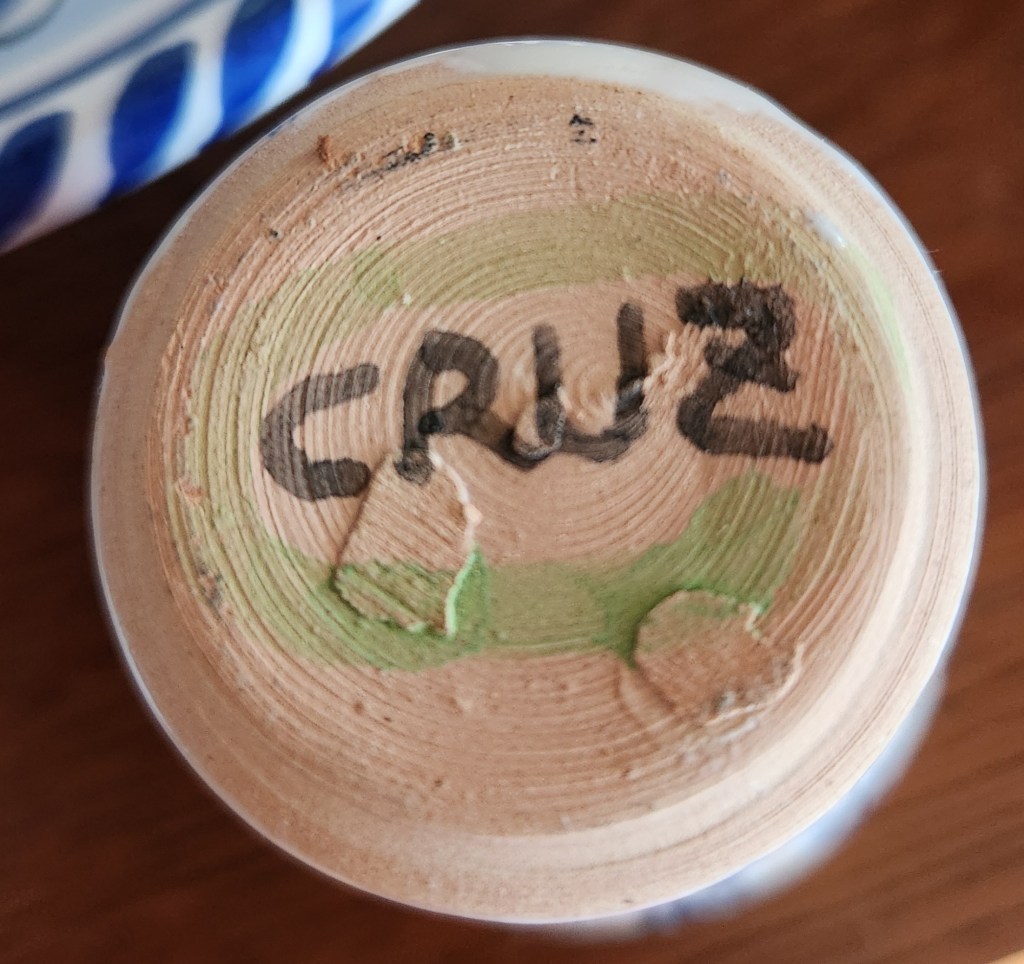
Google research reveals that the Cruz family lives and works in the Spanish province of Toledo which is in central Spain. The men make the pottery and the women paint it in the puntilla style incorporating the traditional “Castillo la Mancha” patterns “with their own one of a kind designs and colors.” No wonder I thought the egg cup belonged in my collection – the pattern is very similar to the pitcher and plate my daughter purchased in Segovia when she went to central Spain during college.
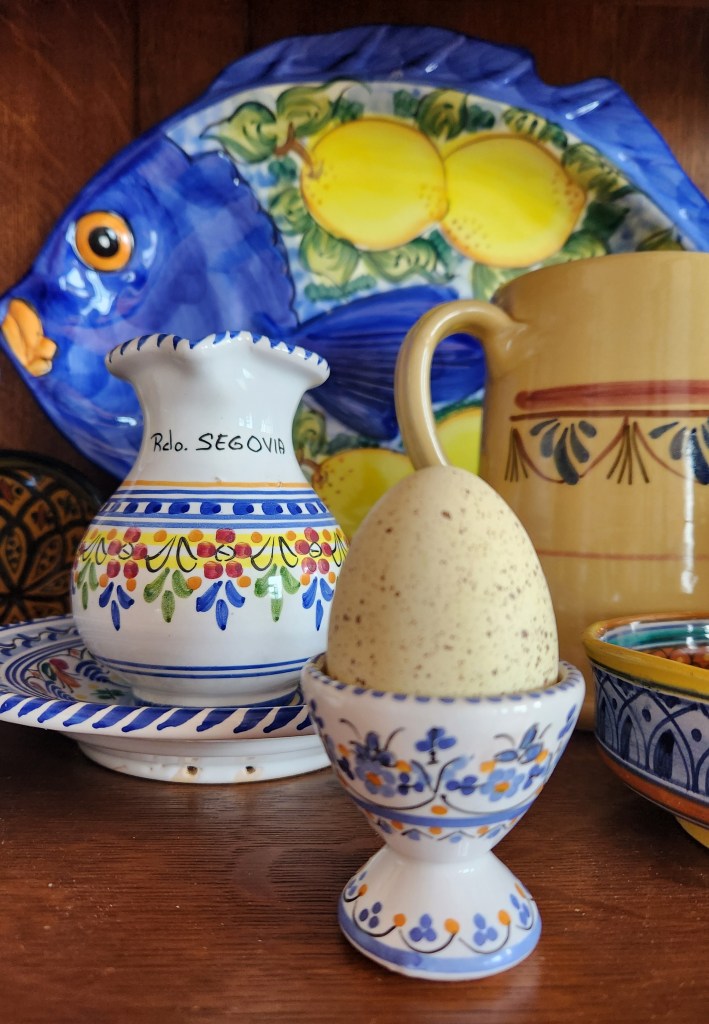
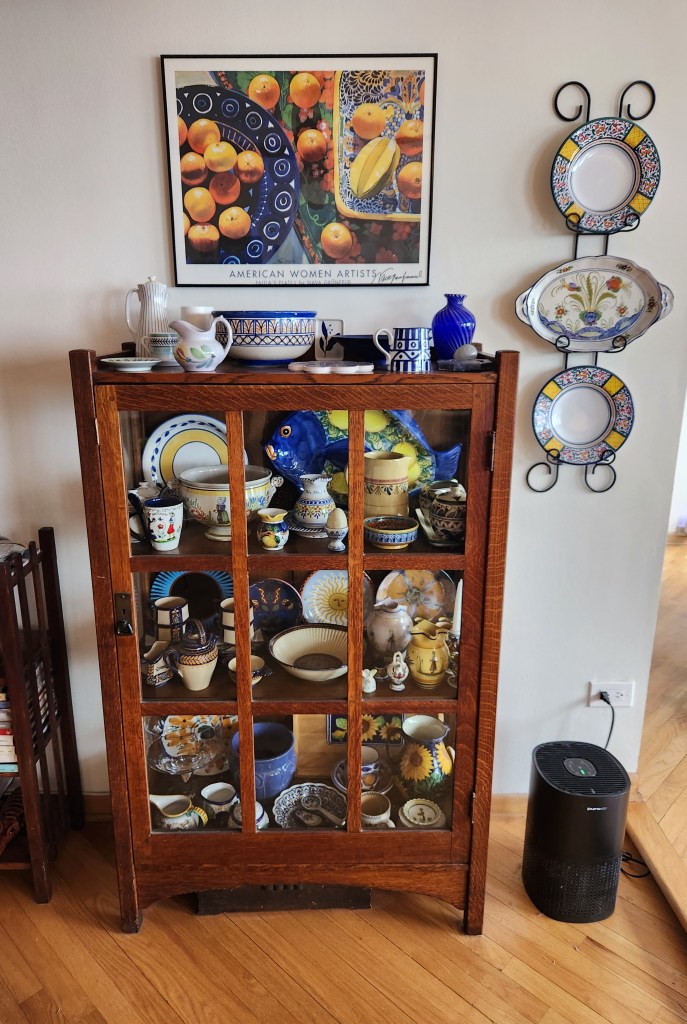
So both the sideboard and the china cabinet benefited from my first estate sale experience!

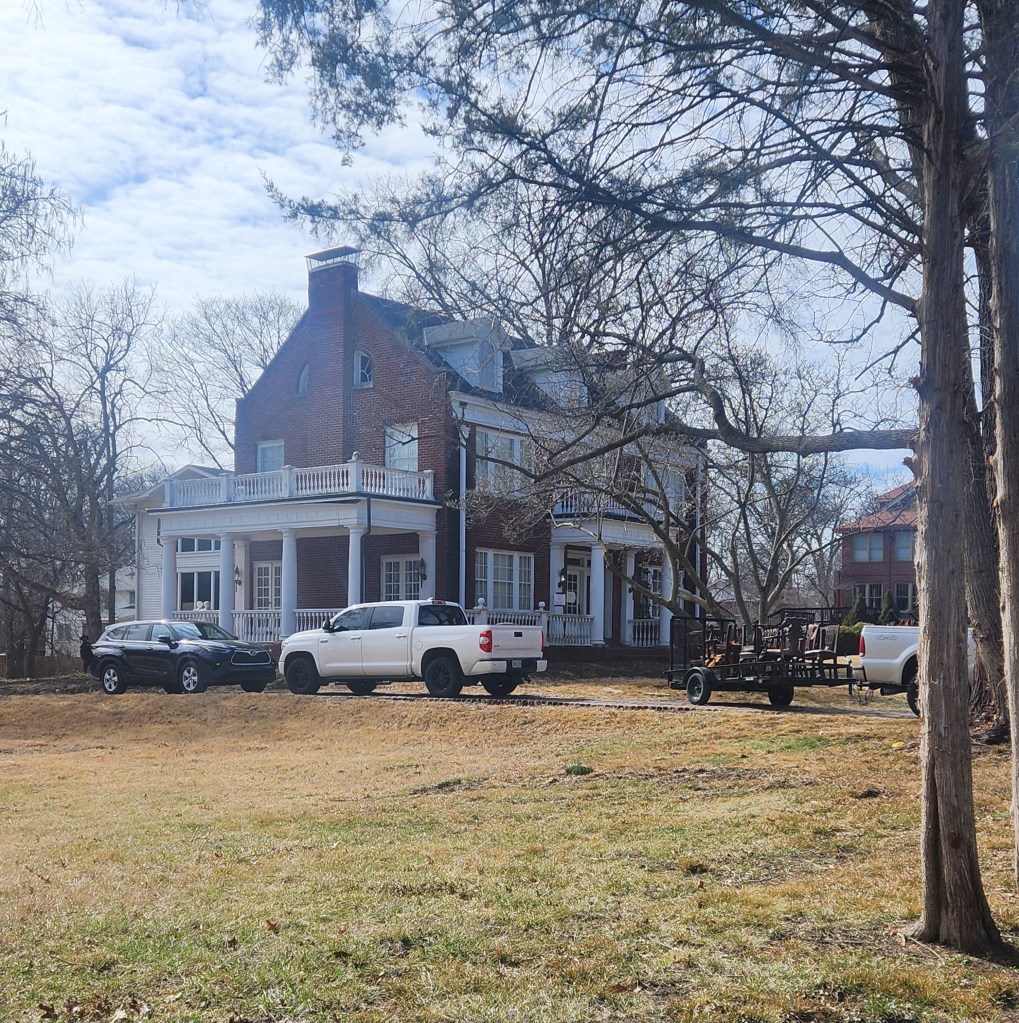
While I was in Columbia there was a lot of excitement in my sister’s neighborhood because it was rumored that the large house on the corner would be having an estate sale. On the first Saturday I was there we walked in the rain to the house but sadly there was no estate sale. On the second Saturday there was a sale but those who were looking at the estate sale as an opportunity to walk through the house and those who were interested in furnishings were disappointed. One of the neighbors who had heard there was going to be a “Plate Sale” and had insisted he was right when people tried to correct him felt vindicated when he found out that the sale consisted mostly of china and glassware set out on tables in the back of the house. My sister who bought a lot of tableware including several serving plates began referring to the sale as a tag sale and made sure I understood it was not a typical estate sale.
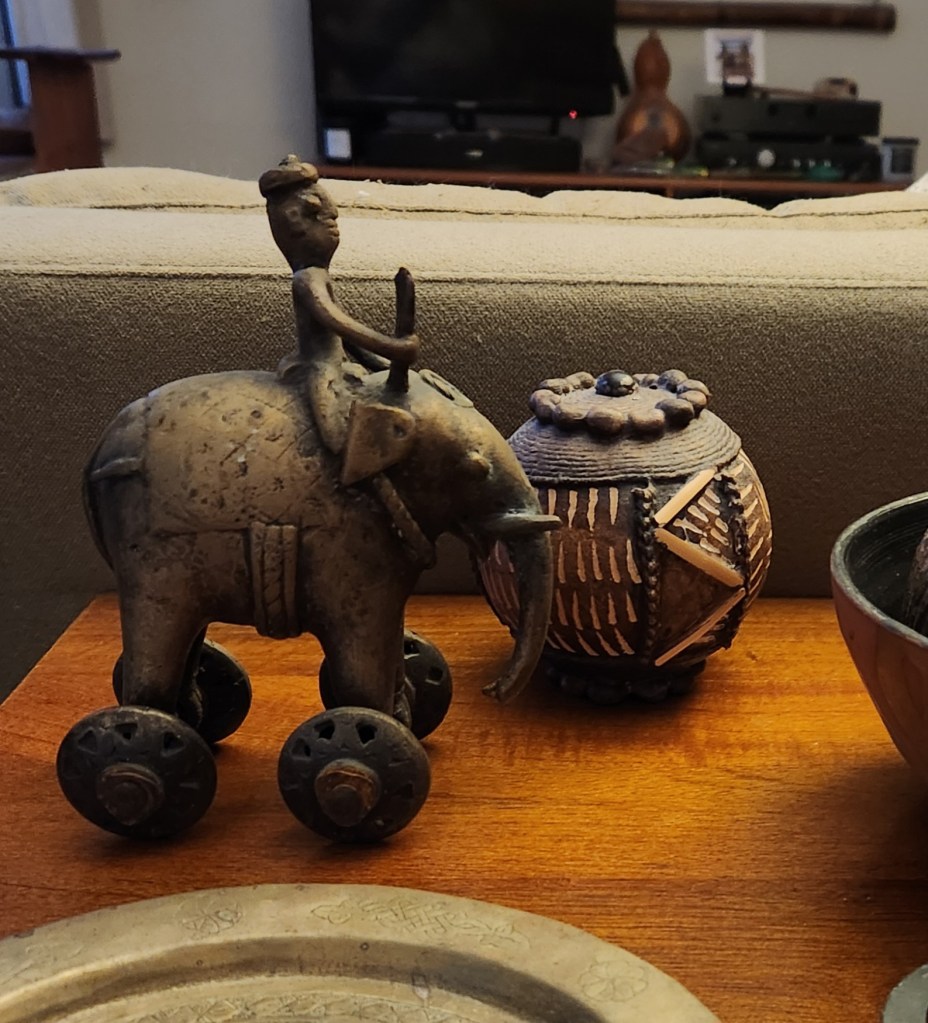
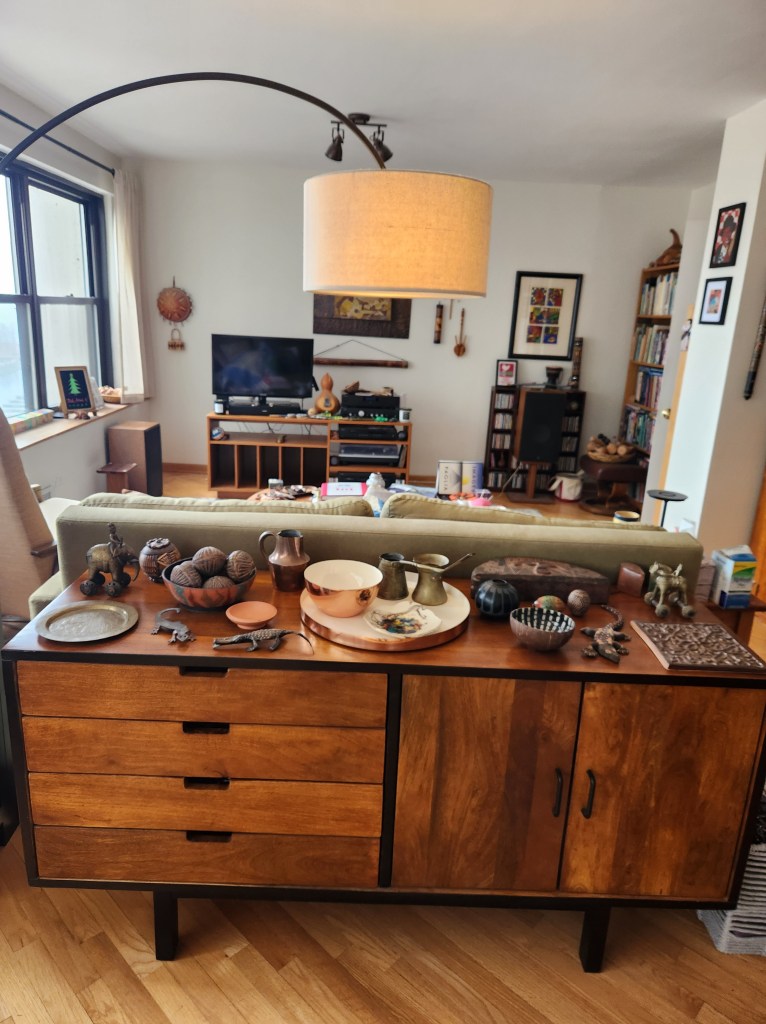
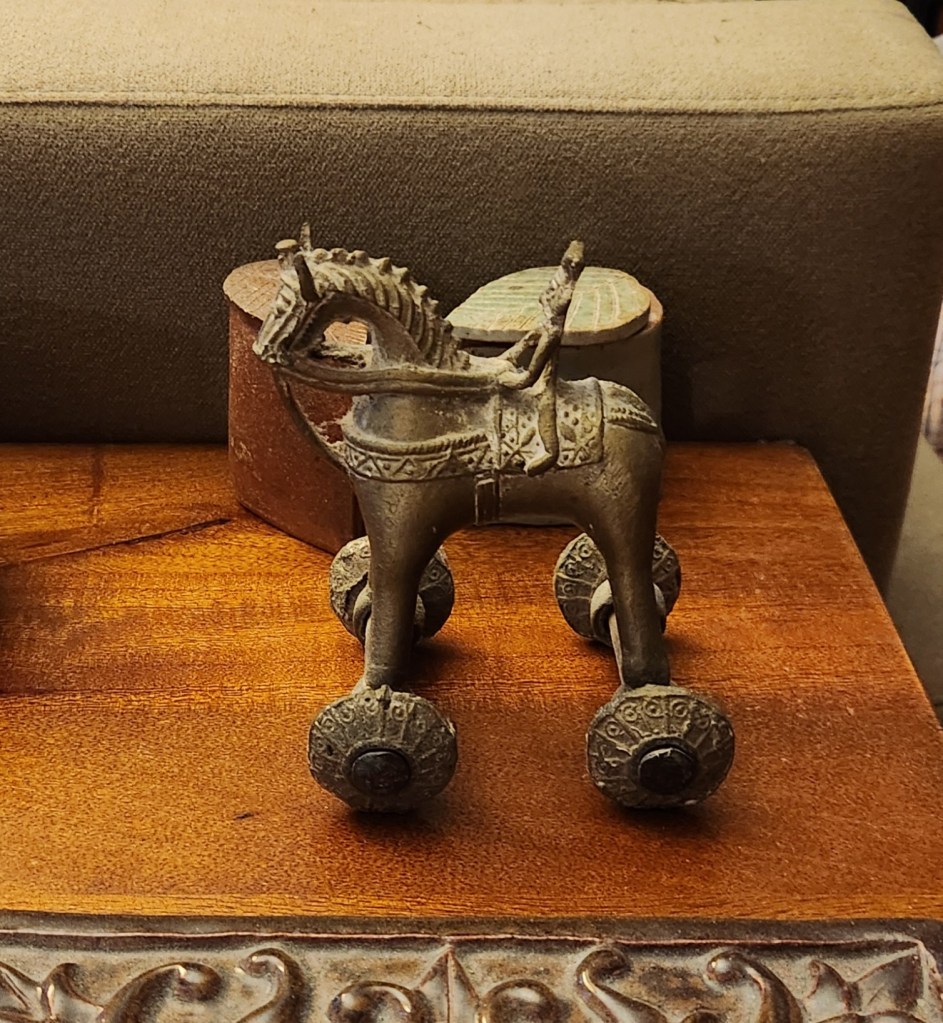
I wasn’t disappointed though as the first thing that caught my eye was a brass elephant with a rider that was very similar to a brass horse with rider that was part of my grandmother’s horse collection. Googling tells me that they are early to mid 20th century temple ornaments or toys from Karnataka or Madhya Pradesh, India. Now they’re facing each other on the ends of my sideboard.
The sale also included several pieces from Africa including a wooden face hanging on a wall that I thought would look great at the top of my dining room suns. It had a lot of blue tape around it so I wondered if it was damaged but at $5.00 or $10.00 I didn’t mind buying it anyway. I was pretty surprised when I took the tape off and found out it was a box that included the original price tag.
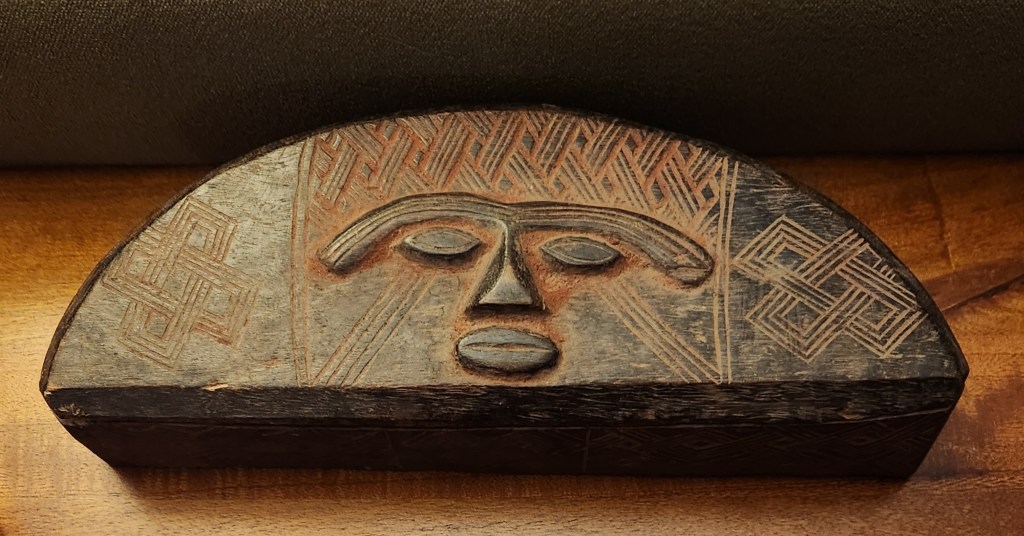
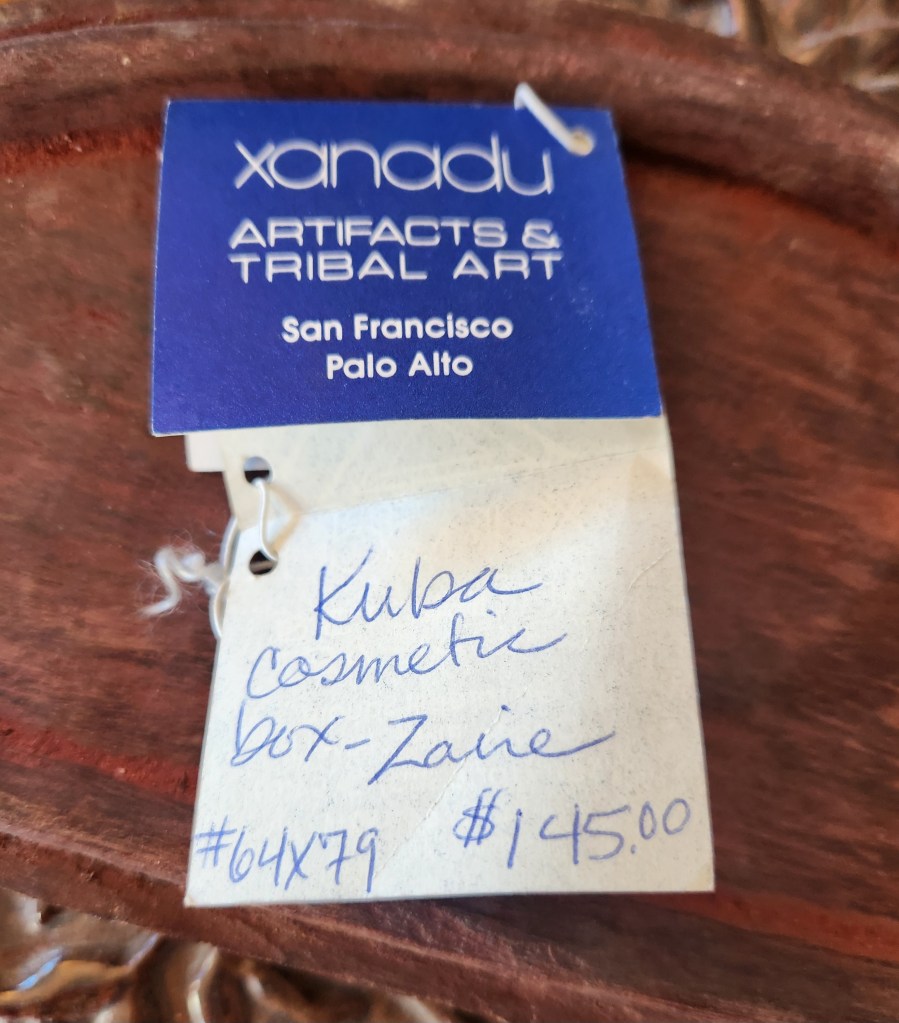
Googling led to a similar box for sale on Etsy for $575.00 and to several museums who have similar boxes in their collections. Kuba cosmetic boxes were used to store camwood or tukulo powder which comes from the Mulombwa tree and is mixed with castor oil to make a cosmetic that was applied to the face or chest for a variety of ceremonies and could also be used as a dye. Since the Republic of Congo was only named Zaire between 1971 and 1997 the box must have been originally been purchased from Xanadu between those years.
Since it is a box and not a wall hanging it also ended up on our sideboard not on our sun wall.
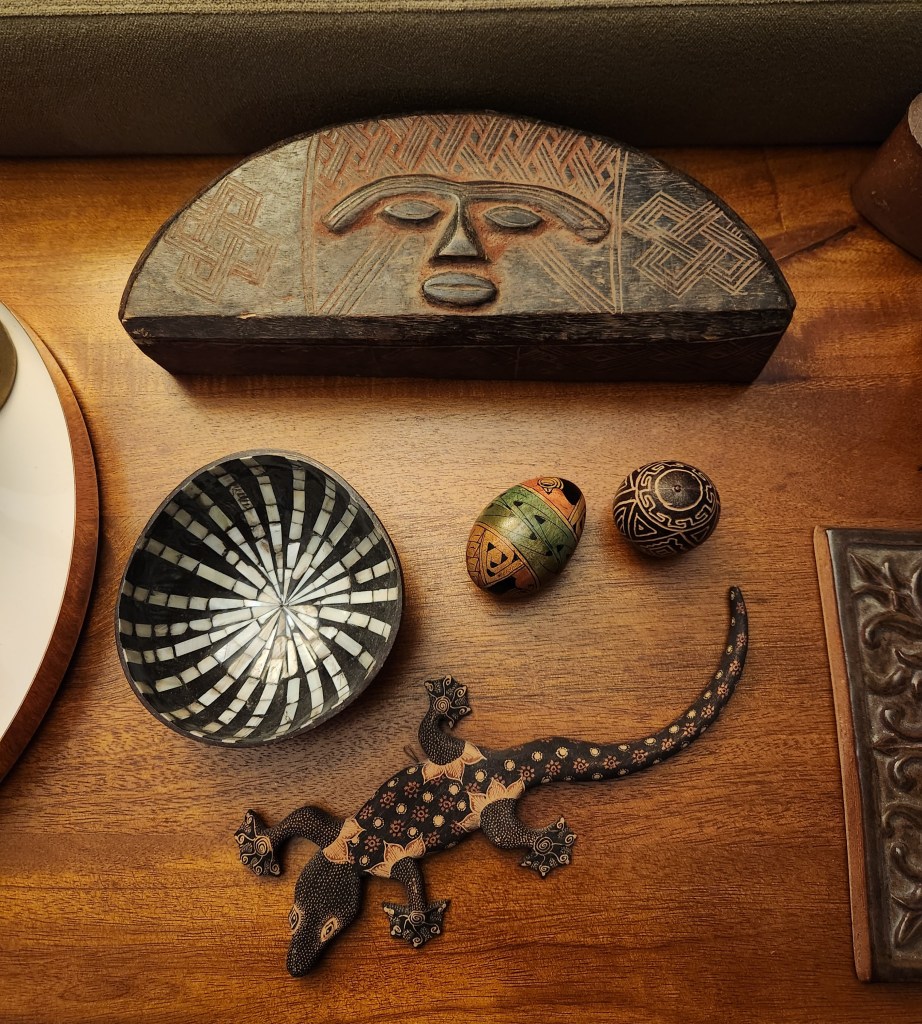
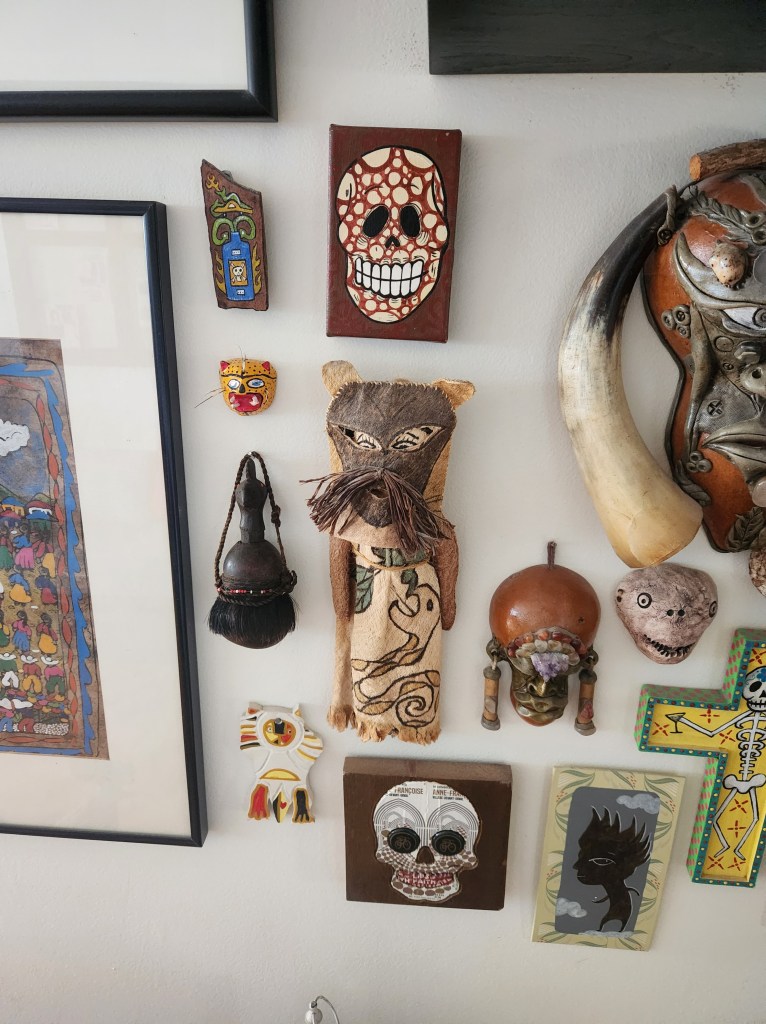
Hanging next to the sun was another piece that interested me because it was made from a gourd. I wasn’t sure about it so at first I didn’t buy it. I went back later in the afternoon when everything was marked down to half price or “make us an offer”. It had no price tag so I asked and was quoted $5.00. I looked in my wallet and found $2.00. “I’ll take it” they said. I am so glad I went back since I found the perfect place for it on our gallery wall.
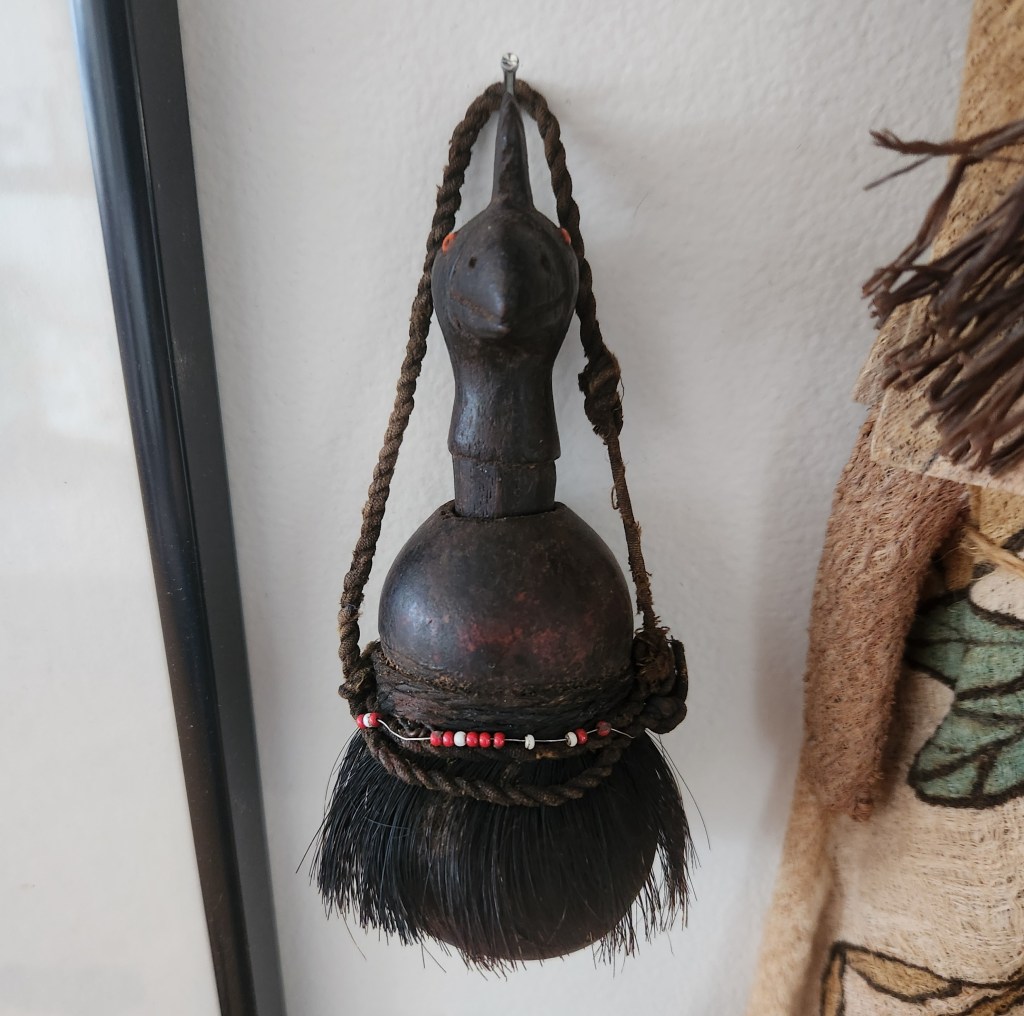
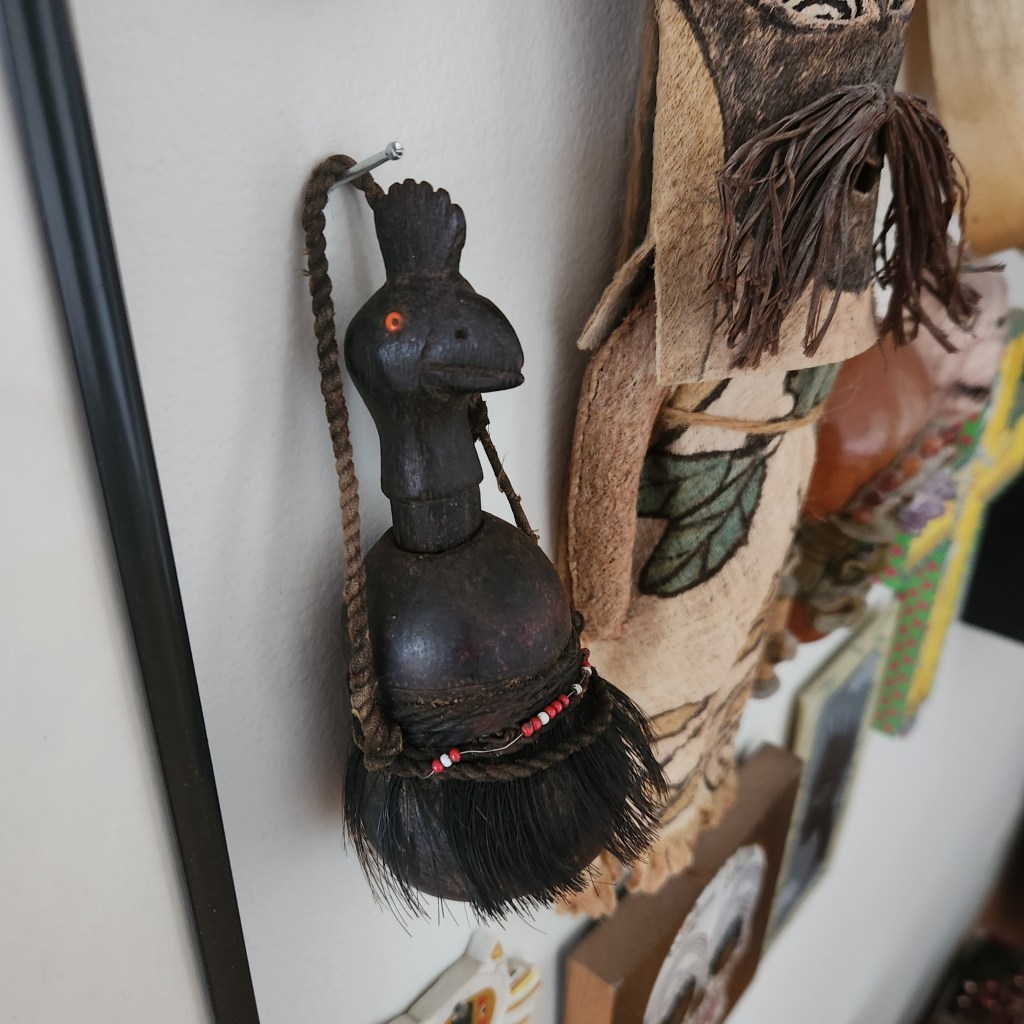
It also had a tag from Xanadu.
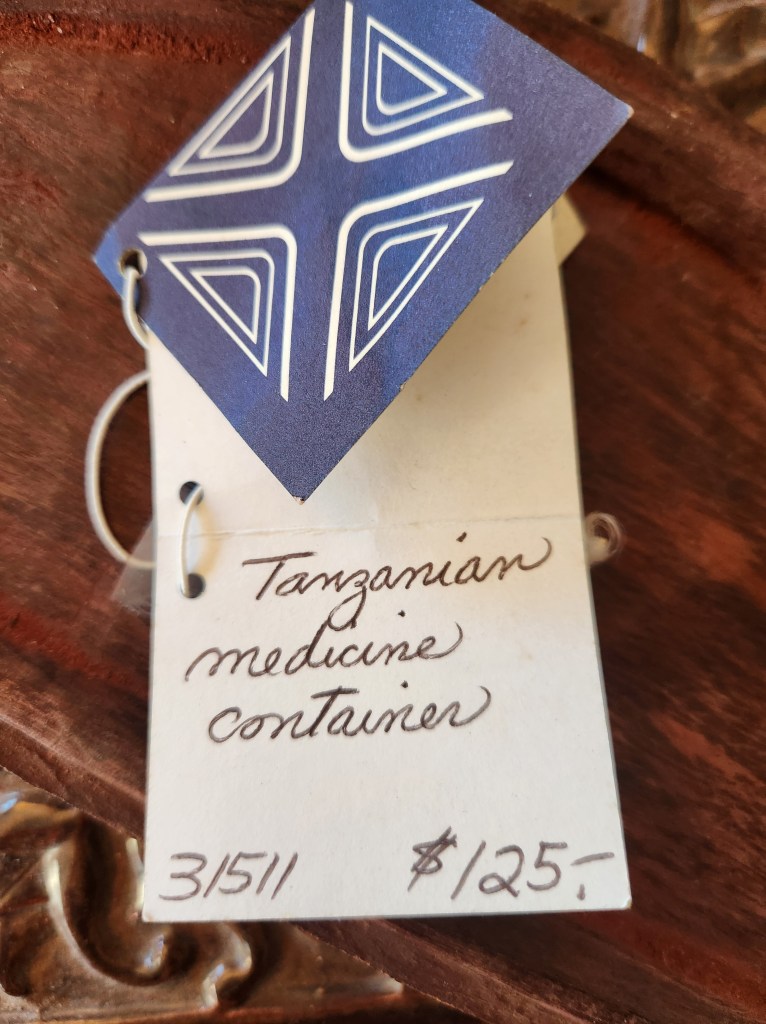
Tanzanian medicine containers are typically made from carved wood and calabash gourds and were used by healers to store oils and powders.
I did get a few items that were more typical of this estate plate sale and will write about them in my next post.

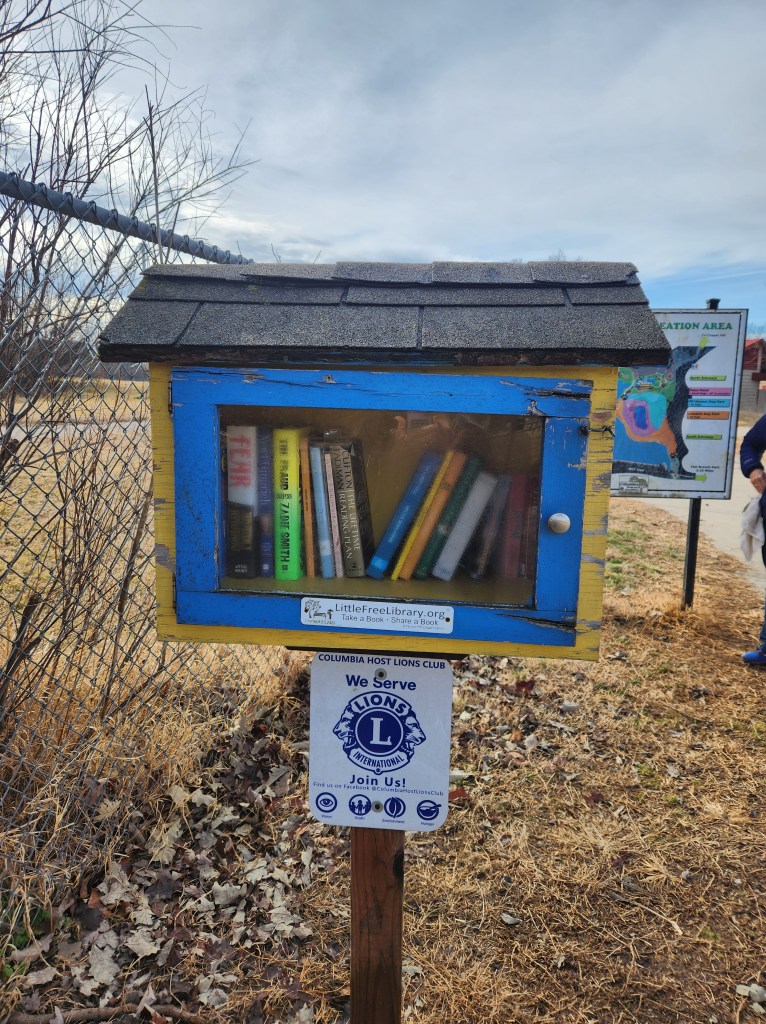
There were quite a few little libraries in my sister’s neighborhood and they were all well stocked.
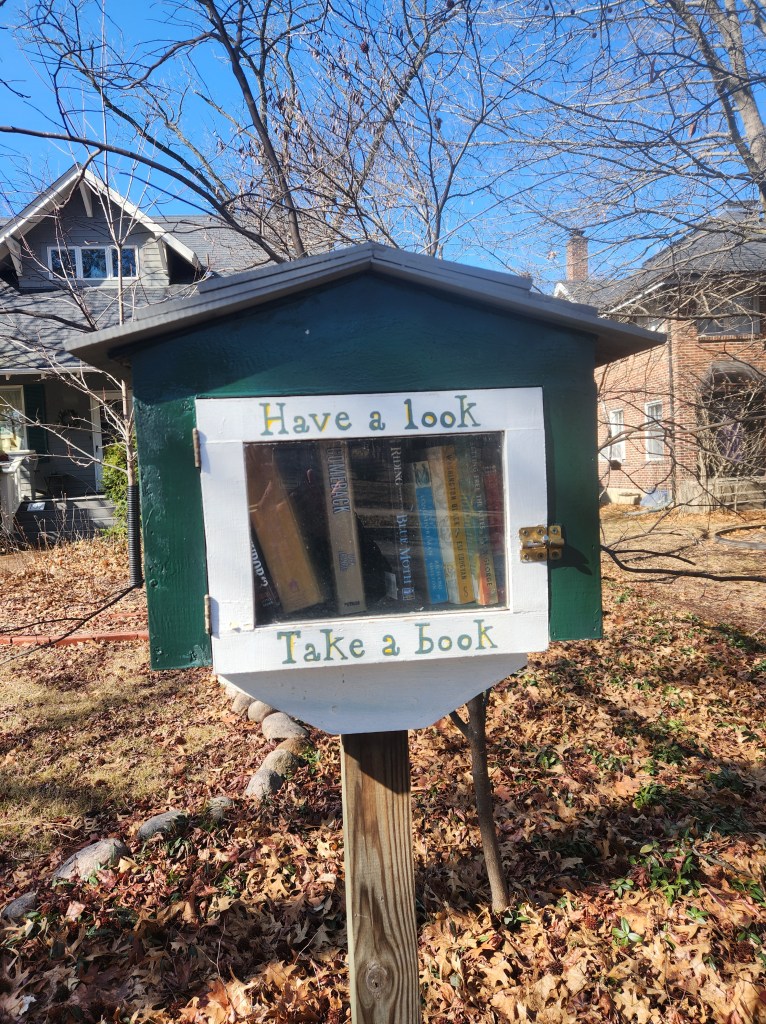
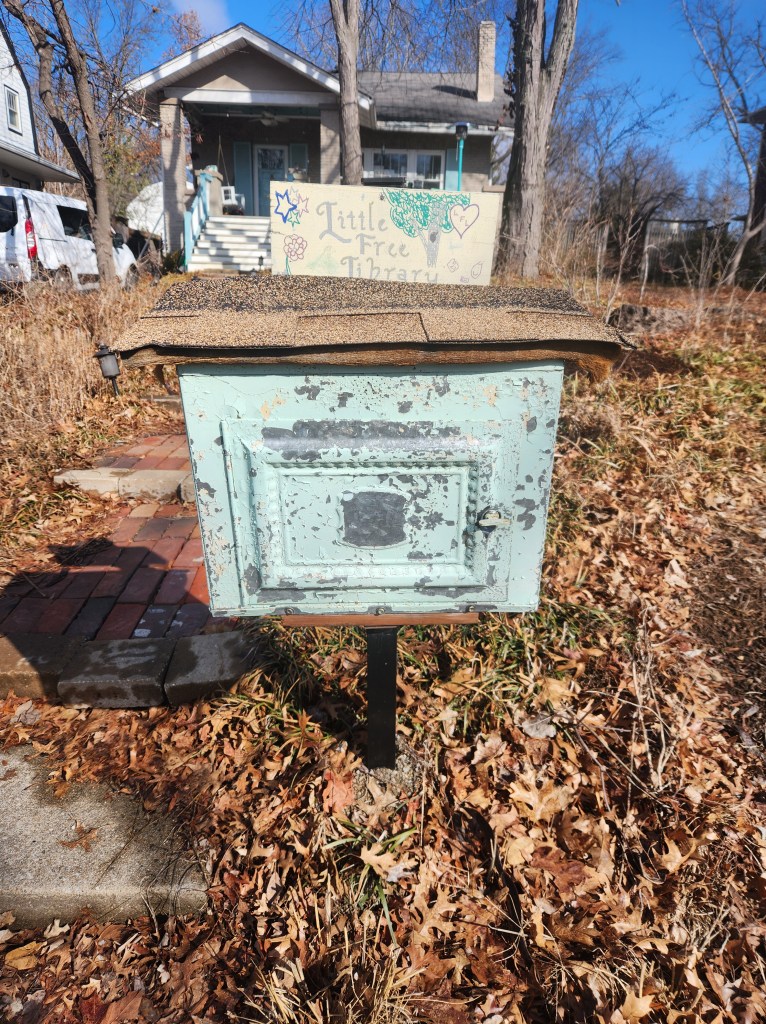
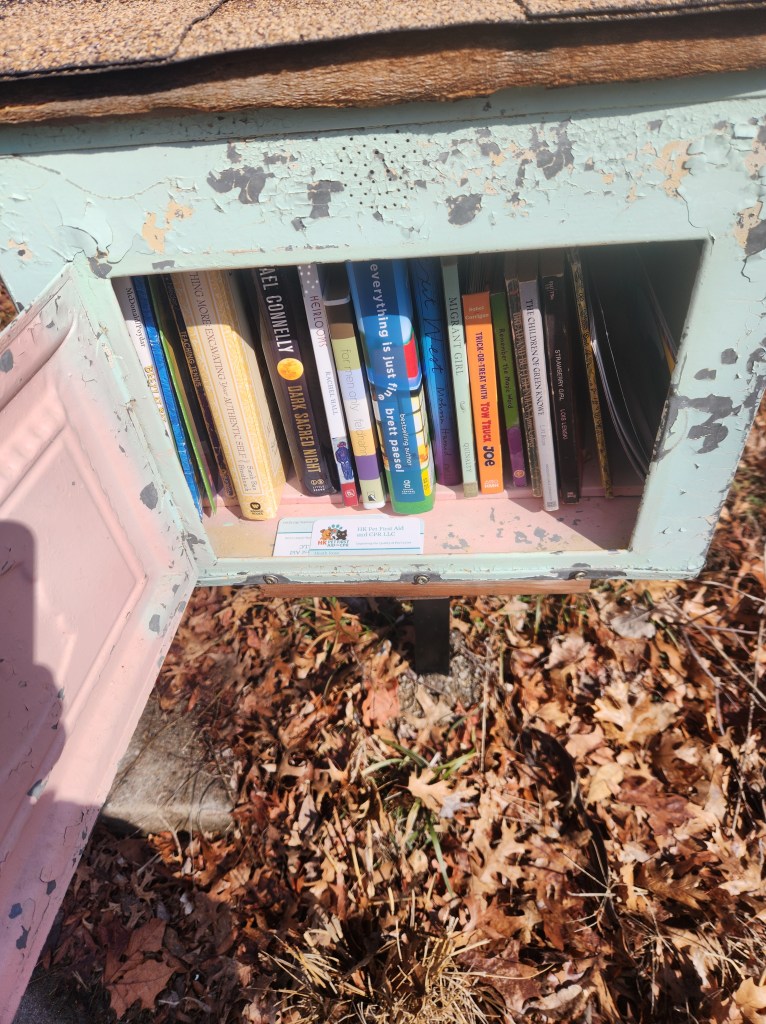
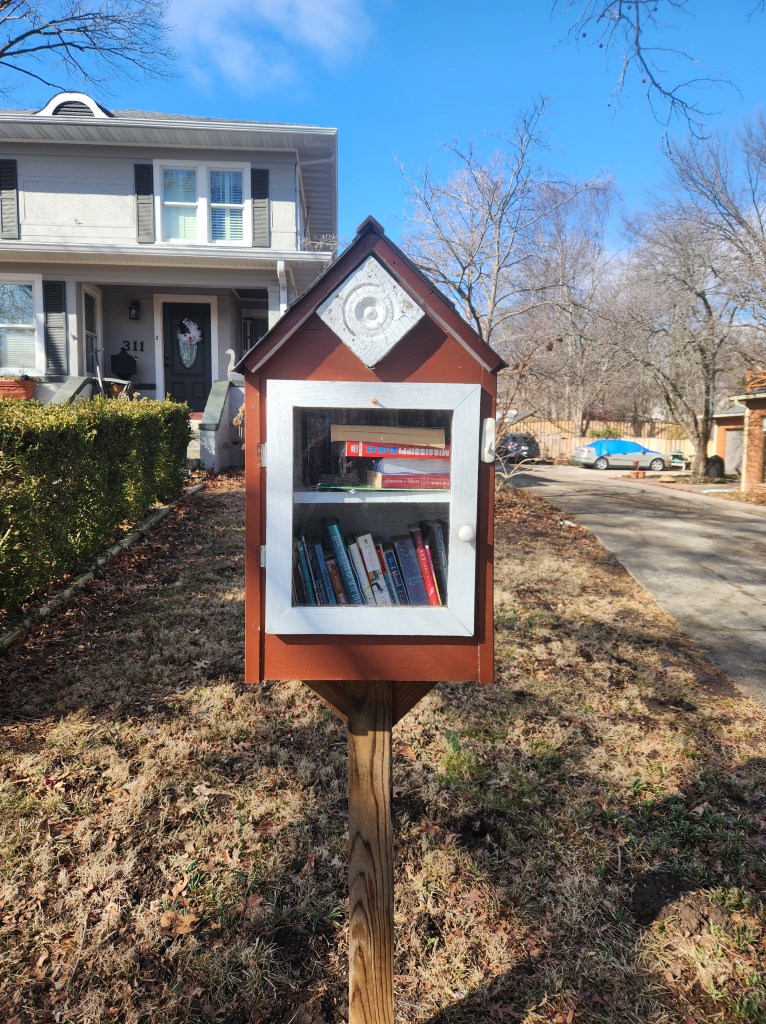
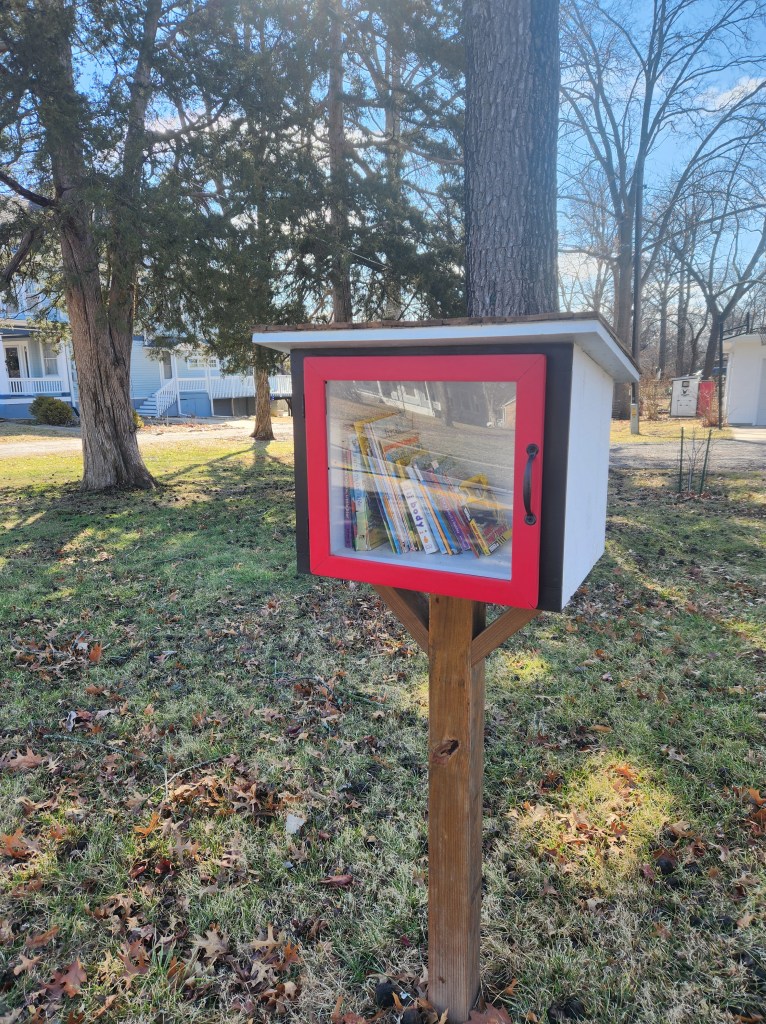
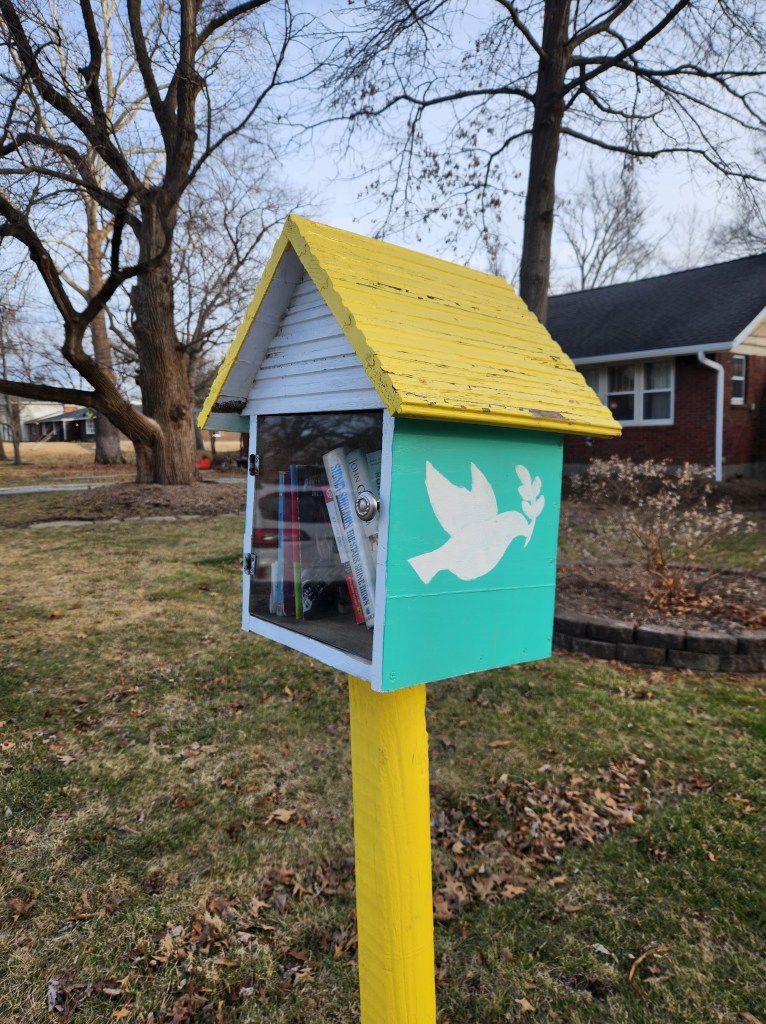
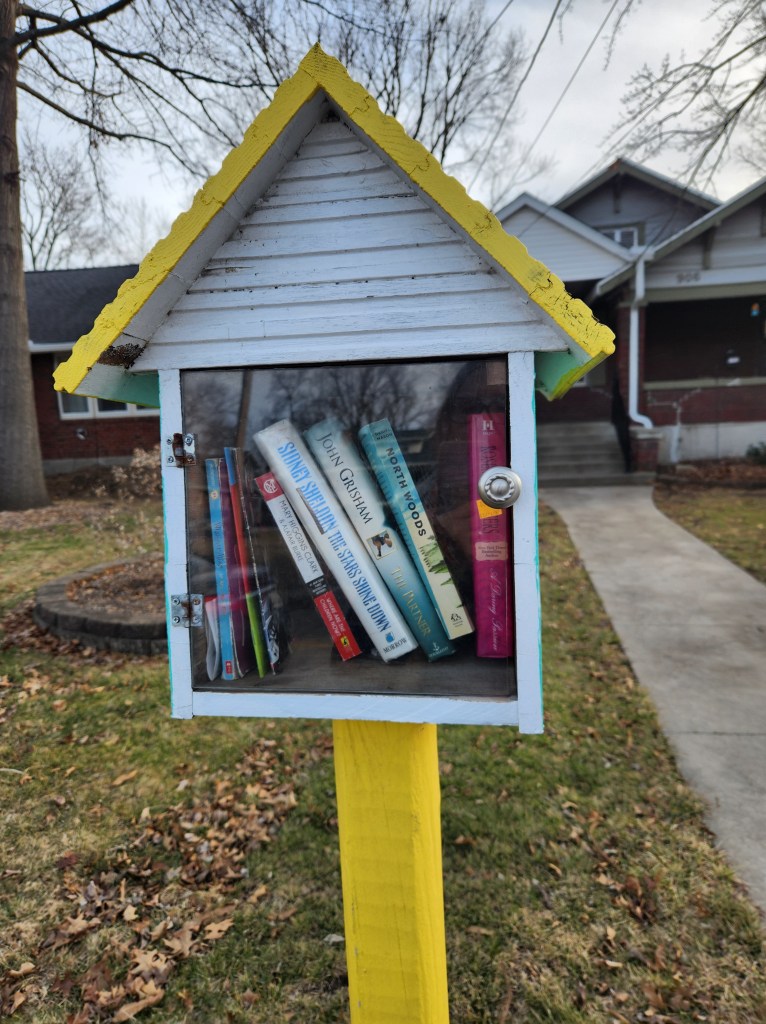
Including the one in a park we took the twins to that looks like it is maintained by a Lions Club.

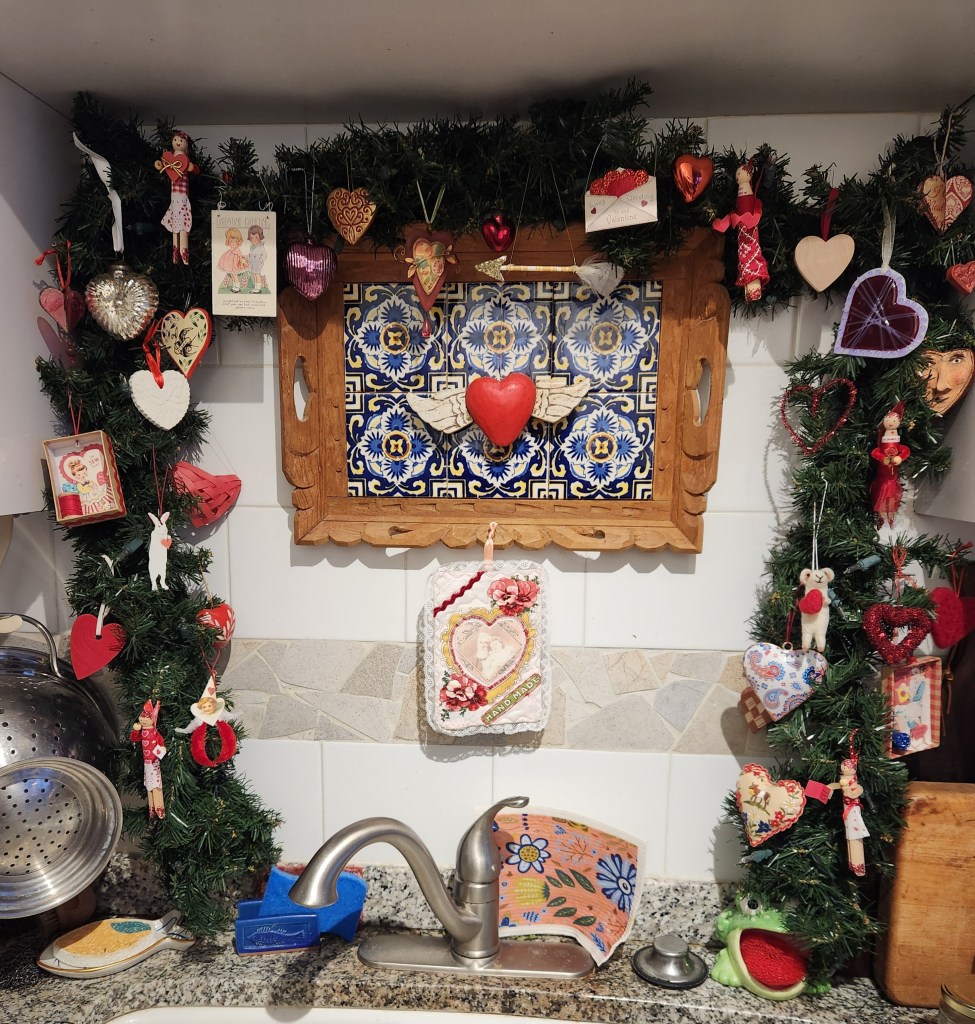
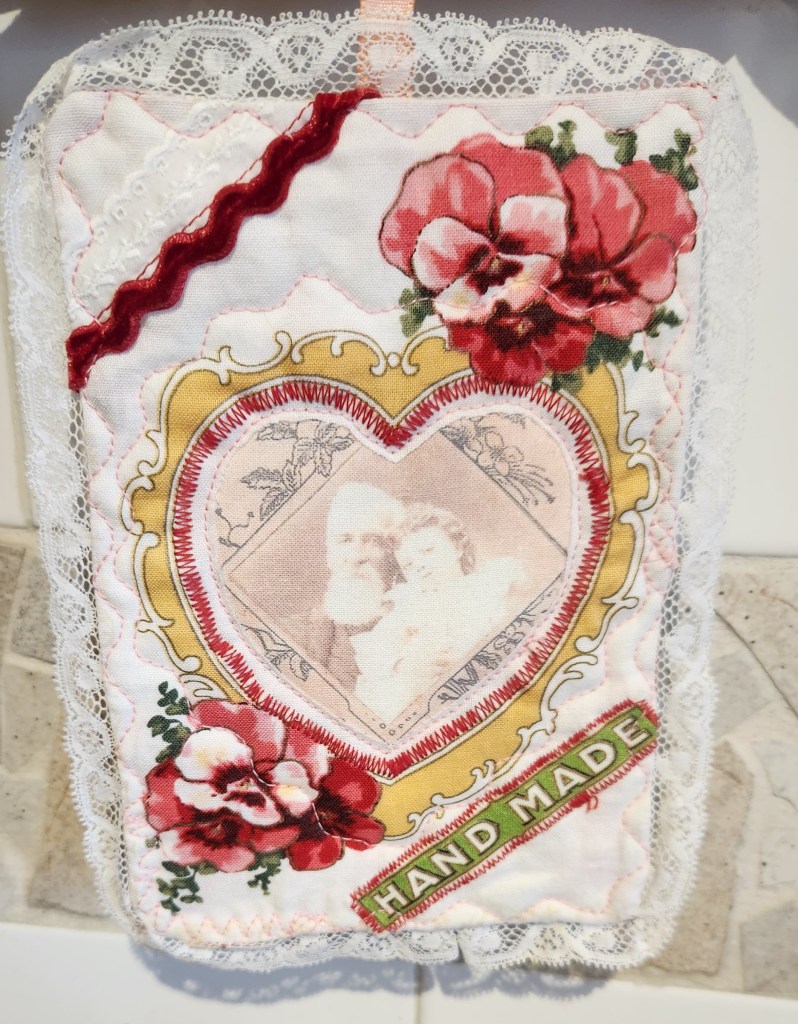
At Rushmer Christmas my Birmingham niece gave me a Valentine incorporating one of the family photographs I had printed on fabric when I was making last year’s ornaments. Since several of the photos wouldn’t work for making ornaments, I gave them to her. I knew she would have a good idea about how to use them. And she did immediately getting to work on this Valentine with the picture of her great great grandmother and her father.
When I got back from Rushmer Christmas there was a box waiting for me from some Northampton friends. In addition to the snowpeople I think I wrote about previously there was a cute little mouse holding a heart.
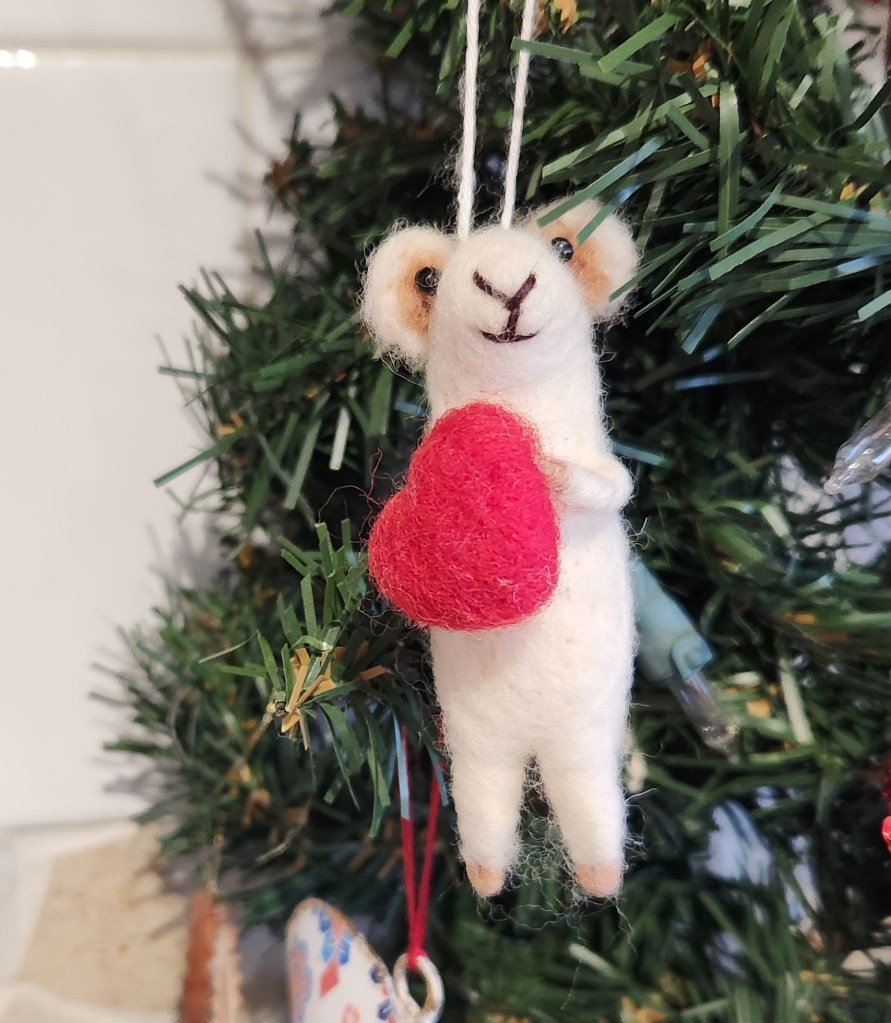
He seemed perfect for the Valentine garland and he reminded me of a bunny holding a heart that my Northampton nephew’s family had given me for Christmas years ago and that I had been using in my Spring decorating. I realized he was far better as a Valentine’s decoration.
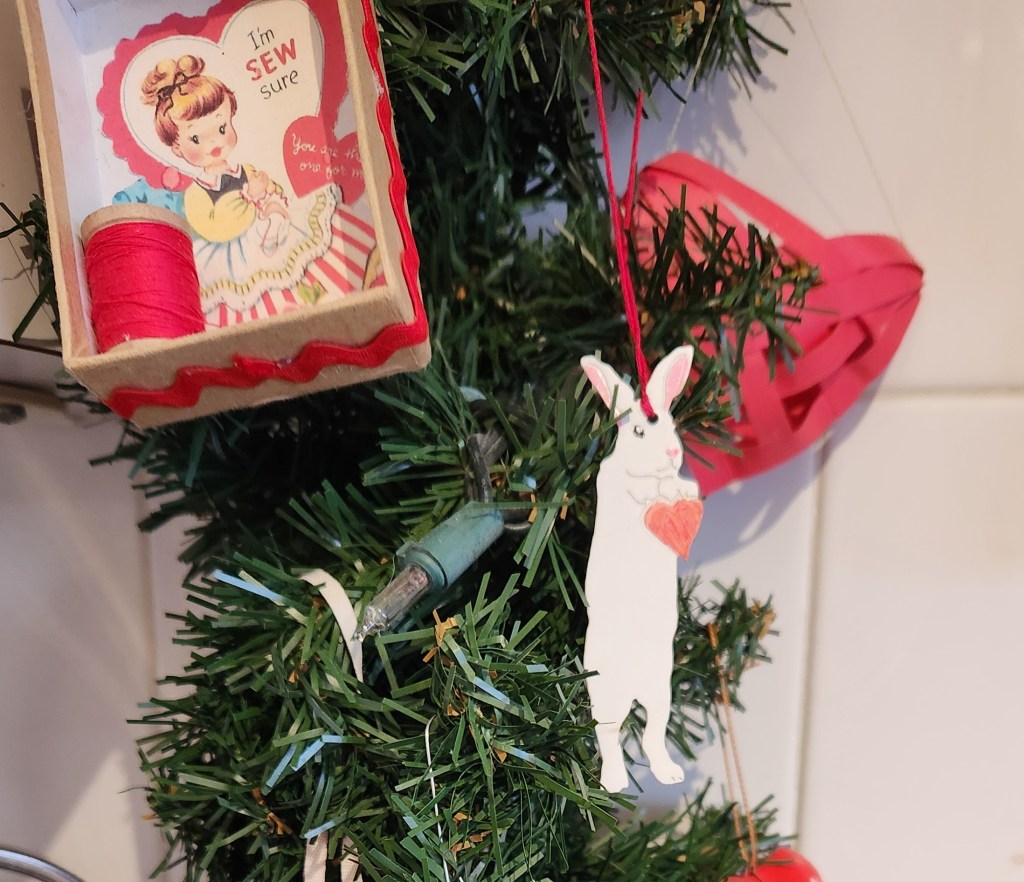
Brittany of The House That Lars Built hosts a Valentine exchange each year and I thought it would be fun to participate and last June I realized what I could make.
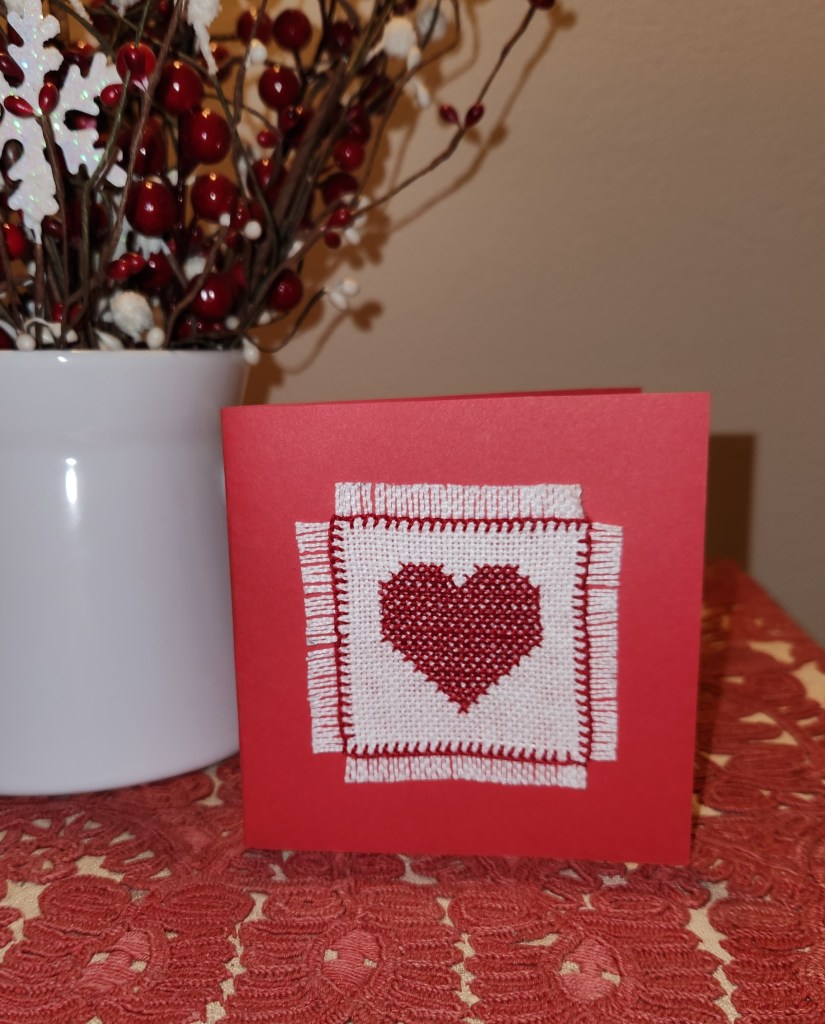
I made a larger card and several smaller cards that I thought I might put in a little art gallery. I had sent the exchange card off but hadn’t done anything with the little cards when I got a call from my sister asking me to come to Columbia because a recent doctor’s visit had determined she had tumors in her bladder and liver. So the little cards became my Valentine’s cards this year.
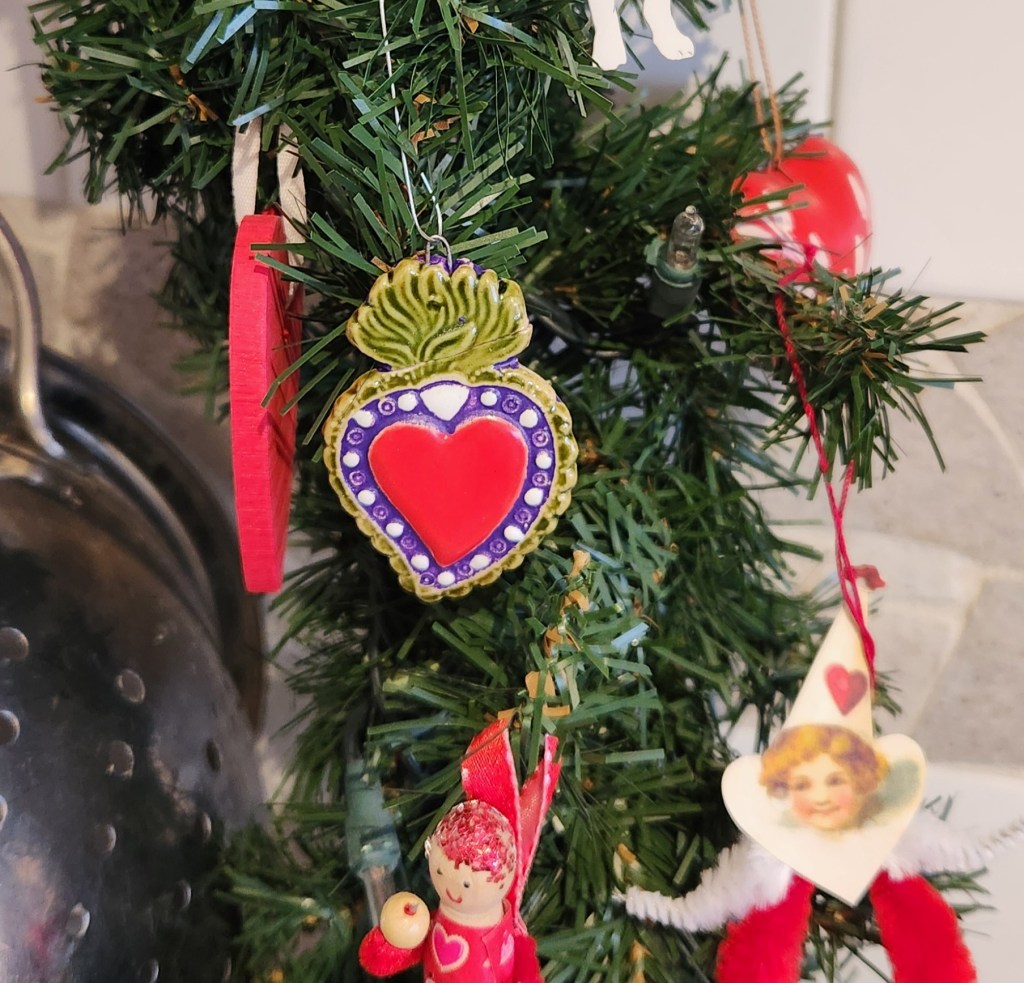
While I was in Columbia we went to Artlandish which had moved to a new location and increased their inventory. One of the things I bought there was this Peruvian heart.
We also went to a Valentine’s party at my Columbia niece’s and were showered with Valentines made by her twins.
I had asked my husband to be on the look out for my valentine from the exchange but before it came I got a Valentine package from my Birmingham niece that included a Useful Pot To Put Things In.
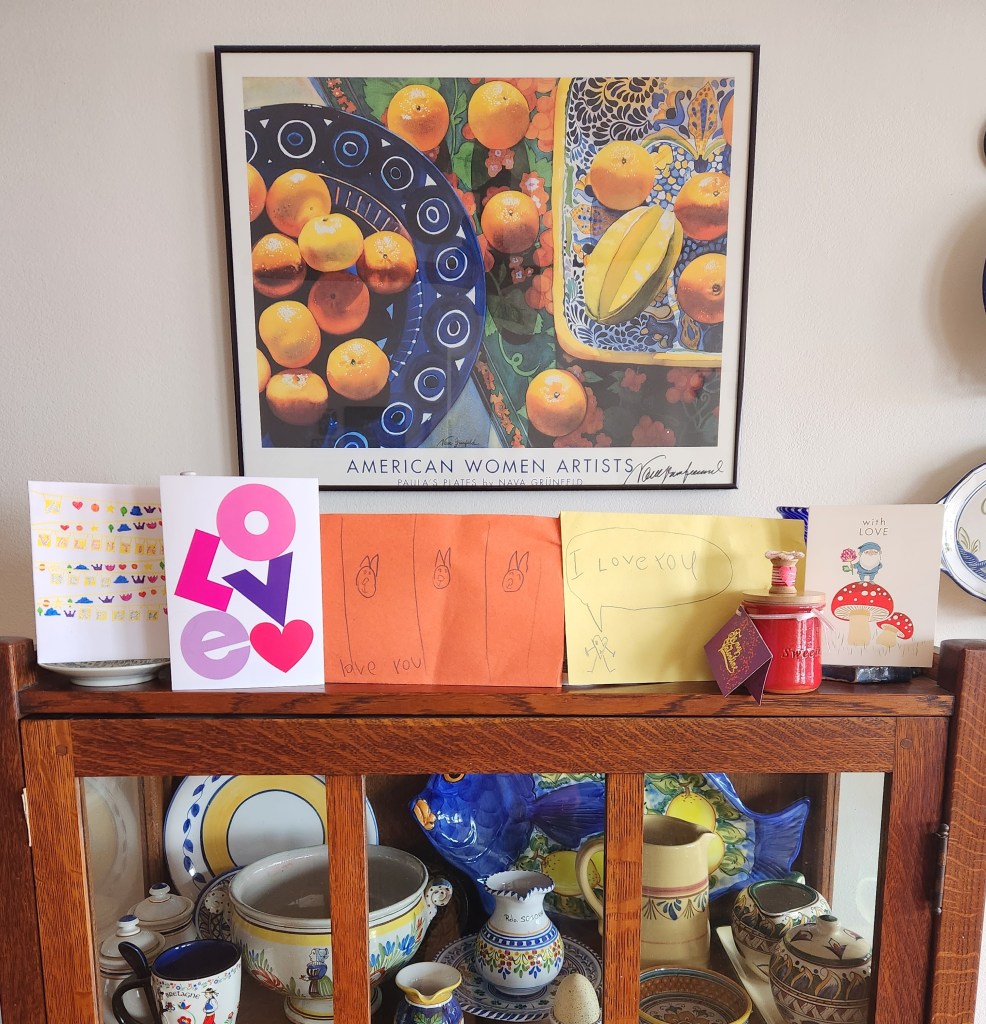
The Useful Pot is on the right in front of a card from a Northampton friend and one of the many cards from the Columbia twins. The card from the #larsvalentineexchange finally came and is on the left next to the card from my husband. I took some close ups to post on Instagram.
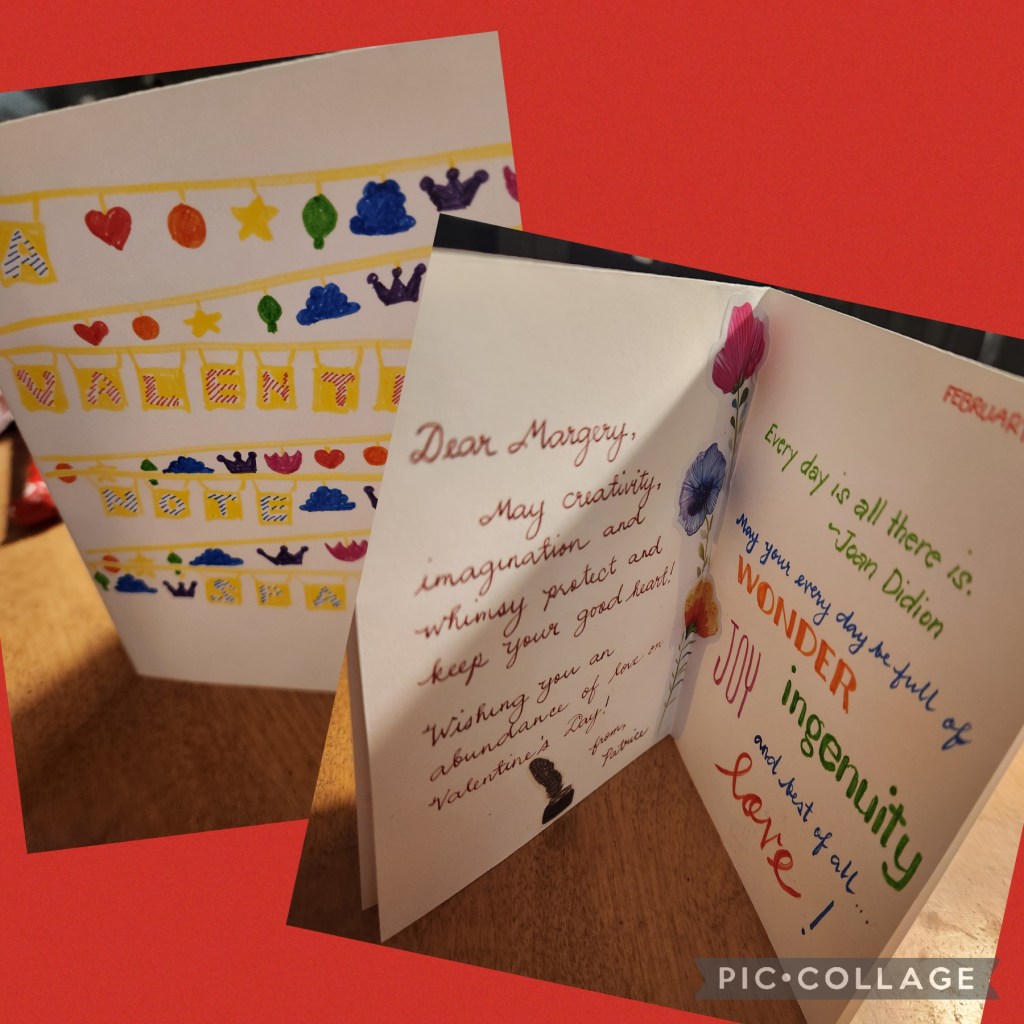
Participating in the exchange was fun but a bit stressful (Did the person I sent my card to get it? Will she like it? Am I going to get something? Will it be one of the extravagant ones some others posted which will make me feel like mine wasnt enough?) so I probably won’t participate again next year.

The first time we went to Columbia, Missouri for a music festival we stopped at a store called Artlandish and admired the paintings and prints by Lisa Bartlett. I realized that if either of us been there alone we’d probably have bought a piece for the other one. We went to Artlandish a few more times after our niece moved to Columbia but we were always together so we never left with a piece. But this year after my sister bought a house in Columbia, I went to visit her by myself and I was determined to buy a piece for my husband as a Christmas present. I bought a print of Little Walter and when it came time to hang it, it didn’t work in either of the places I had been thinking of. We ended up taking down the photographs of our daughters and the embroidered piece my mother had made and hanging it where those had been.
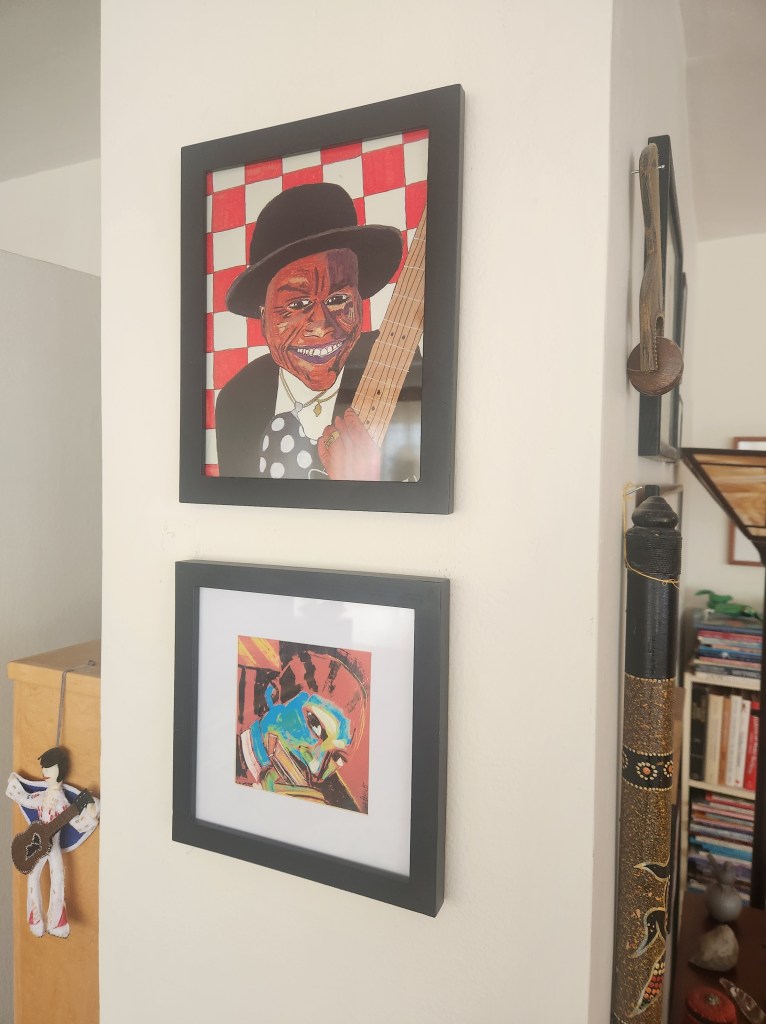
Since Little Walter couldn’t hang there all by himself, we pulled out another print I had gotten at a Poconos Blues Festival but never hung. The portrait of Buddy Guy is by Robert Jr Whitall a videographer, photographer, and publisher of Big City Rhythm and Blues magazine who became an artist during his extended hospital stays in the last decade of his life. I think hanging the pair here connects the prints above one CD case with the paintings by the Easthampton artist Denise Beaudet above the other.
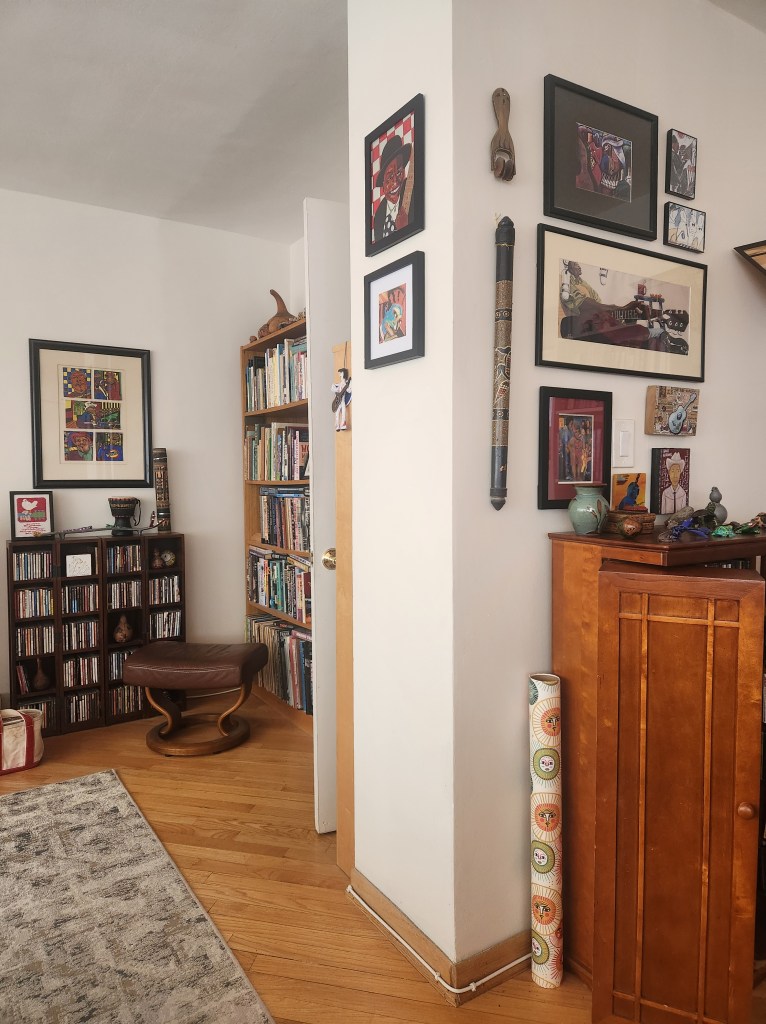
The china cabinet got an addition too – the small tray with the blue flower was in my stocking!
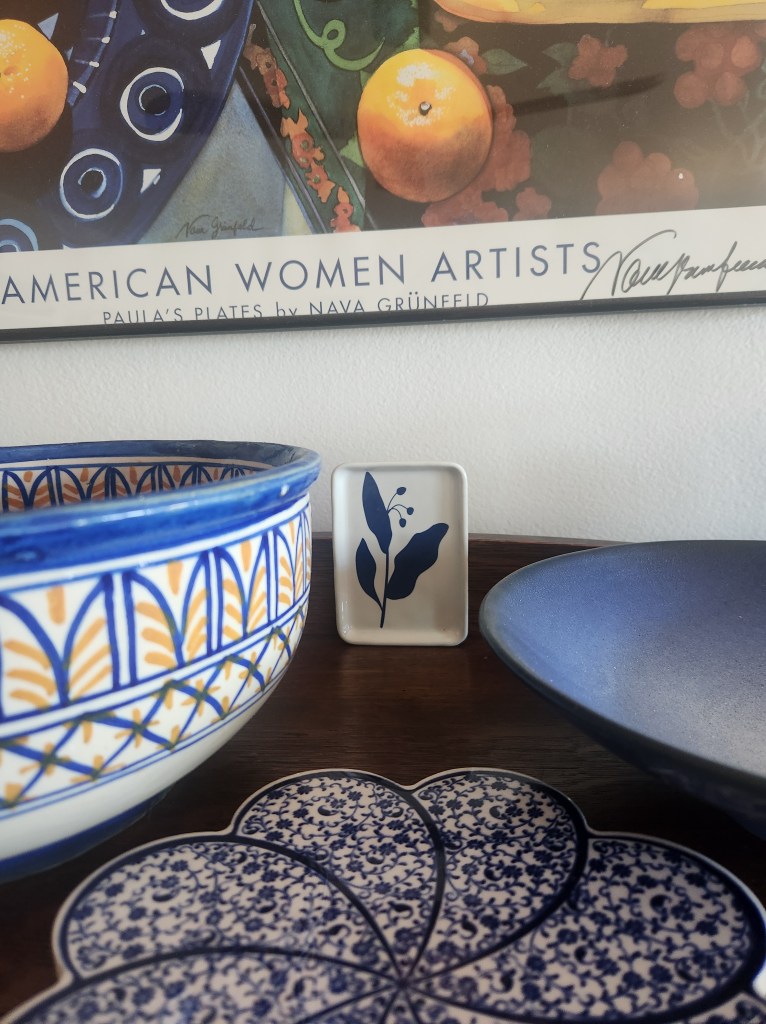
I had said I wasn’t going to overload the living room bathroom with birds but Rushmer Christmas resulted in some additions. When I saw an art vending machine at the Birmingham Art Museum gift shop I knew I had to get some tokens to see which print I would get.
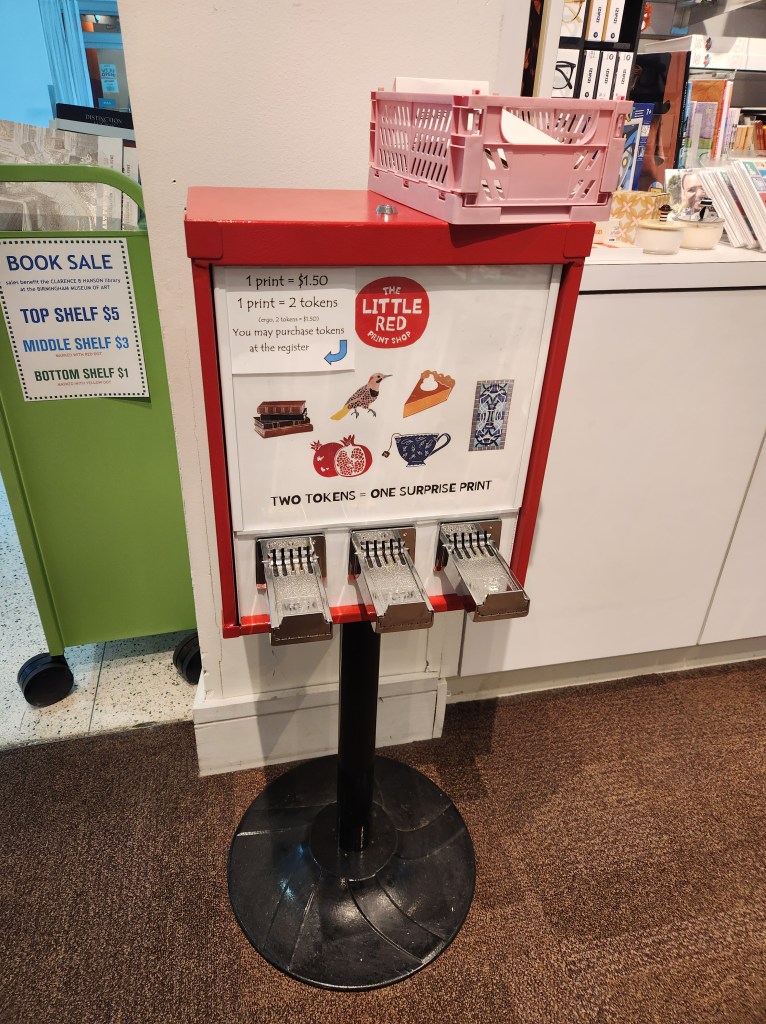
I got the Northern Flicker bird which turns out to be Alabama’s state bird. The next day at Rushmer Christmas we got these little place name holders crafted by my Birmingham niece with artwork by her daughter.
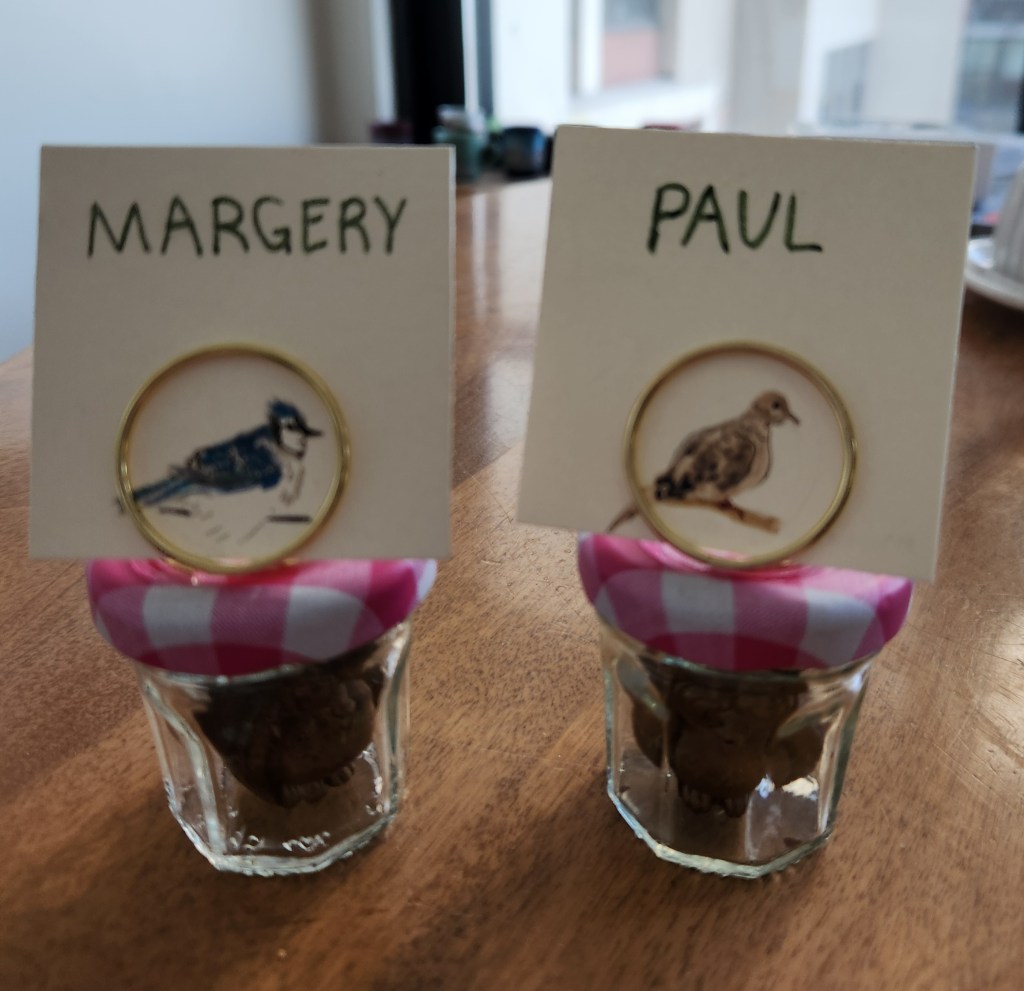
She informed us that all the birds were indigenous to Alabama and I knew I needed to create an Alabama souvenir with all our new birds.
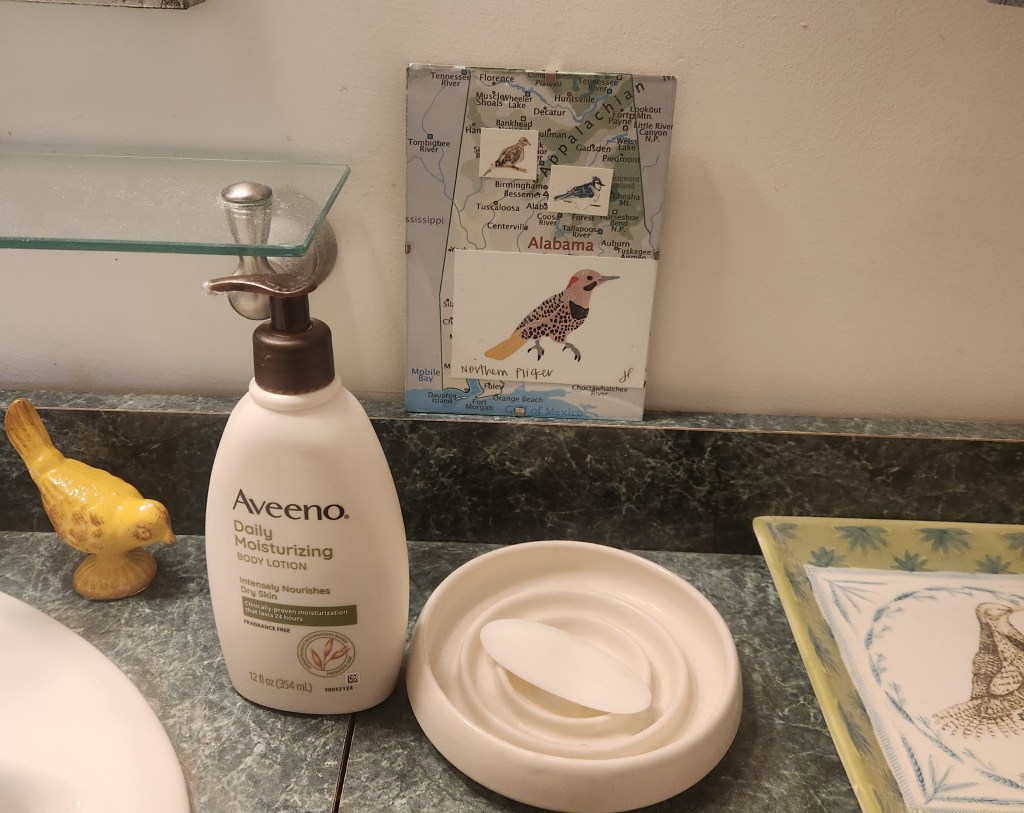
And that yellow bird didn’t really work where it was after we reaaranged some of the art above the cd case (incorporating can mean rearranging too) so he came to the bathroom as well.
My sister gave me a needle felted tapestry kit by Neysa Russo. The Scandinavian Deer reminded me of the deer on the sheets she had given me the year before so when I finished the piece, I turned it into a pillow that will go on our bed when we are using those sheets.
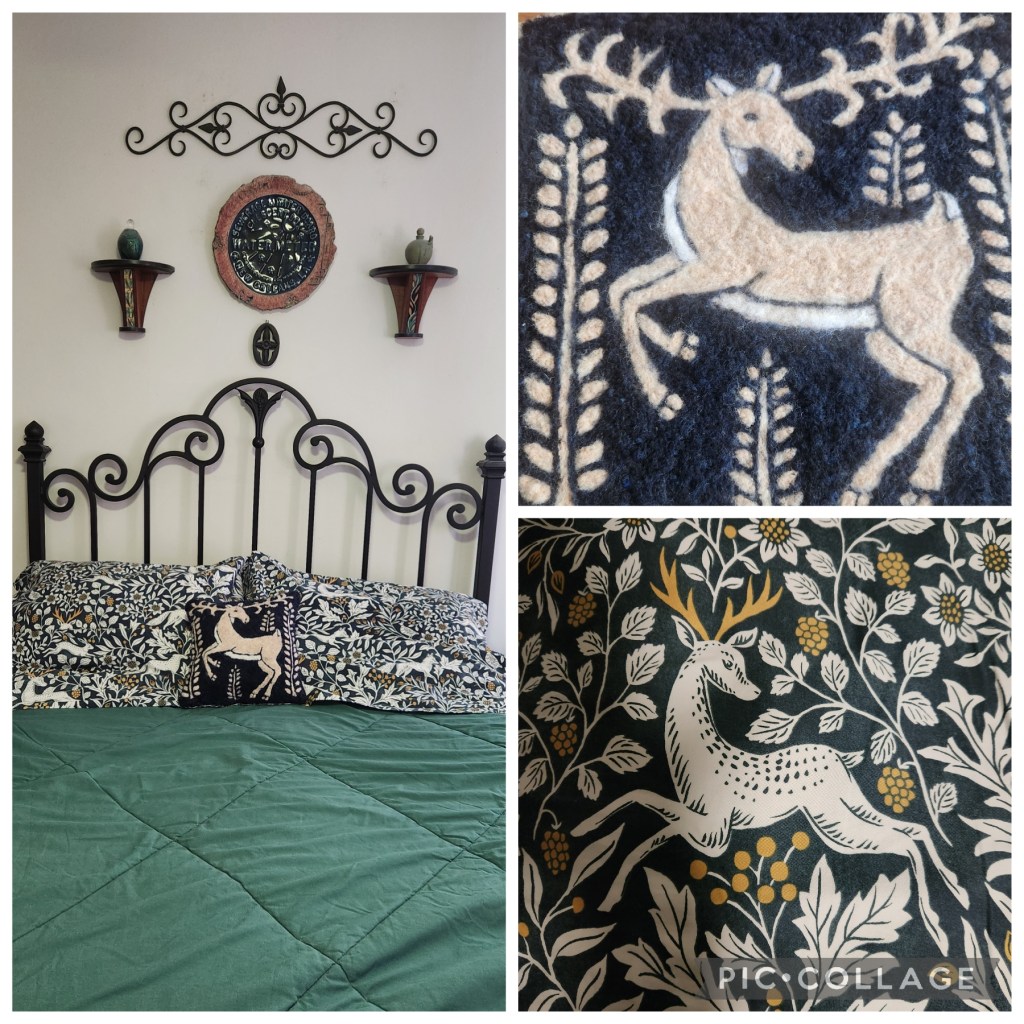
It’s so fun to incorporate new things!

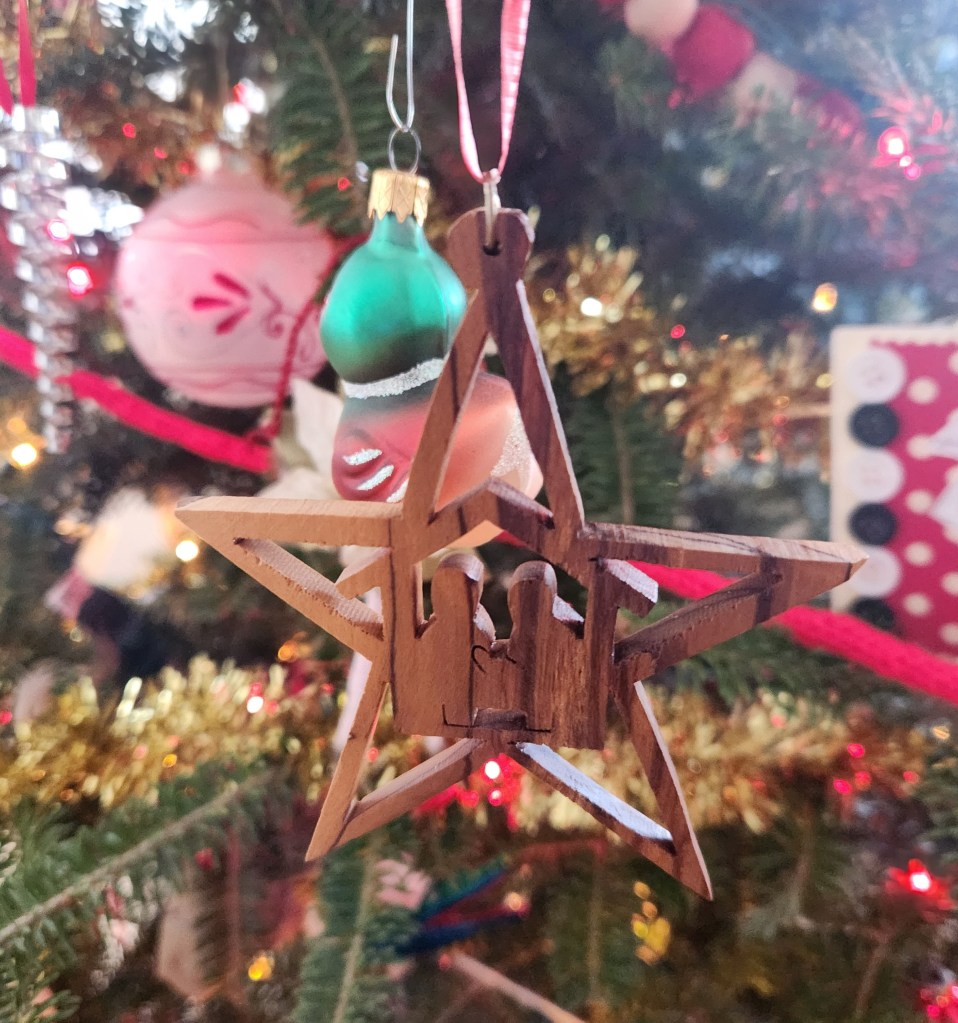
As we were putting all our Christmas decorations away today I remembered two things one was that I never posted the picture I took of the nativity that hung on this year’s advent calendar. So here it is. I bought it last year while Christmas shopping at the antique booth store in Andersonville.
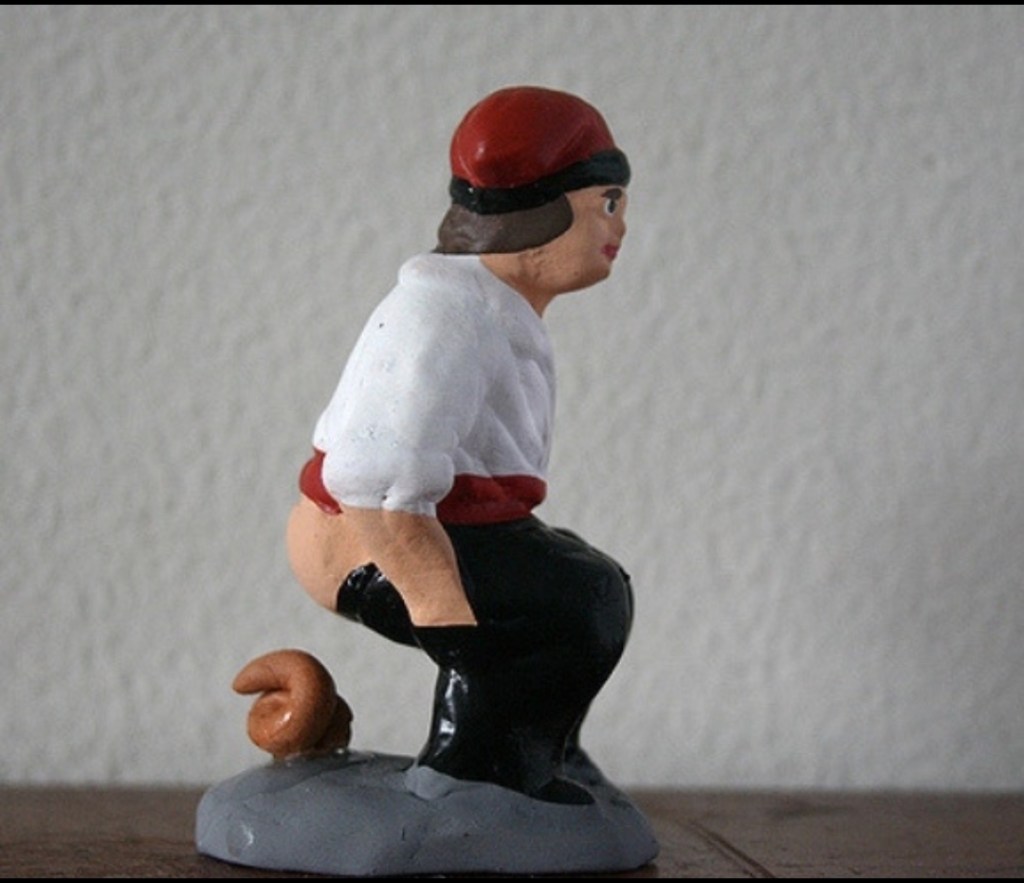
The other thing I remembered was that I wanted to write a post about two disturbing newspaper articles about crèche figurines I read this season. The first was a New York Times article titled “Lamine Lamal has a statuette of himself doing a poo: Its Christmastime in Catalonia”. The article explained that the soccer player was proud of his “caganer” because he understood the tradition unlike other soccer players who had been disturbed when their figurines were created. And what is a caganer? According to Wikipedia:
A Caganer (Catalan pronunciation: [kəɣəˈne]) is a figurine depicted in the act of defecation appearing in nativity scenes in Catalonia and neighbouring areas such as Andorra, Valencia, Balearic Islands, and Northern Catalonia (in southern France). It is most popular and widespread in these areas, but can also be found in other areas of Spain (Murcia) and Portugal.
The name “El Caganer” literally means “the pooper”. Traditionally, the figurine is depicted as a peasant, wearing the traditional Catalan red cap (the barretina) and with his trousers down, showing a bare backside, and defecating.
And if that wasn’t bad enough a few days later I read an article in the Tribune titled “Nativities casting Trump as wise man”. Apparently it is tradition in Naples, Italy to portray the wise men as contemporary celebrities. Soccer players have been popular in this role as well but this year Trump is the bestseller.
Words fail me!


