From a Froebel Gift to Magna Tiles
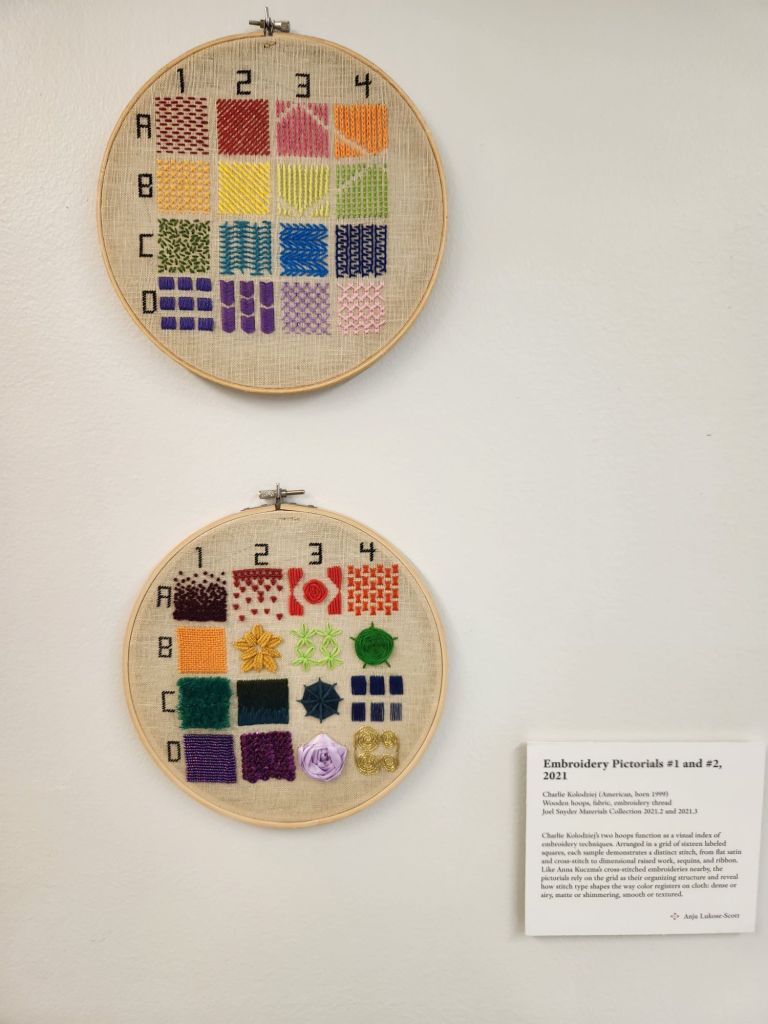
The “Side by Side” exhibit I wrote about in the last post had a subtitle: “Color and Texture” and a focus on the “grid” in cross stitch embroidery, weaving, and patchwork. In addition to all the cross stitch pieces by Anna Kuczma, the exhibit included two samplers by Charlie Kolodziej to illustrate that counted thread embroidery “relies on the woven ground and its perpendicular interlace of warp and weft.”
And Lilia Kuchma “weaves the grid that forms her tapestries. Each pass of the weft over or under the warp constitutes a colorful square, part of a field, plane, or line within the composition.”

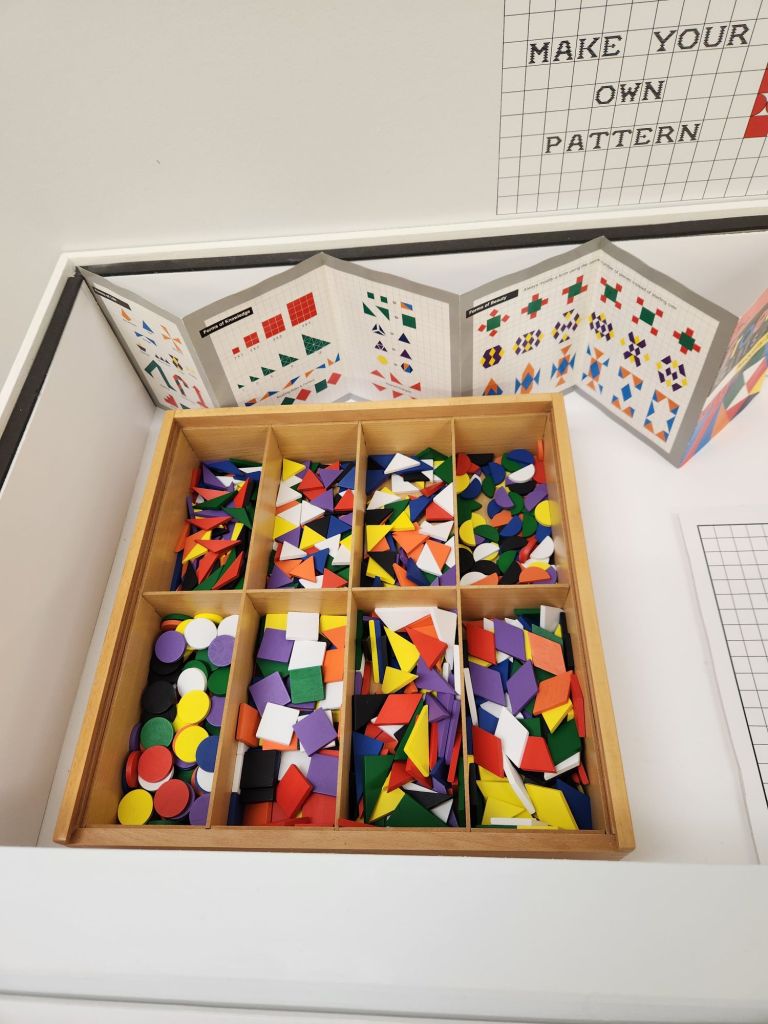
Two examples by Liz Barr show how patchwork quilts also “rely on the grid as their organizing structure”. One of her examples hangs above the hands-on component of the exhibit – a table of parquetry squares which is one of the Froebel gifts that “represent the complex geometry innate in the natural world.” To be honest, I had no idea that parquetry squares were one of the Froebel gifts – number 7 to be exact.


The exhibit was curated by Dr. Erica Watson and her University of Chicago students. (I did a little research on Dr. Watson and it turns out that she curated the excellent Bisa Butler exhibit at the Art Institute!) This exhibit was not in a museum but in the hallways of the Cochrane-Woods Art Center which mostly consisted of classrooms. I had to take a picture of this unusual tribute to another professor as well.

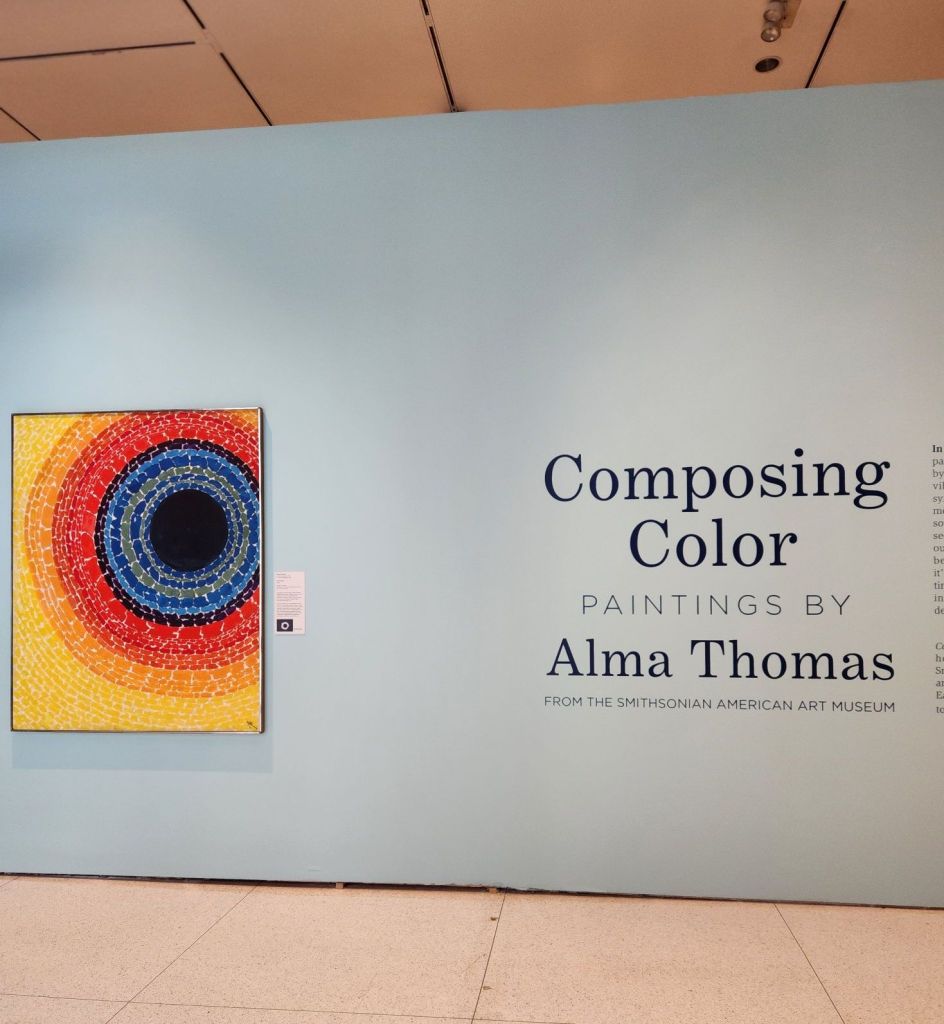
The Smart Museum of Art was across the way so we visited that next and found an excellent exhibit there as well.
It also had a hands-on component that invited us to: “Sit, listen, and imagine the world through Alma Thomas’s eyes. Using the magnetic tiles on the table create your own – or add to someone else’s – colorful composition.”

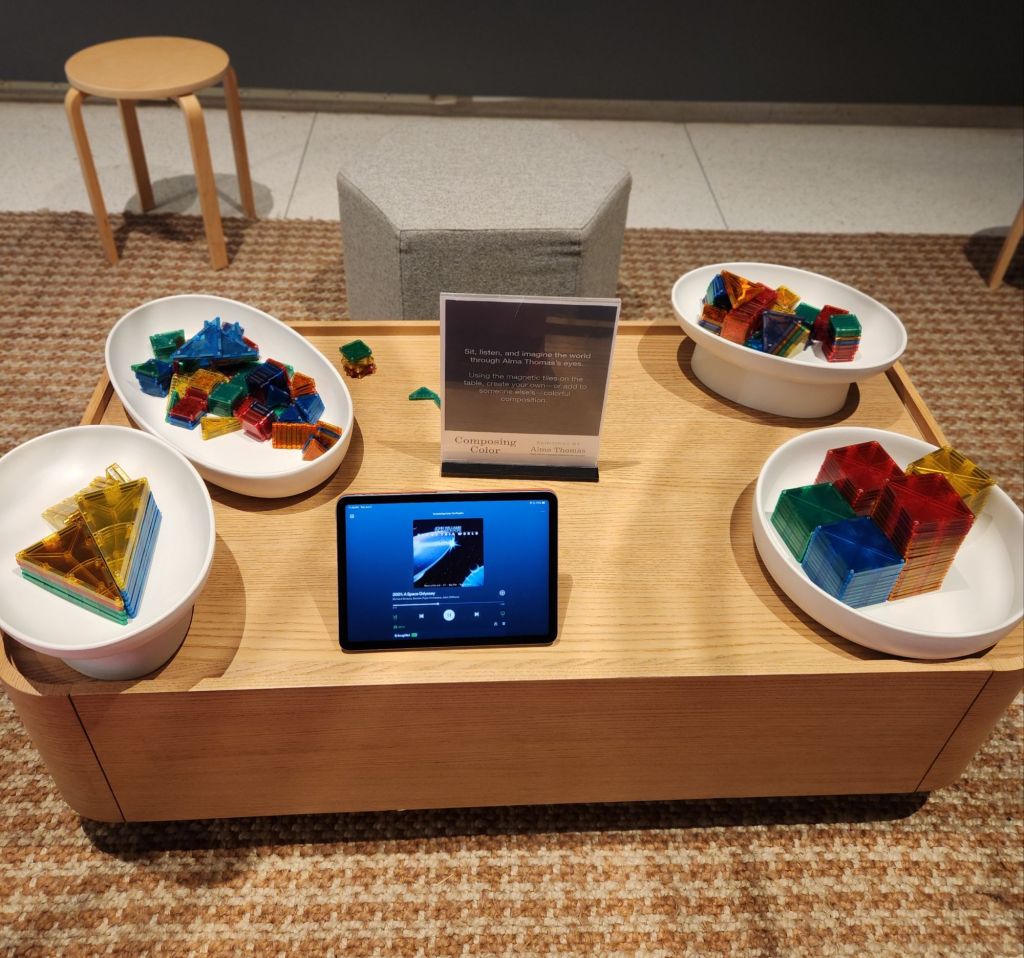

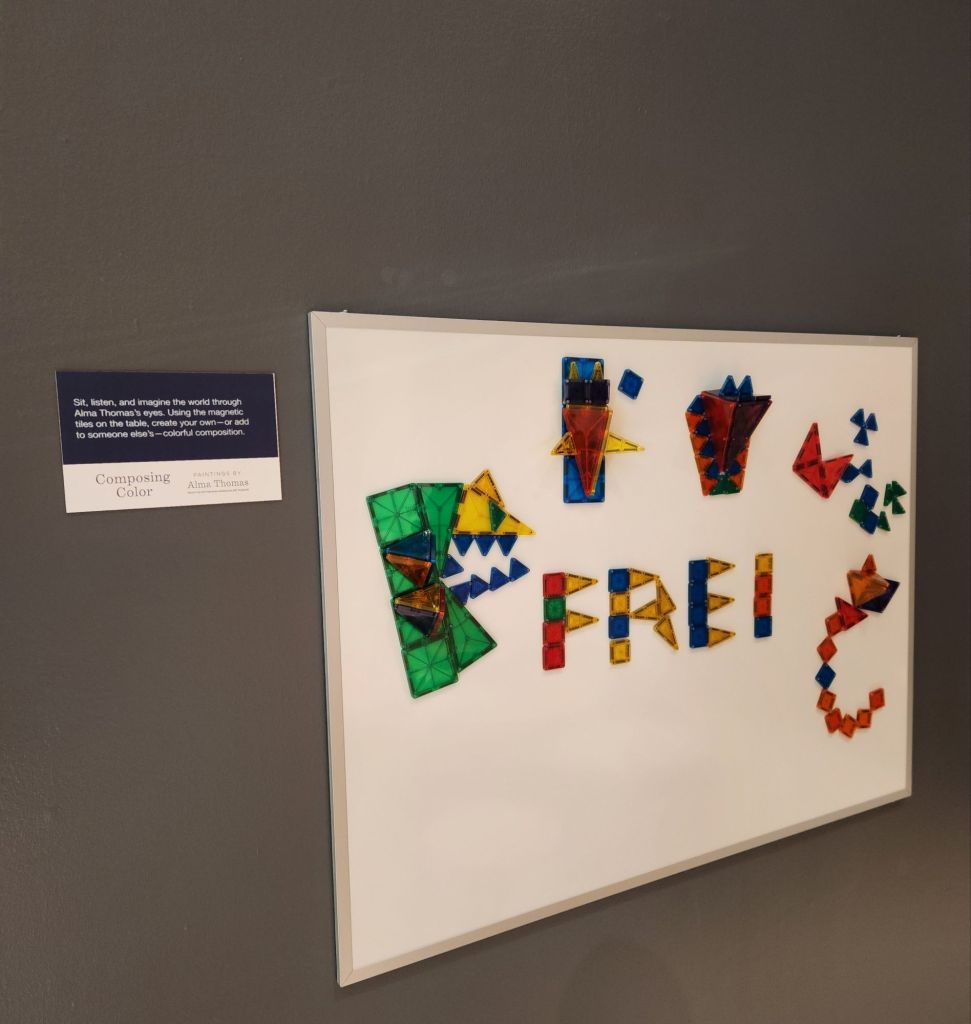
I love that I’m seeing more and more examples of hands on components as part of exhibits!

 Collections and Other Stuff I Like