
One of my favorite Christmas gifts last year had to wait until now to be displayed and featured here because it was meant to go with my Day of the Dead offrenda wreath. My Brooklyn niece made me this beautiful cempasúchil flower mini quilt using new fabric as well as fabric from her mother’s (my sister’s) stash. She based it on a pattern from the book “Flossie Teacake’s Guide to English Paper Piercing”.
Hanging under my sister’s offrenda ornament this year is the new one I made for my husband’s brother, who died in June.
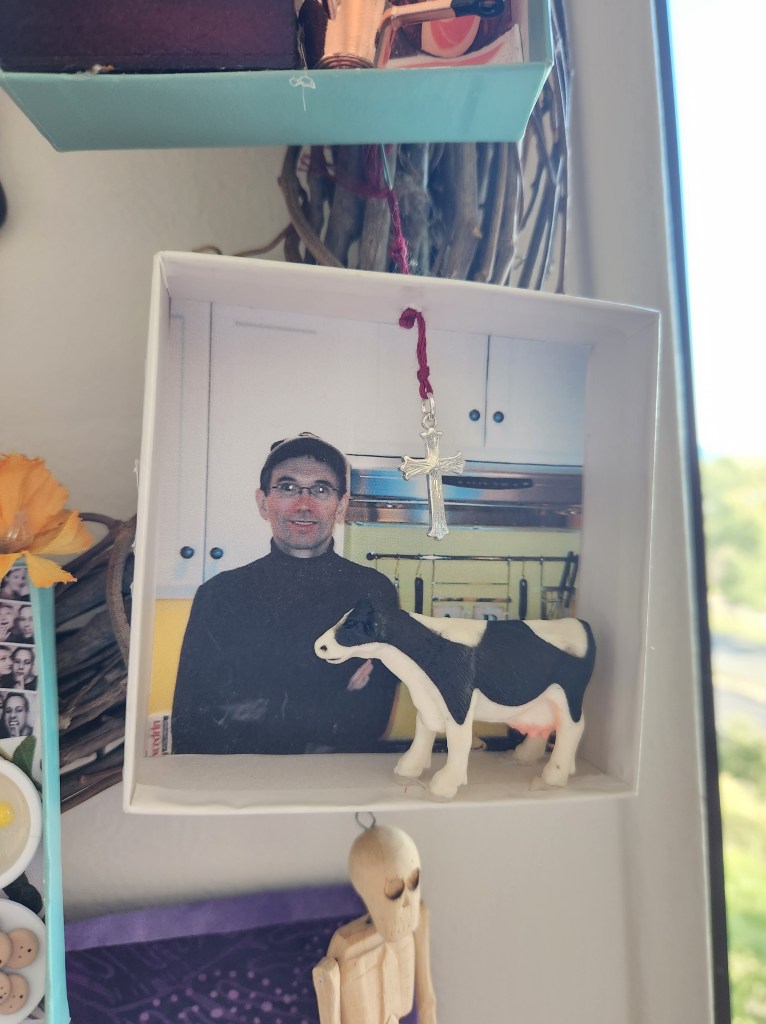
He was an animal veterinarian who specialized in transplanting cow embryos, and at various times in his life, he either embraced or hated getting cow gifts. So I thought his offrenda definitely needed a cow. Being a Christian was an important part of his life for many years, so I added a cross. But before he embraced Christianity, he was a serious Deadhead, so instead of cempasúchils I added the Grateful Dead bears all around the sides of his offrenda ornament.
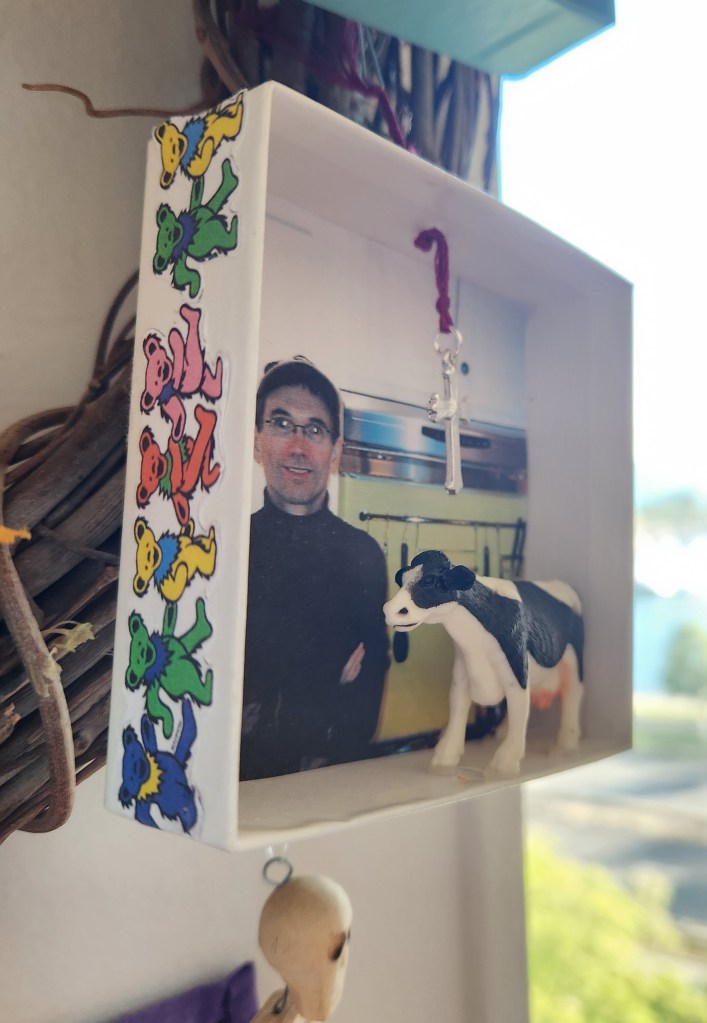
We miss you, Allen.

I thought I knew all the ways to work with felt, but then Jennifer from the children’s museum shared this on her Instagram stories:
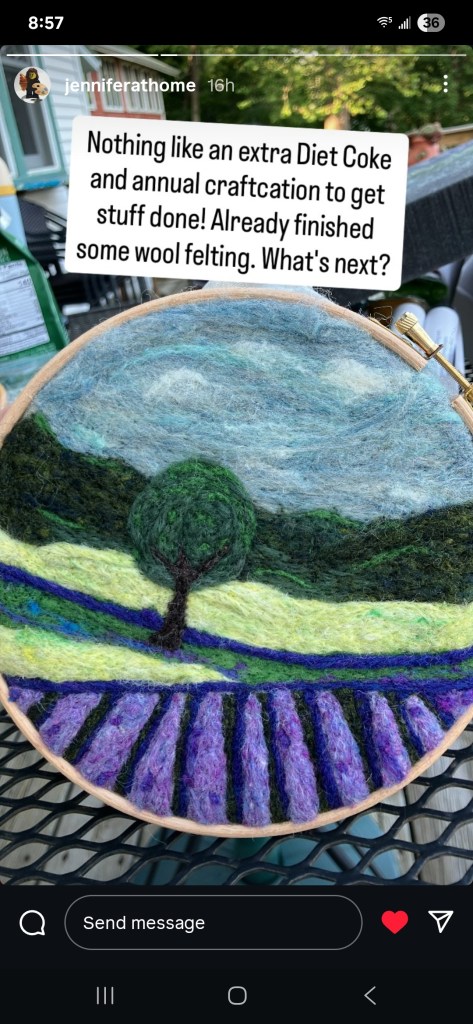
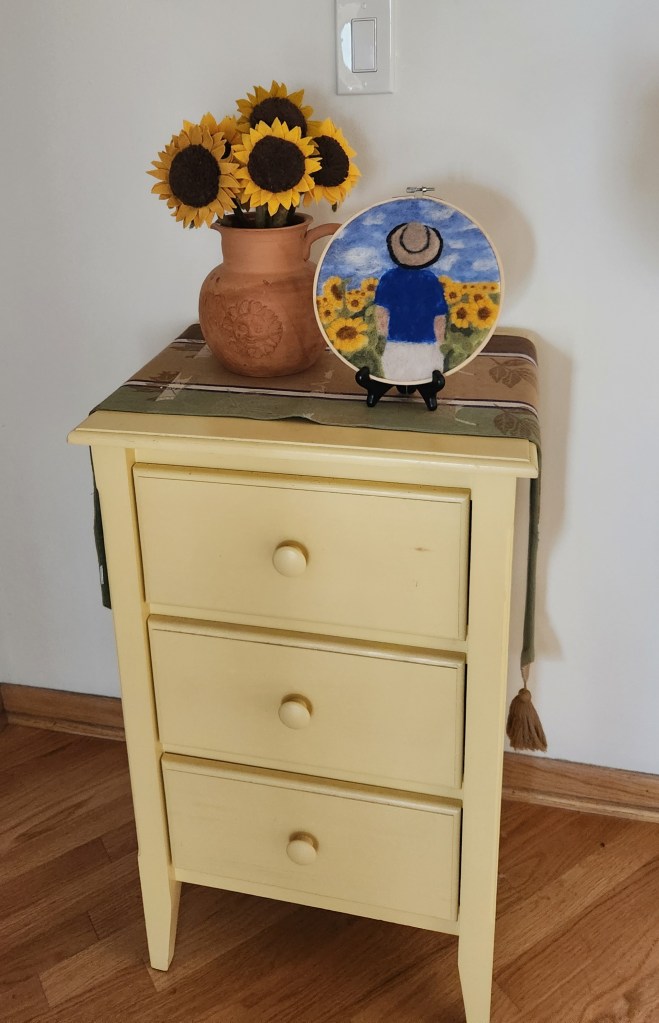
Felting in an embroidery hoop? I did some googling and found out you don’t actually do the felting in the hoop – you needle felt into a piece of fabric on a felting pad or foam piece and then frame it in the hoop. When I thought about what I might want to felt, a field of sunflowers came to mind maybe because my sister had just sent me a picture of herself in a field of sunflowers. After I googled a bunch of pictures of fields, I realized I actually wanted to felt a picture of my sister in the field, not just a random field of sunflowers.
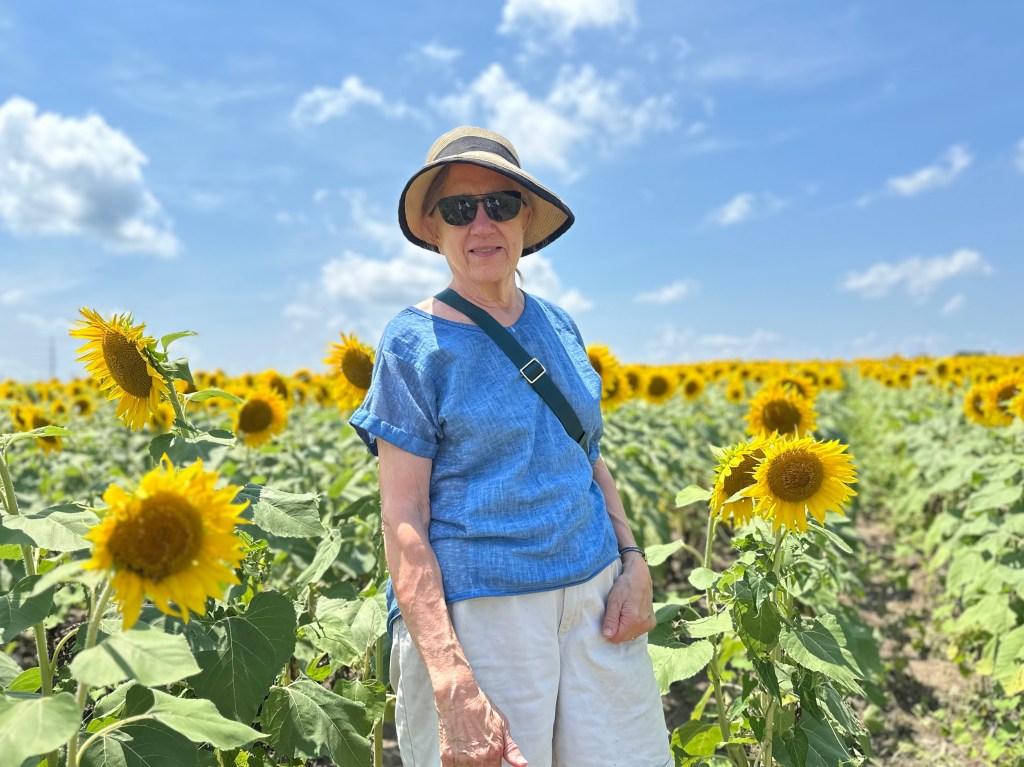
I didn’t want to attempt her face, and that thing thing that people do where they leave the faces blank really creeps me out, so I decided the picture should be of her looking at the sunflowers.

I used both kinds of fiber since that’s what I had, and I found that batts seemed to work a bit better than roving – in fact, for the sunflowers, I started with batting and topped it with roving since the roving was the right color.
When I sent my sister a picture of it, she exclaimed, “Is that me?” and wondered if it was her birthday present. No, but maybe Christmas… For now, it’s part of my Fall decorating.

When the butterflies left (flew away from?) Michigan Avenue, I wondered what would be next. At first, I thought it was going to be flowers since I saw a couple of different ones.
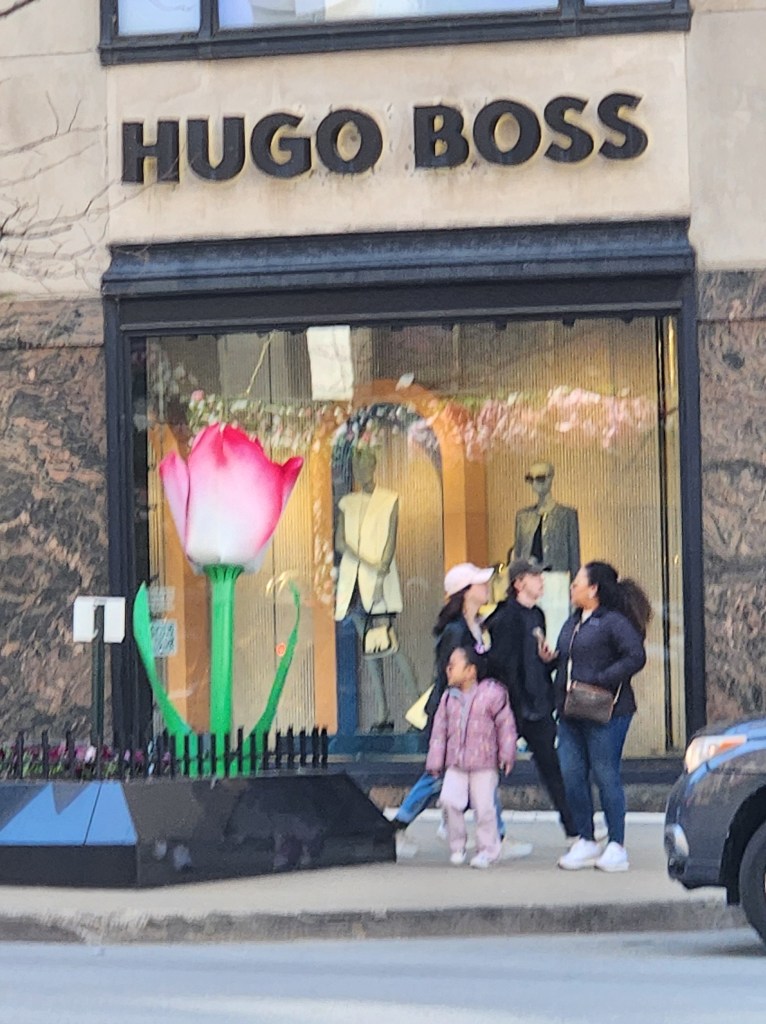
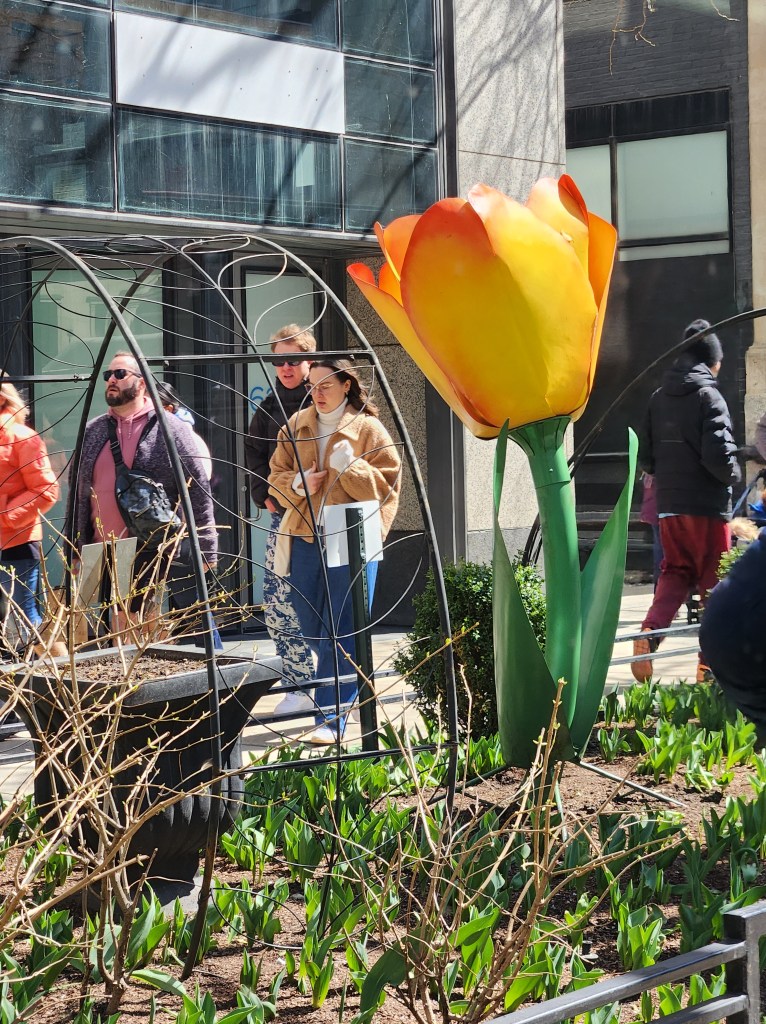
But then I realized that those were just part of the spring landscaping. After a while, a few art pieces appeared. Spying them from the bus windows, I thought they were meant to be buildings, but when I looked at them from different angles, I realized they were Chicago stars. They didn’t have any placards with information, but by using the Google search feature on my phone, I found out that the “Rising Star” or “Everybody is a Star” sculptures were commissioned by the Magnificent Mile Association and painted by artists from the Englewood Arts Collective.
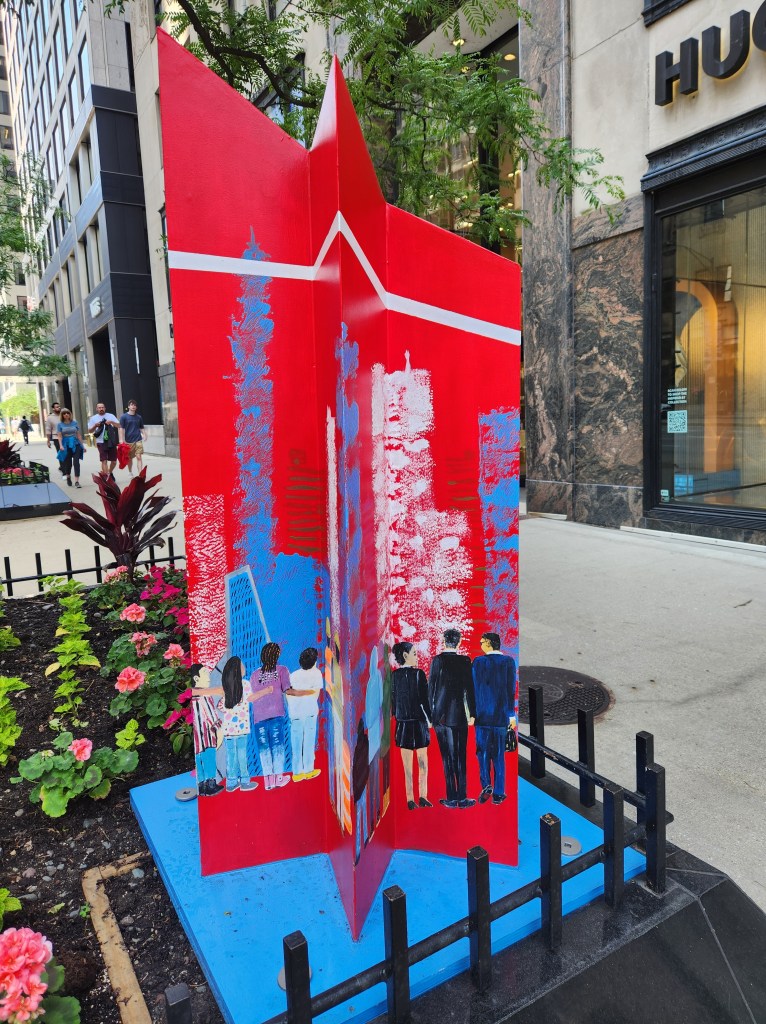


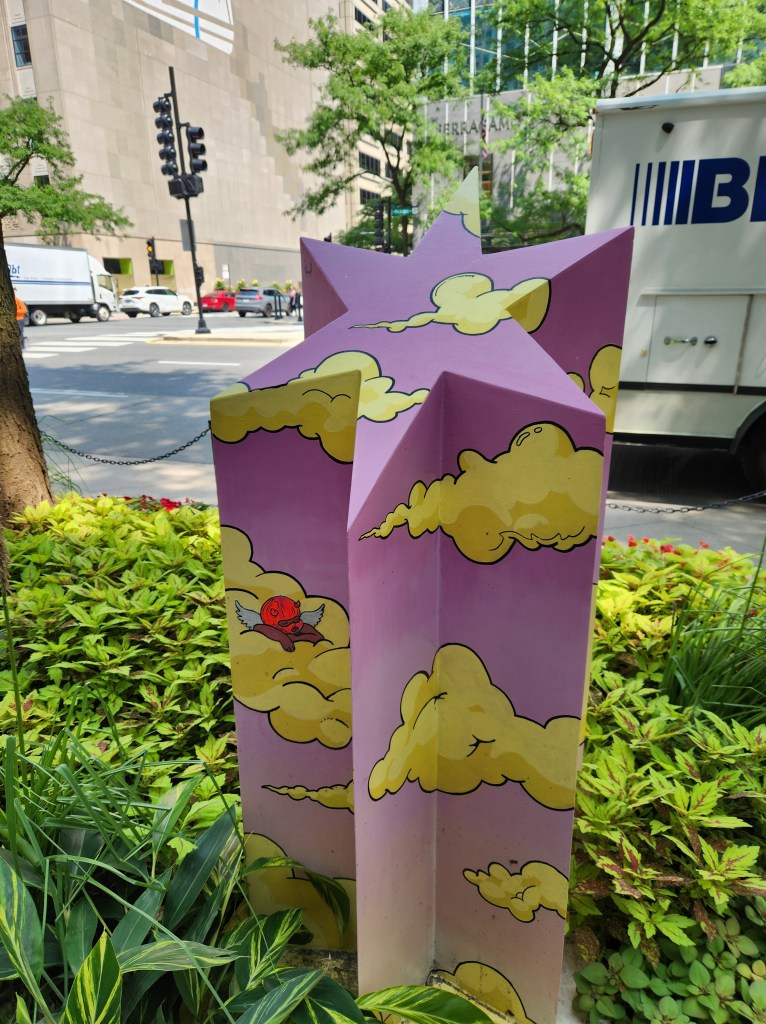


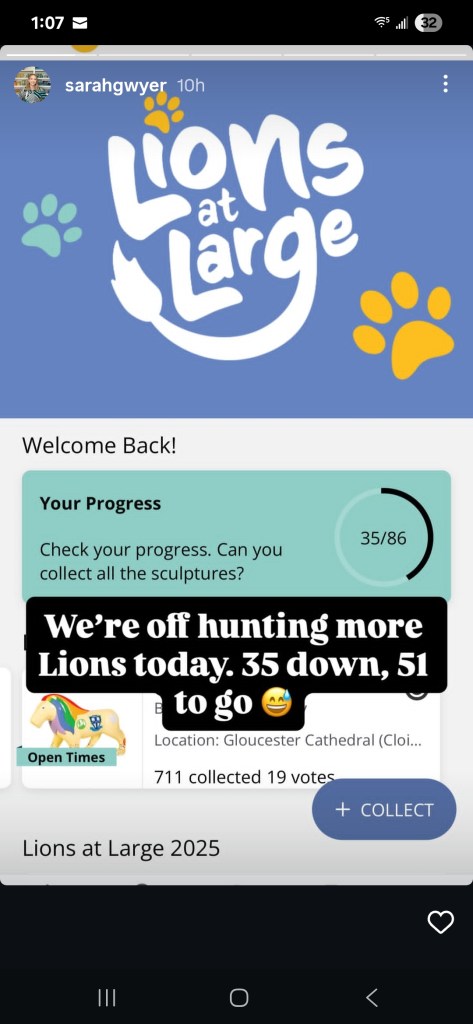
There is one more inside Water Tower Place but I haven’t stopped in there yet. So that makes 6 not nearly as many as the lions a British family I follow on Instagram are finding in Cheltenham and Gloucester.

They posted the above tally a few days ago and today (yesterday?) they set off to find some more.

When people ask me if I like living in Chicago and if I miss living in Western Massachusetts, I have to say yes and yes. I miss many things about Western Massachusetts, including the landscape and the music scene, but I also love things about Chicago, particularly all the art. I mean, there is even art on the bus shelters sometimes!
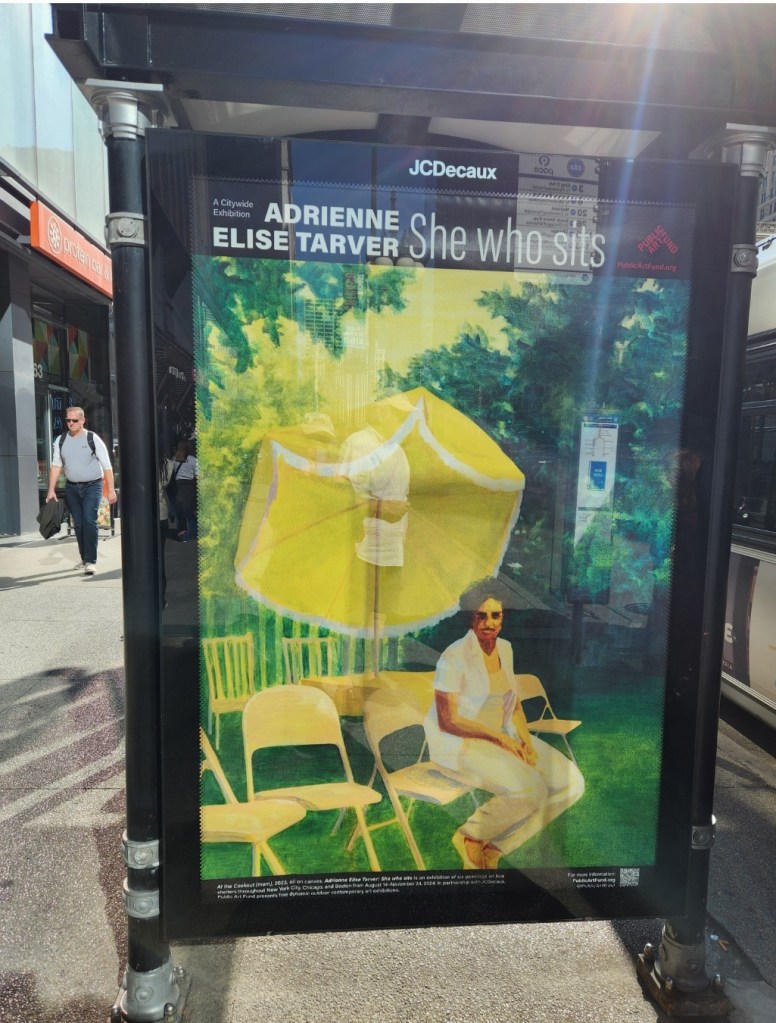
It is kind of hard to take good pictures of it, and I often only see the shelters through the bus windows but here are two from a series called She Who Sits by Adrienne Elise Tarver that appeared on bus shelters from last August to November.

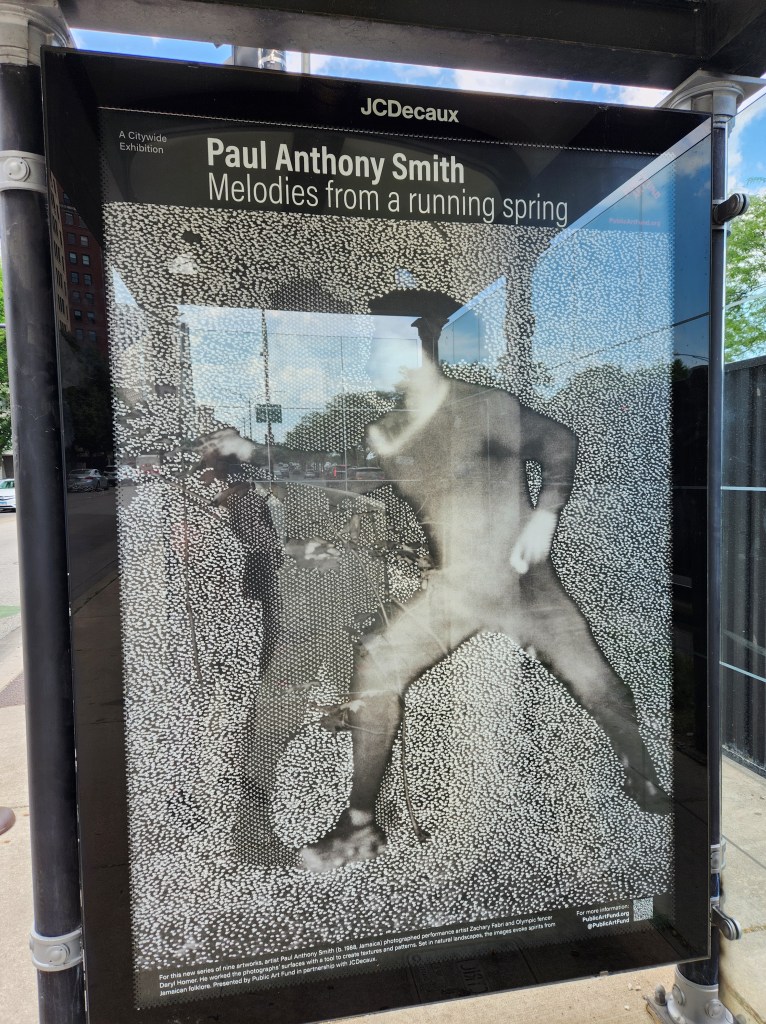
Now, there is a new series by Paul Anthony and I noticed it was installed by the Public Art Fund. Googling led to their website and this description of the series that currently appears on Chicago, New York, and Boston bus shelters:
“The exhibition title, Melodies from a running spring, suggests the artist’s dreams or visions from Jamaica. Each piece features a photographic portrait—sometimes of a single figure, other times two—set in a natural landscape. Smith’s picotage disrupts these photographs in various ways: their backgrounds are sliced by geometric grids, the landscape is obscured by fields of perforation, and in some cases, the figures dissolve almost entirely into texture.”

And of course, another thing I love about Chicago are the buses themselves. People here complain about them a lot, but coming from a place with virtually no public transportation, I find them amazing!


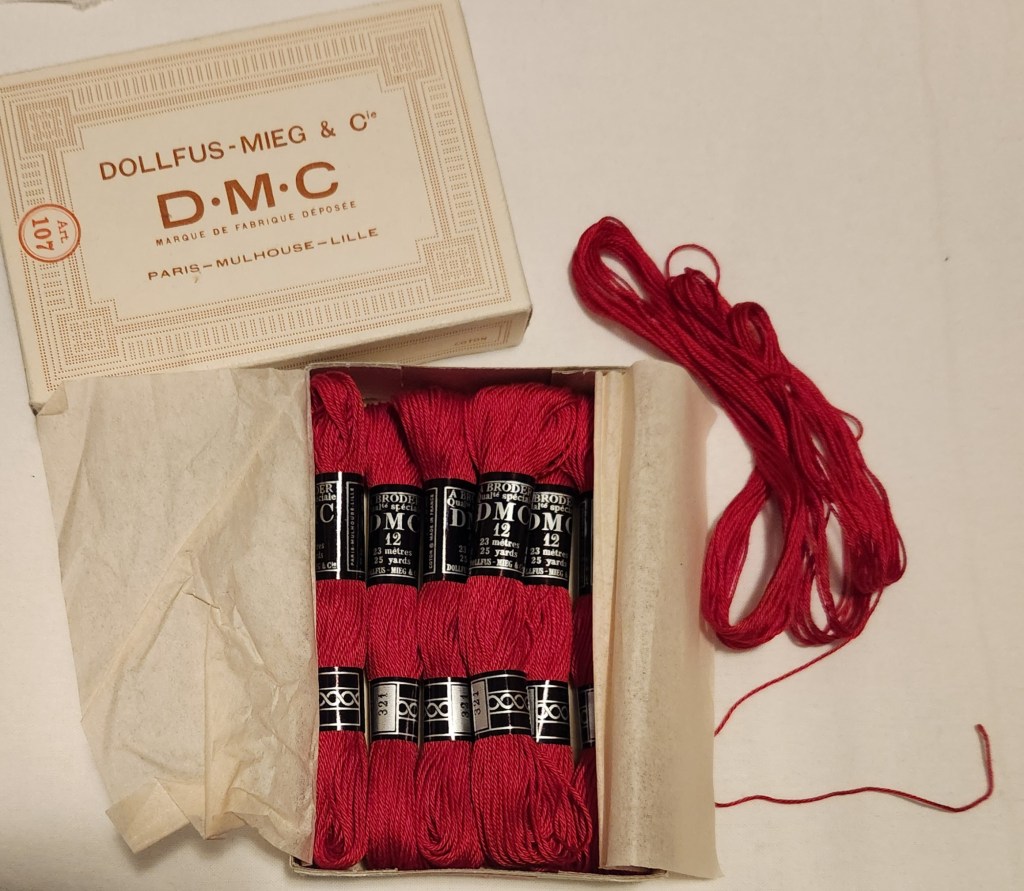
As I was working on a series of Valentine’s cards and hiding the crab card I was making for my cancer sign husband’s birthday, I said, “I’m just making these while I wait for an idea for my next piece.” A few days later, an idea did pop into my head – the Woodstock poster, which was perfect because I still have a lot of the vintage red thread I bought at the Ukranian National Museum.
I googled images of the poster and did a little research about it, too. It was designed by Arnold Skolnick, and according to his New York Times obituary, he only had a few days to work on it after the original psychedelic design by David Edward Byrd was rejected because it featured a nude woman. Arnold Skolnick, who did free lance advertising work, was inspired not by typical concert posters but by a Matisse paper cut outs exhibition he had recently seen. In interviews with various publications over the years, he had mentioned that he started out with a blue background and a flute and that the white bird is not a dove but was actually inspired by the catbirds he saw outside his window. He had also said that he didn’t mean for the bird’s beak to be red but neglected to mention it should be black to the printer. A “happy accident,” I think!
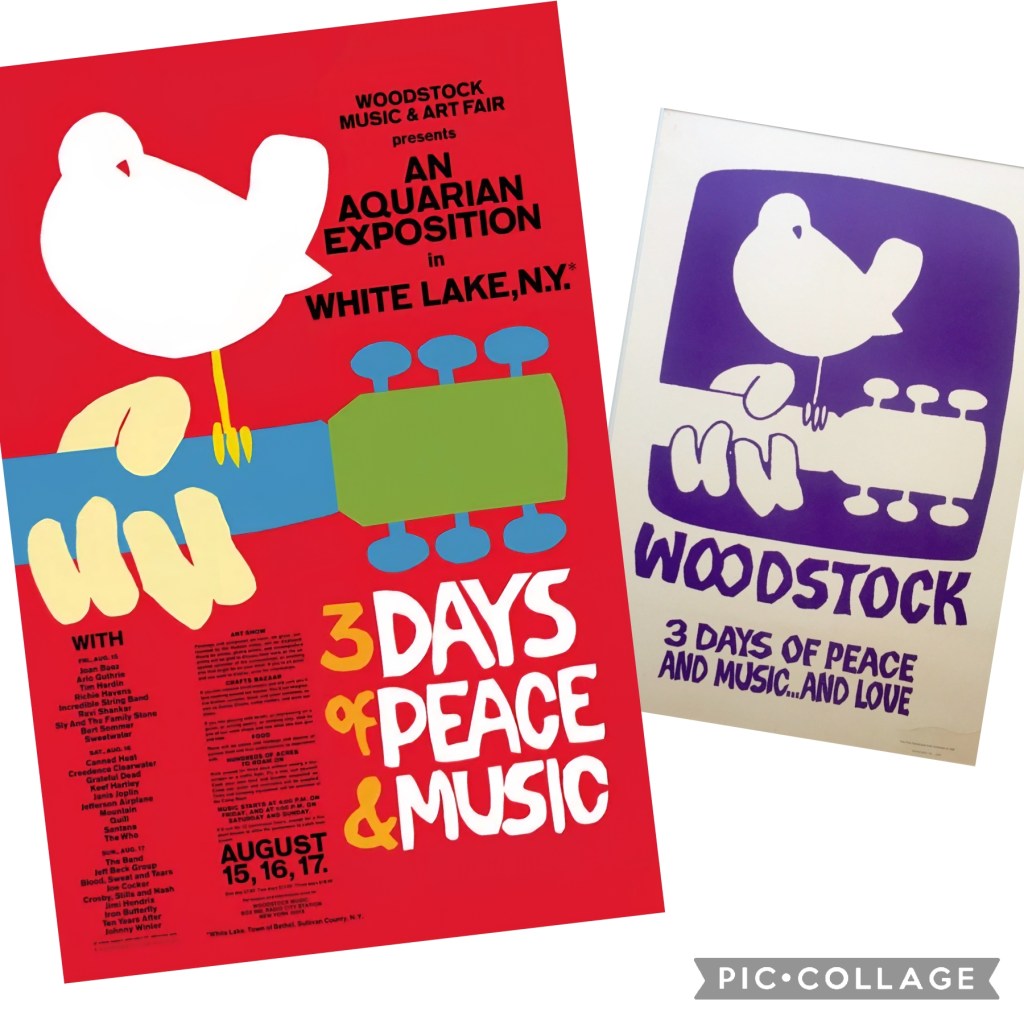
I originally thought of embroidering the poster with the lyrics to Joni Mitchell’s Woodstock to the right of it as I had done with the “Angel from Montgomery” one, but the piece of linen I had was too small for that and I liked the idea of just embroidering the image after I found the movie poster on the right above.
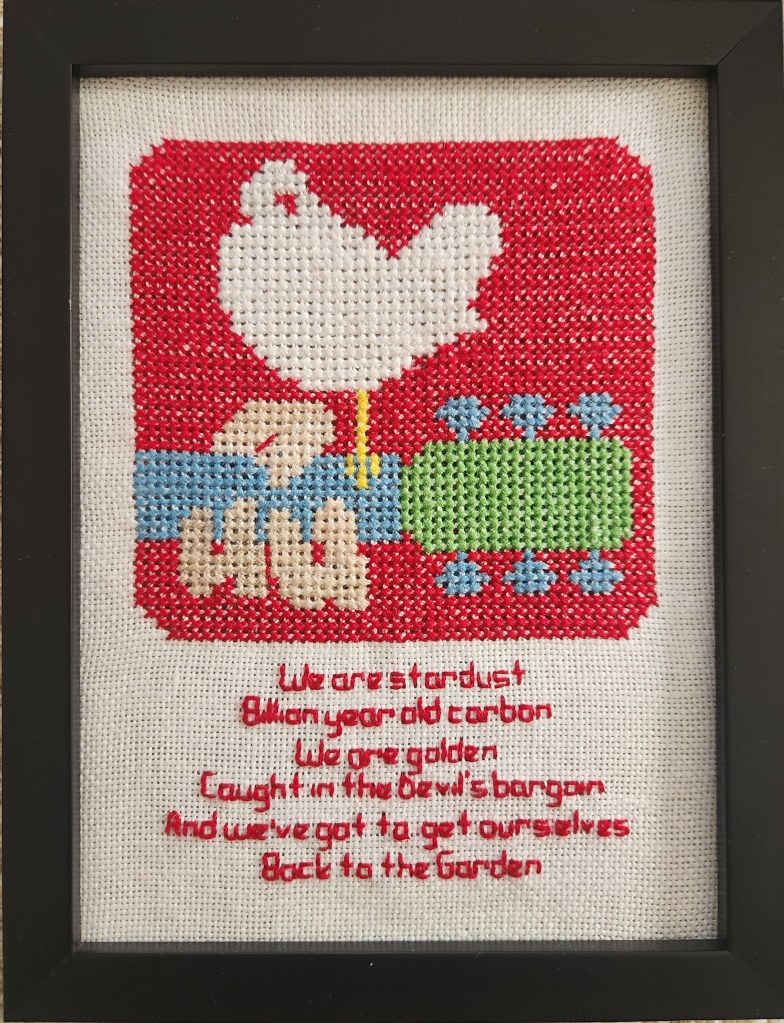
I chose the last chorus of the song because I certainly think we are “caught in the Devil’s bargain” these days. I toyed with gifting it to my friend who actually went to Woodstock but realized it needed to live near the “Angel from Montgomery” piece, although it looks a bit different because the vintage embroidery thread is four strands and I usually use three. Now that I see them together, I think that the Hank Williams portrait with the lyrics to “I Saw the Light” by T.S. Green might have inspired both of my pieces.

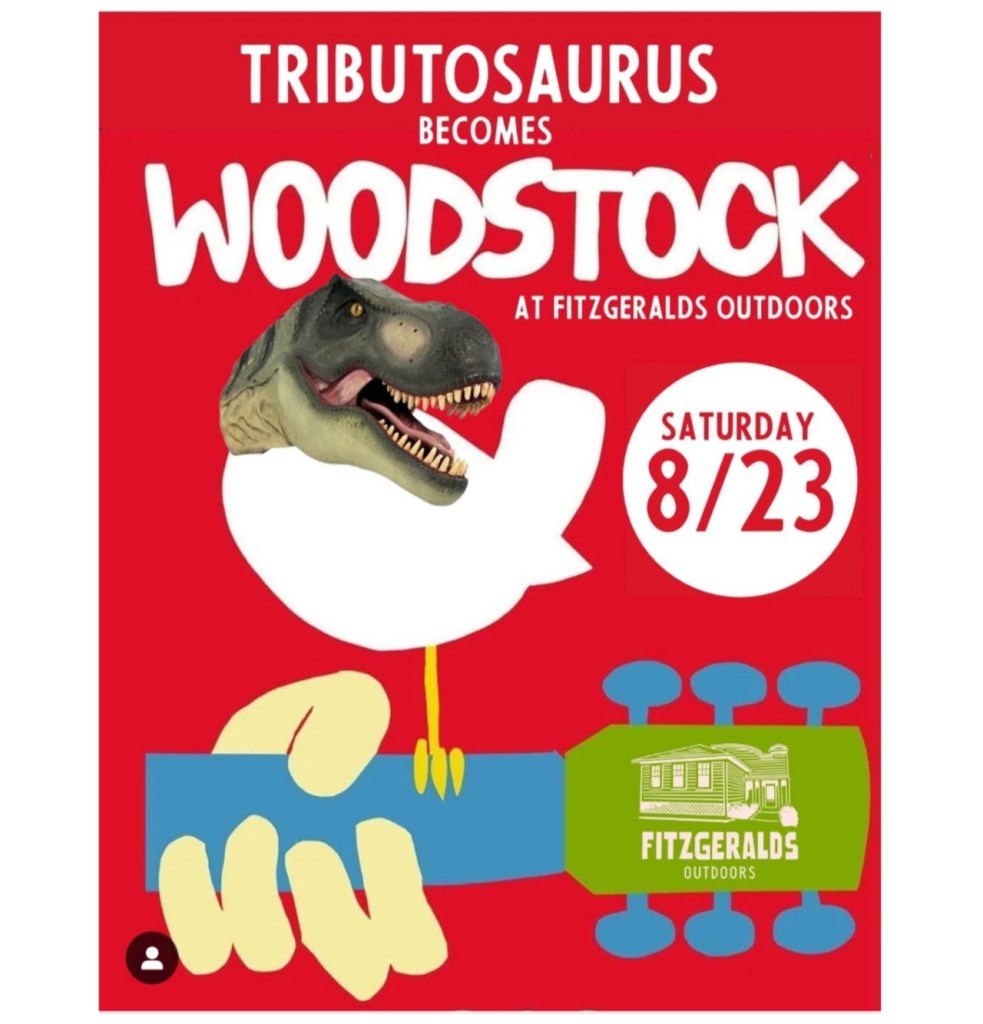
Although speaking of inspiration, as I was stitching, I wondered where the idea to stitch the Woodstock poster had come from. The answer came a few days later when Fitzgerald’s nightclub reposted an advertisement for an upcoming show on Instagram.
Now I wonder where my next idea will come from!

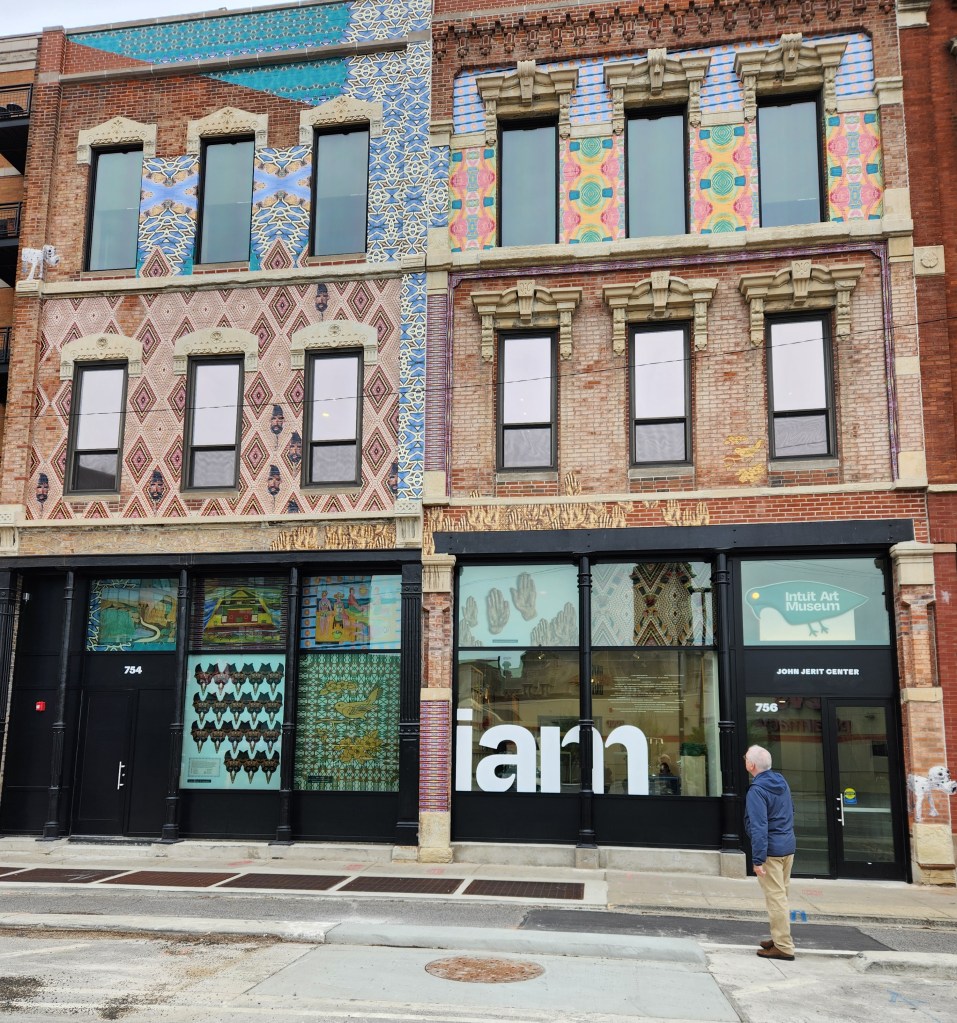
I have to admit that I was a little disappointed during my first visit to the newly renamed Intuit Art Museum during the special preview a month before it reopened. The museum had been closed for almost two years for a major remodel, and at one point, there were plans for a Mr. Imagination Education Studio, which, in my mind, morphed into a full-time art studio with shelves full of bottlecaps and other recycled materials. So it was a surprise to find that the plans had changed and that the new Carolyn Mys Learning Studio was an empty room intended primarily for school educators and students. And on my second visit, the week the museum opened the door to the space was closed.
However, the Center for Learning Engagement and Opportunity or CLEO space which was named for Intuit founder Cleo Wilson, was set up, and I began to understand some of the possibilities for this “flexible community gathering space”.
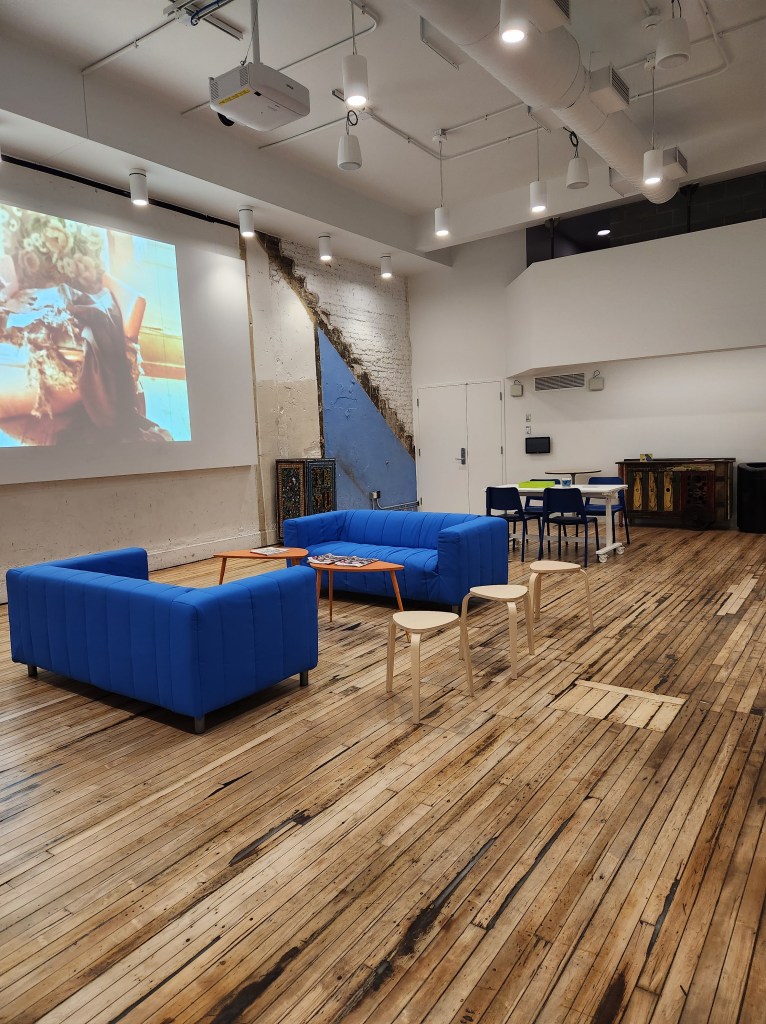
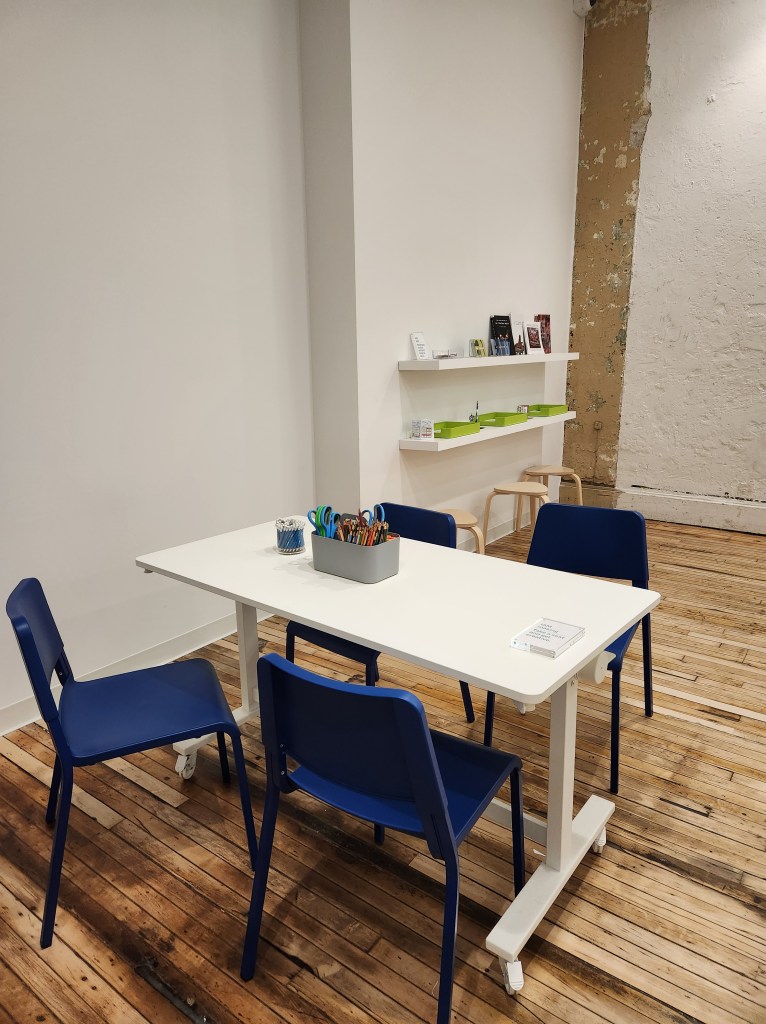
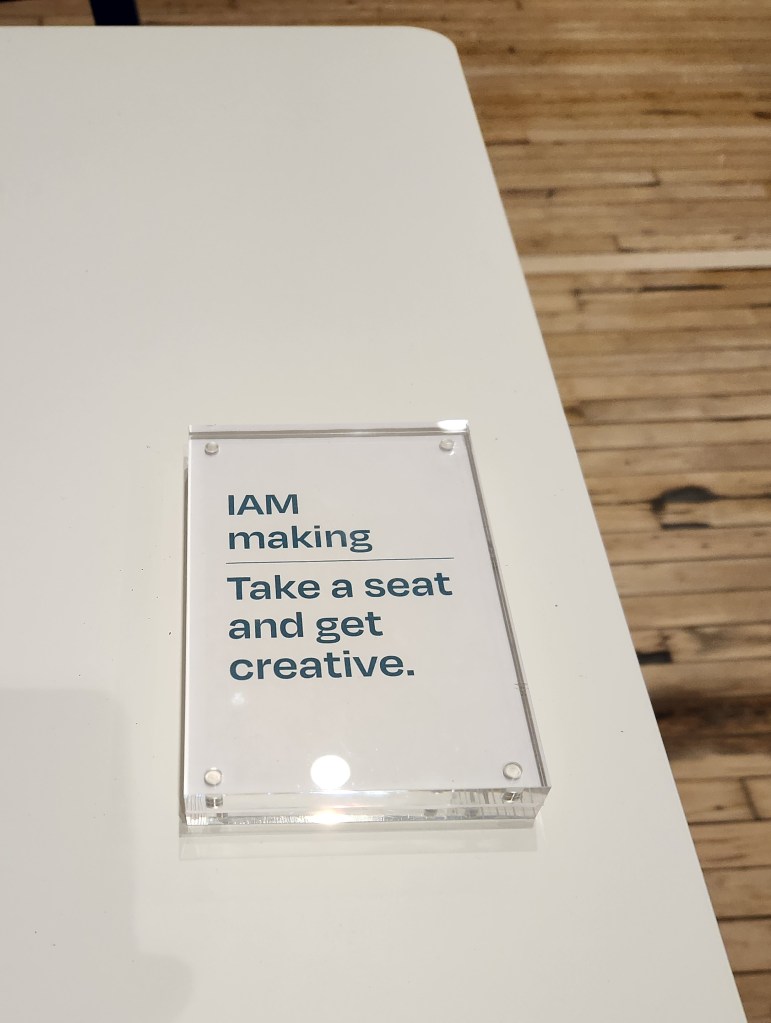

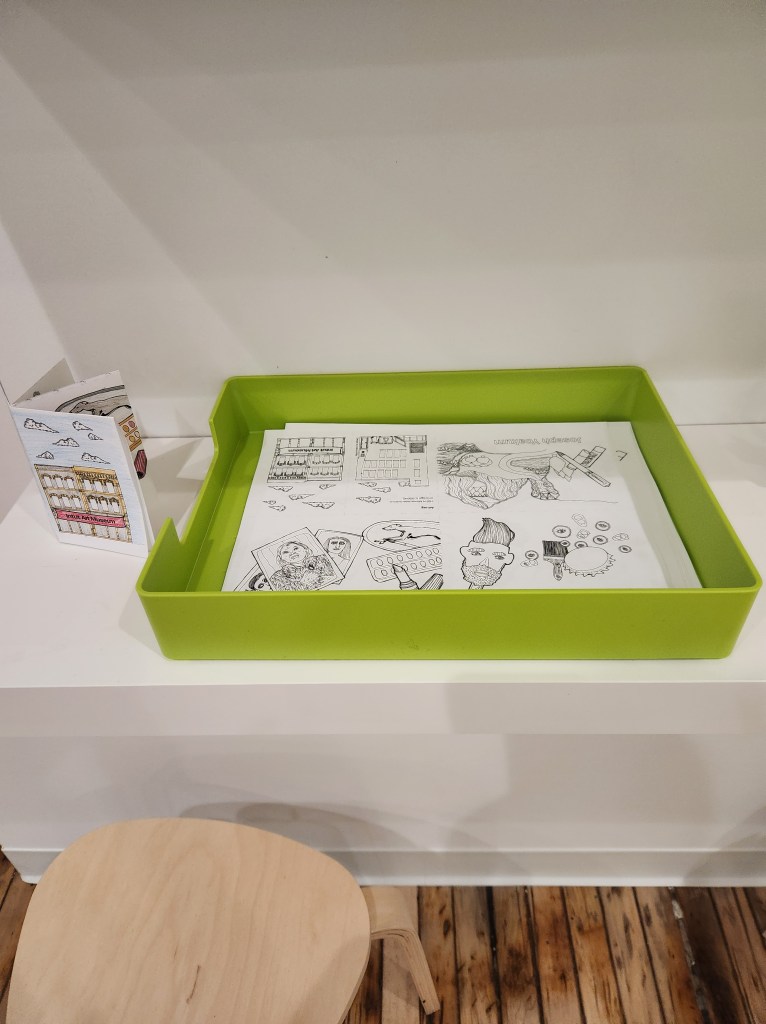
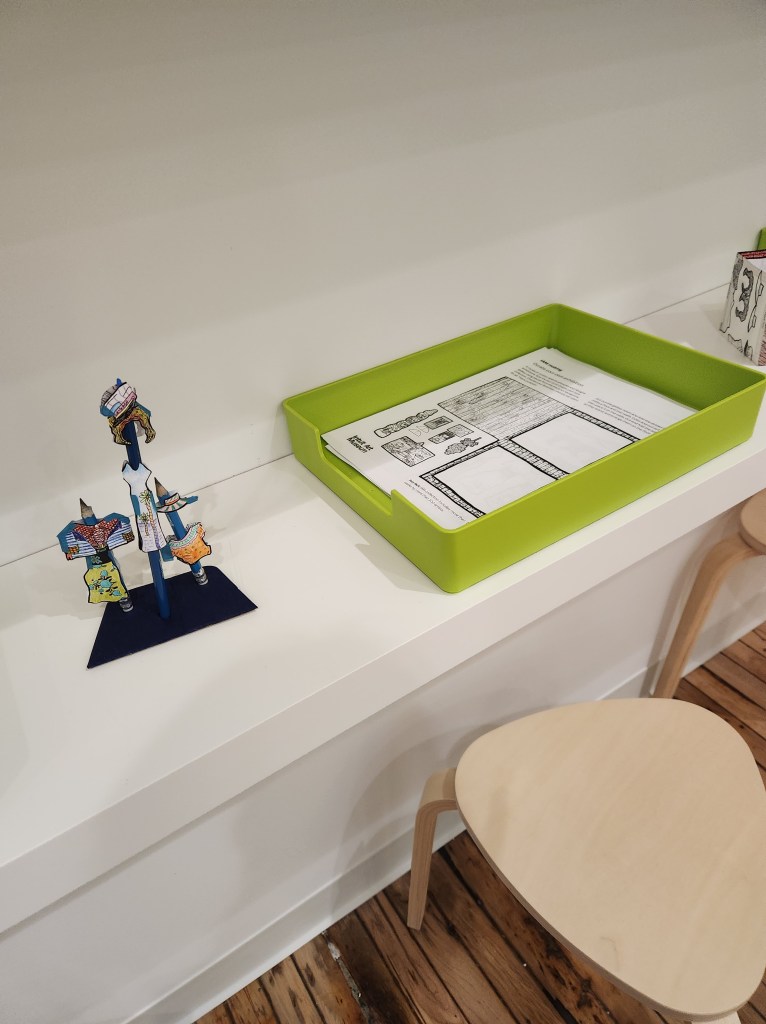

The room was totally reconfigured for my third visit, which was to participate in a weaving workshop.

A work by artist Pooja Pittie was projected on the wall, and she was there to teach us how to make the cords she had used to weave the piece.

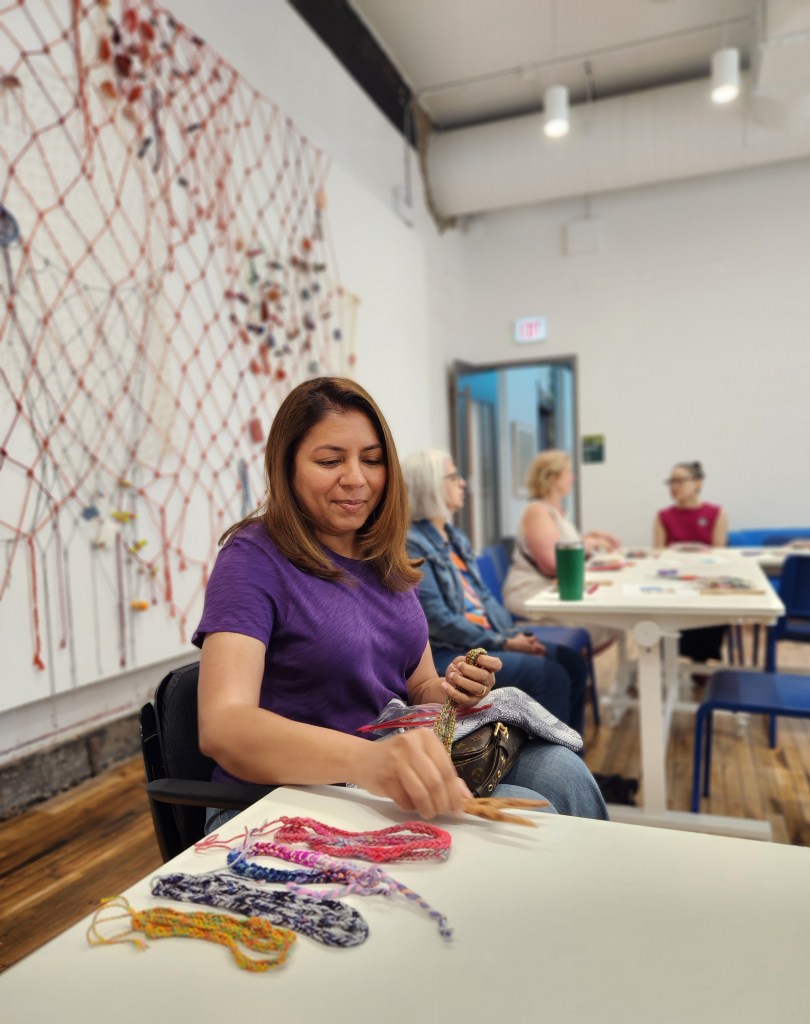

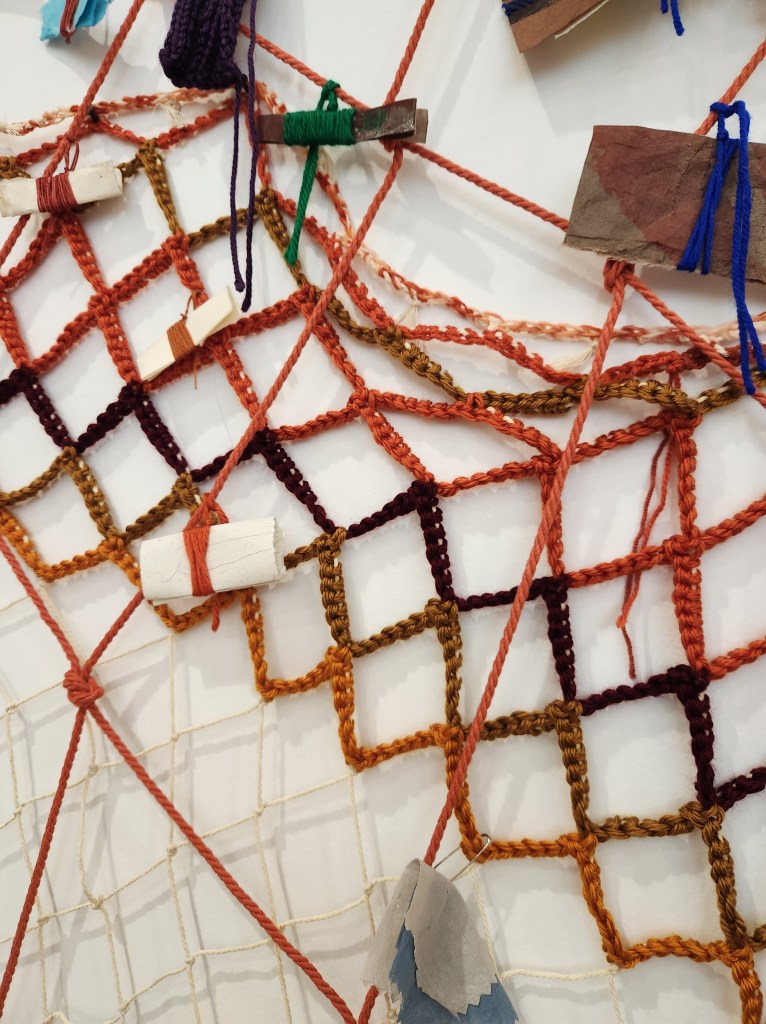
She had also created a piece for the room, which is visible in the previous photos and in the closes ups below. Museum guests are invited to contribute to the piece.
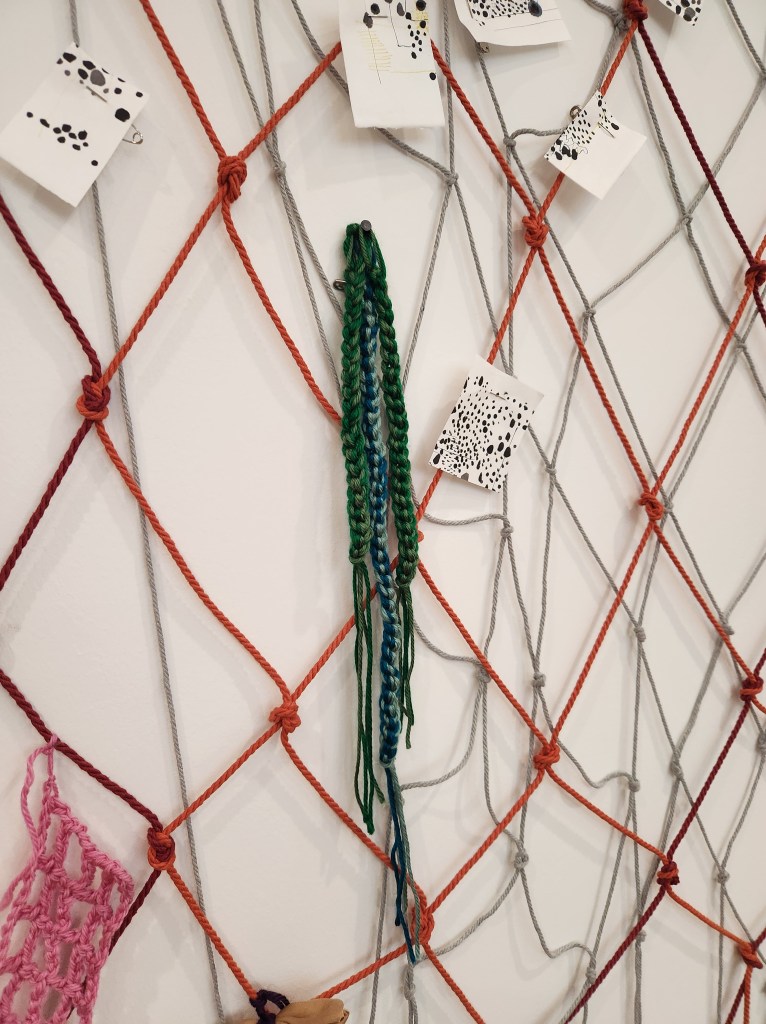


The Carolyn Mys Learning Studio was also open during this visit for the Teacher Fellowship Student Exhibition.
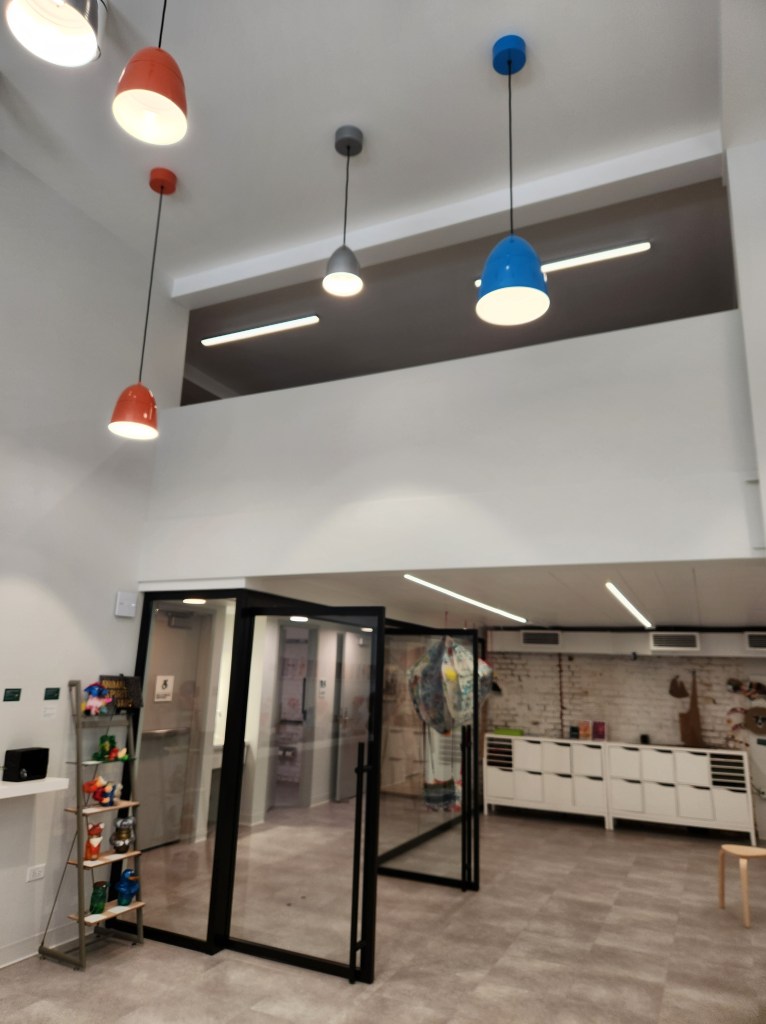


So, while not what I expected, I am impressed with these two amazing spaces not to mention the museum as a whole!

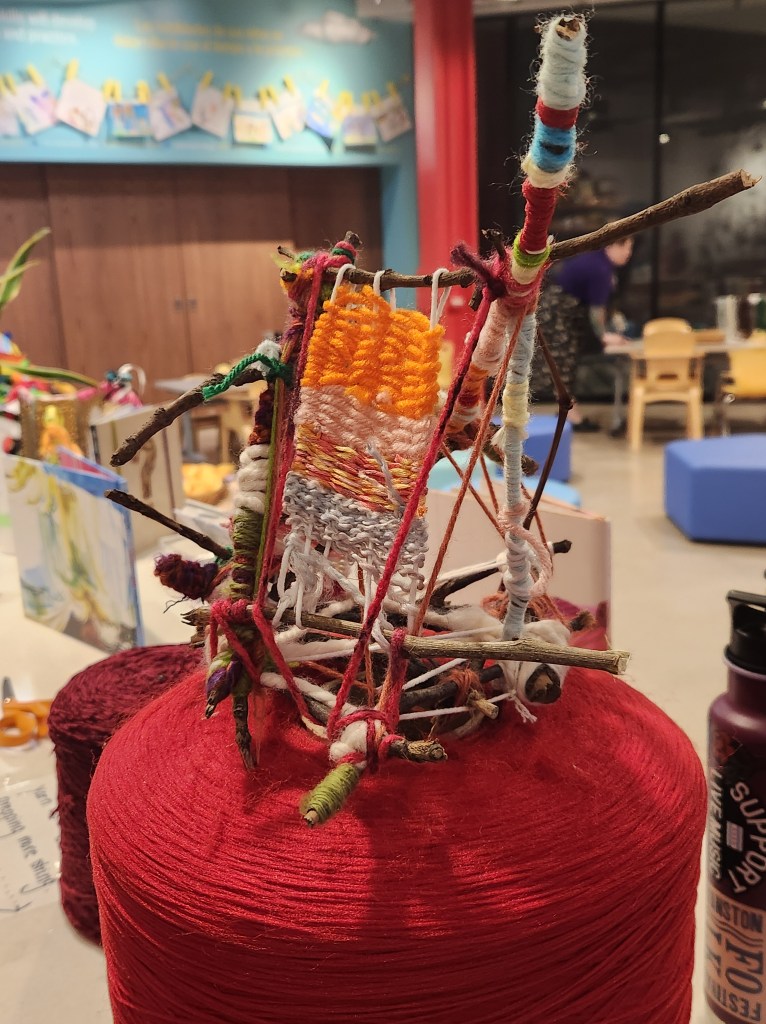
I have been proposing introducing a wrapping curriculum to the art studio for quite a while, so I was excited this spring when we finally presented it. I envisioned it in the Young Artist Program format with several different stations. Many artists, both outsider and traditional, have wrapped chairs, so I proposed that we start there. Liz took it a step further with the Wrapping Garden, bringing in not only a chair but also an easel and the piece of furniture we use to hang artist aprons on. It was so much fun to watch them transform over the five weeks.


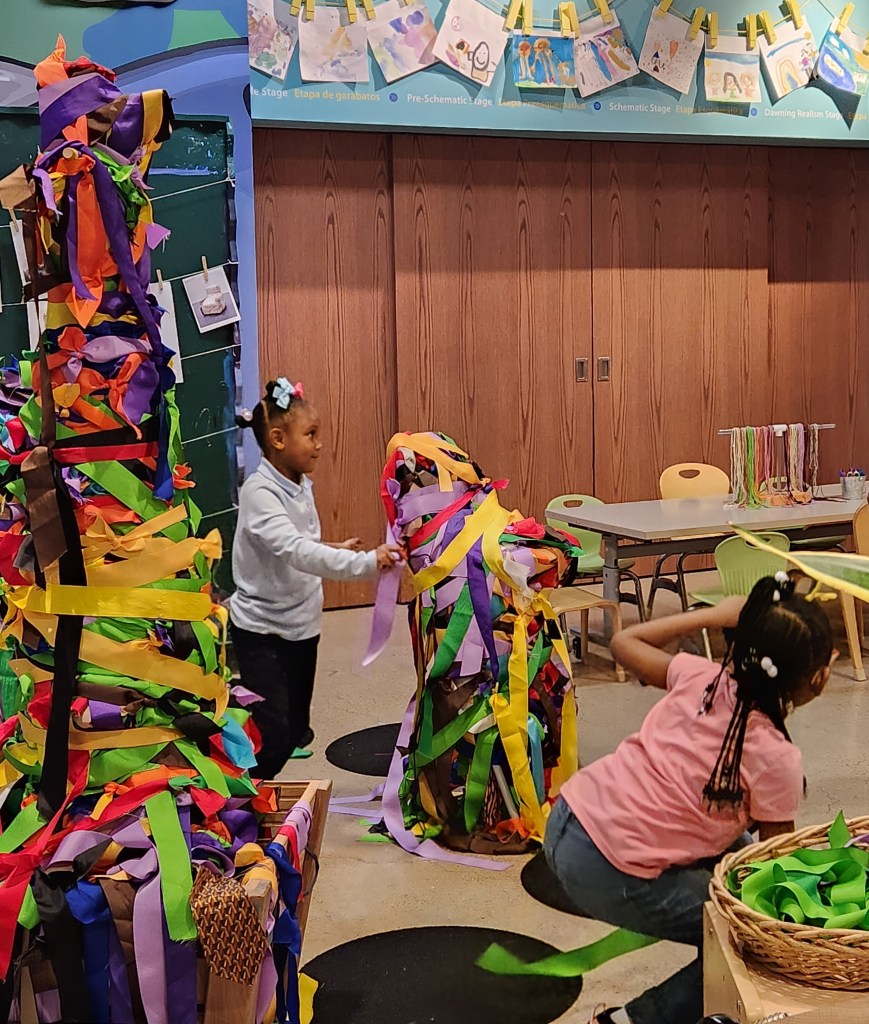
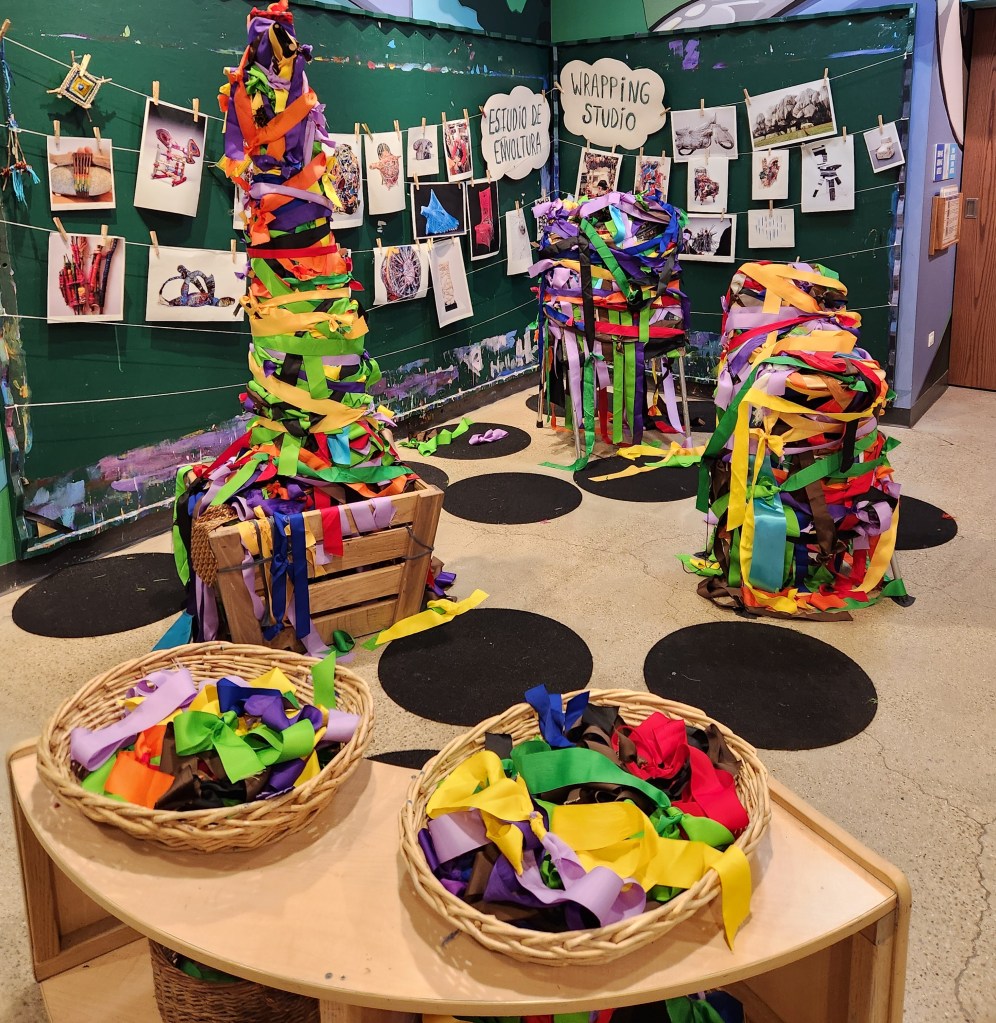

We had a lot of ideas for what would get wrapped at the tables, from small things to natural objects to recycled plastic bottles. But after I sent Liz these pictures from Studio Sprout, we had a new plan.
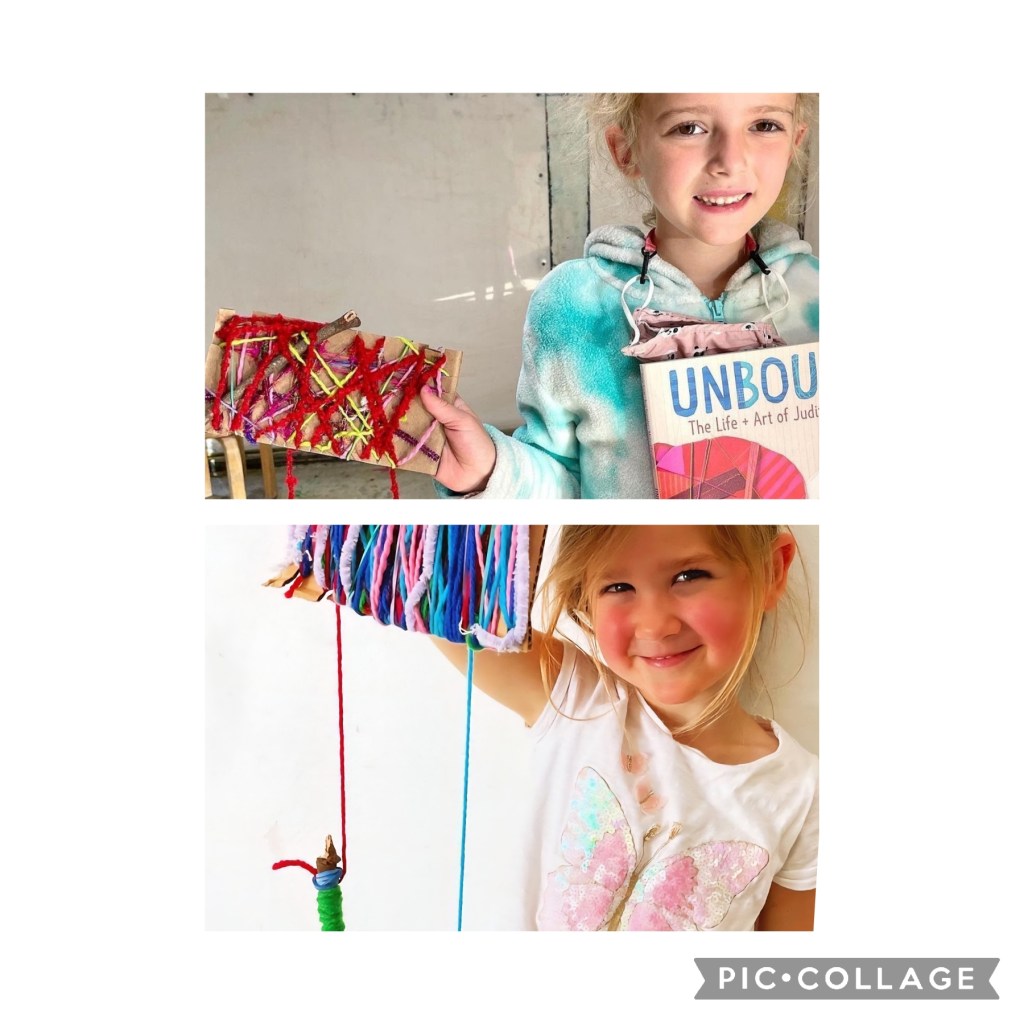
We cut and notched small pieces of cardboard and offered sticks and other natural materials and enhancements to be wrapped with the yarn at the tables.
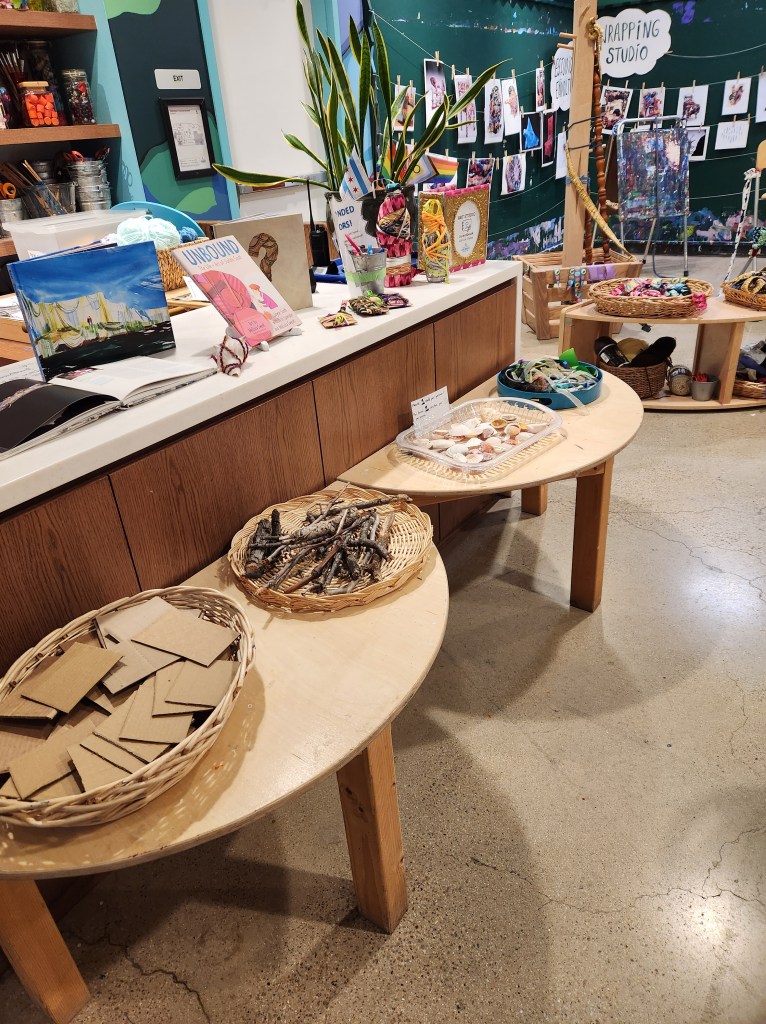

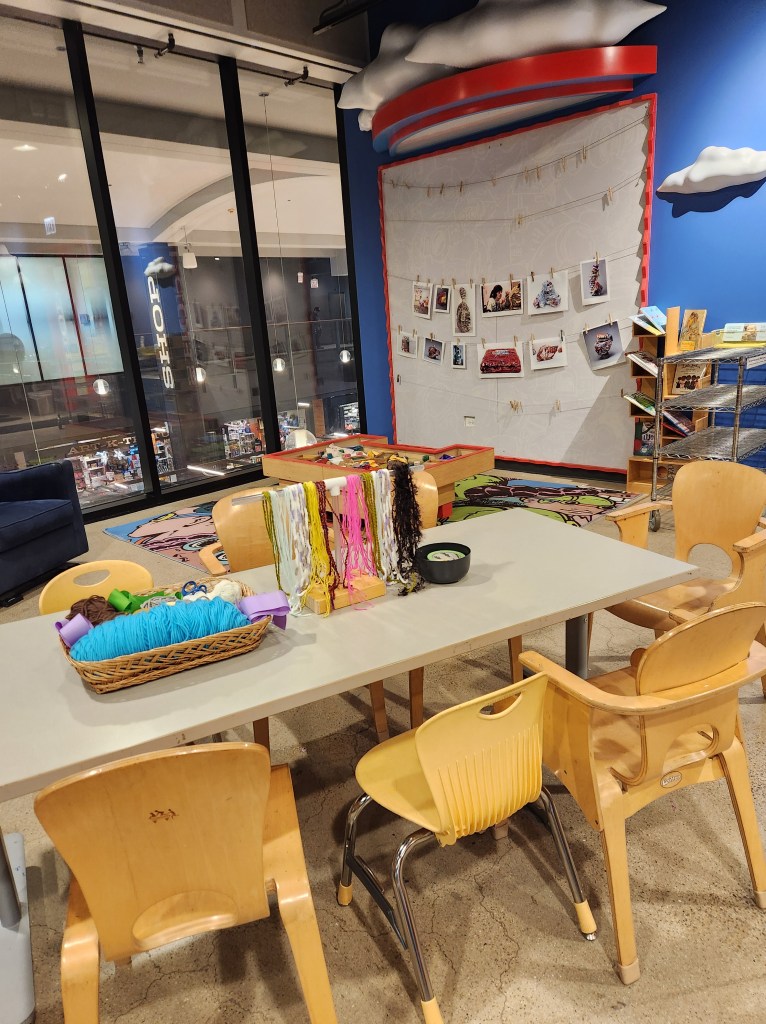

I’d say it was a very successful project!

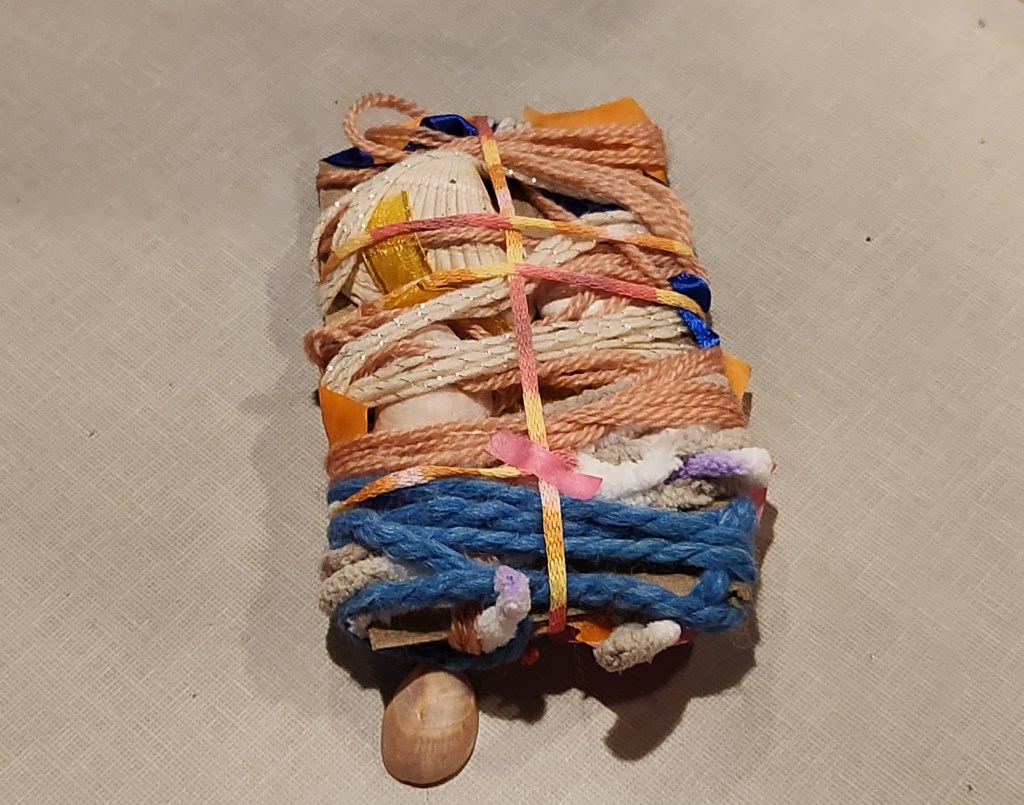
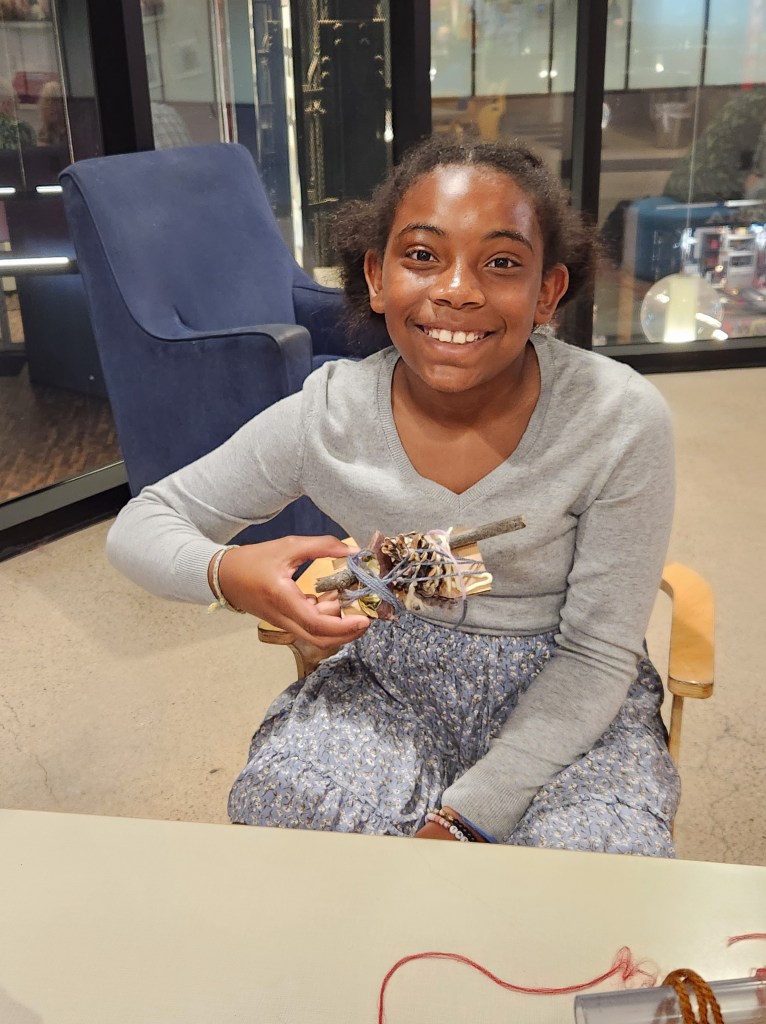
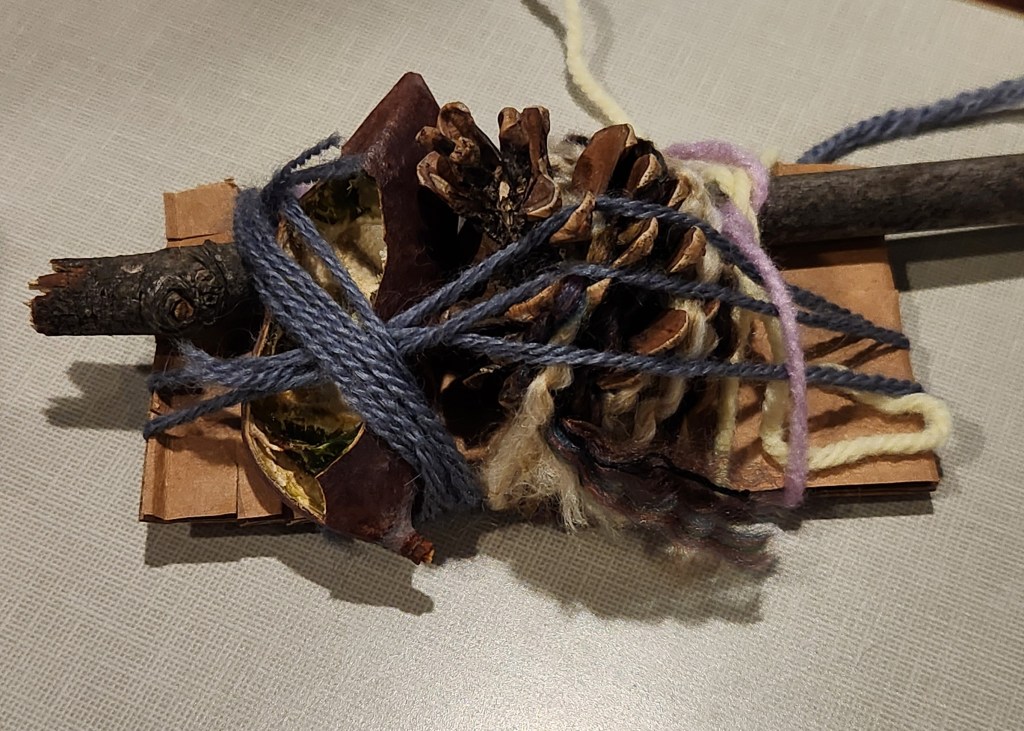

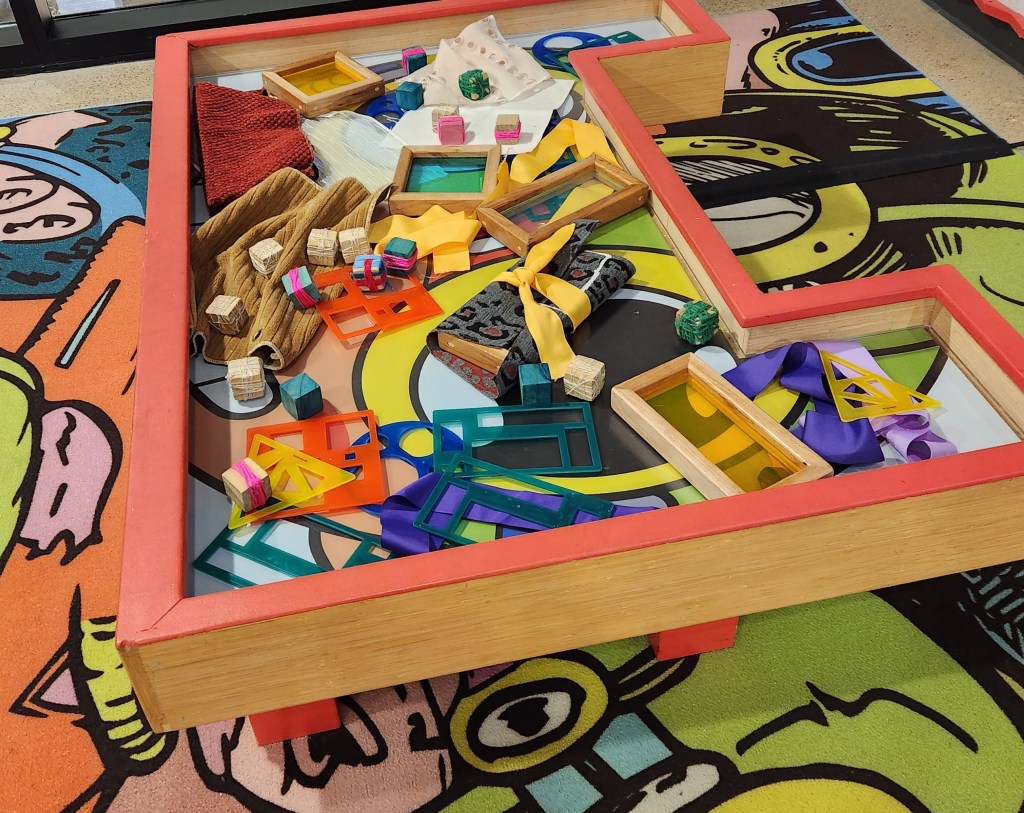
We put larger pieces of fabric and ribbons along with blocks and some other things to wrap in the sensory table.
Photographs of wrapping artists and wrapped objects and books about Judith Scott and Christo and Jeanne-Claude helped to set the stage. Educators were inspired as well!


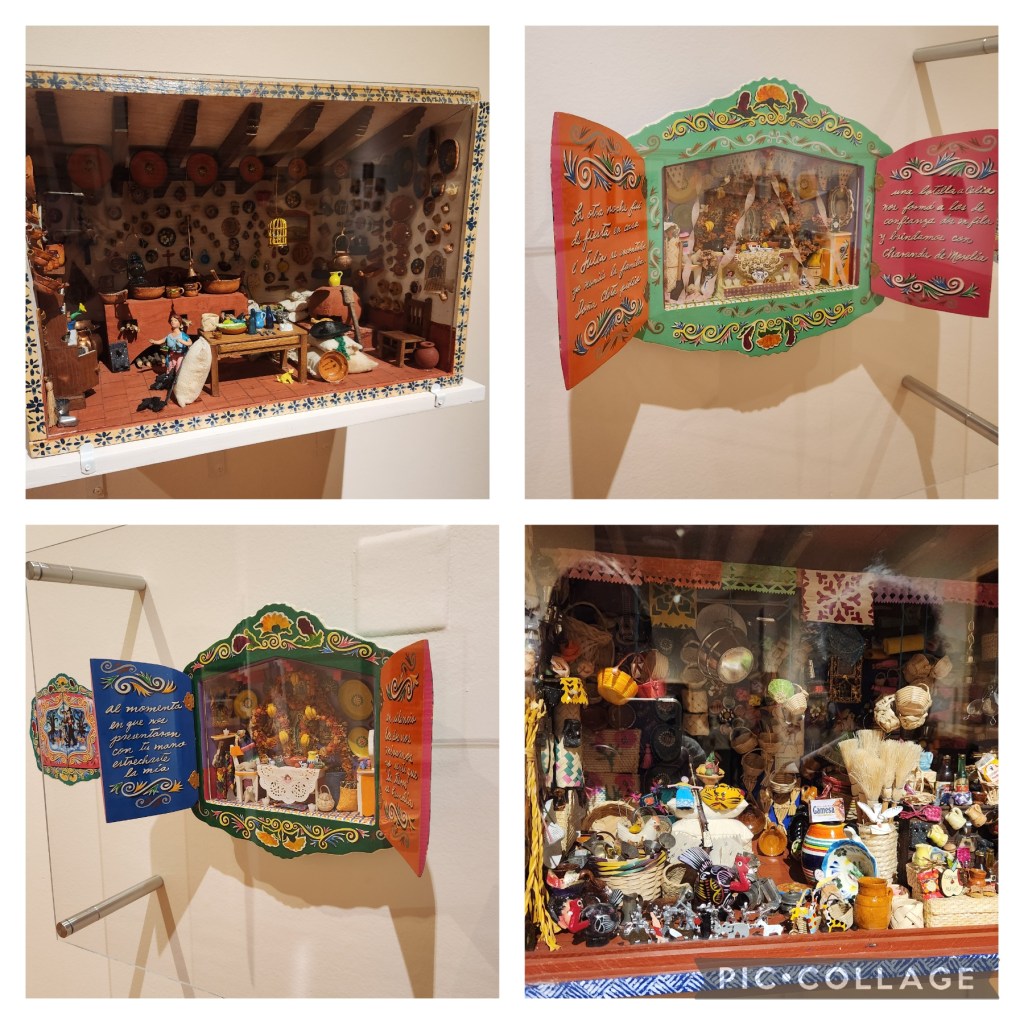
This week, I went with a friend to the National Museum of Mexican Art to see the exhibit El Arte Del Pequeno or the Art of the Small. Four miniature rooms were included in the exhibit, and one of the objects in one of the rooms really caught my eye.

So I was pleased when I found a similar one in the gift shop, especially since it was in the clearance section!

The price tag included the description “Mascaritas Guerrera” and googling that led to the website of Universidad Complitense Madrid (webs.ucm.es/BUCM) and this picture of a full-size mask.
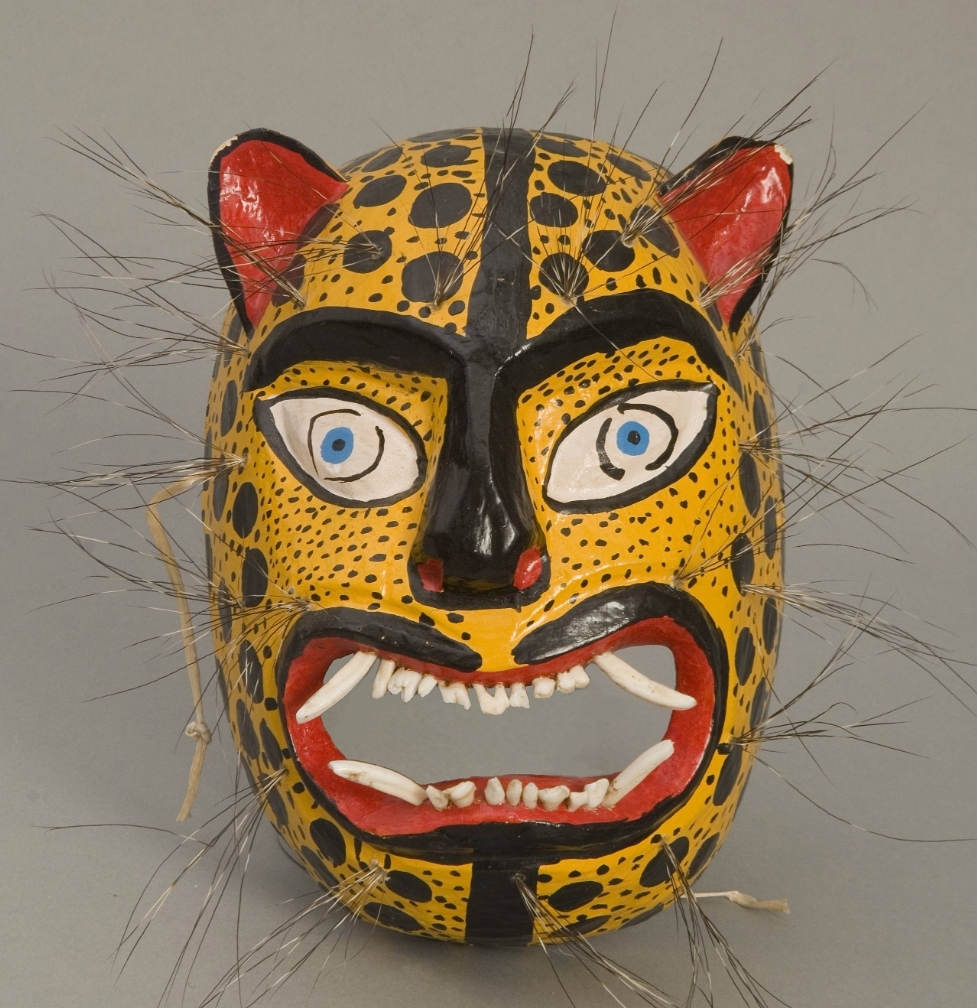
The entry explains that the jaguar mask is part of the Dance of the Tlacolderos, a dance from pre-Christian times that, like so many traditions, has been incorporated into Christian observances and is performed in Guerrero, Mexico during the Feast of the Holy Cross, during Carnival, on some patron saint’s days, and in honor of the Virgin of Guadalupe on December 12. The dance depicts the efforts of farmers to catch the tiger or jaguar.
We had the perfect place for the mini mask on our gallery wall.
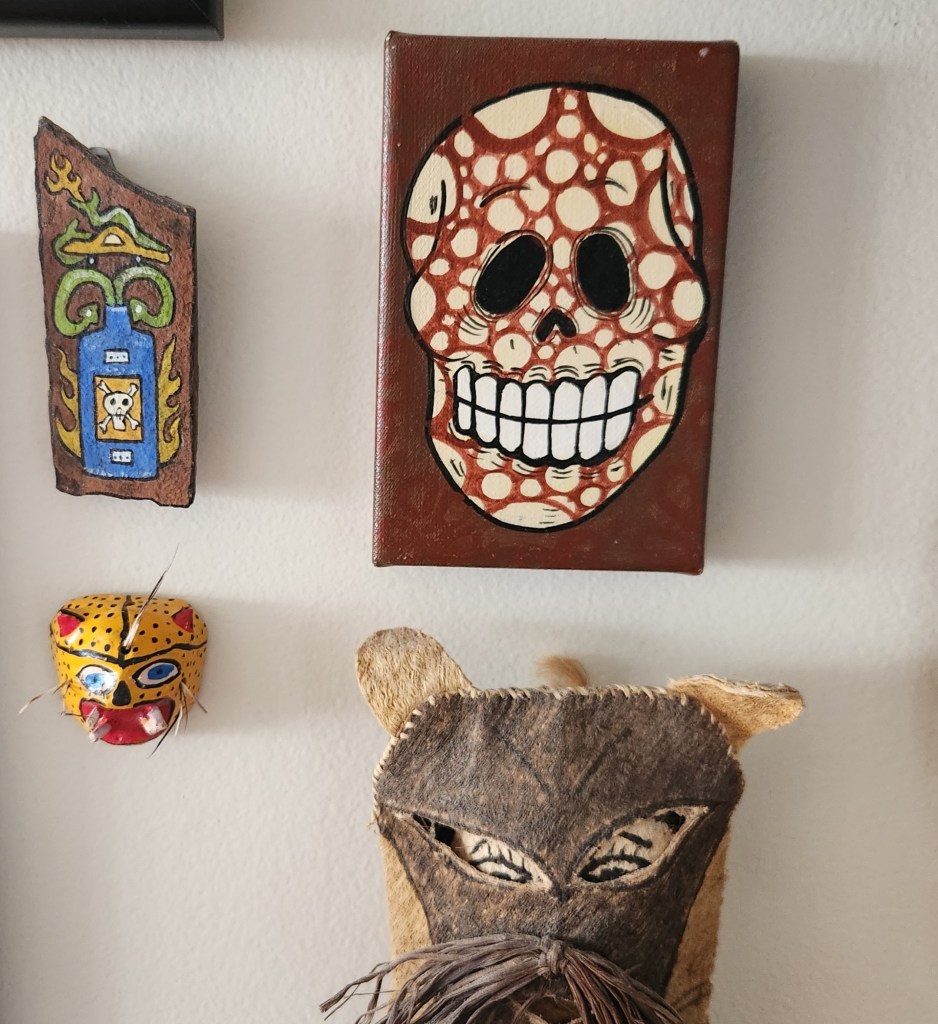
I love the juxtaposition of the jaguar mask’s eyes with the eyes behind the mask of the figure to the right.


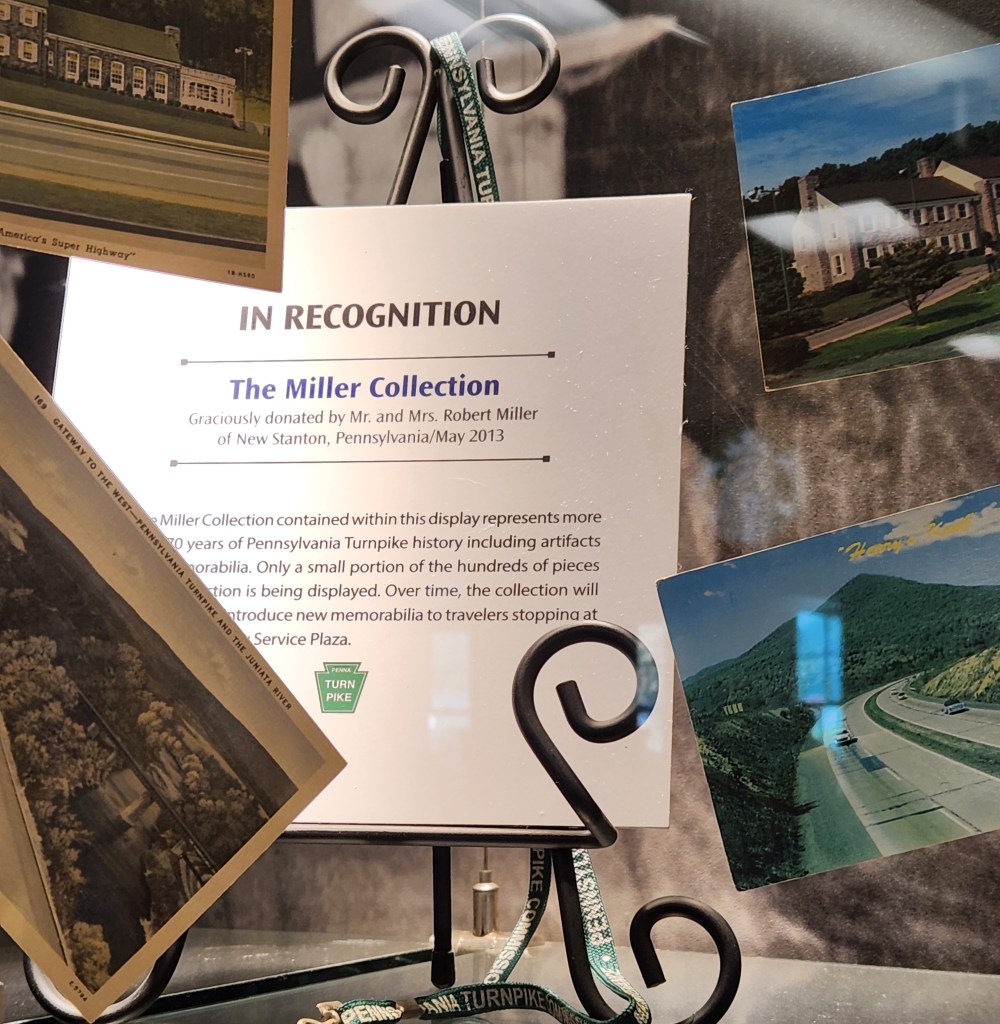
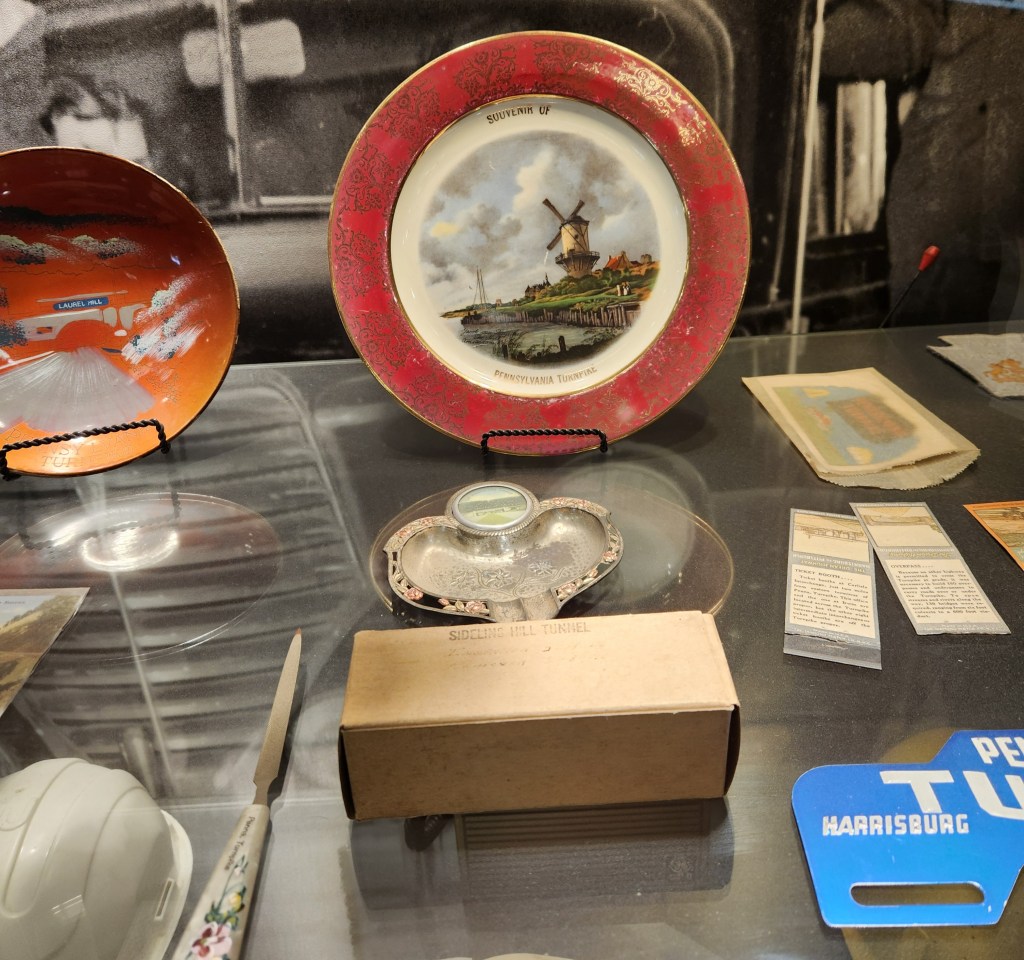
We drove through Pennsylvania recently, and at one of the rest areas, we found a huge collection of Pennsylvania Turnpike memorabilia.

The collection donated to the Turnpike, as this sign explains, by Mr. and Mrs. Robert Miller includes hundreds of artifacts and pieces of memorabilia representing over 70 years of Turnpike history.
The collection will be rotated, here are a few of the pieces currently on display that caught my eye. They are a bit hard to see because they are behind glass and also because they are backed by blown up old photographs of men in suits. I didn’t see an explanation of who they were, and I cropped them out as much as possible.
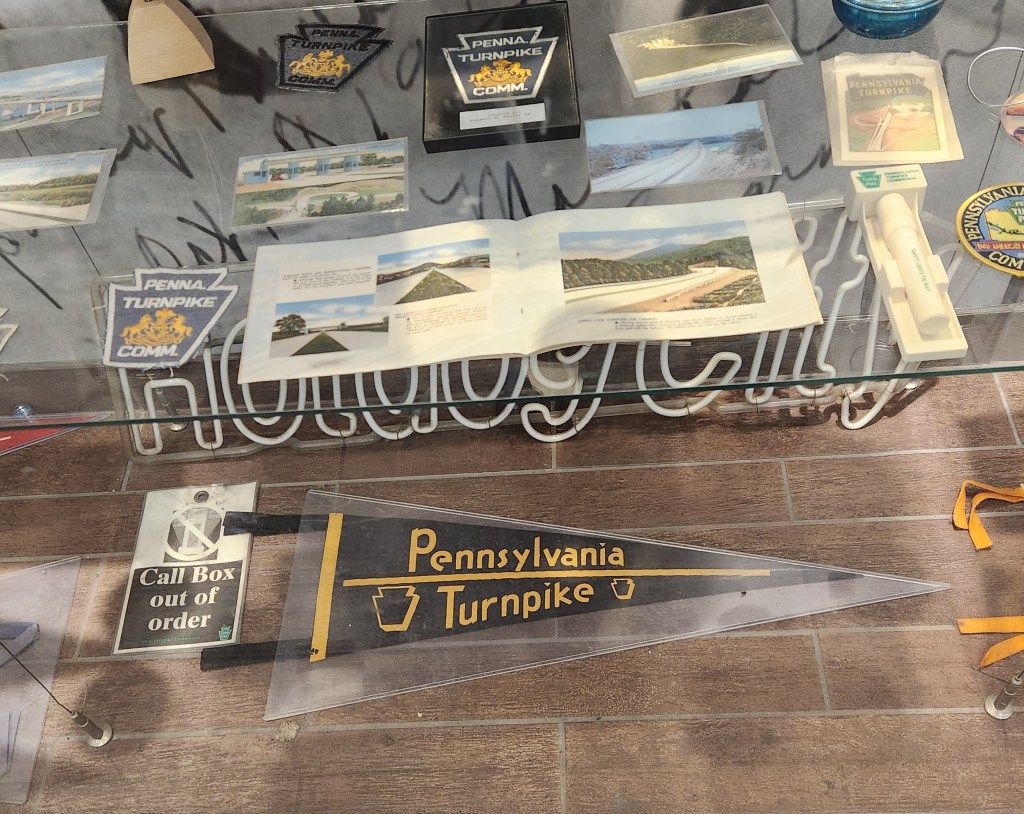
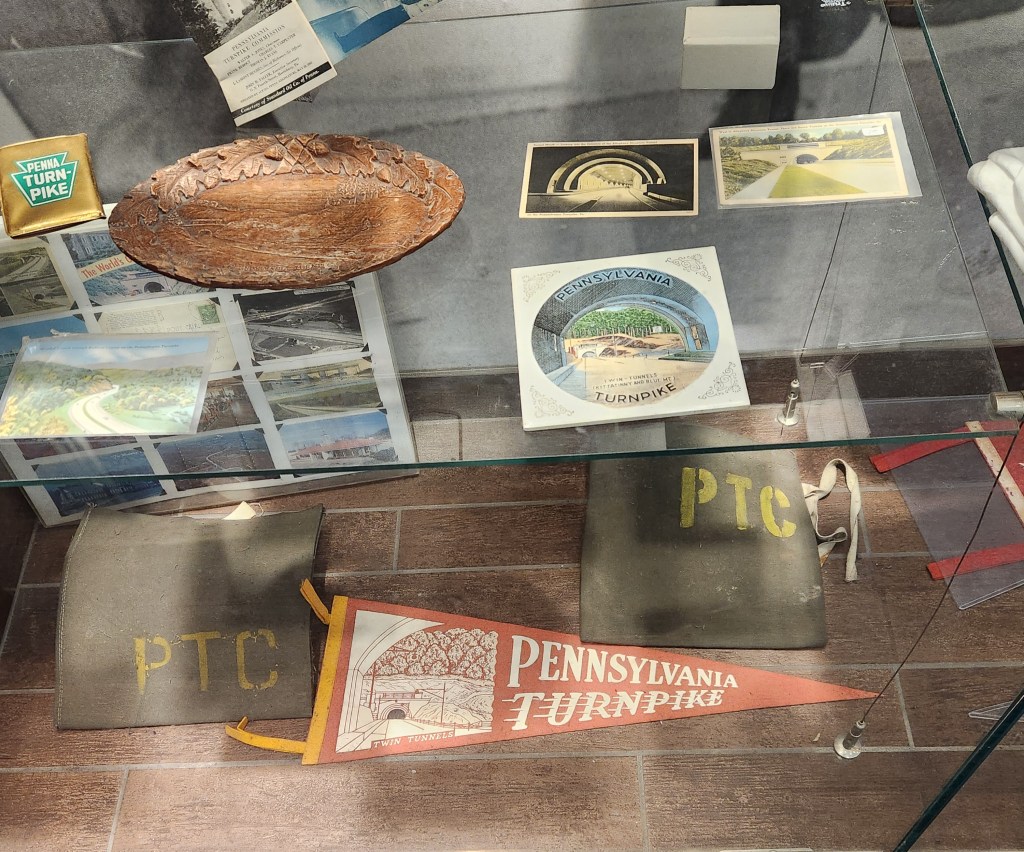
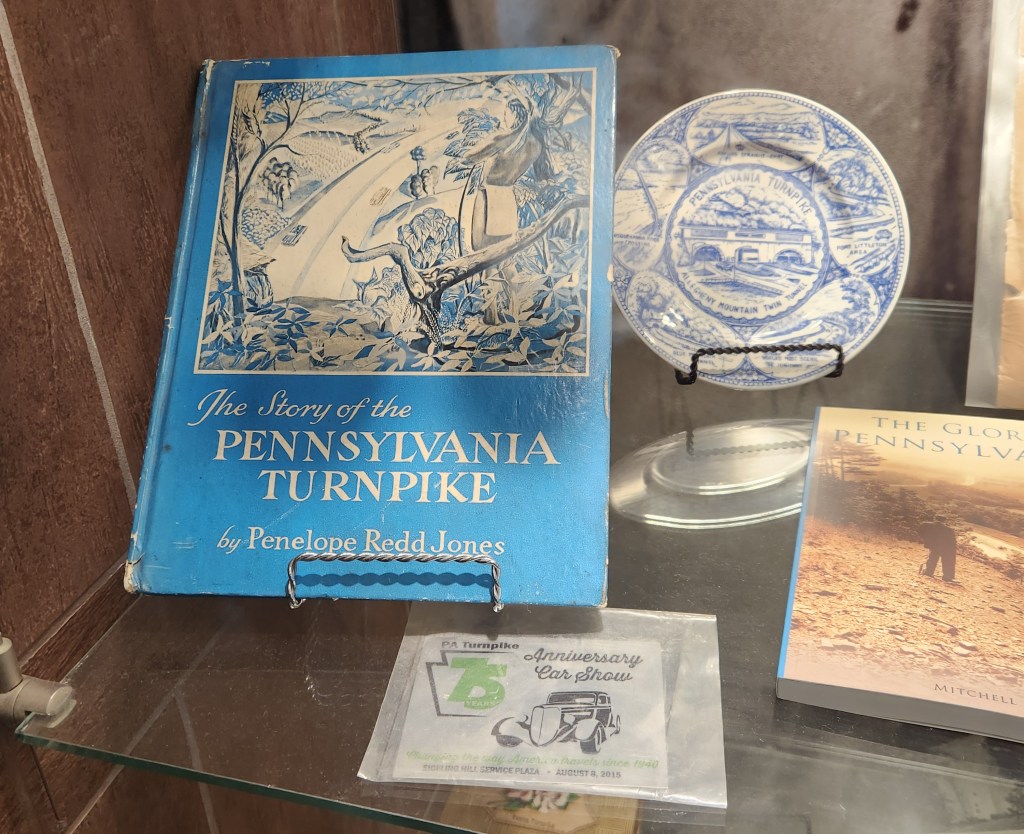
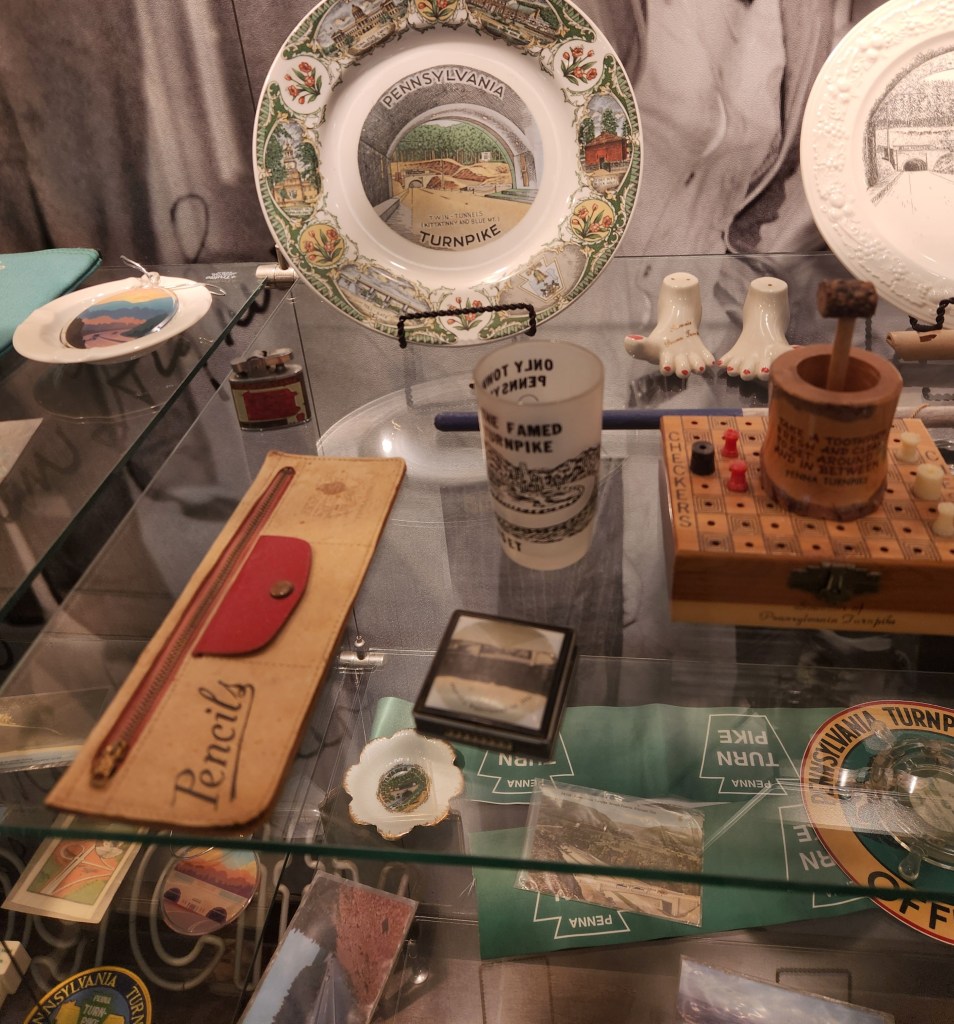


One of my favorite pieces was a book of old matches (top left) because the matches looked like gasoline pumps.
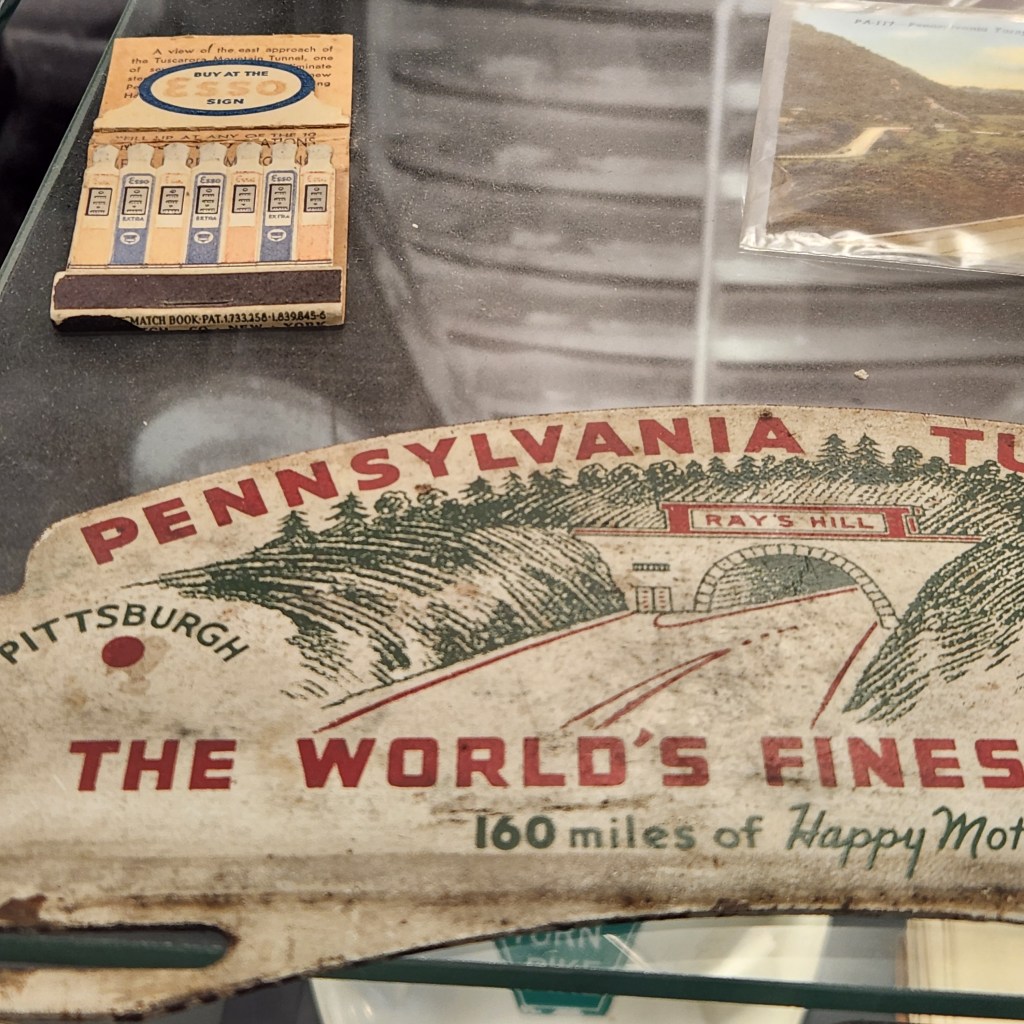
Apparently, there was even a song about the Turnpike!


I just realized it is almost time to put the Spring and Easter things away, and I haven’t written about them yet. Spring started here as it usually does with the appearance of frogs. I couldn’t find any little frogs this year, so the larger ones from a few years ago got some company.
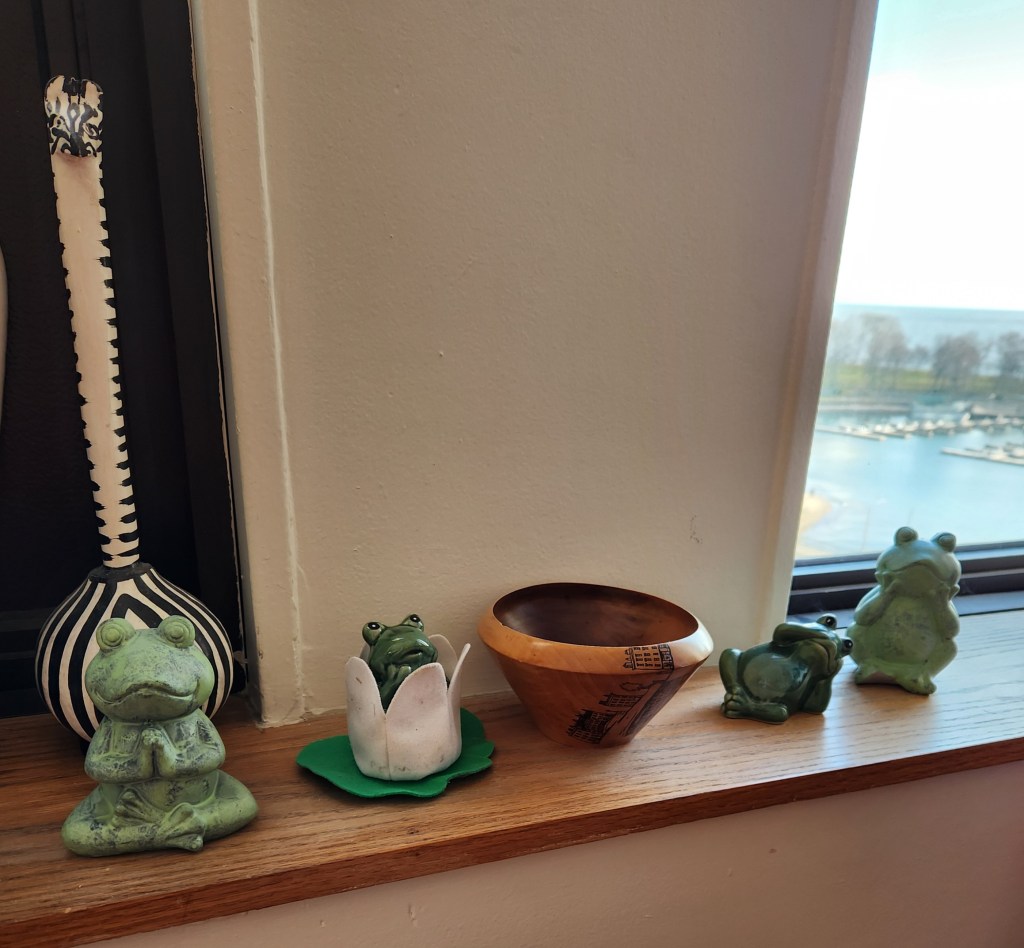
The new ones are the two larger ones on the ends. The yoga frog ended up in front of the gourd zebra in its new place. The gourd zebra had to leave its perfect place when we got living room curtains recently. This is the perfect place for the yoga frog, though, since it is right in front of the space, I have dubbed my yoga studio.
I was excited to unwrap the ornaments that we bought in an after Christmas sale at a store in Lincoln Square and add them to the signs of Spring in the kitchen.


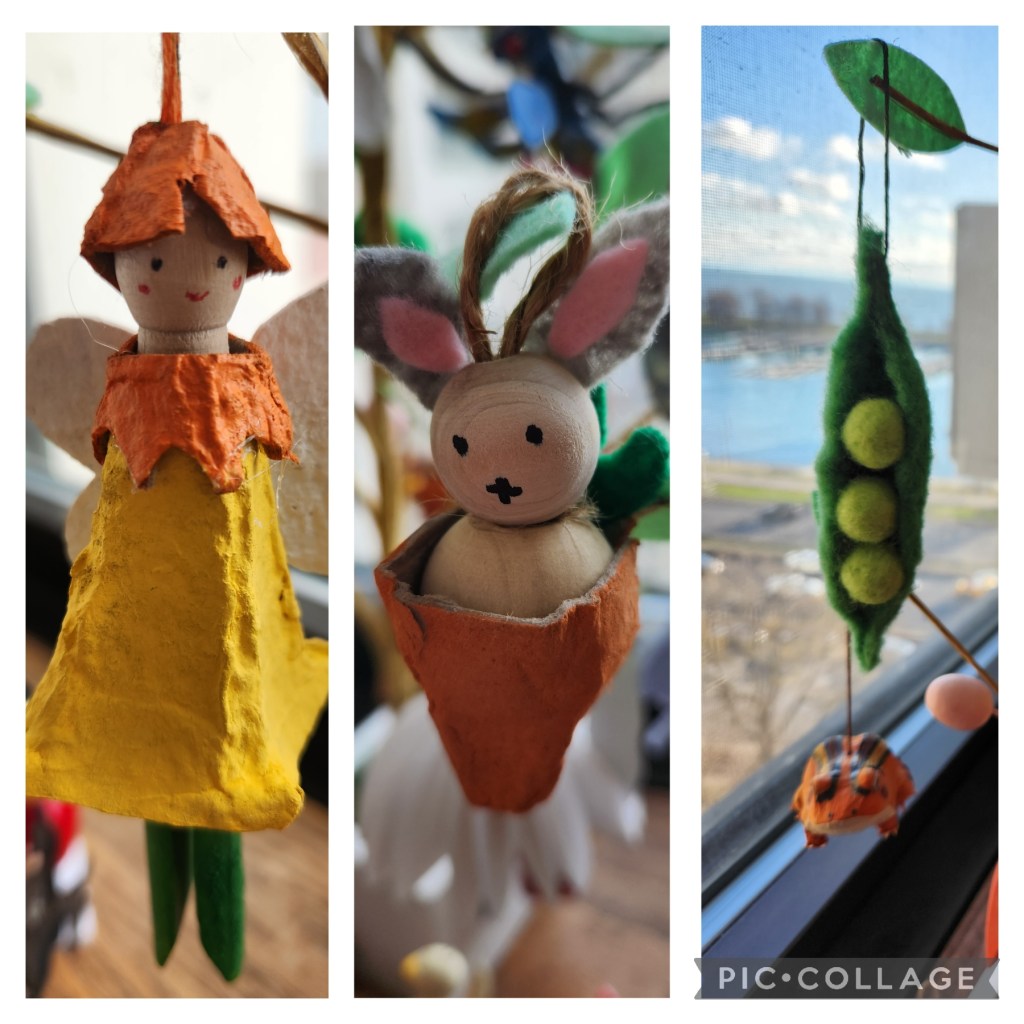
I made some new ornaments for the Spring trees in the dining room windows. The fairy and the bunny constructed with painted egg cartons were inspired by Instagram posts and the felted peapod by an ornament I saw at World Market. Their peas had faces, but I went for a more natural look.
I also hung some garlands inspired by Instagram posts above the trees.

It was hard to find a place on the egg tree for the new eggs I bought last year after Easter at Joann Fabrics, but since they’ve gone out of business, I knew I had to try to fit that green one with the white flowers on.

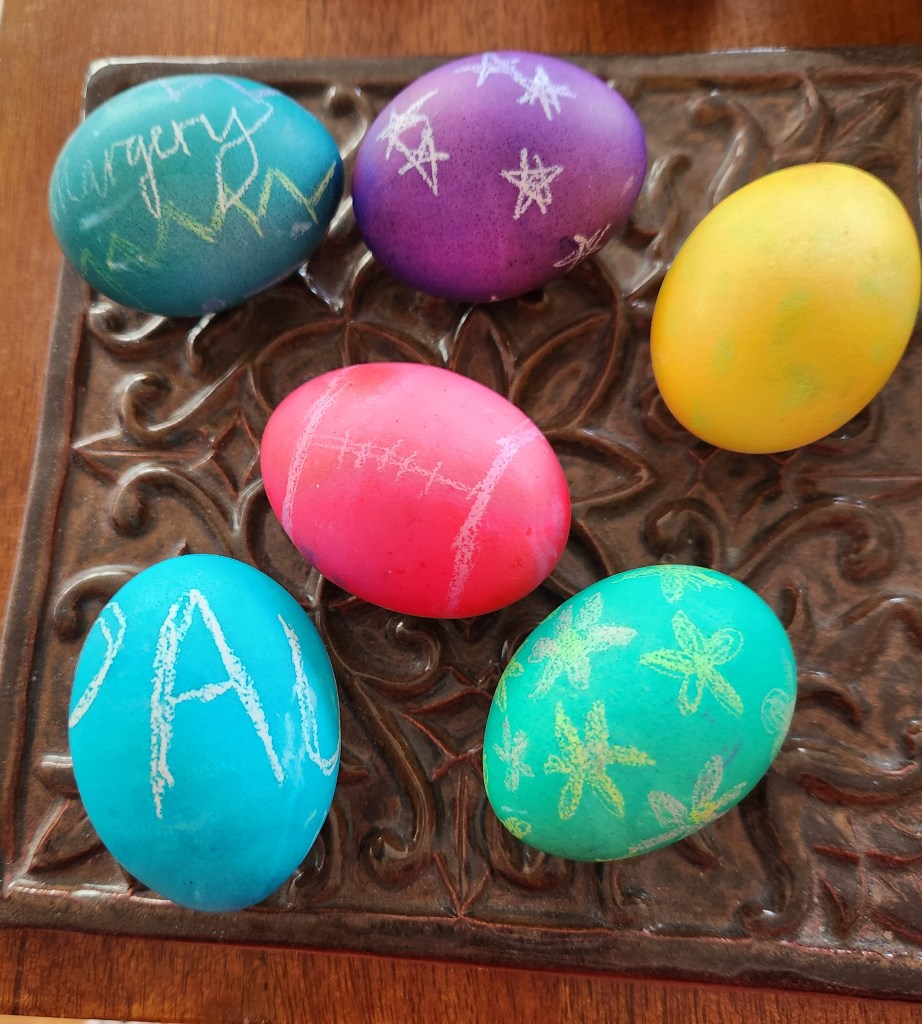
And speaking of eggs, these are the ones we dyed this year. I love the football one!

 Collections and Other Stuff I Like